Table of Contents >> Show >> Hide
- 1. Rats Who Free Their Friends Instead of Hoarding Chocolate
- 2. Elephants Who Mourn, Comfort, and Remember Their Dead
- 3. Dolphins Who Save Humans From Sharks and the Open Sea
- 4. Dolphins and Whales Who Support Injured Pod Members
- 5. Bonobos and Chimpanzees Who Console the Distressed
- 6. Chimpanzee “First Aid” and the Rise of Animal Medicine
- 7. Dogs Who Cross Barriers Just to Comfort a Crying Human
- 8. Magpies and “Funeral” Rituals for Their Dead
- 9. Cows Who Mirror the Distress of Their Calves and Herd Mates
- 10. A Dolphin Who Asked Divers for Help
- What These Stories Mean for Our View of Animal Minds
- Living With Empathetic Animals: Experiences and Reflections
- Conclusion
We humans like to think we invented empathy. Then a rat frees its trapped buddy,
a dolphin shields a swimmer from a shark, and an elephant quietly stands vigil
over the bones of a lost friendand suddenly our “we’re so special” balloon
deflates a bit. Stories and studies from around the world now suggest that
animal empathy and emotional intelligence are far more widespread
than we once believed.
In true Listverse style, this list rounds up ten astonishing, heart-tugging,
and occasionally mind-bending examples of animal empathy.
Some come from controlled experiments, others from wild encounters and
long-term field research. Together, they challenge the idea that compassion
is a human-only feature and show that many species respond to distress, grief,
and pain in ways that look a lot like our own.
1. Rats Who Free Their Friends Instead of Hoarding Chocolate
Rats usually show up in horror movies and pest-control ads, not heartwarming
empathy stories. Yet laboratory experiments have repeatedly shown that rats
will work to free a trapped cage-mate from a small restrainer. They learn how
to open the door and, once they’ve figured it out, they do it again and again
when another rat is stuck inside.
The plot twist? In one famous setup, the free rat had two choices: open a
container of chocolate chips (rat gold) or open the restrainer and free a
distressed friend. Many did bothsharing the chocolate after helping their
buddy. That’s not just “I like watching doors open”; it looks like
prosocial behavior driven by emotional contagion and concern.
Scientists debate whether this counts as full-blown empathy, but the
evidence suggests rats are sensitive to another rat’s distress and motivated
to reduce it. In other words, they behave less like cartoon villains and
more like tiny, whiskered first responders.
2. Elephants Who Mourn, Comfort, and Remember Their Dead
If there were an Animal Empathy Hall of Fame, elephants would have a
permanent exhibit. Wild elephants have been observed gently touching the
bones and tusks of dead herd members, revisiting carcass sites for months or
even years, and standing in silent vigil around a freshly deceased elephant.
Their emotional lives go well beyond grief. Elephants have been seen
supporting injured or exhausted companions, lifting them up with trunks and
tusks, and guarding vulnerable calves that aren’t their own. Herd members
may crowd around a distressed individual, touching and rumbling softly in a
scene that looks uncannily like a family comforting one of its own.
Researchers describe these behaviors as forms of consolation
and social bonding. Whether we label it “empathy” or not, elephants appear
to recognize distress in others and respond with actions that soothe, protect,
or honor those they care about.
3. Dolphins Who Save Humans From Sharks and the Open Sea
Dolphins may look like they’re always smiling, but some of their most
famous moments involve very serious situations. There are numerous reports
of wild dolphins forming tight circles around swimmers or surfers when
sharks are nearby, effectively creating a living shield.
In one widely reported incident off New Zealand, a pod of dolphins
herded a group of long-distance swimmers together and repeatedly circled
them while a great white shark cruised at the edge of the pod. Only when the
shark finally left did the dolphins relax and swim away, leaving some very
grateful humans behind.
Dolphins have also guided lost boaters toward shore and nudged exhausted
swimmers to the surface. While scientists caution against romanticizing every
dolphin story, the pattern is hard to ignore: they often respond to distress
with targeted, helpful actions that look a lot like
cross-species empathy.
4. Dolphins and Whales Who Support Injured Pod Members
Dolphins don’t reserve their helpful side just for humans. Cetaceans
(dolphins, whales, and porpoises) frequently engage in what marine
biologists call “epimeletic behavior”caregiving directed toward injured,
sick, or distressed individuals.
Wild observers have documented pods slowing down to match the pace of an
injured whale, adults forming a “life raft” around a dying dolphin, and
multiple animals taking turns pushing a struggling calf to the surface so it
can breathe. In some cases, these efforts continue even after the individual
has died, suggesting a powerful emotional bond.
The combination of complex brains, specialized social neurons, and
oxytocin-driven bonding suggests many cetaceans possess the neurological
hardware for empathy. Their caregiving behavior is one of the clearest
examples of animal altruism in the ocean.
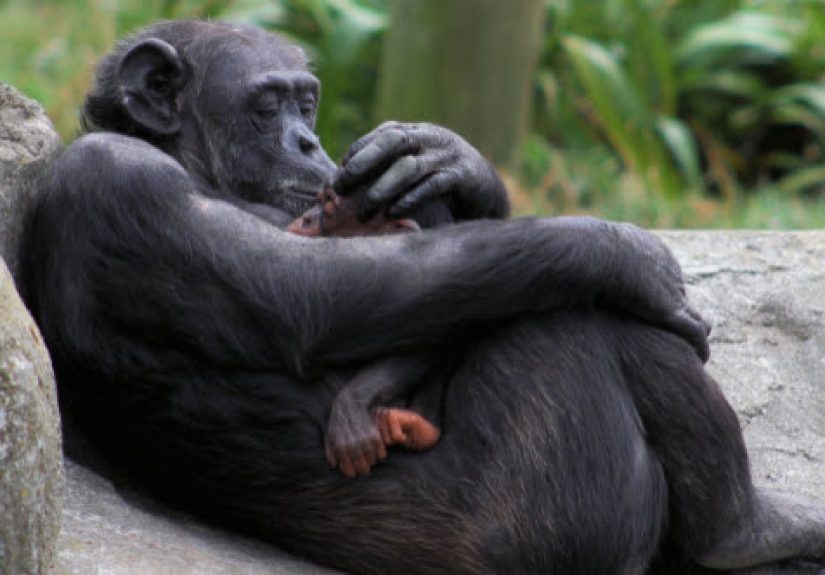
5. Bonobos and Chimpanzees Who Console the Distressed
In the forests of Africa, our closest living relatives have their own
version of “checking on a friend.” After a fight or a scare, bonobos and
chimpanzees often approach the victim and offer gentle touches, embraces,
grooming, or play invitationsbehavior researchers classify as
consolation.
Long-term observations show that juveniles are especially likely to provide
comfort, racing over to hug crying infants or sit next to adults who’ve just
been attacked. These interactions reduce the victim’s visible signs of
stress and help restore group harmony, just like a comforting conversation
might ease tension in a human family.
Recent comparative research also suggests that both bonobos and chimps show
nuanced, individual differences in how empathic they are, which hints at a
deep evolutionary history for emotional sensitivitynot just in humans, but
across great apes.
6. Chimpanzee “First Aid” and the Rise of Animal Medicine
Consolation is one thing; medical care is another. Field researchers in
Uganda have documented chimpanzees not only treating their own wounds with
chewed leaves, but also applying those makeshift remedies to other chimps.
In one striking case, an adult female caught an injured companion’s arm,
gently spread the wound open, and pressed a wad of chewed plant material
onto it.
Over decades of observations, scientists have recorded multiple instances of
chimps using plants with potential medicinal properties for both self-care
and social care. These behaviors look a lot like the early roots of
healthcare culture: knowledge about healing plants, shared
and applied within a community.
While researchers are cautious about using human terms like “doctor,” it’s
hard not to see empathy in a chimp that pauses its day to tend carefully to
a friend’s injury.
7. Dogs Who Cross Barriers Just to Comfort a Crying Human
Ask dog owners whether their pets sense their moods and you’ll get an
enthusiastic yes (and probably a few tearful stories). Experimental evidence
backs up at least some of those anecdotes. In controlled studies, pet dogs
are more likely to approach and make gentle physical contact when a human
is crying than when the same person is humming or talking
normally.
In some experiments, dogs even had to overcome a physical barriera door or
a short obstacleto reach the distressed person. Many pushed through quickly
when they heard sobs, suggesting that the dog’s motivation was not just
curiosity but something closer to concern.
Physiological data tell a similar story. Dogs listening to crying sounds
show changes in stress hormones and heart-rate patterns that parallel
emotional contagion in humans. Whether we call it empathy or not, dogs (and
probably cats, on their own mysterious terms) clearly respond to human
emotions in ways that feel deeply supportive.
8. Magpies and “Funeral” Rituals for Their Dead
Corvidscrows, ravens, magpies, and jaysare famous for their brains, but
they may have big feelings, too. Observers have described scenes where
magpies gather silently around a dead flock member, gently pecking or
nudging the body, and sometimes leaving small objects like twigs, pine
needles, or bits of grass nearby.
These gatherings can last for several minutes as the birds stand watch in
what looks a lot like a vigil. Afterward, the group flies
off together. Are they grieving, assessing danger, or both? Scientific
explanations often emphasize the survival valuelearning about threatswhile
others see hints of genuine sorrow and social bonding.
Either way, magpie “funerals” remind us that emotional complexity may not be
limited to mammals. Birds with walnut-sized brains can still behave in ways
that reflect awareness of loss and the importance of community.
9. Cows Who Mirror the Distress of Their Calves and Herd Mates
Farm animals are often left out of empathy conversations, but research on
cattle paints a surprisingly emotional picture. Studies show that when
calves are restrained, other nearby calves show increased heart rates and
stress signalseven when they are not the ones being handled. This
emotional contagion suggests they can “catch” each other’s
distress.
Mother cows respond strongly to their calves’ calls, with significant changes
in heart rate and behavior. When separated from favored companions, cows may
pace, vocalize more, and show signs of anxiety that settle once they’re
reunited.
Emotional sensitivity in cows doesn’t look as dramatic as dolphins rescuing
divers or elephants mourning a matriarch, but it matters. It tells us that
empathy-like processes may be common in social herd animalsand that
improving their welfare means respecting those emotional bonds.
10. A Dolphin Who Asked Divers for Help
One of the most striking stories of animal empathy flips the script: instead
of humans helping a distressed animal, an animal appears to understand that
humans can help. In Hawaii, divers reported a bottlenose dolphin that
approached them while entangled in fishing line. The dolphin hovered close,
positioning its injured fin within reach and patiently remaining still as a
diver cut the line away.
The entire interaction looked intentional, as if the dolphin recognized not
only its own distress but also the possibility that these odd bubble-blowing
primates could relieve it. Once free, the dolphin calmly swam off.
Is that empathy? At minimum, it’s a powerful example of trust and
cross-species understanding. It also hints at something deeper: a
mind capable of recognizing pain, seeking targeted help, and cooperating in
a delicate, life-or-death procedure.
What These Stories Mean for Our View of Animal Minds
Taken together, these ten examples suggest that empathy-like processesemotional
contagion, consolation, helping behavior, and griefare scattered across the
animal kingdom. From rodents and cows to dolphins and great apes, many species
show patterns of behavior that are hard to explain without some form of
emotional sensitivity to others.
Scientists still debate how much of this is instinct, how much is learned,
and where to draw the line between simple emotional resonance and complex,
human-like empathy. But one thing is becoming clear: the old view of animals
as unfeeling, automatic machines doesn’t match what we now see in labs, farms,
forests, and oceans.
Whether you’re a pet parent, an animal advocate, or just someone who’s
casually sobbed into a dog’s fur, recognizing animal empathy
changes how we think about our fellow creaturesand what we owe them.
Living With Empathetic Animals: Experiences and Reflections
It’s one thing to read about animal empathy in scientific papers; it’s another
to feel it breathing softly next to you on the couch.
When Your Dog Becomes Your Unofficial Therapist
Picture this: you’ve had a nightmare of a day. Your inbox is a disaster, your
to-do list is longer than a giraffe’s neck, and someone just left a not-so-kind
comment on your latest post. You finally sit down, eyes stinging, shoulders
tightand your dog quietly pads over, rests their head on your knee, and lets
out a long, sympathetic sigh.
You didn’t call them. You didn’t shake the treat jar. But they show up anyway,
often before you shed the first tear. Many owners describe this as their dog
“just knowing” when something is wrong. Whether the underlying mechanism is
emotional contagion, subtle body-language reading, or something we don’t yet
understand, the experience feels like pure, uncomplicated comfort.
The Subtle Empathy of Cats and Quieter Companions
Cats get a bad reputation as emotional freelancers, but countless people report
a different story. Maybe your cat normally acts like the CEO of the house, but
on the day you get bad news, they follow you from room to room, curl up on your
chest, and refuse to leave. They may not lick your face dramatically, but their
steady presence can lower your heart rate and anchor you in the moment.
The same goes for quieter animalsrabbits who hop close and sit next to a
crying owner, parrots who gently vocalize when their person is upset, or horses
who soften their posture around anxious riders. These interactions don’t always
make headlines, but for the humans experiencing them, they may be life-changing.
Witnessing Wild Empathy Firsthand
For people who work in wildlife rehabilitation, sanctuaries, or conservation,
moments of animal empathy can be even more dramatic. A caregiver might see one
elephant stand between a newly rescued individual and a loud, scary vehicle. A
sanctuary volunteer might watch a traumatized chimpanzee slowly relax as another
chimp approaches, offers a gentle arm around the shoulders, and remains there
until the tension fades.
Even brief encounters can be powerful. Divers tell stories of dolphins lingering
nearby when someone is panicking in open water, or wild whales turning toward a
boat as if to present an injured calf for help. These scenes are easy to
romanticize, but they’re also hard to forgetand they often inspire humans to
become fierce advocates for the animals who once protected them.
How These Stories Change Us
Experiencingor even just reading aboutexamples of animal empathy
has a strange side effect: it makes us reflect on our own behavior. If a rat
can sacrifice chocolate to free a friend, what does that say about how we treat
the people around us? If cows and elephants are emotionally affected by the
loss or suffering of their companions, how should that shape our choices about
food, entertainment, and conservation?
At their best, these stories invite us to expand our circle of concern. They
nudge us toward a worldview where other species aren’t just background scenery
in the human drama, but fellow feeling beings with their own relationships,
struggles, and loyalties. In that sense, animal empathy doesn’t just make the
world more interestingit makes it morally deeper.
And maybe that’s the most amazing thing of all: by revealing the emotional
lives of animals, science and storytelling together give us a chance to become
a little more empathetic ourselves.
Conclusion
From lab rats and dairy cows to dolphins, elephants, chimps, and magpies, the
animal kingdom is brimming with behaviors that look and feel like empathy.
Some are subtleslight shifts in heart rate when a calf crieswhile others are
dramatic, like dolphins circling a swimmer to fend off a shark.
We may never know exactly what it feels like to be an elephant in mourning or
a dog comforting a crying human. But the evidence is clear enough to reshape
how we see them: not as unfeeling automatons, but as emotionally complex
neighbors who sometimes show compassion that rivals our own. Recognizing that
fact is a small step toward treating them with the respect and protection they
deserve.
SEO Summary
empathy, from grieving elephants to heroic dolphins, that challenge what it
means to be human.
sapo: Animals aren’t supposed to be emotional, right? Tell
that to the elephants who stand vigil over their dead, the dolphins who circle
swimmers to fend off sharks, or the rats who free their trapped friends even
when there’s chocolate on the table. This in-depth list dives into ten
astonishing displays of animal empathyfrom dogs who push through barriers to
comfort crying people to magpies that seem to hold funerals for fallen flock
members. Drawing on real research and documented stories, you’ll explore how
empathy, grief, and kindness show up again and again across speciesand why
these surprising examples should change the way we see and treat the animals
who share our world.