Table of Contents >> Show >> Hide
- Fact #1: They Built the Largest Contiguous Land Empire in History
- Fact #2: The Mongols Ran on Merit (More Than You’d Expect)
- Fact #3: Their Communication Network Was an Imperial Superpower
- Fact #4: The Mongols Practiced Strategic Religious Tolerance
- Fact #5: “Pax Mongolica” Helped Supercharge Eurasian Trade
- Fact #6: Their Army Was Organized Like a Machine (On Horseback)
- Fact #7: They Absorbed Technology and Expertise From Everywhere
- Fact #8: Mongol Women Could Hold Serious Power
- Fact #9: The Empire Was Split Into Major Khanates (It Wasn’t One Giant Blob Forever)
- Fact #10: Their Legacy Includes Global Exchange (and Some Wild Human Footnotes)
- What These Facts About the Mongols Really Add Up To
- Experience Bonus: of “Mongols in Real Life” Inspiration
The Mongols have one of the most intense reputations in world historypartly because they moved fast,
fought smart, and (let’s be honest) didn’t exactly send “friendly neighbor” vibes when they arrived.
But the real story is bigger than battlefield headlines. The Mongols built systems that stitched continents
together, standardized how an empire communicated, and made long-distance trade feel less like a gamble and
more like… well, a risky business plan with slightly better odds.
This deep dive shares 10 amazing facts about the Mongolsthe kind that make you pause mid-scroll and say,
“Wait, they did what?” We’ll cover the Mongol Empire’s size, strategy, laws, communication networks, cultural exchange,
and the surprising ways their legacy still shows up in how our world connects today.
Fact #1: They Built the Largest Contiguous Land Empire in History
Yes, “contiguous” mattersand it’s a big deal.
At its peak in the 13th century, the Mongol Empire stretched across a massive continuous swath of Eurasiaoften described
as the largest contiguous land empire ever assembled. “Contiguous” means it was connected territory, not a patchwork
of overseas colonies. That footprint ran from East Asia toward Eastern Europe, covering enough land to make your average map
look like it needs to lie down.
Why is this amazing? Because the Mongols pulled it off without modern communications, trains, or even reliable road signage.
They did it with horses, discipline, intelligence gathering, and an organizational style that prioritized speed and coordination.
Fact #2: The Mongols Ran on Merit (More Than You’d Expect)
They cared a lot about loyalty and resultsless about fancy family trees.
The Mongols are famous for promoting capable people, including individuals from conquered groups, into roles that mattered.
In practice, this could mean military commanders rising through demonstrated competence, and administrators gaining influence
because they could actually run things. In an era when social rank often acted like a lifelong password you were born with,
the Mongol approach could be startlingly practical.
This didn’t mean everyone had equal rights in a modern sense (history rarely does). But it did mean the empire often valued
effectiveness over pedigreean approach that helped them manage a huge, diverse population across vast distances.
Fact #3: Their Communication Network Was an Imperial Superpower
Meet the Yam: the relay system that made “urgent” actually mean something.
One of the most impressive Mongol innovations was their empire-wide relay network, commonly called the Yam.
Think of it as a medieval express system: stations spaced across routes where messengers could swap horses, rest, and keep moving.
The goal was simplekeep information flowing so leaders could respond quickly across a sprawling empire.
The Yam supported governance, intelligence, and trade by making communication more predictable. Later travelers (including famous
European visitors) described the system’s efficiency in Mongol-ruled regions, and it became one of the practical tools that helped
hold together a territory that might otherwise have fallen apart under its own size.
Fact #4: The Mongols Practiced Strategic Religious Tolerance
Not always “because it’s nice,” but because it works.
The Mongols are widely noted for a policy of religious tolerance across much of their empire. In a multi-religious world
that could be extremely tense, Mongol rulers often allowed different faiths to coexist, and they sometimes offered protections or
exemptions to religious leaders. This wasn’t the same as modern freedom of religion, and it could vary by time and placebut the
overall approach was unusually flexible for a conquering empire.
The practical reason is pretty straightforward: if you’re ruling over huge populations with different beliefs, forcing everyone into
one religious box can create nonstop rebellion. Tolerance, in this sense, was a tool of stabilityone that also encouraged movement
of people and ideas across Eurasia.
Fact #5: “Pax Mongolica” Helped Supercharge Eurasian Trade
They didn’t invent the Silk Road, but they made it run hotter.
During periods of relative stability under Mongol dominance, historians often describe a “Pax Mongolica”a time when travel and
trade across large parts of Eurasia became safer and more reliable than in many earlier periods. This mattered because the routes we
casually call the “Silk Road” were less a single road and more a network of paths, stops, agreements, and local power dynamics.
With Mongol influence spanning wide regions, merchants could move goods more consistently, and ideas traveled with themtechnologies,
artistic styles, diplomatic messages, and religious debates. The Mongol era didn’t make trade risk-free (nothing does), but it could
reduce chaos across long distances, which is basically the historical equivalent of lowering the buffering time on a video.
Fact #6: Their Army Was Organized Like a Machine (On Horseback)
Discipline + structure + mobility = terrifying efficiency.
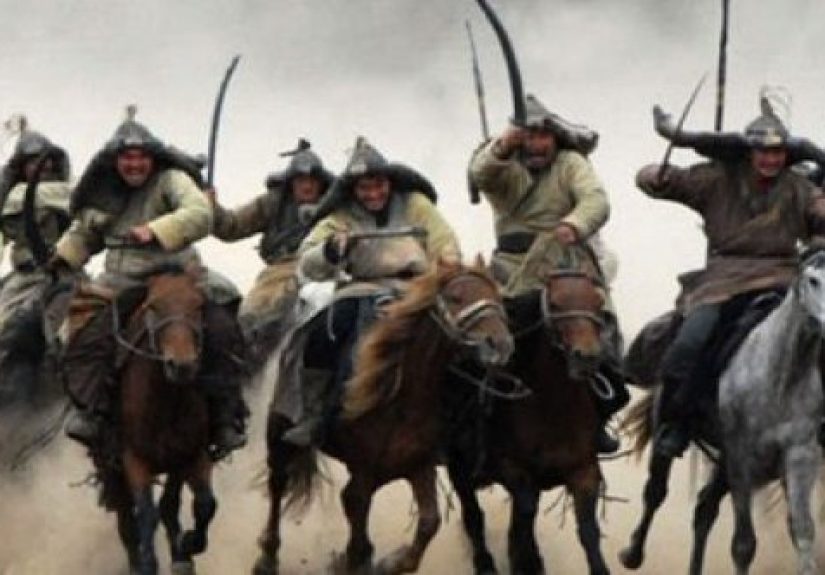
Mongol forces became legendary not just for riding skills, but for organization. They used strict discipline and structured units
that helped coordinate large numbers of fighters across chaotic terrain. Add mobilityfast cavalry movement, rapid shifts in direction,
and flexible tacticsand you get an army built for surprise, pursuit, and pressure.
The result wasn’t “unstoppable,” but it was adaptable. Mongol leaders also made use of intelligence and planning, learning about targets
and exploiting weaknesses. Their battlefield reputation wasn’t only about bravery; it was about systemshow the army communicated, moved,
and executed strategy at speed.
Fact #7: They Absorbed Technology and Expertise From Everywhere
The Mongol Empire was a knowledge magnetsometimes forcefully, sometimes strategically.
The Mongols didn’t operate like a single-culture bubble. As they expanded, they incorporated specialistsengineers, scribes,
administrators, artisansinto imperial projects. This blending mattered in warfare (especially siege capabilities) and in governance,
where conquered regions often had bureaucratic tools the Mongols could use to manage resources and people.
In other words, the Mongols weren’t only “destroyers.” They were also empire-builders who understood that conquering is one thing,
but running what you conquer is another. Their willingness to adopt useful methods helped them expand quickly and maintain
controlat least for a time.
Fact #8: Mongol Women Could Hold Serious Power
Nomadic life demanded competenceand sometimes that reshaped authority.
In Mongol society, women could play vital roles in managing households, property, and logisticsespecially during campaigns when men
were away. Across Mongol history, some women wielded political influence, served as regents, and helped steer major decisions.
Their visibility in power wasn’t constant everywhere, and it changed over time, but it’s a key reminder that “medieval women had no influence”
is a lazy myth that collapses under real examples.
Understanding women’s roles also helps explain how Mongol life functioned: survival on the steppe required coordination and resilience,
not just combat skills. The empire’s “engine room” included families, networks, and leaders who kept things running behind the scenes.
Fact #9: The Empire Was Split Into Major Khanates (It Wasn’t One Giant Blob Forever)
Huge empires don’t stay simple; they get… complicated.
After the initial explosive expansion, the Mongol world developed into major branches commonly described as separate khanates.
This included a central realm linked to the Great Khan (with a major seat in what became Beijing during the Yuan period), alongside
other powerful Mongol-ruled regions in Central Asia, parts of Russia and Eastern Europe, and Iran.
This matters because it explains why “the Mongols” aren’t a single uniform story. Policies could differ by region. Local cultures shaped rule.
Alliances shifted. Sometimes Mongol-led states cooperated; sometimes they competed. It’s a reminder that empires are rarely monoliths for long.
Fact #10: Their Legacy Includes Global Exchange (and Some Wild Human Footnotes)
From art and diplomacy to genetics, the Mongol era echoes in strange places.
The Mongol period helped connect East and West in ways that influenced diplomacy, commerce, and culture. Travelers recorded observations,
artisans carried techniques, and courts interacted across distances that once seemed practically unbridgeable. Museums today highlight how Mongol-era
exchange shaped art, textiles, and objects that blended multiple cultural traditions.
And then there’s the famous modern “genetic legacy” story: research has suggested that a Y-chromosome lineage possibly linked to
Genghis Khan spread widely across regions once under Mongol control, popularized in media as “millions of descendants.” It’s often
discussed carefully (genetics isn’t a time machine with perfect labels), but the headline illustrates something real: Mongol history
wasn’t just a political eventit was a demographic and cultural force that left marks long after borders changed.
What These Facts About the Mongols Really Add Up To
More than conquest: a blueprint for connectivity (with sharp edges).
If you only remember the Mongols for conquest, you’re missing the bigger picture. The Mongol Empire shows how power can move through
systems: communications like the Yam, administrative choices that rewarded performance, and policies that kept diverse populations
from constantly erupting into revolt. The same forces that made the empire formidable also made it influentialtrade networks expanded, cultural
exchange accelerated, and Eurasia became more tightly linked than it had been for centuries.
None of this erases the brutality that accompanied many conquests. History isn’t a PR campaign. But it does explain why the Mongols remain
such a gripping subject: they reshaped the world with speed, organization, and a surprisingly modern understanding that information and logistics
can be as powerful as weapons.
Experience Bonus: of “Mongols in Real Life” Inspiration
How to feel the Mongol story todaywithout needing a time machine (or a spare horse).
You don’t have to be a historianor a person who casually owns a yurtto have meaningful experiences connected to the Mongols. Start with
the easiest gateway: museums and digital collections. If you’ve ever stood in front of a single object (a textile, a metalwork piece, a weapon,
a manuscript) and suddenly felt history become physical, you’ll get why Mongol-era collections matter. They’re not just “cool old stuff.”
They show how cultures mixed across long distancespatterns traveling, techniques spreading, symbols changing meanings as they crossed borders.
Looking at Mongol-era art is basically watching globalization happen in slow motion, with better craftsmanship than most of us can manage on a weekend.
Another experience is reading travelers’ accountscarefully, like a detective. Medieval travel writing can be dramatic, biased, and sometimes
convinced that “I saw a thing” is the same as “the thing is true.” But that’s part of the fun. When a traveler describes relay stations,
busy roads, and imperial organization, you get a sense of how shocking Mongol-scale connectivity felt to outsiders. It’s the emotional difference
between “a bunch of tribes” and “a system that can move messages across continents.” Even if you’re skeptical (good!), you’ll feel the awe behind
the descriptions.
If you want a more immersive experience, follow the Mongol story through places and landscapeseven from your couch. Watch documentaries or lectures
that emphasize geography: the steppe’s openness, the importance of horses, the challenge of supplying large moving armies, the way climate and pasture
shape daily life. Then compare that to dense agricultural regions the Mongols ruled. You’ll start to understand why Mongol leadership valued mobility,
why communication systems mattered, and why governing a settled city required different tools than governing on the move. It turns “they conquered a lot”
into “they solved massive logistical puzzles repeatedly.”
For a personal, modern connection, try food and music. Mongolian cuisine reflects nomadic realitiespractical, hearty, built around what travels well.
Listening to Mongolian traditional music styles can also be an experience in atmosphere: expansive, echoing, built for wide skies. You’re not “becoming
Mongol” by enjoying it (please don’t start introducing yourself as a khan at school), but you can respect how culture expresses environment.
The steppe shapes sound, taste, rhythm, and daily routinesand those details help the Mongol story feel human, not just imperial.
Finally, one of the best “Mongols-related experiences” is a mindset shift: read a modern book or take a course module that treats the Mongols as
empire-builders, not cartoon villains. When you see them as organizers of trade, users of diplomacy, builders of communication networks, and pragmatic
rulers navigating diversity, you don’t excuse violenceyou simply understand the full mechanism. And that’s the real upgrade: turning history from a meme
into a multidimensional story you can actually learn from.