Table of Contents >> Show >> Hide
- Why party games got so weird back then
- The 10 awkward early-1900s party games (and why they’d break your group chat)
- What these games reveal about early-1900s social life
- How to host a vintage party-game night without the cringe
- Modern Playtest: What It’s Like to Try These Games Today (Experience + Lessons)
- SEO tags
Before playlists, streaming, and doomscrolling, a “good party” didn’t come with a speakerit came with rules. Specifically, rules that asked polite adults
to hop around a yard holding vegetables, wear mittens through dinner, or get beaned in the ankles by a spinning leather shoe. If that sounds like a group therapy
intake form, congratulations: you’ve just met the strange charm of early-1900s party games.
Listverse’s roundup of awkward party games (pulled from a 1938 compilation of “wholesome” games) reads like someone dared a roomful of hosts to invent fun using
only household objects, mild humiliation, and the unshakable confidence of an era that believed entertainment should build characterpreferably by testing your
ability to button baby clothes while wearing oven mitts.
Why party games got so weird back then
Parlor games weren’t just fillerthey were the main event. The “parlor” (or living room’s formal ancestor) was designed for conversation and face-to-face
entertaining, which meant games leaned heavily on observation, performance, wordplay, and social nerves. With fewer distractions, hosts had a powerful incentive:
keep the room buzzing, keep the guests mingling, and keep awkward silences from settling in like a permanent houseguest.
Many of these games also had a not-so-secret second job: forcing people to interact. They created harmless reasons to talk to strangers, compete in teams, show
off a unique object, or reveal personality under pressure. Of course, some also created excellent reasons to leave early and “check on the babysitter.”
The 10 awkward early-1900s party games (and why they’d break your group chat)
10. Colonial Mitten
The premise is simple: guests arrive and immediately get stuffed into thick mittens, fingers squished together with only thumbs semi-functional. Then they’re
assigned tasks that are objectively normal… until you try them with mittens: buttoning baby clothes, picking up tiny grains of rice, and other fine-motor skills
designed to remind everyone that humans are basically elegant raccoons who need opposable fingers to thrive.
The real twist? Dinner happens while still mittened, ideally featuring foods that are hard to eat neatly. This game isn’t just awkwardit’s a full-body
commitment to chaos. Modern-friendly upgrade: swap “hardest foods possible” for finger-safe snacks and make the tasks silly-but-safe
(wrapping a gift, stacking marshmallows, or “texting” a sentence on a fake phone drawn on paper).
9. Vegetable Hop
Imagine an outdoor obstacle course where the obstacles are… pumpkins. The host scatters vegetables of different sizes around the yard. Guests hop on one foot,
collecting as many vegetables as they can carry without dropping them. Drop one? You drop them all and start over. It’s part scavenger hunt, part balance test,
part accidental slapstick.
Why it’s awkward: you learn very quickly who has ankles of steel and who is one onion away from meeting the grass. Modern twist:
use foam balls or plush “veggies,” and keep score with quick rounds so nobody ends the night with a souvenir limp.
8. Dogs and Cats
Before guests arrive, the host hides a full deck of playing cards around the houseunder cushions, inside drawers, tucked in magazines. Then everyone splits into
two teams: Dogs hunt black cards; Cats hunt red cards. Here’s the kicker: when someone finds a card, they can’t just grab it. Dogs must bark loudly and freeze
in place until their captain retrieves the card. Cats must meow and wait for their captain too.
Why it’s awkward: grown adults barking into a sofa is a bold lifestyle choice. Modern twist: replace barking/meowing with a funny
“signal phrase” (“Captain, I’ve struck treasure!”) to save vocal cords and dignityslightly.
7. Curio Party
This one is basically an adult “show-and-tell.” Guests bring a strange, precious, or meaningful objecta curiosity, a souvenir, a family oddity, an inexplicable
gadget. Everything goes on a table, and each person explains what their item is, where it came from, and why they kept it.
Why it’s awkward: it can turn into a heartfelt story… or a sudden realization that you brought “a rock I found once” to a room full of people
holding antiques. Modern twist: set categories (“weirdest thrift find,” “most useless kitchen tool,” “sentimental item”) so the vibe stays playful
and nobody feels like they need to produce museum-quality artifacts.
6. Sweet Spelling
The host writes letters on all sides of four sugar cubes (skipping the trickiest letters). Guests toss them like dice and try to form a real word from whatever
letters land face-up. If there’s a dispute, a dictionary settles it. The prize? The sugar cubes themselvesnow ink-marked and slowly disintegrating, like the
dignity of the player who just rolled four vowels and insisted it “counts.”
Why it’s awkward: it’s word-nerd gambling with edible evidence. Modern twist: use letter dice or paper squares instead of inked
sugar, and award candy or bragging rights rather than “congrats, enjoy your inky snacks.”
5. Kitchen Sounds
Guests stand outside the kitchen while the host performs noisy tasks behind a screenmixing, sweeping, shelling peanuts, chopping, stirring. Players listen and
guess the sound. Correct guesses earn points, and the host moves to the next sound. Think of it as “Name That Tune,” except the tune is “someone aggressively
whisking something you will probably eat later.”
Why it’s awkward: it turns ordinary domestic noise into high-stakes competition. Modern twist: make it a fast-paced team game,
and include silly “decoy” sounds (crinkling foil, shaking pasta in a jar) to keep it unpredictable.
4. Peanut Hunt
Picture an indoor Easter egg hunt, but the eggs are peanuts. The host hides peanuts around the housebehind books, in vases, under cushionsand guests search to
collect the most. Afterwards, everyone eats their haul, which is either delightfully thrifty or mildly alarming depending on how you feel about “floor peanuts.”
Why it’s awkward: it’s competitive scavenging plus snack logistics. Modern twist: use wrapped candy, tokens, or plastic eggs
redeemable for treatsespecially if allergies are in the mix.
3. Swinging Shoe
The host ties a rope to an old shoe and spins it in a circle from the center while guests form a ring around them. As the shoe swings along the ground, players
must jump to avoid getting whacked in the ankles. Early-1900s footwear was often heavy leather, which means this game lives somewhere between “playful”
and “unexpected low-budget gladiator training.”
Why it’s awkward: someone is always one mistimed hop away from being taken out by a flying boot. Modern twist: use a soft object
(like a plush toy) and keep the swing low and slow. Or turn it into a gentle “jump rope circle” for a safer throwback vibe.
2. Hobo Party
This one is the clearest reminder that “fun” isn’t automatically kind. The concept was to dress in shabby clothing, decorate with junk, and play games themed
around homelessnesssometimes including a risky “jump on the freight car” musical-chairs variant using wooden crates. Some versions even pushed guests into a
staged “begging” scenario with neighbors who were warned in advance.
Why it’s awkward: because it’s not just awkwardit’s mean-spirited. If you’re hosting a vintage night today, skip this entirely. Better
modern replacement: do a “Great Depression-era potluck” that focuses on history respectfully (simple recipes, music, trivia) and pair it with a donation
drive for a local shelter or food bank.
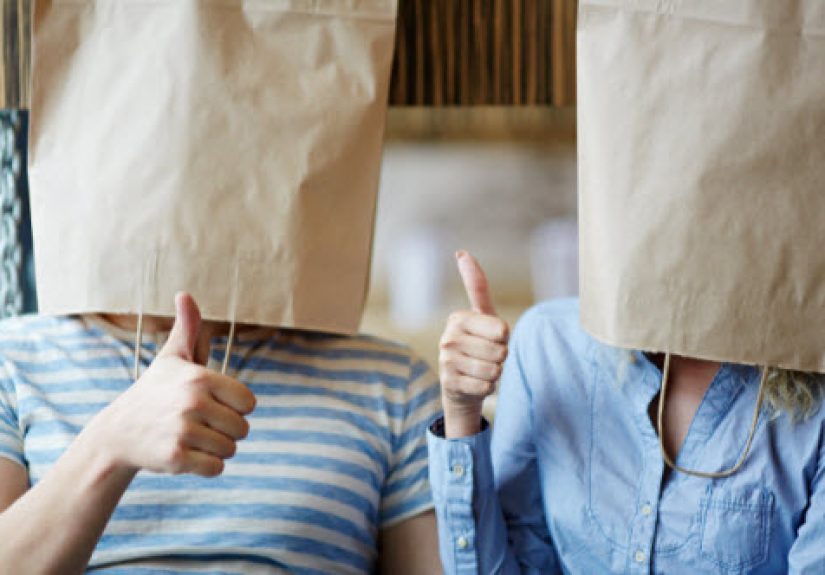
1. Paper Sack Party
Guests arrive and receive a paper bag with eye and mouth holes cut out, which they wear over their head. Each person also wears a large number on their chest and
carries paper and pencil. The goal is to mingle and identify which friend is behind each bag by voice, mannerisms, and conversationthen write down your guesses.
Whoever correctly identifies the most people wins.
Why it’s awkward: because you’re basically speed-socializing in a low-oxygen disguise. It’s also a game that needs extra care today“paper bag”
has other historical associations, so don’t frame it as a “paper bag party” theme. Modern twist: use comfortable masquerade masks or fun numbered
name tags with hidden identities (like “Secret Guest” cards) to capture the mystery without the baggage.
What these games reveal about early-1900s social life
The most surprising part isn’t the odd rulesit’s the social engineering. These games turn a roomful of acquaintances into teammates, rivals, storytellers, and
comedians. They also show what earlier hosts valued: participation over passivity, laughter over polish, and “memorable” over “comfortable.”
They also expose blind spots. Some ideas leaned into embarrassment as entertainment, and at least one used poverty as a punchline. Reading these now is a useful
reminder: traditions are not automatically timeless, but the human urge to connectthrough play, stories, and shared ridiculousnessabsolutely is.
How to host a vintage party-game night without the cringe
- Lead with consent: tell guests what kinds of games you’re doing so nobody feels ambushed by surprise ankle hazards.
- Prioritize safety: swap hard/heavy objects for soft ones, keep outdoor games on stable ground, and avoid “crate jumping” entirely.
- Keep it inclusive: offer seated options and alternatives for mobility, sensory needs, or social comfort.
- Upgrade the prizes: choose silly awards (tiny trophies, candy, “Most Determined Hopper”) instead of anything edible that touched ink.
- Skip harmful themes: if a game depends on mocking a vulnerable group, it doesn’t deserve a reboot.
Modern Playtest: What It’s Like to Try These Games Today (Experience + Lessons)
The first thing you notice when you try early-1900s party games in a modern living room is how quickly they expose your “social settings.” In 2025, we’re used
to opting out quietlychecking a phone, refilling a drink, drifting toward the snack table like it’s a witness protection program. These games don’t let you
disappear. They demand participation with the relentless cheer of a golden retriever holding a tennis ball.
Colonial Mitten is the quickest path to instant camaraderie because everyone looks equally ridiculous. The room goes from polite to hysterical the
moment someone tries to pick up a single grain of rice and realizes their hands are now decorative. It’s also weirdly wholesome: people start coaching each other,
celebrating tiny victories (“YOU BUTTONED IT! LEGEND!”), and laughing at themselves instead of each other. The only downside is snack managementif you serve
anything saucy, you’ll be laundering mittens like you’re running a tiny, chaotic hotel.
Dogs and Cats works best when you replace barking with a less throat-destroying signal. Still, the “freeze and call your captain” rule creates
instant comedy, because it turns every discovery into a dramatic statue pose. Someone will inevitably get stuck half-under a sofa, announcing their success like a
theater actor trapped in furniture. It also reveals leadership styles: some captains sprint like Olympic athletes; others saunter over as if responding to a minor
email.
Kitchen Sounds is shockingly fun if you keep it fast. The host feels like a magician backstage, and guests become amateur audio engineers:
“That’s not whiskingthat’s the sound of a spoon in a ceramic mug!” The game escalates when you add decoys (shaking a bag of pasta, tapping a wooden cutting
board, crinkling parchment). The best part is that it’s accessible: people who don’t want to run around can still dominate through pure listening skills.
Sweet Spelling is where confidence goes to get humbled. Everyone starts off acting like they’ll casually roll “C-A-K-E” on the first toss. Then
you get four letters that look like a typo, and suddenly the room is negotiating the existence of words that sound like medieval illnesses. If you play it with
real sugar cubes, you’ll also learn that ink + sugar + humidity equals “mystery smudge,” which is not a flavor profile anyone requested. Use letter tiles and you
keep the fun without the edible regret.
Swinging Shoe is the one you test carefully, because the line between “adorable throwback” and “why is there an ice pack on your shin” is thin.
With a soft object and a gentle swing, it becomes a goofy circle-jump game that even skeptics enjoy. With anything heavy, it becomes an accident report. The
modern lesson: nostalgia is cute, but physics is undefeated.
The biggest surprise, though, is how these games create the exact thing we claim to want at parties: real interaction. No one is stuck making small talk about the
weather for 20 minutes because they’re busy collaborating, guessing, performing, or cheering. The awkwardness doesn’t disappearit just changes shape. It becomes
shared awkwardness, which is the kind that turns into inside jokes the next day.
If you try any of them, start with the ones that are “awkward in a goofy way,” not “awkward in a harmful way.” The past can be entertaining, but we don’t have to
import every outdated idea along with the fun. Keep the laughter, keep the creativity, keep the togethernessand leave the cruelty on the cutting-room floor.
Early-1900s party games may be awkward, but they’re also a reminder: humans have always been desperate to connect, and we’ll try almost anything to make a roomful
of people laugh together. Even if it involves hopping while holding a pumpkin.