Table of Contents >> Show >> Hide
- Why Bullhorns Feel Fresh Right Now
- Bullhorns vs. Antlers: The Quick Difference
- 10 Favorites: The Best Ways to Use Bullhorns at Home
- 1) The Entryway Statement Pair
- 2) The Dining Room Conversation Starter
- 3) The Softened Version: Wicker or Rattan Bullhead
- 4) The Glam Twist: Painted or Metallic Horns
- 5) The Mantel Anchor in a Modern Rustic Room
- 6) The Western Gothic Accent
- 7) The Lighting Bridge: Antler-Style Chandeliers and Horn-Friendly Fixtures
- 8) The Mixed-Natural-Materials Look
- 9) The Small-Scale “Hint” for Apartments
- 10) The Faux-First, Provenance-First Approach
- How to Style Bullhorn Decor Without Making It Look Dated
- Are Bullhorns Really Replacing Antlers?
- Conclusion
- Experiences from Real Homes and Real Styling Choices (Extended Section)
For years, antlers were the unofficial mascot of rustic decorating. If a room had reclaimed wood, a stone fireplace, and a blanket you wanted to marry, chances were good there was a set of antlers somewhere nearby. But lately, a new wall statement has been stealing the spotlight: bullhorns.
And honestly? It makes sense. Bullhorn decor has a cleaner silhouette, a slightly more sculptural look, and a wider style range than many people expect. It can read ranch-house chic, modern rustic, Southwestern, Western Gothic, or even Scandinavian depending on the shape, finish, and placement. In other words, bullhorns are no longer just “cabin decor.” They’re design punctuation.
This article breaks down why bullhorn wall decor is trending, how it differs from classic antler decor, and the 10 favorite ways designers and stylish homeowners are using the look right now. We’ll also cover sourcing tips (real vs. faux), styling mistakes to avoid, and real-world design experiences that show how this trend works in everyday homes.
Why Bullhorns Feel Fresh Right Now
Design trends tend to swing like a pendulum. When a look becomes too expected, people don’t necessarily abandon the vibethey just refine it. That’s exactly what’s happening here. Antlers still work, but bullhorns feel like a sharper, more graphic update.
The rise of “modern Western,” “rich ranch,” and “Western Gothic” styles has also helped. These aesthetics keep the warmth and natural materials of traditional rustic interiors, but they dial up the polish: richer textures, moodier colors, more restraint, and fewer obvious theme-room clichés. Bullhorns fit that mood perfectly. They reference ranch life and natural forms without always feeling literal or overly lodge-like.
There’s also a practical design reason: horns tend to create a stronger horizontal line than antlers. That makes them easier to style over a bed, mantel, console, or sofa without visually “spraying” into everything around them. Antlers are branchy and energetic; bullhorns are bold and architectural. Both are beautifulbut one definitely feels newer.
Bullhorns vs. Antlers: The Quick Difference
Before we get too deep into styling, let’s clear up a common mix-up. Horns and antlers are not the same thing. In wildlife terms, antlers are typically shed and regrown each year, while horns are a permanent structure (with one famous pronghorn exception). In decor terms, the difference is all about shape and mood.
- Antlers: Branching, intricate, woodland, traditional-lodge energy.
- Bullhorns / longhorn-style horns: Curved, graphic, ranch-inspired, sculptural, often more modern.
So if antlers are the cozy flannel shirt of wall decor, bullhorns are the tailored suede jacket.
10 Favorites: The Best Ways to Use Bullhorns at Home
1) The Entryway Statement Pair
One of the strongest uses of bullhorns is in the entryway. A pair of wall-mounted horns immediately sets a tone: warm, collected, and a little adventurous. It works especially well if your entry is otherwise simplethink plaster walls, a wood bench, and a woven runner.
Why it works: the horns act like built-in architecture. They frame the space without taking up floor room, and they make a “plain wall” look intentional in about five seconds.
2) The Dining Room Conversation Starter
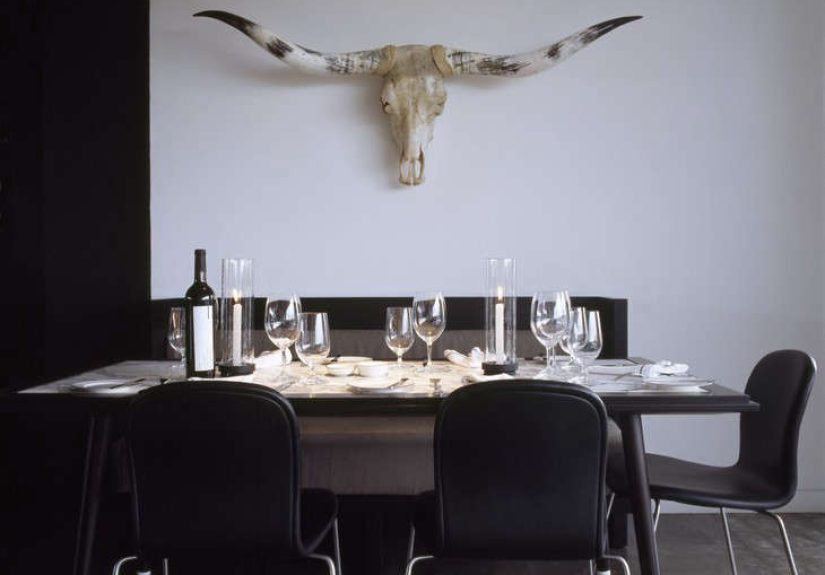
Bullhorns in a dining room are surprisingly versatile. They can lean rustic above a farmhouse table, sophisticated in a dark-painted room, or artistic in a minimalist space. Designers often use them where a traditional framed artwork would feel too predictable.
If your dining room already has strong lines (a rectangular table, straight-back chairs, a linear chandelier), curved horns add visual balance. They soften all those edges while still keeping a dramatic presence.
3) The Softened Version: Wicker or Rattan Bullhead
Not into a literal horn mount? The woven bullhead is the “I love the trend but I also own linen sheets and oat milk” versionand that’s a compliment. Wicker and rattan bullhead pieces bring the shape and personality of bullhorn decor without the visual heaviness of bone, resin, or metal.
This is a great choice for bedrooms, nurseries, or lighter interiors where a traditional horn mount might feel too intense. It also plays beautifully with coastal, boho, and Scandinavian-inspired rooms.
4) The Glam Twist: Painted or Metallic Horns
Want the ranch vibe without going full cowboy? Try a glam finish. Designers have used painted, whitewashed, or even gold-accented horn displays to make them feel more curated than rugged.
A metallic-tipped or gold-dipped horn/skull piece can look fantastic against reclaimed wood, black paint, or a textured plaster wall. The contrast creates that “high-low” look designers love: rustic form, polished finish.
5) The Mantel Anchor in a Modern Rustic Room
Mantels are where a lot of horn decor either looks amazing or looks like a theme restaurant. The secret is editing. Use one large horn piece (or a refined horn-adjacent object, like a mirror frame or sculptural mount) and keep the rest of the mantel simple.
Add just a few supporting elements: a stack of books, a ceramic vase, maybe a candle or brass object. Let the horns be the star. When every item on the mantel is trying to “say something,” the room starts yelling.
6) The Western Gothic Accent
Bullhorns shine in moody rooms. If you like the Western Gothic lookdeep paint, vintage wood, leather, old mirrors, dim lightinghorns can be the perfect finishing move. They add a rugged note that keeps the room from feeling too formal.
This is also where scale matters. A smaller pair of horns in a powder room, library, hallway, or office can feel incredibly stylish because the room is already intimate. In a compact space, one strong accent goes a long way.
7) The Lighting Bridge: Antler-Style Chandeliers and Horn-Friendly Fixtures
Okay, this one technically crosses into antler territorybut hear me out. If you’re curious about bullhorn decor but not ready to commit to a wall mount, antler-style lighting is a great “bridge” element. It brings in the natural, ranch-inspired shape language while still functioning as lighting.
Major retailers now sell faux antler and horn-inspired chandeliers in styles that range from rustic-lodge to polished transitional. This tells you something important: the look has gone mainstream, and it’s being redesigned for modern homesnot just cabins in the woods.
8) The Mixed-Natural-Materials Look
The most successful bullhorn rooms don’t rely on horns alone. They layer them with other natural materials: reclaimed wood, linen, leather, stone, woven fibers, aged brass, and earthy ceramics. That combination makes the room feel rich and grounded rather than novelty-driven.
In fact, if your room already has natural texture (wood beams, a stone fireplace, warm white walls), bullhorns often look like they belong thereeven if you’d never considered them before.
9) The Small-Scale “Hint” for Apartments
You do not need a ranch house, a cabin, or a zip code with more horses than people to use this trend. Apartment-friendly versions work too: small horn sculptures, horn-shaped wall objects, mini mounts, or artwork featuring horn silhouettes.
The goal is a nod, not a costume. A tiny horn accent above a bookshelf or in a styled vignette can give you the same mood without dominating a small room.
10) The Faux-First, Provenance-First Approach
This is the smartest favorite on the list. Whether you choose real or faux, be intentional. A lot of homeowners and designers prefer faux versions (resin, wicker, carved wood, or composite materials), especially if they want the shape without the ethical concerns. Others choose pieces made from naturally shed antlers for lighting or decor.
The key is transparency and restraint. If you’re buying a statement piece, ask what it’s made of, how it was sourced, and how heavy it is (your drywall would like a heads-up). Style-wise, a well-made faux piece often looks better than a cheap “real” oneand it’s easier to integrate into a modern space.
How to Style Bullhorn Decor Without Making It Look Dated
Keep the Palette Tight
Bullhorns look best when the room palette is controlled. Neutrals, deep earth tones, black, warm whites, and muted greens all work beautifully. If everything else in the room is bright and busy, the horns can feel random.
Mix Eras and Textures
A horn piece paired with only rustic furniture can feel one-note. Add one or two modern elementslike a sleek lamp, contemporary art, or a tailored sofaand the whole room looks more intentional. This “mix, don’t match” approach is a major reason newer Western-inspired rooms feel elevated.
Respect Scale
Large longhorn-style pieces need breathing room. If the horns are wide, keep nearby wall decor minimal. In smaller rooms, choose compact horn objects or a woven bullhead. Oversized horns in a tiny hallway can turn “statement” into “jump scare.”
Use Horns as Art, Not Theme Decor
The difference between stylish and cheesy is usually quantity. One excellent bullhorn piece can look sculptural and cool. Five horn-themed pieces in the same room starts to look like the room is auditioning for a steakhouse franchise.
Are Bullhorns Really Replacing Antlers?
Not exactly. Antlers aren’t “out”they’ve just become more context-specific. They still look great in cabins, mountain homes, and layered rustic interiors. But bullhorns are becoming the go-to choice for people who want a Western or nature-inspired touch that feels cleaner, more graphic, and a little less expected.
Think of it this way: antlers are classic. Bullhorns are the remix.
Conclusion
If you’ve been feeling like antler decor is a little too familiar, bullhorns may be the update your space needs. They bring shape, texture, and personality to a room, and they work across more styles than most people realizefrom Scandinavian and boho to modern rustic and Western Gothic.
The best part? You don’t need a sprawling ranch or a dramatic log cabin to pull it off. Start small, choose a quality piece, and style it with restraint. Whether you go faux, woven, metallic, or classic, bullhorn decor can deliver that “collected, cozy, and a little bold” energy that makes a room memorable.
Experiences from Real Homes and Real Styling Choices (Extended Section)
One of the most useful things about this trend is that it’s not just living in glossy magazine fantasy rooms. You can see horn and antler-adjacent styling choices working in all kinds of spaces: cabins, family homes, mountain houses, boutique inns, and modern renovations. And the pattern is pretty consistent. The rooms that feel best are the ones that treat horn decor as part of a larger material story, not as a gimmick.
In real cabin makeovers, for example, horn decor often appears alongside practical, warm elements: wood paneling, chunky mantels, vintage furniture, and simple neutral textiles. That combination matters. When a homeowner adds antlers or horns to a room that already has warmth and texture, the piece feels like a natural extension of the architecture. But when the room is empty or disconnectedsay, a generic gray wall with no other organic materialsthe horn piece can feel pasted on.
Another experience that shows up again and again is “refinement through contrast.” In several styled interiors, the horn or antler element is paired with something soft, polished, or modern: a clean-lined sofa, a painted wall, a contemporary coffee table, or brass lighting. That contrast keeps the look from feeling heavy. It’s basically the decorating equivalent of wearing boots with a tailored coat. The rugged piece works because the rest of the outfit is edited.
There’s also a strong lesson around scale. In smaller rooms, designers and homeowners tend to use one horn motif and stop there. Maybe it’s a single wall mount, a chandelier, or a decorative object on a shelf. In larger rooms, they can go biggerbut even then, they usually anchor the display with a fireplace, a mantel, or a large wall so it doesn’t float awkwardly. When people overdo it, it’s almost always a scale problem: too many small horn objects scattered around, or one giant piece squeezed into a space that can’t support it.
A more subtle but important experience is how often people choose faux versions now. Woven bullheads, faux antler chandeliers, and resin interpretations show up frequently in stylish homes because they deliver the silhouette without forcing the room into a literal hunting-lodge identity. For a lot of households, that’s the sweet spot. They want the sculptural look and rustic warmth, but they also want the room to feel relaxed, modern, and family-friendly.
Finally, the biggest real-world takeaway: horn decor works best when it reflects the personality of the home. In a mountain house, it can feel heritage-driven. In a city apartment, it reads as unexpected art. In a moody Western-inspired library, it adds drama. In a light Scandinavian bedroom, a wicker bullhead can feel playful and quiet. Same idea, different expression.
So if you’re experimenting with the “bullhorns vs. antlers” question, don’t think in trend terms alone. Think in room terms. What does your space already say? Bullhorns look best when they finish the sentencenot when they try to write the whole paragraph by themselves.