Table of Contents >> Show >> Hide
- How to Choose Spring-Flowering Trees and Shrubs
- 10 Flowering Trees and Shrubs for Spring Landscaping
- 1. Flowering Dogwood (Cornus florida)
- 2. Eastern Redbud (Cercis canadensis)
- 3. Magnolia (Star or Saucer Types)
- 4. Flowering Crabapple (Malus spp.)
- 5. Serviceberry (Amelanchier spp.)
- 6. Common Lilac (Syringa vulgaris)
- 7. Forsythia (Forsythia spp.)
- 8. Azaleas (Rhododendron spp.)
- 9. Viburnum (Various Species)
- 10. Flowering Cherry (Prunus spp.)
- Care Tips for Spring-Flowering Trees and Shrubs
- Conclusion: Build a Spring Landscape That Actually Lasts
- Real-Life Experiences: Making the Most of Spring-Flowering Trees and Shrubs
If winter has your yard looking like a monochrome crime scene (victim: color), spring-flowering trees and shrubs are your alibi. With the right mix of blossoms, fragrance, and structure, you can turn a lifeless lawn into the most cheerful spot on the blockwithout needing a full landscaping crew or a botany degree.
In this guide, we’ll walk through 10 of the best flowering trees and shrubs for spring landscaping, how to use them in real yards (not just magazine photos), and simple care tips so they’ll keep blooming year after year. Think of this as your practical, slightly chatty roadmap to spring color.
How to Choose Spring-Flowering Trees and Shrubs
Before you fall in love with a pretty bloom at the garden center, it helps to think like a landscape designer for five minutes. When choosing flowering trees and shrubs for spring, keep these factors in mind:
- USDA hardiness zone: Always check whether a plant can handle your winter temperatures. Many classics like dogwood, redbud, and magnolia do well across a wide range of zones in the U.S.
- Sun and soil: Most spring-blooming trees and shrubs want full sun (6+ hours) to perform their best, though somelike azaleas and many viburnumstolerate or prefer partial shade.
- Mature size: That “cute little tree” in a 5-gallon pot might become a 25-foot giant. Look for height and spread at maturity so you don’t end up pruning it away from your roof or power lines.
- Bloom time and color: Mix early, mid-, and late-spring bloomers so your yard doesn’t flash and fade in two weeks. Aim for a palette that works with your house color and other plants.
- Maintenance level: Some shrubs (looking at you, forsythia) will put up with almost anything. Others, like some azaleas, appreciate more careful soil prep and watering.
- Wildlife and allergy considerations: Many flowering trees and shrubs attract pollinators and birds. That’s usually a bonus, but consider proximity to patios, driveways, or allergy-prone family members.
With those basics covered, let’s look at 10 flowering trees and shrubs that consistently show up on expert lists for stunning spring landscaping.
10 Flowering Trees and Shrubs for Spring Landscaping
1. Flowering Dogwood (Cornus florida)
Flowering dogwood might be the poster child for spring in many parts of the United States. Its horizontal branching gives it a naturally layered, graceful silhouette, and the “flowers” you see are actually showy bracts in white, pink, or soft blush tones.
- Why it’s great: Early to mid-spring bloom, beautiful fall foliage in red or purple, and small red fruits that support birds later in the season.
- Best use in the landscape: As a specimen tree near the front yard, along a driveway, or anchoring a mixed shrub border. It plays especially well with shade-tolerant shrubs beneath its canopy.
- Growing conditions: Full sun to partial shade and well-drained, slightly acidic soil. Avoid compacted, soggy areas.
Design tip: Underplant dogwood with spring bulbs and shade-loving perennials so that when the tree finishes blooming, the lower layer keeps the color show going.
2. Eastern Redbud (Cercis canadensis)
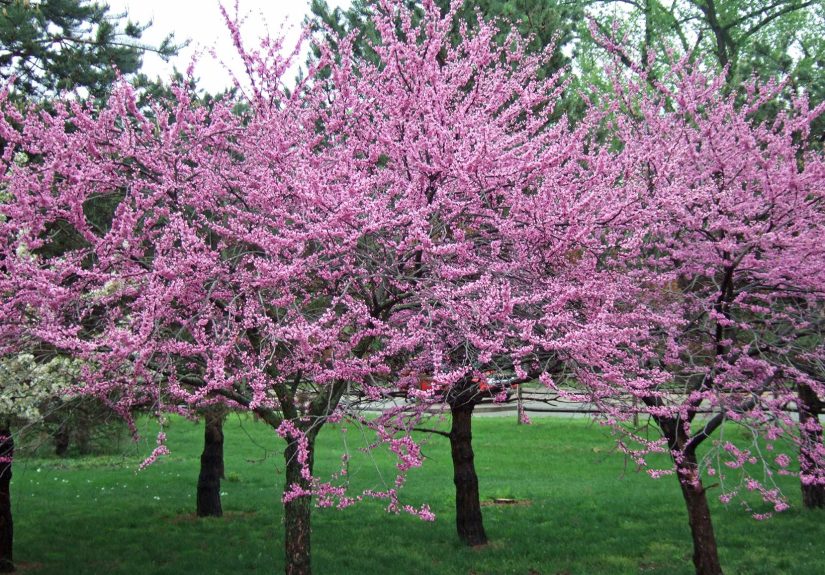
If you’ve ever driven down a road lined with trees covered in magenta-pink blossoms hugging every branch, you’ve probably met the eastern redbud. It’s one of the most striking early spring flowering trees, with color so bold it looks almost unreal.
- Why it’s great: Masses of small pea-like flowers bloom directly on the stems and trunk before leaves emerge, creating an electric cloud of color. Heart-shaped leaves follow and often turn golden or yellow in fall.
- Best use in the landscape: Perfect as a focal point in a small yard or as a grouping of two or three trees in a larger landscape. Many dwarf and weeping varieties are available for tight spaces.
- Growing conditions: Full sun to light shade in average, well-drained soil. Once established, redbuds are relatively low-maintenance.
Design tip: Pair redbud with neutral-toned siding or brickits intense spring color looks fantastic against gray, white, or charcoal exteriors.
3. Magnolia (Star or Saucer Types)
Magnolias are the drama queens of early spring landscapingin the best way. Deciduous varieties like star magnolia and saucer magnolia explode with large, fragrant blossoms before leaves emerge, sometimes as early as late winter in milder climates.
- Why it’s great: Big, showy flowers in white, pink, or purple that signal spring has officially arrived. Many cultivars offer excellent cold hardiness.
- Best use in the landscape: As a standalone specimen near a front entry or in a prominent bed. Their architectural branching and large blossoms command attention.
- Growing conditions: Full sun to light shade and fertile, well-drained soil. Protect from harsh, drying winds.
Design tip: Because magnolia petals can drop in large numbers, avoid planting directly over patios or pools where cleanup will bug you.
4. Flowering Crabapple (Malus spp.)
Flowering crabapples pack an impressive amount of beauty into one small tree: spring blossoms, summer foliage, and fall or winter fruit that often feeds birds. Modern cultivars are far more disease-resistant than older types, making them a smart choice for today’s yards.
- Why it’s great: Billowing pink, red, or white blossoms in mid-spring; colorful small fruits; and excellent wildlife value.
- Best use in the landscape: As a centerpiece in the lawn, lining a driveway, or near a front walk. Dwarf varieties work in smaller spaces or even large containers.
- Growing conditions: Full sun and well-drained soil. Choose disease-resistant cultivars for better performance and fewer spray needs.
Design tip: If you want a tidier look, pick cultivars whose fruits persist on the tree into winter rather than dropping all at once on your sidewalk.
5. Serviceberry (Amelanchier spp.)
Serviceberry doesn’t get as much press as dogwood or cherry, but it absolutely deserves a spot in a spring landscape. It offers four-season interest: white spring flowers, edible berries, great fall color, and attractive bark for winter.
- Why it’s great: Early white blossoms, berries loved by birds (and tasty for humans in jams or baked goods), and fiery orange or red fall foliage.
- Best use in the landscape: Works as a small multi-stem tree or large shrub, ideal for naturalized plantings, woodland edges, or as a transition between lawn and wilder areas.
- Growing conditions: Full sun to part shade with moist, well-drained soil. Many native species are well-adapted to North American climates.
Design tip: Plant serviceberry where you can see it from the kitchen windowyou’ll enjoy spring flowers, then get a front-row seat to the bird buffet later.
6. Common Lilac (Syringa vulgaris)
One whiff of lilac and you know it’s spring. These classic flowering shrubs are beloved for their clusters of purple, pink, or white blossoms and unforgettable fragrance that fills the yard on cool May mornings.
- Why it’s great: Strong fragrance, classic cottage-garden charm, and long-lived shrubs that can be passed down through generations.
- Best use in the landscape: As a backdrop in borders, along property lines, or in a dedicated “scent garden.” They make excellent informal hedges.
- Growing conditions: Full sun and well-drained soil are key. Lilacs dislike soggy conditions and prefer cooler climates.
Design tip: Plant lilacs where breezes can carry their fragrance toward windows, porches, or outdoor seating areas.
7. Forsythia (Forsythia spp.)
If you want the earliest possible hit of sunshine in your yard, plant forsythia. These shrubs explode in bright yellow flowers on bare stems, often before the grass has even turned green.
- Why it’s great: Extremely reliable, cold-hardy, and tolerant of a wide range of soils. It’s one of the easiest spring-flowering shrubs to grow.
- Best use in the landscape: As a mass planting along fences or slopes, or as a loose hedge. It’s less ideal as a tight, clipped foundation shrub.
- Growing conditions: Full sun for best bloom, but it will tolerate light shade. Average soil is usually fine.
Design tip: Give forsythia enough space to arch naturally. Shearing it into perfect boxes is like putting a tuxedo on a golden retrievertechnically possible but deeply wrong.
8. Azaleas (Rhododendron spp.)
Azaleas are the paintbox of spring. Their vivid blooms in pink, red, coral, white, or bi-color can turn a shady corner into the best-looking part of the yard.
- Why it’s great: Massive color impact in a compact size, with options for both evergreen and deciduous varieties. Some reblooming types offer flowers beyond spring.
- Best use in the landscape: Ideal for foundation plantings, under tall pines, or along woodland edges where they get dappled shade.
- Growing conditions: Prefer acidic, well-drained soil rich in organic matter, and protection from harsh afternoon sun in hotter climates.
Design tip: Pair azaleas with hostas, ferns, and heucheras for a layered, shade-friendly, high-impact spring display.
9. Viburnum (Various Species)
Viburnums are the quiet overachievers of the shrub world. Many species offer fragrant spring blooms, followed by berries and excellent fall color. Some have snowball-like clusters, while others feature flat-topped lacecap-style flowers.
- Why it’s great: Long bloom season for certain species, attractive fruit that feeds birds, and strong structure that looks good even when not in bloom.
- Best use in the landscape: As specimen shrubs, informal hedges, or backbone plants in mixed borders.
- Growing conditions: Many viburnums tolerate full sun to part shade and a range of soils, making them versatile choices.
Design tip: Choose cultivars with colorful berries and fall foliage to get the most multi-season value from each plant.
10. Flowering Cherry (Prunus spp.)
Flowering cherries are the trees that make people pull over and take photos. Their clouds of pink or white blossoms create a soft, romantic look that screams “spring has arrived!”
- Why it’s great: Spectacular bloom display, often with graceful branching and, in some varieties, attractive peeling bark.
- Best use in the landscape: As focal points in front yards, near patios, or as a small grove if you have the space.
- Growing conditions: Full sun and well-drained soil. Many flowering cherries prefer protection from strong winds and benefit from regular watering during dry spells.
Design tip: Because flowering cherries can be prone to certain diseases and pests, choose disease-resistant cultivars recommended for your region and keep them mulched and well-watered.
Care Tips for Spring-Flowering Trees and Shrubs
Getting the right plant in the right place is half the battle. The other half is basic care. The good news: you don’t need to babysit these plants if you start them off correctly.
1. Planting Time
In many parts of the U.S., fall is one of the best times to plant trees and shrubs for strong spring performance. Cooler air and still-warm soil encourage root growth with less stress, so your spring-blooming dogwoods, redbuds, lilacs, and viburnums are ready to put on a show when warm weather arrives.
2. Watering and Mulching
Water deeply but infrequently to encourage deep roots. Newly planted trees and shrubs typically need consistent moisture for the first year or two. A 2–3 inch layer of mulch (kept a few inches away from the trunk) helps conserve moisture and moderate soil temperature.
3. Fertilizing
Most spring-flowering trees and shrubs don’t need heavy feeding. A balanced, slow-release fertilizer or a top-dressing of compost in early spring is usually enough, especially if your soil is reasonably healthy.
4. Pruning for More Blooms
Timing matters. Spring-flowering trees and shrubs generally bloom on “old wood,” meaning flower buds were formed the previous year. For plants like lilac, forsythia, azalea, viburnum, dogwood, and redbud, the safest pruning window is right after flowering finishes. Waiting until late summer, fall, or winter often means cutting off next year’s blooms.
Stick to three basic pruning goals: remove dead or diseased wood, thin out crossing or crowded branches, and gently shape the plant. Skip the severe “meatball” haircutit stresses plants and ruins their natural habit.
Conclusion: Build a Spring Landscape That Actually Lasts
Spring doesn’t have to be a two-week fireworks show followed by months of green boredom. By mixing flowering trees like dogwood, redbud, magnolia, crabapple, serviceberry, and cherry with reliable shrubs such as lilac, forsythia, azalea, and viburnum, you can create a layered spring landscape that looks intentional, not accidental.
Think about bloom time, color combinations, plant size, and how each plant will look in other seasons. Add mulch, water wisely, prune at the right time, and your spring garden will get better every year. Your neighbors may pretend not to notice, but they’ll definitely be zooming in on your yard from across the street.
SEO Summary
sapo: Want your yard to shout “spring!” instead of whispering “I forgot to plan ahead”? These 10 flowering trees and shrubs deliver serious color, fragrance, and curb appeal from the first warm days of the season. From iconic dogwoods and redbuds to lilacs, azaleas, and viburnums, we break down how each plant performs, where it fits best in your yard, and the simple care steps that keep the blooms coming year after year. Use this guide as your blueprint for building a spring landscape that’s beautiful, low-stress, and guaranteed to turn heads.
Real-Life Experiences: Making the Most of Spring-Flowering Trees and Shrubs
Beyond the plant tags and pretty photos, there’s the reality of living with these trees and shrubs season after season. Here are some experience-based tips and scenarios to help you make smarter choicesand avoid a few common headaches.
1. Small Yard? Prioritize Multi-Taskers
If your yard is on the smaller side, you can’t afford “one-trick” plants that only look good for a couple of weeks. That’s where serviceberry, crabapple, and certain viburnums really shine. They bloom in spring, feed birds with their fruit, and show off great fall color. In a tiny front yard, one well-chosen tree with all-season interest will outperform three random shrubs that only look impressive in April.
Consider a compact serviceberry or dwarf crabapple planted near the front walkway. In spring, you get blossoms that greet you every time you come home. In summer, birds stop by for the berries. In fall, the foliage glows in orange and red tones. That’s a lot of value from a single plant.
2. Don’t Underestimate Fragrance
Many people choose spring trees and shrubs based purely on color, then later realize they missed out on some of the best scents. Lilac, certain viburnums, and some magnolias all bring fragrance to the party. If you entertain outdoors in springor just like opening your windows on mild eveningsplant at least one strongly fragrant shrub where breezes can carry the scent toward your house.
A simple combination that works in many regions: one lilac near a side yard, a viburnum closer to the patio, and an azalea or two tucked under taller trees. You get layered color and a mix of fragrances without overloading any one area.
3. Think About Cleanup and Drop Zone
Beautiful blooms eventually fall. That’s fine when petals drift onto mulch, but less charming when they pile up on decks, patios, or in pool skimmers. Flowering cherries and magnolias, in particular, can drop a lot of petals in a short time.
When placing these trees, imagine where all those petals will land. If you love cherry blossoms but hate sweeping, plant the tree a bit farther from hard surfaces and let the petals fall into planting beds, where they’ll break down naturally.
4. Learn Your Pruning Window Early
One of the most common “why isn’t my shrub blooming?” questions comes down to mistimed pruning. Many homeowners innocently shape their shrubs in late fall or early spring, not realizing they’re cutting off the flower buds for the coming season.
A simple rule of thumb: if it blooms in spring, prune it right after flowering. This applies to lilacs, forsythia, many viburnums, azaleas, and several spring-blooming trees. Put a reminder in your calendar: “Prune spring bloomers in late spring.” That one habit can rescue a lot of lost blooms.
5. Use Color to Complement Your House
Think beyond “pretty” and consider how bloom colors play off your home’s exterior. White dogwoods and cherries pop beautifully against brick or dark siding. Pink azaleas soften the look of gray or black exteriors. Yellow forsythia adds warmth to cooler-toned houses.
Try this: stand across the street from your house and imagine where you’d like the eye to go first. A flowering tree placed diagonally from your front door can lead the eye across the facade, making the whole house feel more balanced and welcoming.
6. Start with One Area, Not the Whole Yard
It’s easy to get overexcited, buy 15 plants, and then feel overwhelmed trying to place them all. Instead, focus on one “impact zone” firstoften the front yard, an entry path, or a main view from a frequently used window.
For example, you might:
- Anchor a front bed with a flowering dogwood or redbud.
- Add a lilac along the side yard for fragrance and privacy.
- Plant a viburnum or azalea near the porch for close-up color.
Once that area is working, you can gradually extend the same palette into other parts of the yard instead of starting everywhere at once.
7. Respect the Mature Size (Your Future Self Will Thank You)
It’s tempting to squeeze a large-blooming shrub into a small spot because it looks harmless in a nursery container. Fast-forward a few years, and the plant is swallowing your path, blocking windows, or scraping the siding. Then you’re stuck constantly pruning it into a smaller form than it naturally wants to be, which often reduces flowering.
When in doubt, size up from the plant tag and give it just a little more space than you think it needs. Choose dwarf or compact varietieslike smaller crabapples, redbuds, and cherriesif you’re working with limited space. “Right plant, right place” isn’t just a slogan; it’s what keeps your landscape low-stress and high-impact over time.
Spring landscaping should be fun, not frustrating. With a thoughtful mix of these 10 flowering trees and shrubs, a realistic understanding of their needs, and a willingness to let them grow into their natural shapes, you’ll build a yard that looks like you hired a designereven if the real secret weapon was just good plant choices and a little planning.