Table of Contents >> Show >> Hide
- 1. World-Class Camouflage That Fools Almost Everyone
- 2. The Windy-Day Sway: Behavioral Camouflage
- 3. The Dramatic Escape: Self-Amputation and Limb Regeneration
- 4. Chemical Warfare: Smelly Sprays and Defensive Secretions
- 5. Startle Displays, Spines, and Other “Don’t Mess With Me” Warnings
- 6. Extreme Sizes: From Tiny Twigs to Giant Tree Monsters
- 7. Cloning Themselves: Reproduction Without Males
- 8. Egg Mimicry and Ant Babysitting Services
- 9. Long-Distance Travelers: Surprising Ways They Spread
- 10. Surprisingly Good Pets with Chill Personalities
- Putting It All Together: Quiet Insects, Loud Superpowers
- Real-World Experiences with Stick Insects
At first glance, stick insects look like the lazy interns of the insect worldlong, skinny,
and apparently doing nothing but hanging around on twigs. But behind that “just a branch”
aesthetic is a set of survival skills so wild that even sci-fi screenwriters might tell them
to dial it back a little.
Also known as walking sticks or phasmids, these insects have evolved some of the most
sophisticated camouflage, defense systems, and reproductive tricks on Earth. There are more
than 3,000 known species scattered across forests, shrublands, and backyards around the
globe, and many of them are hiding in plain sightliterally. From regrowing lost legs to
reproducing without males, stick insects are quietly rewriting the rules of what a “simple
bug” can do.
Let’s climb into the bushes (metaphorically, no poison ivy required) and explore ten
incredible abilities of stick insects that prove these “walking twigs” are anything but
boring.
1. World-Class Camouflage That Fools Almost Everyone
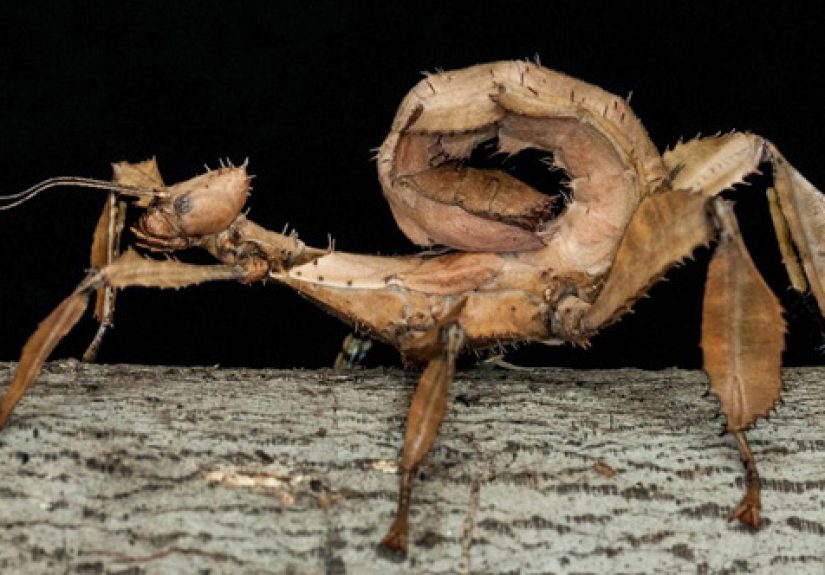
Camouflage is the stick insect’s signature move. Many species have evolved bodies that
look exactly like twigs, stems, or dried leaves. Their colors match bark and foliage, and
their legs line up with their bodies to complete the illusion. Some species even have
bumps and notches that mimic buds, scars, and knots on branches.
In zoos and insect exhibits, visitors often stare right at a stick insect enclosure and
confidently declare, “There’s nothing in there.” Then the “branch” suddenly walks away.
That’s how good they are. Studies of phasmids show that this extreme camouflagecalled
crypsisis the main reason such a large, slow, crunchy snack can survive
in forests full of birds, lizards, and hungry mammals.
Some species don’t just look like plants; they behave like them. Which leads us to their
next trick.
2. The Windy-Day Sway: Behavioral Camouflage
If you’ve ever watched a stick insect when there’s a breeze, you may notice something
strange: it gently rocks back and forth as if it’s being pushed by the wind. This
rhythmic swaying isn’t a sign of dizzinessit’s advanced behavioral camouflage.
By swaying in time with leaves and branches, the insect smooths out the tiny
“mechanical” movements that would give it away as an animal. Predators scanning for the
sharp, purposeful motions of prey instead see a plant part moving just like everything
else around it. Some research suggests that this swaying also helps them judge distances
and depth, but the main benefit is simple: if you move like a leaf, you get treated like
a leaf.
It’s the insect version of joining a crowd and copying everyone’s walk so nobody notices
you’re the one carrying the snacks.
3. The Dramatic Escape: Self-Amputation and Limb Regeneration
Imagine escaping danger by literally dropping a leg and running away. For many stick
insects, that’s not a gruesome accidentit’s a strategy. When grabbed by a predator, some
species can perform autotomy, a controlled self-amputation. Special
muscles snap the leg off at a weak joint, leaving the twitching limb behind as a decoy
while the insect makes a very uneven but urgent getaway.
Even more impressive, young stick insects can regrow the lost leg over several molts. As
they shed their exoskeleton to grow, a new limb develops and gradually returns to full
size. In some species, even older individuals can trigger an extra molt in order to
regenerate a missing leg. It’s like having a built-in “undo” button for bad encounters
with hungry birds.
Of course, this isn’t freeregrowing a leg costs energy, and repeatedly dropping limbs is
a bad long-term plan. But in a life-or-death moment, sacrificing one leg to save the other
five is a trade most stick insects are willing to make.
4. Chemical Warfare: Smelly Sprays and Defensive Secretions
When camouflage fails and physical escape isn’t an option, some stick insects switch to
chemical warfare. Certain species produce foul-smelling or irritating secretions from
glands near the thorax. These sprays can be squirted toward a predator’s face, targeting
sensitive areas like the mouth and eyes.
One well-known example is the spiny stick insect Eurycantha calcarata, which
can release a strong, musty odor when disturbed. Other species produce milky defensive
fluids with bitter or irritating compounds. To a predator, it’s like biting into a
mouthful of perfume and hot sauce at the same timememorable, but not in a good way.
Combined with their camouflage, these chemical defenses create layers of protection: if
a predator manages to find them and grab them, it may quickly decide that this
particular “twig” is not worth the headache.
5. Startle Displays, Spines, and Other “Don’t Mess With Me” Warnings
Not all stick insects rely on staying invisible. Some species have dramatic
startle displays they unleash at the last second. A normally dull,
bark-colored insect may suddenly spread bright wings patterned in vivid reds, yellows, or
blues. The sudden flash of color can confuse or scare a predator long enough for the
insect to drop, run, or hide.
Other species have sharp spines on their legs and bodies. When threatened, they brace
themselves and use those spines like miniature barbed clubs, pinching or stabbing at
anything trying to eat them. Some can also make hissing sounds or rustling noises by
rubbing body parts togetheran insect way of saying, “Back off, I’m pointier than I look.”
Stick insects may look gentle, but plenty of them come equipped with hidden armor and
a flair for dramatic theater when cornered.
6. Extreme Sizes: From Tiny Twigs to Giant Tree Monsters
Stick insects come in a shocking range of sizes. Some are only a couple of inches long
and delicate enough to perch on a grass blade. Others look like mobile tree branches.
Several of the world’s longest insects are phasmids, including species that can stretch
over 20 inches (with legs fully extended).
Recently, scientists in Australia described a gigantic stick insect more than 40
centimeters long that had managed to go unnoticed thanks to its superb camouflage. In
the dark rainforest canopy, it simply blended in among the branches, despite being the
size of a small snake.
This size variation isn’t just for show. Larger bodies can deter some predators, while
small and slender species can vanish into thin stems and fine foliage. Either way, stick
insects prove that “looking like a stick” can mean anything from “toothpick” to “small
walking broom handle.”
7. Cloning Themselves: Reproduction Without Males
Stick insects don’t always bother with traditional dating. In many species, females can
reproduce through parthenogenesis, a form of asexual reproduction where
eggs develop into healthy offspring without ever being fertilized by a male.
In populations where males are rare or absent, a single female can found an entire
colony. She lays eggs that hatch into genetic copies of herself, which then grow up and,
in turn, lay more eggsno courtship, no awkward first dates, no shared Netflix account to
untangle afterward.
This cloning strategy is incredibly powerful for colonizing new areas. If a pregnant
female is blown by a storm into a new forest or transported accidentally by humans, she
doesn’t need to find a partner to establish a thriving population. The downside is lower
genetic diversity, but for a stealthy insect living a slow, leafy life, it’s apparently
a workable trade-off.
8. Egg Mimicry and Ant Babysitting Services
Even stick insect eggs are clever. Some species lay eggs that look like tiny plant seeds.
On the surface of each egg is a nutritious cap called a capitulum, which ants
find irresistible. Worker ants carry the eggs back to their nest, bite off the edible
cap, and discard the rest of the egg in their underground “trash room.”
For the stick insect, this is perfect. The egg ends up protected in a secure, humid,
predator-free environment beneath the soil. When the nymph eventually hatches, it climbs
up out of the ant nest and into the vegetation above, starting its life with a free
ride and early protection.
This strategycalled myrmecochory, or ant-mediated seed dispersalis
more commonly associated with plants. Stick insects have essentially hacked the system,
turning ants into accidental babysitters and egg relocation experts.
9. Long-Distance Travelers: Surprising Ways They Spread
For insects that can’t fly (many stick insects are wingless), you’d think their travel
options would be limited. Yet stick insects have turned out to be surprisingly good at
spreading across islands and even oceans.
One reason is their tough eggs. Some species produce eggs with hard shells that can
survive drying, rough handling, or even a trip through a bird’s digestive system. There’s
evidence that eggs can be transported in soil, stuck to plant material, or carried by
wind and water over long distances.
Humans unintentionally assist them, too. Ornamental plants, cut branches, and landscaping
materials may hide adults or eggs. That’s how some stick insect species have turned up
far away from their native ranges, quietly turning new neighborhoods into their personal
camouflage playgrounds.
10. Surprisingly Good Pets with Chill Personalities
Despite their strange abilities, many stick insects are popular as educational pets and
classroom animals. They’re generally quiet, harmless to humans, and content to hang out
on a branch all day snacking on leaves. Their slow, deliberate movements and excellent
camouflage make them perfect ambassadors for teaching kids about adaptation and
evolution.
In captivity, they’re often fed bramble, oak, eucalyptus, or other leafy branches placed
in water. Because they’re nocturnal, many spend the day frozen in classic “I am a stick”
mode, then become active at nightclimbing, feeding, and occasionally molting. Molting is
a dramatic event where the insect hangs upside down and carefully wriggles out of its old
exoskeleton, sometimes leaving behind what looks like a ghost-stick suspended on the
branch.
For people who keep them, there’s a quiet joy in watching an insect that doesn’t buzz,
bite, or stingbut can still pull off some of the most advanced survival tricks on the
planet.
Putting It All Together: Quiet Insects, Loud Superpowers
When you add it all upexpert camouflage, behavioral tricks, limb regeneration, chemical
defenses, dramatic startle displays, extreme sizes, cloning reproduction, ant-assisted
childcare, rugged eggs, and relaxed pet potentialstick insects start to look less like
“boring brown bugs” and more like a highlight reel of evolutionary creativity.
They survive by being almost invisible, yet their biology is anything but dull. The next
time you walk through a forest or past a hedge, remember: some of those “twigs” may be
watching you back, perfectly still, ready to sway in the breeze the moment you look
away.
Real-World Experiences with Stick Insects
Seeing a Stick Insect for the First Time
Ask people who’ve actually encountered stick insects, and you’ll hear a familiar theme:
confusion, then wonder. Many describe their first sighting as a double-take moment. You
notice that one particular twig seems to be in a slightly different position than a
second ago. You stare at it, your brain glitches for half a second, and then it hits
you“Wait, that branch has knees.”
In nature centers and museums, educators often use this moment of realization as a
teaching tool. They let visitors search the enclosure themselves before pointing out the
insects. The quiet gasp when a “stick” suddenly moves is exactly the kind of emotional
hook that makes people remember lessons about adaptation and evolution long after they
leave.
Keeping Stick Insects as Pets
For hobbyists, keeping stick insects is a bit like having living, low-maintenance
houseplants that occasionally shuffle around. Proper care still matters: they need the
right temperature and humidity, a steady supply of safe foliage, and enough vertical
space to molt successfully. But compared with many other exotic pets, they’re fairly
forgiving and gentle.
Owners often describe them as calming to watch. At night, you might see a small group
slowly exploring their branches, carefully testing each step with their long legs. You
may witness a molta surprisingly athletic event where the insect hangs upside down,
pulls itself out of its old exoskeleton, and then slowly stretches its new body and
legs. Afterward, the fresh exoskeleton looks smooth and slightly soft, hardening over
the next few hours.
Some species can be handled with care, especially larger, calmer ones. Children
frequently describe the sensation as holding a moving twig or feather-light robot.
Because stick insects don’t bite or sting, they can help nervous kids build confidence
around insects in general.
Watching Their Superpowers in Action
In both the wild and captivity, patient observers can see many of the abilities described
above. You might watch a stick insect sway gently in artificial breeze from a fan, its
movements perfectly synced with the leaves. If you look closely at a younger individual,
you may notice a leg that’s slightly smaller or paler than the othersa regrown limb
from a past accident.
Egg laying is another fascinating behavior. Females may simply drop eggs to the ground
one by one, each tiny capsule designed to survive weather, predators, and, sometimes,
ant relocation. If you raise them at home, you quickly learn that what looks like a
container of sand or soil may suddenly sprout miniature stick insects months later, like
a time-delayed magic trick.
Why They Stick in Our Memory
Ultimately, part of the charm of stick insects is the contrast between appearance and
reality. They seem like background characters in the story of the forest, but once you
learn about their abilities, they become unforgettable. Teachers use them to explain
evolution, artists draw inspiration from their shapes and poses, and bug enthusiasts
appreciate them as living examples of how far natural selection can push a simple idea:
“What if you just looked like a stick?”
Whether you meet them in a rainforest, classroom, or terrarium on someone’s bookshelf,
stick insects have a way of quietly stealing the show. They don’t buzz, roar, or sting.
They simply stand there, perfectly still, embodying one of nature’s most underrated
superpowers: the art of not being noticeduntil you finally do.