Table of Contents >> Show >> Hide
- Why 2026 Viral Videos Feel Bigger Than Just “Going Viral”
- 10. “Teacher Lunch” and the Rise of Minimalist Utility Videos
- 9. Fibermaxxing Wellness Videos
- 8. “Weekend Lover” Confession Videos
- 7. “Kennedy Summer” Aesthetic Reels
- 6. “Mom, What Were You Like in the ’90s?” Throwback Videos
- 5. The “365 Buttons” Meme Videos
- 4. Chinamaxxing and the Explainer Video Boom
- 3. The “Dr Pepper Baby” Jingle Video
- 2. McDonald’s Big Arch CEO Taste-Test Video
- 1. The “2026 Is the New 2016” Throwback Edits
- What This Top 10 Really Says About Social Media in 2026
- Looking Back: What 2025 Taught Us About Influential Social Media Videos
- Conclusion
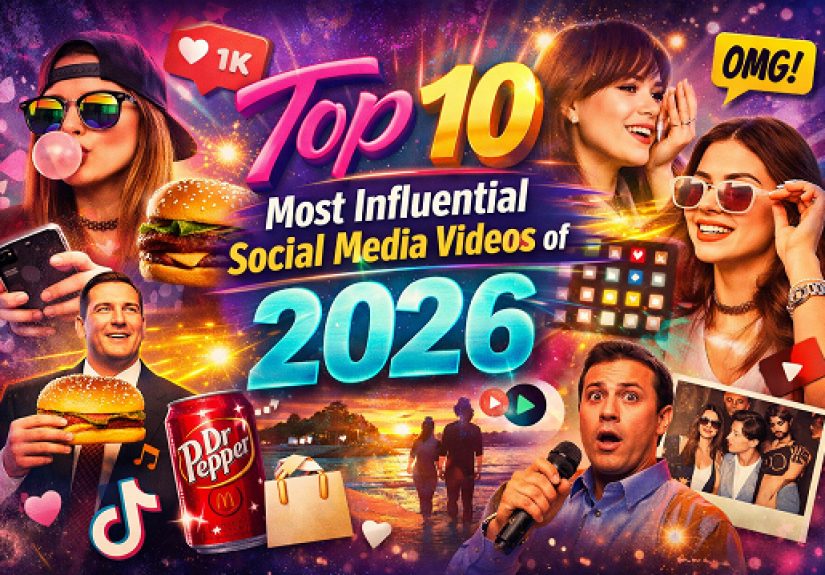
Let’s start with the honest version, not the algorithm-bait version: 2026 is still unfolding, so no one can responsibly hand you a neat, polished, “these are absolutely the final winners of the year” list without also selling you a bridge and a ring light. What we can do is rank the social media videos and video trends that have already shaped culture, brand behavior, internet language, shopping habits, and the way creators make content in 2026 so far.
And wow, what a year it has already been. Social video in 2026 feels less like random virality and more like a giant group project powered by nostalgia, remix culture, low-stakes chaos, and the occasional corporate executive accidentally becoming the main character. TikTok, Instagram Reels, YouTube Shorts, and creator-led long-form video are all feeding the same machine now. The result is a video landscape where one clip can become a meme, a slogan, a shopping driver, a TV commercial, and a full-blown business strategy before lunch.
This ranking focuses on influence, not just views. In other words, these are the videos that changed something: conversation, aesthetics, consumer behavior, platform strategy, creator careers, or brand marketing. Some are single clips. Some are video formats that spread like glitter at a craft table: impossible to contain, weirdly beautiful, and suddenly everywhere.
Why 2026 Viral Videos Feel Bigger Than Just “Going Viral”
The biggest shift this year is that viewers are not just passively scrolling. They are searching, stitching, dueting, parodying, shopping, quote-posting, mood-boarding, and turning short-form clips into cross-platform franchises. Social media videos in 2026 are less about polished perfection and more about emotional clarity. People want a point of view. They want a recognizable vibe. They want a reason to care in the first three seconds, and preferably something funny, useful, nostalgic, or mildly unhinged by second seven.
That is why this year’s most influential videos do not all look alike. Some are messy. Some are stylish. Some are basically internet inside jokes with better lighting. But together, they reveal the big 2026 truth: the most influential social media content now works because it feels participatory. The audience does not just watch the video. The audience finishes it.
10. “Teacher Lunch” and the Rise of Minimalist Utility Videos
Why it mattered
One of the quietest but most telling social video shifts of 2026 is the explosion of minimalist food videos: easy lunches, low-effort meal hacks, “I only had two ingredients and a dream” recipes, and stripped-down snack clips designed for busy people with questionable energy levels. The viral “Teacher Lunch” style of video mattered because it hit the sweet spot between practical and post-ironic. It was simple, affordable-looking, easy to recreate, and perfect for short-form video.
These videos did not dominate because they were cinematic masterpieces. They dominated because they were useful. They reflected a broader creator economy trend in which audiences reward content that feels grounded in real life rather than overly optimized for performance. In SEO terms, these clips win because they satisfy intent. In human terms, they win because viewers can watch one while standing in the kitchen, then immediately go make the thing.
9. Fibermaxxing Wellness Videos
Why it mattered
Every year the internet picks one health-adjacent obsession and treats it like the chosen one. In 2026, fiber got its glow-up. Fibermaxxing videos, colorful gut-health meal clips, and “here’s how I eat more fiber without becoming a full-time lentil influencer” content turned wellness into something more visual, more practical, and more commercially powerful.
What made these videos influential was not just their reach. It was their effect on what people bought, saved, searched, and discussed. This category shows how social media videos now shape health language in real time. The most successful clips combined bright visuals, personal storytelling, easy swaps, and a tone that said, “I am not here to lecture you; I am here to help your breakfast stop betraying you.” That blend of evidence, aesthetics, and accessibility is very 2026.
8. “Weekend Lover” Confession Videos
Why it mattered
The “Weekend Lover” trend turned secret relationships, vague situationships, and emotional oversharing into one of the year’s defining storytime formats. These videos spread because they gave creators a ready-made emotional frame: tell a messy story, reveal just enough to make the audience gasp, and leave enough unsaid for the comments to become a second episode.
This is influential social media at its purest. The format is easy to copy, emotionally sticky, and built for participation. It also proves that short-form video still thrives on narrative tension. Viewers do not just want fast clips; they want mini-dramas with receipts, subtext, and a soundtrack that says, “You are about to hear something ridiculous.” These videos helped solidify confession-based storytelling as one of 2026’s strongest engines of engagement.
7. “Kennedy Summer” Aesthetic Reels
Why it mattered
“Kennedy Summer” videos became influential because they were less about one family and more about an entire visual fantasy: sun-faded Americana, East Coast ease, old money without saying “old money” every three seconds, and an idea of summer that looks expensive but claims to be effortless. In other words, social media catnip.
These Reels and TikToks mattered because they turned a fuzzy mood into a repeatable video language. The formula was instantly recognizable: grainy footage, nostalgic styling, sailboats if possible, linen if available, and a soundtrack that made everything feel like a memory you never actually had. This is how aesthetics become influential in 2026. They do not just inspire outfits. They shape travel content, shopping wish lists, home decor, beauty choices, and the broader visual grammar of Instagram and TikTok.
6. “Mom, What Were You Like in the ’90s?” Throwback Videos
Why it mattered
This trend took one simple question and turned it into an intergenerational content machine. Parents posted old photos and clips. Adult children reacted. Celebrities joined in. And suddenly the internet had another nostalgia lane to speed down with absolutely no intention of touching the brakes.
What made these videos influential was their emotional range. They were funny, revealing, stylish, and unexpectedly human. They let creators show a version of themselves their followers had never seen, which is one of the fastest ways to deepen audience loyalty. These videos also worked beautifully across platforms because they were visually self-contained. You did not need long explanations. One old photo, one look, one haircut with a deeply committed level of volume, and the story basically told itself.
5. The “365 Buttons” Meme Videos
Why it mattered
The “365 Buttons” moment is the kind of internet phenomenon that sounds fake until you remember the internet runs on chaos, mystery, and confidence. What began as a strange comment-thread idea quickly became a viral video attitude: do the thing, refuse to over-explain, and let confusion become the brand.
That made it wildly influential. “365 Buttons” was not just a meme; it was a content style. It rewarded ambiguity, self-definition, and semi-serious performance art. It also fit perfectly with 2026’s broader vagueposting and anti-overexplanation mood. The message landed because so many users were exhausted by the pressure to justify everything online. These videos turned not explaining yourself into a punchline, a mantra, and a shareable aesthetic. Weird? Yes. Important? Also yes.
4. Chinamaxxing and the Explainer Video Boom
Why it mattered
Some of the most influential videos of 2026 are not jokes or brand moments at all. They are explainers. Cultural commentary clips around “Chinamaxxing” and related geopolitical or lifestyle trends showed how short-form video now translates complex global narratives into digestible, highly shareable content. These videos were influential because they made discussion portable. Suddenly, conversations about cultural aspiration, economic anxiety, and cross-border perception were happening in stitched videos and creator commentary posts, not just in newspapers and documentaries.
This does not mean every explainer was nuanced. Let’s not get carried away. But it does mean that short-form video is increasingly where people first encounter big ideas. In 2026, influence does not only belong to the funniest clip. It also belongs to the video that gives the internet a new framework, a new phrase, or a new lens for understanding what is happening around it.
3. The “Dr Pepper Baby” Jingle Video
Why it mattered
If you needed one case study for how brand marketing works now, this is it. A creator makes a simple, catchy, funny, unmistakably native social video. The internet responds. The brand notices. Instead of flattening the idea into a boring campaign deck, the brand moves quickly and turns the creator’s original spark into a mainstream ad moment. That is the 2026 playbook in one fizzy sentence.
The “Dr Pepper Baby” clip was influential because it proved that the line between user-generated content and national advertising is now paper-thin. The original post felt homemade, musical, and genuinely platform-native. Its success showed brands that creators no longer need to imitate commercials. Commercials now imitate creators. That reversal is huge. It means the most valuable ad idea in the room may not come from the conference room at all. It may come from a TikTok that felt too weirdly charming to ignore.
2. McDonald’s Big Arch CEO Taste-Test Video
Why it mattered
This video was social media gold because it looked like it should not have worked. A CEO, an awkward bite, a very corporate tone, and a product presentation that practically begged the internet to make fun of it. Naturally, the internet said, “Don’t mind if we do.” The clip spread through mockery, parody, remixing, and brand pile-ons. And then it did something even more important: it generated real commercial value.
That is why this was one of the most influential social media videos of 2026. It demonstrated that in the attention economy, embarrassment and effectiveness are not always enemies. Sometimes they are business partners. Rival brands jumped in. Users memed it into a format. McDonald’s leaned into the joke. Instead of trying to smother the moment with stiff PR language, the company let the meme breathe. The lesson for marketers is painfully clear: in 2026, cultural fluency often beats polished control.
1. The “2026 Is the New 2016” Throwback Edits
Why it mattered
If there is one video phenomenon that has defined the mood of social media in 2026 so far, it is this one. “2026 Is the New 2016” edits turned nostalgia into a full-scale creative engine. Users posted old filters, bottle-flip references, Snapchat dog ears, oversaturated selfies, peace signs, musical callbacks, and soft-focus memories of a year that the internet now treats like a lost golden age.
Why did these videos matter so much? Because they were not just trend participation. They were a collective emotional reset. They gave users a way to respond to uncertainty with familiarity, style, and humor. They worked on TikTok, Instagram, and Shorts. They were easy to reproduce, easy to remix, and easy for celebrities to join. Most importantly, they told us something deep about 2026 social media culture: the most influential videos are not always about novelty. Sometimes the biggest thing on the internet is a beautifully edited reminder that everybody misses an older version of the web, even if that older version was also ridiculous.
What This Top 10 Really Says About Social Media in 2026
Put these videos together and a pattern emerges. The most influential social media videos of 2026 are doing at least one of four things. They are selling without sounding like sales. They are telling stories fast. They are packaging emotion into a repeatable format. Or they are creating an aesthetic people can wear, quote, parody, or shop.
That is the big SEO and content lesson too. If you want content to travel in 2026, stop thinking only about reach and start thinking about replay value. Ask whether the video gives people a line to borrow, a feeling to identify with, a visual to imitate, or a reason to respond. The internet does not just reward visibility anymore. It rewards usability.
And yes, sometimes that usability looks like a heartfelt throwback montage. Sometimes it looks like a burger bite that launched a thousand dunks. Social media contains multitudes.
Looking Back: What 2025 Taught Us About Influential Social Media Videos
If 2026 is refining the rules of influence, 2025 was the year those rules got written in bold Sharpie. The biggest lesson from 2025 was that short-form video stopped being a sidecar to culture and became the engine itself. TikTok’s own year-end music recap showed just how direct that pipeline had become: viral moments on TikTok were increasingly tied to mainstream chart success, and older songs could roar back to life if the right video trend adopted them. That is how a track like Jess Glynne’s “Hold My Hand” became one of the defining sounds of 2025 all over again, carried by travel edits, reunion jokes, and feel-good clips that gave an old song a brand-new passport stamp.
Another 2025 lesson was that creators were no longer simply individuals posting into the void. They were media businesses, cultural distributors, and sometimes labor market influencers. You could see it in the rise of skilled-trades creators, whose videos helped make welding, line work, and vocational careers look aspirational to a younger audience. You could see it in the growth of creator jobs overall. And you could definitely see it in YouTube’s year-end reporting, which made it impossible to ignore how creators were shaping whole fandom ecosystems around games, shows, music, and digital franchises. A video was no longer just a post. It was often the front door to an economy.
2025 also taught brands to stop pretending they were in charge of the internet’s imagination. The smartest brands did not try to manufacture every meme from scratch. They learned to watch, react, and collaborate. TikTok’s awards and year-end reports highlighted creators whose influence came from authenticity, community trust, and usefulness, not just glossy production. That shift matters because it carried directly into 2026. Today’s best-performing branded social videos still tend to look like creator content first and marketing second.
There was also a darker lesson in 2025: not all influence is good influence. Some of the year’s biggest viral videos spread through humiliation, invasive speculation, or pile-on culture. The Coldplay kiss-cam saga became a warning sign for the cost of algorithmic amplification when a brief clip turns into a life-altering spectacle. At the same time, AI-generated songs and synthetic creator tools started appearing more visibly in viral ecosystems, reminding everyone that social media was entering a phase where authenticity would become more valuable precisely because it would become harder to fake.
So if 2025 was the year social video proved it could move music, jobs, shopping, fandom, and public conversation all at once, then 2026 is the year creators and brands are trying to get smarter about that power. The audience is savvier now. It knows when something is manufactured, when something is truly funny, and when something feels human enough to matter. That might be the biggest lesson of all.
Conclusion
The most influential social media videos of 2026 are not all polished, profound, or even particularly sensible. Some are nostalgic montages. Some are meme-friendly corporate mishaps. Some are confessionals, explainers, or lifestyle clips with a suspiciously strong ability to make strangers buy cheese or rethink summer. But every entry on this list did something important: it escaped the feed and changed behavior.
That is the real standard for influence in modern short-form video. Not just views. Not just likes. Not even just virality. Real influence means people copied the format, borrowed the language, changed the aesthetic, bought the product, joined the conversation, or rethought what social media video could be. In 2026, the winning clips are not just watched. They are absorbed.