Table of Contents >> Show >> Hide
- Before You Exit: 3 Tiny Rules That Prevent Big Awkward
- 11 Easy Ways to Say Goodbye Without Saying Goodbye
- 1) The Time Anchor: “I should head out…”
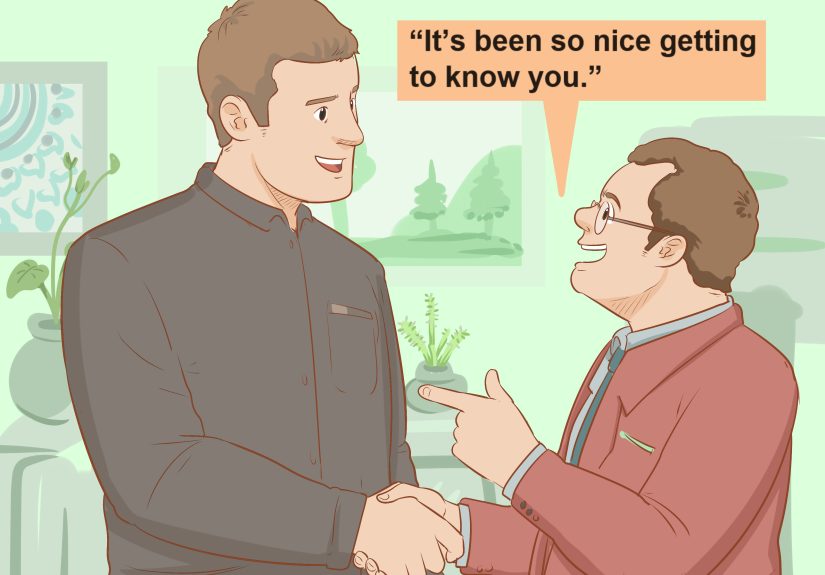
- 2) The Appreciation Exit: “This was greatthank you.”
- 3) The Well-Wish Wrap-Up: “Take care / Drive safe / Enjoy your day.”
- 4) The Permission Slip: “I’ll let you get back to it.”
- 5) The Summary Seal: “So we’re set for Tuesday at 2.”
- 6) The Next-Step Exit: “I’ll follow up / I’ll send the link.”
- 7) The Transitional Word Trick: “Anyway…” (then exit)
- 8) The Hand-Off: Introduce someone (then slip out)
- 9) The Body-Language Sign-Off: Step back, smile, and move
- 10) The Channel-Specific Close: Text and email sign-offs that aren’t “goodbye”
- 11) The “Mini Irish Goodbye” (aka: leave quietly, but kindly)
- Quick Choose-Your-Exit Guide
- When “No Goodbye” Can Feel Bad (and what to do instead)
- Conclusion
- Real-World Goodbye Moments (Extra )
Some people can stroll out of a room like a movie starcoat on, confident nod, door closes, credits roll. The rest of us? We do the “one more thing” shuffle: one more comment, one more hug, one more “okay but really I should go,” followed by another five minutes of standing near the doorway like a decorative lamp.
If you’ve ever wished you could end a conversation gracefully without dropping the actual word “goodbye,” you’re in the right place. The good news: you don’t need a dramatic exit or a secret trapdoor. You just need a few polite exit lines, a bit of timing, and (occasionally) the courage to stand up.
Below are 11 easy, real-life ways to say farewell without saying “goodbye”with specific examples for in-person chats, phone calls, texts, and emails. The vibe is simple: clear, kind, and not-awkward. (Or at least less awkward.)
Before You Exit: 3 Tiny Rules That Prevent Big Awkward
- Be brief and believable. A clean exit beats a five-paragraph explanation.
- Match the moment. Casual hangout? Keep it light. Work meeting? Keep it crisp.
- Don’t ghost. “No goodbye” should still feel considerate, not confusing.
11 Easy Ways to Say Goodbye Without Saying Goodbye
1) The Time Anchor: “I should head out…”
Time-based exits work because they’re universally understood. You’re not rejecting the personyou’re honoring the clock. Keep it friendly, then move your feet.
- In person: “I should head outearly morning tomorrow. This was great.”
- Phone/video: “I’ve got to jump to my next thing, but I’m glad we caught up.”
- Text: “I’m logging off for the nighttalk soon!”
- Email: “I’ll keep an eye on this and circle back tomorrow.”
2) The Appreciation Exit: “This was greatthank you.”
Gratitude is a social shortcut. It signals closure while leaving the interaction on a warm note. It’s especially useful with hosts, clients, coworkers, and anyone who just gave you their time (or snacks).
- In person: “Thanks for having methis was a lot of fun.”
- Phone/video: “Thanks for walking me through that. Super helpful.”
- Text: “Thanks again for today! I’m going to crash.”
- Email: “Thank you for your timeappreciate your help on this.”
3) The Well-Wish Wrap-Up: “Take care / Drive safe / Enjoy your day.”
A genuine well-wish acts like a verbal closing bracket. It works in almost any setting and feels natural even when you’re leaving a little earlier than planned.
- In person: “Drive safetext me when you get home.”
- Phone/video: “Hope the rest of your day goes smoothly.”
- Text: “Take carecatch you later.”
- Email: “Have a great rest of your week.”
4) The Permission Slip: “I’ll let you get back to it.”
This one is a crowd favorite because it makes your exit sound considerate. You’re not leaving because you’re boredyou’re leaving because you respect their time. (Even if you’re also leaving because your social battery is at 2%.)
- In person: “I’ll let you get back to your daygood catching up.”
- Phone/video: “I won’t keep youthanks again.”
- Text: “I’ll let you get back to it. Talk soon!”
- Email: “I’ll let you get back to itthanks in advance.”
5) The Summary Seal: “So we’re set for Tuesday at 2.”
A quick recap creates a natural stopping point. This is perfect for meetings, planning, and any conversation that needs a clean “wrap” without a dramatic ending.
- In person: “Awesomeso we’ll meet at 6, and I’ll bring dessert.”
- Phone/video: “Greatnext steps: you’ll send the draft, and I’ll review by Friday.”
- Text: “Cool7pm, front entrance. See you then.”
- Email: “Recap: we’ll proceed with Option B and sync Thursday.”
6) The Next-Step Exit: “I’ll follow up / I’ll send the link.”
When you promise a small next action, the conversation naturally concludes. It also reduces the chance of a “waitone more thing” spiral. Just be sure you actually do the thing. (Your future self will thank you.)
- In person: “I’ll text you that reciperemind me if I forget.”
- Phone/video: “I’ll email the details after this. Talk soon.”
- Text: “I’ll send the doc link in a sec.”
- Email: “I’ll share the updated file shortly.”
7) The Transitional Word Trick: “Anyway…” (then exit)
Certain words naturally signal a wrap-up: “Anyway,” “Alright,” “Well,” “So.” Use one, pause briefly, then pair it with an exit line. This keeps it smooth instead of sudden.
- In person: “Anywaythis was great. I’m going to let you mingle.”
- Phone/video: “Alrightlet’s pick this up later this week.”
- Text: “Okayback to real life. Talk tomorrow.”
- Email: “In any case, I’ll move forward as discussed.”
8) The Hand-Off: Introduce someone (then slip out)
At parties, networking events, or office hallways, a friendly hand-off is magic: you connect two people, then exit while they start talking. It feels generous, not evasive.
- In person: “Ohhave you met Jordan? Jordan, you two both love hiking.”
- Work: “You should connect with Priyashe handled something similar last quarter.”
- Tip: After the intro, give them 10 seconds… then step away.
9) The Body-Language Sign-Off: Step back, smile, and move
Sometimes your words are fineyour body just didn’t get the memo. Nonverbal cues help your exit land: you angle your body away, take a small step back, gather your items, and pair it with a warm expression. Translation: “This was lovely, and also I am leaving now.”
- In person: Smile + small wave + “Take care!” while already turning toward the door.
- Video calls: “Alright, I’m going to hop off,” while you reach for the “Leave” button.
- Pro move: Stand up. Sitting is a trap.
10) The Channel-Specific Close: Text and email sign-offs that aren’t “goodbye”
Digital conversations still need closurejust in a format that fits the medium. In texts, a short friendly closer works. In emails, your sign-off sets tone and professionalism.
Text examples:
- “Talk soon!”
- “Catch you later.”
- “Back to ithave a good one.”
- “Going offlinehope your day’s great.”
Email examples (professional to friendly):
- Professional: “Sincerely,” “Regards,” “Best,” “Thank you,”
- Warm-professional: “All the best,” “With appreciation,” “Best regards,”
- Friendly (when appropriate): “Thanks again,” “Talk soon,” “Looking forward,”
11) The “Mini Irish Goodbye” (aka: leave quietly, but kindly)
“Irish goodbye” is slang for leaving a gathering without telling anyone. In real life, it can be practicalespecially when goodbyes turn into a second event. The kinder version is a mini exit: tell one key person (usually the host), give a small wave to anyone you’re actively talking to, and go.
- At a party: “Hey, I’m heading outthank you for having me!” (Then vanish responsibly.)
- At work events: “I’m going to take offgreat seeing you.”
- Optional follow-up: A quick text later: “Made it homethanks again!”
Quick Choose-Your-Exit Guide
Not sure which line to use? Pick based on the situation:
- Work / professional: Summary Seal, Next-Step Exit, Email sign-off.
- Phone calls with talkers: Permission Slip (“I’ll let you go”), Time Anchor.
- Parties / social gatherings: Appreciation Exit + Well-Wish, or the Mini Irish Goodbye.
- Awkward hallway chats: Transitional Word Trick + body-language pivot.
When “No Goodbye” Can Feel Bad (and what to do instead)
There are moments when skipping a clear farewell can read as cold: sensitive conversations, serious conflict, or anything where the other person needs closure. In those situations, you don’t need a speechyou just need clarity:
- “I’m going to go for now. Thanks for talking with me.”
- “I need to step away, but I’ll reach out tomorrow.”
- “Let’s pause here. I appreciate your time.”
Conclusion
Saying goodbye without saying “goodbye” isn’t about disappearingit’s about leaving with grace. The best exits are short, kind, and matched to the moment. Choose one solid line, add a warm tone, and then (this is key) actually leave. The doorway is not a meeting room.
Real-World Goodbye Moments (Extra )
Here’s what these “goodbye without goodbye” strategies look like in everyday lifethe kind of experiences people run into all the time, usually when they’re holding a jacket they put on fifteen minutes ago.
The never-ending kitchen conversation: You’re at a casual get-together, and somehow you’ve been discussing air fryers, neighborhood gossip, and the emotional rollercoaster of online shopping returnswithout moving an inch. This is when the Transitional Word Trick saves you. “Anyway, I’m going to grab my thingsthis was so fun.” The magic isn’t just the words; it’s that you start gathering your items while you say them. People read motion as commitment. Without motion, your sentence becomes a suggestion.
The phone call that refuses to end: You love the person. You do. But they treat silence like a challenge. The Permission Slip (“I’ll let you get back to it”) works because it frames your exit as a favor. Pair it with a Summary Seal: “So we’re set for Saturday at noon. PerfectI’ll let you go.” If you add one small next step“I’ll text you the address”it’s even easier to land the plane. The goal is not to slam the door; it’s to gently guide the conversation to a runway and roll to a stop.
The workplace “quick question” ambush: You’re headed to lunch when a coworker catches you with “Got a sec?” Suddenly you’re deep in a project update you didn’t schedule. This is where the Time Anchor shines: “I’ve got to step out in two minutes, but give me the headline.” When your two minutes are up, you can close cleanly: “Got it. I’ll look at it after lunch and follow up.” You’re polite, you’re clear, and you avoid becoming the unofficial hallway help desk.
The party exit without the parade: Some gatherings turn departure into a group activitymultiple hugs, multiple callbacks, and one person insisting you take leftovers like they’re negotiating an international treaty. The Mini Irish Goodbye keeps it respectful: tell the host, thank them, and wave to whoever you’re with. If you worry about seeming abrupt, send a short message later: “Made it homethanks again for such a great night.” That tiny follow-up gives warmth without forcing you into a 20-minute goodbye circuit.
The common thread in all these experiences is simple: a graceful exit is a combination of words + timing + movement. Pick a line that fits, say it like you mean it, and let your body do the rest. You don’t need to vanish. You just need to close the moment.