Table of Contents >> Show >> Hide
- A Quick Pool-Picking Cheat Sheet
- Before You Choose: 6 Questions That Save You Money (and Headaches)
- The 12 Different Types of Swimming Pools
- 1) Concrete (Gunite/Shotcrete) In-Ground Pool
- 2) Vinyl Liner In-Ground Pool
- 3) Fiberglass Shell In-Ground Pool
- 4) Above-Ground Pool
- 5) Semi-In-Ground (Partial In-Ground) Pool
- 6) Plunge Pool
- 7) Lap Pool
- 8) Spool (Spa + Pool) / Cocktail Pool
- 9) Infinity / Vanishing-Edge Pool
- 10) Natural Swimming Pool
- 11) Indoor Pool
- 12) Shipping Container / Modular Pool
- How to Choose the Right Swimming Pool for Your Home
- Step 1: Match the pool to your lifestyle (not your fantasy schedule)
- Step 2: Choose structure + surface based on maintenance tolerance
- Step 3: Think in systems: sanitation, circulation, and energy use
- Step 4: Put safety on the blueprint, not the afterthought list
- Step 5: Decide what you want to upgrade later (and what’s painful to retrofit)
- Common “Best Fit” Scenarios (With Specific Examples)
- of Real-World Experience: What Pool Owners Wish They’d Known
- Wrap-Up: Choosing a Pool You’ll Love Using
- Notes
Picking a swimming pool is a little like picking a pet: you’re not just choosing something cute and funyou’re choosing
daily care, long-term costs, and a relationship that gets very real the first time you hear, “Why is it green?” from a
neighbor. The good news: the “right” pool isn’t one perfect option. It’s the pool that matches how you’ll actually use it,
where you live, what your yard can handle, and what you want to spend now (and keep spending later).
This guide breaks down 12 different types of swimming poolsfrom classic in-ground builds to compact plunge
pools and modern modular optionsplus a practical way to decide which one fits your life. Expect pros, cons, and
real-world “wish we knew this earlier” advice. (No judgment if your dream is a pool-shaped margarita. We’ve seen worse.)
A Quick Pool-Picking Cheat Sheet
- Want the most customization? Concrete (gunite/shotcrete) in-ground.
- Want faster installation + easy upkeep? Fiberglass shell.
- Want a lower up-front price (in-ground)? Vinyl liner in-ground.
- Want the most budget-friendly splash zone? Above-ground.
- Short on space? Plunge pool, spool (spa + pool), or compact lap pool.
- Have a view worth showing off? Infinity/vanishing-edge (if the budget agrees).
- Hate the idea of chlorine smell? Consider a saltwater system (it’s a sanitizer system, not a “pool type”).
Before You Choose: 6 Questions That Save You Money (and Headaches)
1) What’s the pool for: play, fitness, entertaining, or “cooling off for 10 minutes”?
A family “hangout” pool prioritizes steps, benches, and shallow lounging. A fitness pool cares about straight lines and
consistent depth. A “dip pool” can be small and simplebut still feel luxurious with good lighting and finishes.
2) What’s your realistic budgetinstall + yearly ownership?
Pools come with two price tags: the build and the “forever after.” Maintenance, chemicals, water, repairs, electricity,
and upgrades (hello, new pump) add up. Plan for annual costs the same way you plan for the install.
3) What does your yard allow?
Access for equipment, slope, soil conditions, drainage, and utility lines matter. A tight side yard might limit what can
be delivered in one piece (like some fiberglass shells). A hillside lot might push you toward semi-in-ground designs.
4) How much time do you want to spend maintaining it?
Some pool surfaces resist algae better, and some shapes collect debris like they’re competing in a leaf Olympics.
If you want lower daily effort, think smooth surfaces, simpler shapes, and modern filtration/robot cleaning.
5) What’s your climate and swim season?
In colder areas, heating and covers may matter more than the pool type. In hot areas, evaporation and sun exposure
become bigger issues. A pool that’s comfortable for your region gets used moresimple as that.
6) What are your local rules?
Permits, fencing/barrier requirements, setbacks, and equipment standards vary by location. Treat local code like the
boss it is, not a suggestion you can out-charm.
The 12 Different Types of Swimming Pools
1) Concrete (Gunite/Shotcrete) In-Ground Pool
This is the “build anything” option. Concrete pools can be custom-shaped, deep, shallow, curved, geometricwhatever fits
your yard and imagination. They’re durable and can last a long time, but they often cost more and usually take longer to
build. Concrete can also be more porous than other surfaces, which can mean more brushing and attention to algae if water
chemistry isn’t kept steady.[1]
- Best for: Custom designs, premium finishes, unique shapes.
- Watch-outs: Longer build timeline, potentially higher maintenance.
2) Vinyl Liner In-Ground Pool
Vinyl pools use a liner fitted inside a framed structure. They’re often more affordable than concrete and feel smooth on
feet (and elbows). The trade-off: liners wear out and can be punctured, so replacement is part of the long-term plan.
Many homeowners treat liner replacement as a predictable “every so often” refreshlike repainting a house, but wetter.[2]
- Best for: Lower up-front cost with in-ground look.
- Watch-outs: Liner replacement and potential punctures/tears.
3) Fiberglass Shell In-Ground Pool
Fiberglass pools are manufactured off-site and delivered as a shell. Installation can be faster than concrete, and the
smooth, non-porous surface often makes upkeep easier. The main limitation is design flexibility: your shape choices are
typically limited to what manufacturers offer. In areas with ground movement, fiberglass can be a compelling choice due to
its flexibility relative to rigid materials.[3]
- Best for: Faster installs, easier surface maintenance.
- Watch-outs: Limited shapes/sizes; delivery access matters.
4) Above-Ground Pool
Above-ground pools are the fastest route to “pool ownership” without turning your yard into a construction site for months.
Many are made with metal or resin walls and use a liner. They can be upgraded with surrounding decks and landscaping to look
surprisingly polished. They’re also easier to remove laterhelpful if you’re not sure you want to commit to the full in-ground
lifestyle.
- Best for: Budget-friendly summer fun, flexible commitment.
- Watch-outs: Less “built-in” look; ladders and barriers still need safety planning.
5) Semi-In-Ground (Partial In-Ground) Pool
Semi-in-ground pools sit partially below grade and partially above it. They’re popular on sloped yards where a full dig can
be complex (or wildly expensive). With smart decking and retaining-wall design, they can blend into landscaping beautifully.
If your lot is challenging, this style can be a practical compromise between above-ground affordability and in-ground aesthetics.
- Best for: Sloped lots, hybrid look, deck integration.
- Watch-outs: Site engineering and drainage details matter a lot.
6) Plunge Pool
Plunge pools are small by designmade for cooling off, relaxing, and quick dips rather than full-on Marco Polo tournaments.
They’re ideal for small yards and can feel high-end with benches, lighting, and a heater for shoulder-season use. Because they
use less water, they can reduce chemical and heating needs compared with larger pools (though fixed costs like equipment don’t
shrink as dramatically as people hope).[4]
- Best for: Small spaces, low-fuss lounging, “tiny pool, big vibe.”
- Watch-outs: Not great for laps; some costs don’t scale down as much as size.
7) Lap Pool
A lap pool is long, narrow, and focused on exercise. It’s the most honest pool type: it doesn’t pretend it’s for parties
it’s for swimming. Lap pools can be integrated into modern backyards, narrow side yards, or minimalist landscape designs.
Consider depth consistency and swim length. If you want fitness-first, this is the classic answer.
- Best for: Training, fitness, sleek designs.
- Watch-outs: Less flexible for play features; can feel “serious” for families with kids.
8) Spool (Spa + Pool) / Cocktail Pool
A spool blends a small pool with spa-like featuresoften heated, with powerful jets and built-in seating. Think: “hot tub
energy” with slightly more room to float. If you want hydrotherapy and relaxation but don’t have space for a full pool (or you
want something usable in cooler months), a spool is a smart, social option.
- Best for: Year-round comfort, entertaining, compact yards.
- Watch-outs: Heating costs; not a true swimming pool replacement for everyone.
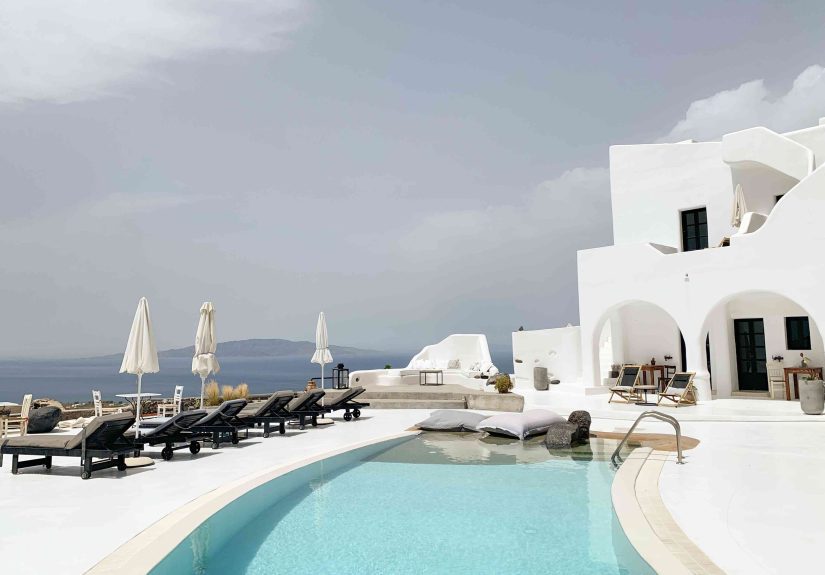
9) Infinity / Vanishing-Edge Pool
Infinity pools create the illusion that water spills into the horizon. They’re dramaticand technically demanding. They work
best when you have a view and elevation, because the effect relies on geometry and a catch basin system. If you’re choosing
this style, plan on higher engineering complexity, more precise construction, and generally higher costs than standard pools.
- Best for: View lots, luxury design statements, resorts-at-home energy.
- Watch-outs: Higher complexity, higher price, specialized builders required.
10) Natural Swimming Pool
Natural pools use biological filtration (plants and beneficial microbes) instead of relying solely on traditional chlorine
systems. They often include a separate regeneration zone where plants do the “cleaning.” The look is gorgeousmore pond-meets-pool
than “hotel rectangle.” It’s not maintenance-free, though; it’s simply different maintenance, involving ecosystem balance and
seasonal care.
- Best for: Nature-forward landscaping, reduced chemical approach, unique aesthetics.
- Watch-outs: Requires space and specialist design; expectations must match reality.
11) Indoor Pool
Indoor pools extend your swim season to “whenever you feel like it,” which is a strong argument. The big consideration is not
the poolit’s the building around it. Indoor pools need serious humidity control, ventilation, and moisture-resistant materials
to avoid condensation damage. Done right, they’re private, clean, and weatherproof. Done wrong, they’re a slow-motion home repair
documentary.
- Best for: Four-season swimming, privacy, consistent water temperature.
- Watch-outs: Higher enclosure cost; humidity management is non-negotiable.
12) Shipping Container / Modular Pool
Container and modular pools are pre-built or semi-pre-built systems designed for faster setup. They’re typically compact and
modern, sometimes with integrated filtration and optional heaters. They can be appealing for small lots, modern design styles,
and faster installation timelines. The key is verifying local code compliance, foundation requirements, and long-term service
support (because “cool concept” isn’t a maintenance plan).
- Best for: Modern aesthetics, tight timelines, smaller spaces.
- Watch-outs: Local permitting, insulation/comfort, and service network.
How to Choose the Right Swimming Pool for Your Home
Step 1: Match the pool to your lifestyle (not your fantasy schedule)
If you’re realistic about your habits, you’ll be happier. Example: If you work long hours and want easy enjoyment, a small
plunge pool or spool you’ll actually use beats a giant pool you admire from indoors while saying, “Soon. Definitely soon.”
Step 2: Choose structure + surface based on maintenance tolerance
If “weekly brushing” sounds like a hobby you will not adopt, prioritize smoother, less porous finishes and straightforward
designs. Also consider automation: robotic cleaners, timers, and efficient pumps can reduce daily effort and ongoing costs.
Step 3: Think in systems: sanitation, circulation, and energy use
“Saltwater pools” are still chlorine poolssalt systems generate chlorine from salt. Many owners choose them for feel and
convenience, but equipment compatibility matters. For energy, efficient pumps and smart run-times can noticeably reduce
electricity use; ENERGY STAR-certified pool pumps are designed to improve efficiency compared with standard options.[5]
Step 4: Put safety on the blueprint, not the afterthought list
Safety isn’t just “be careful.” It’s barriers, alarms, covers, and compliant drainslayers that protect kids, pets, and
distracted adults holding a burger and a phone at the same time. Plan fencing and self-closing/self-latching gates from day one,
and make sure drains and suction fittings meet safety requirements. Pools should be funnot “how did we not think of that?” later.[6]
Step 5: Decide what you want to upgrade later (and what’s painful to retrofit)
It’s easier to add a robot cleaner later than to change a pool’s shape, depth profile, or plumbing layout. If you want a tanning
ledge, built-in seating, or a specific entry, decide early. Your future self will thank youpossibly out loud.
Common “Best Fit” Scenarios (With Specific Examples)
- You have a small urban yard: Plunge pool or spool. Add a bench, good lighting, and you’ve got a boutique-hotel vibe without needing a football field.
- You want classic family use: Fiberglass or vinyl in-ground with a shallow end, wide steps, and a safety cover option.
- You want a forever, custom backyard centerpiece: Concrete in-ground with tailored shape, integrated spa, and a finish that matches your landscape style.
- You’re not ready for a permanent build: Above-ground with a deck and thoughtful landscaping for comfort and style.
- You’re buying for fitness: Lap pool, or a spool with strong swim jets if space is limited.
- You have a view lot: Infinity edgeonly if you’re ready for the engineering and premium build.
of Real-World Experience: What Pool Owners Wish They’d Known
Here’s what homeowners and pool pros tend to learn the “experienced way” (which is a polite phrase for “after spending money”).
First: the yard always looks bigger in your imagination. People sketch a generous pool, a lounge area, a dining set, and
a firepit… then reality shows up with setbacks, easements, and the fact that your favorite oak tree has opinions about root
disturbance. Many owners end up happier with a slightly smaller pool plus better deck spacebecause you can’t host friends on
“the idea of a patio.”
Second: equipment choices affect daily happiness. A quieter, efficient pump, good filtration, and a robotic cleaner can make
pool ownership feel easy. Skimping on equipment can turn a pool into a second job. Owners often say the best upgrades weren’t flashy
water featuresthey were the things that reduced weekly chores and kept water stable with less fuss.
Third: small pools still need real maintenance. A plunge pool sounds like “less water, less work,” and that’s partly truebut
water chemistry still matters, filters still need cleaning, and leaves still fall like they’re paid per leaf. Smaller water volume can
also mean chemistry changes faster (a little imbalance can swing more quickly), so consistent habits are key.
Fourth: the first contractor conversation should be about your yard, not your dream tile. Great builders ask about soil,
drainage, access for machinery, and where equipment will live. Homeowners who start with site realities often avoid expensive surprises.
And yes“We’ll figure it out later” is how you end up figuring it out with a change order.
Fifth: plan safety like you plan the pool. Owners with kids often say the best money they spent was on barriers and layered
protectionfencing, gates, covers, and alarmsbecause it reduces stress. It’s hard to enjoy a pool when your brain is running a
constant “what if” background app.
Sixth: decide what “done” means. A pool can technically be finished while the yard still looks like a construction postcard.
Many owners recommend budgeting for the surrounding areadecking, shade, landscaping, and lightingbecause that’s what makes the pool
feel like part of your life instead of a separate project you occasionally visit. The pool is the star, but the supporting cast is what
makes the movie watchable.
Wrap-Up: Choosing a Pool You’ll Love Using
The best pool isn’t the biggest or the most expensiveit’s the one that fits your space, your budget, your climate, and how you actually
live. Start with your purpose (fitness, play, relaxing, entertaining), then choose a structure and surface that matches your maintenance
tolerance. Finally, make smart decisions about safety and energy use so your pool stays fun, not stressful.
Notes
- [1] Cost/longevity comparisons and typical installed price ranges vary by region and features.
- [2] Vinyl liner replacement timing depends on care, water chemistry, and usage.
- [3] Material performance can depend on soil movement and local installation practices.
- [4] Plunge pool pricing and ownership costs depend on material, site work, and equipment.
- [5] Energy savings depend on pump sizing, run time, and local electricity rates.
- [6] Safety standards and code requirements differ by jurisdictionverify local rules.