Table of Contents >> Show >> Hide
- Why Hollywood Can’t Leave a Perfect Ending Alone
- 12 Perfect Endings That Got Undermined By The Sequel
- 1. Terminator 2: Judgment Day → Terminator 3: Rise of the Machines
- 2. Toy Story 3 → Toy Story 4
- 3. Jurassic Park → Jurassic Park III
- 4. Alien 3 → Alien: Resurrection
- 5. Star Wars: Return of the Jedi → The Sequel Trilogy
- 6. Wonder Woman → Wonder Woman 1984
- 7. Men in Black → Men in Black II
- 8. Die Hard & Die Hard 2 → Die Hard with a Vengeance (and beyond)
- 9. The Matrix → The Matrix Reloaded, Revolutions, & Resurrections
- 10. Iron Man 3 → Avengers: Age of Ultron and the MCU
- 11. Star Trek II: The Wrath of Khan → Star Trek III: The Search for Spock
- 12. Thor: Ragnarok → Avengers: Infinity War
- What These Undermined Endings Say About Modern Storytelling
- Living With Endings That Won’t End: A Fan’s-Eye View
- Final Reel: Let Some Stories Roll Credits
You know that feeling when you close a great book, sit there in silence for a second, and think,
“Yep, that’s it. That’s the ending”? Movies can do that too. Sometimes they stick the landing so
perfectly you’re ready to walk out of the theater, hug a stranger, and never think about a sequel
again. And then Hollywood goes, “But what if… money?” and suddenly that perfect, emotional ending is
just… one more chapter in a franchise that refuses to die.
Over the last few decades, studios have turned tidy finales into launchpads for cinematic universes.
Story arcs that seemed complete are reopened, character deaths are reversed, and hard-earned happy
endings get “reinterpreted” so there’s room for another trilogy, a reboot, and probably a streaming
spin-off. Fans have noticed: lists of happy endings destroyed by sequels and franchise continuations
are now a whole subgenre of film discussion, and with good reason.
Why Hollywood Can’t Leave a Perfect Ending Alone
From big genre sites to fan-driven rankings, there’s a clear pattern: if a movie connects with
audiences and makes serious money, the odds of it staying a standalone story are basically zero.
Industry breakdowns of franchises like Terminator, Star Wars, and the MCU all point
to the same thing intellectual property is king. A satisfying ending might be great art, but a
recognizable brand is great business.
That’s why we end up with sequels that:
- Undo character growth (“surprise, your development was temporary”).
- Reverse meaningful sacrifices (“death is just a minor scheduling issue”).
- Reset the world back to “crisis mode” so the stakes can be ramped up again.
The result? Movie lovers are stuck in a weird place: grateful for more time with beloved characters,
but a little bitter that the endings they cried over don’t actually “count” anymore.
12 Perfect Endings That Got Undermined By The Sequel
1. Terminator 2: Judgment Day → Terminator 3: Rise of the Machines
Terminator 2 is one of those rare sequels that feels so complete it practically welds the
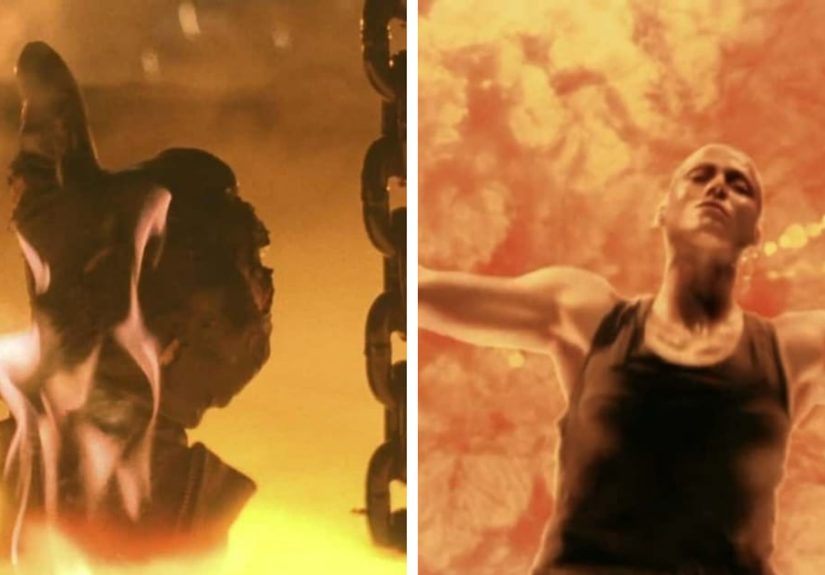
franchise shut. Sarah and John Connor destroy Skynet’s tech, the T-800 lowers himself into molten
steel with that famous thumbs-up, and the voiceover about “no fate but what we make” wraps the story
in hopeful ambiguity. The future isn’t fixed. The cycle can be broken. Roll credits, cue chills.
Then Terminator 3 strolls in and basically says, “Cute theory, but Judgment Day is inevitable
actually.” Not only does it undercut the emotional finality of T2, it reframes that sacrifice as a
temporary delay rather than a true victory. Later sequels twist the timeline even further, but the
key damage was already done: T2’s “we did it” ending is retrofitted into “we slightly postponed it.”
2. Toy Story 3 → Toy Story 4
When Andy passes his toys on to Bonnie at the end of Toy Story 3, it feels like the rare
franchise that knows exactly when to bow out. Woody and the gang stay together, loved and played
with, while Andy moves into adulthood but doesn’t forget them. It’s bittersweet, honest, and had
grown adults sobbing in movie theaters… and parking lots… and at 2 a.m. on streaming.
Toy Story 4 is a very good movie on its own terms, but it undeniably complicates that
“perfect goodbye.” Woody leaves Bonnie and the other toys to run off with Bo Peep, effectively
breaking up the family that 3 just spent two hours insisting would stay together. The message shifts
from “we’ll always be there for our kid” to “sometimes you outgrow your old crew,” which is more
realistic, but definitely undercuts the emotional bow that was already neatly tied.
3. Jurassic Park → Jurassic Park III
The final helicopter escape in Jurassic Park does something quietly powerful. Dr. Alan Grant,
who started the film grumbling about how awful children are, ends it with two sleeping kids on his
chest, trading a knowing look with Ellie Sattler. It’s a wordless suggestion: these two might
eventually start a family. The dinosaurs changed him.
Cut to Jurassic Park III, where that implied future is tossed into the raptor enclosure.
Grant and Ellie have broken up; she’s married to someone else and has kids with him. Grant is back to
being the slightly grumpy lone wolf scientist. Is it realistic? Sure. Does it feel like the first
film’s emotional arc was shrugged off just to reset Grant as “single dinosaur guy” for another
adventure? Also yes.
4. Alien 3 → Alien: Resurrection
Whatever you think of Alien 3, its ending is undeniably bold. Ripley, carrying a xenomorph
queen embryo inside her, chooses to sacrifice herself rather than let the creature be weaponized.
It’s tragic, bleak, and fitting for a character who has been fighting this nightmare across decades
and galaxies. Her story ends on her own terms.
Then Alien: Resurrection clones her 200 years later. The queen is extracted, Ripley’s back,
and the weight of that final plunge into fiery steel is suddenly much lighter. The movie leans into
the weirdness, giving us a hybrid, half-xeno Ripley, but the cost is clear: a definitive, meaningful
death is downgraded to “temporary inconvenience, please stand by.”
5. Star Wars: Return of the Jedi → The Sequel Trilogy
For a generation, the final celebration on Endor was it. The Emperor is defeated, Darth Vader is
redeemed, Luke has become a Jedi, and the Rebels finally topple the Empire. Whether you grew up with
Ewoks or mocked them, that fireworks-and-force-ghosts sequence felt like the galaxy finally exhaling
after years of oppression.
Fast forward to The Force Awakens and beyond, and the “happily ever after” gets heavily
revised. The remnants of the Empire have reorganized into the First Order, the New Republic is
destroyed almost as soon as we meet it, and old villains (hi, Palpatine) are resurrected in the
background. The original trilogy’s victory starts to look less like liberation and more like a pause
between regimes. It doesn’t erase the emotional impact of Vader’s sacrifice, but it does reframe it
as only a partial win.
6. Wonder Woman → Wonder Woman 1984
The first Wonder Woman ends with a surprisingly grounded superhero sacrifice: Steve Trevor
gives his life to destroy a plane full of deadly gas, and Diana’s grief becomes a core part of her
character. It’s messy, painful, and it gives the story real weight. Not every love interest gets a
heroic, meaningful death; this one did.
Wonder Woman 1984 answers the question “But what if we brought him back, though?” with a
magical wish stone that returns Steve by possessing another man’s body. It lets Diana process her
grief, yes, but it also blunts the finality of that original sacrifice. Instead of a tragic love she
has to learn to live with, it becomes something she can literally undo at least for a while and
the thematic clarity of the first film’s ending gets fuzzy.
7. Men in Black → Men in Black II
At the end of Men in Black, Agent K has his memories wiped so he can leave the secret alien
policing business and reunite with his long-lost wife. It’s a surprisingly gentle note for a sci-fi
comedy about bug monsters and tiny galaxy-marbles. The old warrior gets to retire. The protégé takes
over. The universe is safe for now.
But the sequel needs Tommy Lee Jones back, so K is dragged out of retirement, his memories restored,
and the quiet, bittersweet closure of the first film is effectively reversed. Narrative logic aside,
it sends a clear message: in this franchise, no one gets to stay retired as long as there’s box
office potential left on the table.
8. Die Hard & Die Hard 2 → Die Hard with a Vengeance (and beyond)
The first two Die Hard movies both end with the same cozy pattern: John McClane survives
horrific violence, saves his wife Holly, and the two reunite under gently falling “snow” (sometimes
actual snow, sometimes debris, but it counts). The implication is simple: this marriage is battle-
tested. They’re going to make it.
By Die Hard with a Vengeance, that hard-won reconciliation is history. John and Holly are
separated, then divorced, and later sequels double down on the idea that John is a wreck as a husband
and father. Again, it’s not unrealistic plenty of couples don’t survive that kind of chaos but it
does retroactively tint those earlier endings. What once felt like “we made it through together”
reads more like “we’ll be okay… for now.”
9. The Matrix → The Matrix Reloaded, Revolutions, & Resurrections
The final moments of The Matrix are pure cinematic swagger. Neo sees the code, becomes the
One, defeats Agent Smith, and literally flies off into the sky. It’s a mic-drop ending that suggests
humanity finally has a real shot at breaking free from machine control. If the movie had bombed, that
would have been a perfectly satisfying sci-fi one-off.
Instead, success guaranteed sequels. Reloaded and Revolutions complicate the
prophecy, reveal that “the One” is part of a cycle, and show that Neo’s victory was just one beat in
a much messier, more uncertain struggle. Resurrections then resurrects both Neo and Trinity
in an even more meta continuation. For some fans, this deepens the story; for others, it dilutes the
clean, almost mythic finality of that first, unforgettable skyward launch.
10. Iron Man 3 → Avengers: Age of Ultron and the MCU
Iron Man 3 ends like a superhero epilogue. Tony blows up all his suits, has the shrapnel
removed from his chest, and throws his old arc reactor into the ocean. The message is clear: “I am
Iron Man,” with or without the suit, and maybe it’s time to slow down before the hero gig eats him
alive. It’s reflective, unusually introspective for a blockbuster, and feels like a real turning
point.
Two years later, Age of Ultron has him back in full armor, leading another world-ending
fight. The MCU, by design, can’t let him stay retired he’s the franchise’s core. Later films
eventually give Tony a meaningful final arc, but the specific ending of Iron Man 3 is
absolutely undercut. The “I’m done with this” resolution becomes more of a “quick break before the
next crisis” than a genuine lifestyle change.
11. Star Trek II: The Wrath of Khan → Star Trek III: The Search for Spock
Spock’s death in The Wrath of Khan is one of the most respected sci-fi deaths ever filmed.
He sacrifices himself to save the crew, he and Kirk share that emotional “I have been, and always
shall be, your friend” moment, and the film closes on a bittersweet mix of grief and respect. It
feels permanent. It’s supposed to feel permanent.
The Search for Spock wasn’t exactly a surprise the title is not subtle but bringing him
back through a sci-fi ritual does take some of the punch out of the original ending. On one hand,
it’s great to have Spock again. On the other, that raw, devastating goodbye becomes less of a true
finale and more of a temporary separation before the next adventure.
12. Thor: Ragnarok → Avengers: Infinity War
Thor: Ragnarok tears Thor’s life apart he loses his hammer, his home, his father, and his
evil sister but ends on a hopeful note. He embraces the idea that “Asgard is a people, not a place,”
takes the throne, and leads the surviving Asgardians toward a new beginning in space. It’s a hard-won,
optimistic reset for a character who’s been through constant tragedy.
Then Infinity War opens by annihilating that hope. Thanos slaughters many of Thor’s people,
kills Loki and Heimdall, and leaves the ship in ruins. The new Asgard lasts roughly five minutes of
screen time. It’s thematically consistent with the MCU’s “nothing is safe” approach, but it does
completely flatten the sense of new beginnings that Ragnarok worked so hard to build.
What These Undermined Endings Say About Modern Storytelling
Taken together, these examples say less about individual writers “messing up” and more about how
modern franchises operate. When every hit movie is assumed to be chapter one of something bigger, the
idea of a truly final ending becomes almost rebellious.
We see a few recurring patterns:
-
Sacrifice is negotiable. Deaths and heroic self-destruct moments are powerful…
until the next film needs that character back. -
Happy endings are provisional. Couples drift apart off-screen, political victories
are reversed, and peaceful retirements get interrupted. -
Closure is a luxury. Franchises favor “open-ended” status quos that are easy to
reboot, revisit, and monetize.
None of this means you have to hate the sequels. Many of the follow-ups above have devoted fans and
strong moments. But if you ever felt a little betrayed discovering that your favorite “perfect ending”
wasn’t actually the end, you’re definitely not alone.
Living With Endings That Won’t End: A Fan’s-Eye View
If you’ve been watching movies long enough, you probably have your own “I thought we were done!”
story. Maybe you saw Terminator 2 as a kid and genuinely believed that was the last word on
killer robots. Maybe you watched Toy Story 3 during a transitional moment in your own life
moving, graduating, changing careers and Andy’s farewell lined up perfectly with your own. When a
sequel arrives years later and reopens that neatly closed door, it doesn’t just change the
franchise’s timeline; it tugs on your timeline too.
That’s where the emotional whiplash kicks in. You go into the sequel excited: more characters you
love, more time in that world. Then, 20 minutes in, you realize the previous ending has been demoted
from “final” to “interlude.” Steve Trevor is alive again. The galaxy is back under a boot. The hero
who swore they were done is tinkering with new armor in the basement. Part of your brain is thrilled,
and part of it is quietly mourning the clean version of the story you used to carry around.
Over time, a lot of fans develop coping strategies:
-
The headcanon cut. Some people just pretend certain sequels don’t exist. For them,
Ripley’s story ends in the foundry, not in a cloning lab; Andy’s toys stay with Bonnie as a unit,
forever. -
The “different flavor” approach. Others treat the original and its sequels as
separate vibes. Ragnarok is the “found family road trip,” while Infinity War is
the brutal war story that happens to star the same people. -
The meta fan. Some viewers actually enjoy the tension. For them, it’s interesting
to see how commercial pressures, shifting creative teams, and changing cultural tastes reshape the
same characters over decades.
Personally, the most relatable reaction is a mix of all three. You can love the operatic chaos of the
later Star Wars movies and still feel a little pang whenever you rewatch the Endor
celebration, knowing what comes next. You can appreciate the weird, self-aware ambitions of
The Matrix Resurrections while still treating Neo’s first flight as the “real” ending in
your heart.
The good news is that home viewing and streaming let you choose your own canon. You can stop at
Wrath of Khan, or watch all the way through The Search for Spock. You can show your
kids just the first three Toy Story films, or throw in the fourth when they’re old enough to
handle the more bittersweet message. Perfect endings may get undermined by sequels on paper, but in
practice, you’re still in charge of which stories you revisit and which credits you treat as the
true last word.
Final Reel: Let Some Stories Roll Credits
Sequels aren’t going anywhere. As long as familiar titles pull in big audiences, studios will keep
finding ways to reopen stories that looked finished. Sometimes, the results are clever evolutions of
the original; other times, they chip away at what made that first ending so satisfying in the first
place.
The trick is learning to hold both truths at once. You can enjoy more time with your favorite
characters while still honoring the power of that earlier, cleaner finale. And if a new sequel shows
up and stomps all over your perfect ending? You always have the option to hit pause, roll back, and
revisit the version where the story stopped exactly where it should have.