Table of Contents >> Show >> Hide
- Why These Leadership Books Matter for Principals
- 1. The Happiness Advantage by Shawn Achor
- 2. Leadership and Self-Deception by the Arbinger Institute
- 3. Culturize by Jimmy Casas
- 4. Good to Great by Jim Collins
- 5. The Fearless Organization by Amy Edmondson
- 6. What Is My Value Instructionally to the Teachers I Supervise? by Baruti K. Kafele
- 7. Becoming by Michelle Obama
- 8. The End of Average by Todd Rose
- 9. Leaders Eat Last by Simon Sinek
- 10. What Great Principals Do Differently by Todd Whitaker
- 11. Multipliers by Liz Wiseman
- 12. The Multiplier Effect by Liz Wiseman, Elise Foster, and Lois Allen
- What This 12-Book Shelf Says About Great School Leadership
- Extended Reflection: What These Lessons Look Like in Real School Life
- Conclusion
- SEO Tags
School leadership is one of those jobs that can make a person answer emails with one hand, calm an upset parent with the other, and somehow still remember the cafeteria duty schedule before 8:15 a.m. In other words, being a principal is not for the faint of heart, the easily distracted, or the person who says, “I prefer low-stress environments.”
That is exactly why leadership books still matter. The best ones do not offer glittery nonsense about “winning the day” before sunrise or turning every problem into a motivational poster. Instead, they give principals language for the work they are already doing: building trust, shaping school culture, coaching teachers, leading through change, and staying human while everyone else is losing their minds over the copier.
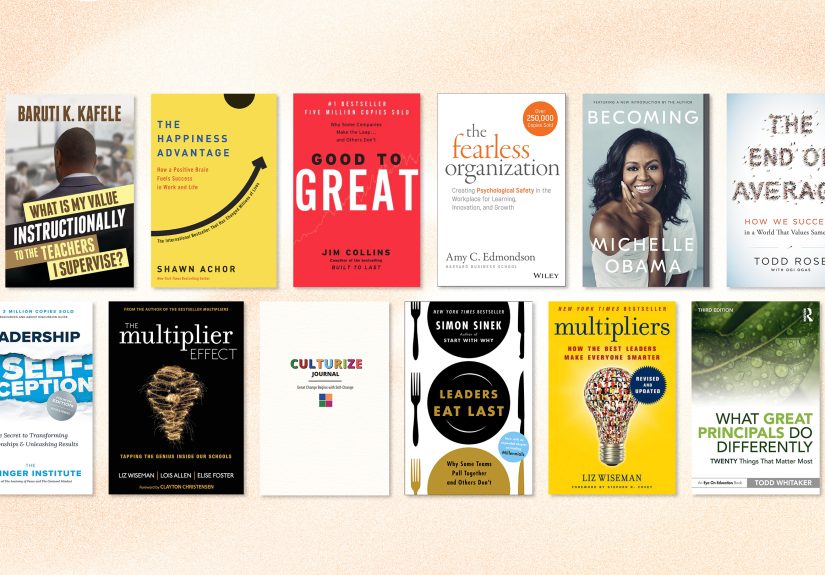
A recent roundup of principals’ favorite leadership books revealed something refreshing: there is no single “correct” bookshelf for school leaders. Some principals swear by books on positivity and mindset. Others lean toward instructional leadership, self-awareness, or team culture. A few prefer books that are not even traditional leadership texts at all. Together, their picks paint a clear picture of what great school leadership actually looks like. It is less about heroic speeches and more about habits, humility, clarity, and the daily choices that shape a campus.
Below is a fully rewritten synthesis of 12 standout recommendations from principals, along with the biggest leadership lesson each title offers to anyone running a school. If you are a principal, aspiring administrator, or educator who loves a good professional read, consider this your shortcut to a smarter bookshelf.
Why These Leadership Books Matter for Principals
Across education sources and school leadership organizations, one theme shows up again and again: principals grow when they keep reading. Not because books magically solve school problems, but because strong leadership depends on reflection. Principals need ideas they can test, language they can borrow, and frameworks that help them see familiar challenges in a new way. The right book can sharpen instructional leadership, strengthen culture, and help leaders move from reacting to responding.
And the real magic here is range. These 12 recommendations do not all march in the same direction. Some focus on internal mindset. Some center relationships. Some ask leaders to get better at drawing out the talent of others. Put together, they suggest that the best leadership book for a principal is not necessarily the one with the loudest title. It is the one that changes how that leader shows up on a random Tuesday in October.
1. The Happiness Advantage by Shawn Achor
Why one principal swears by it
Belinda Averill, principal of South Lake Middle School in Southern California, highlighted this book because it flips a belief many leaders quietly carry: that success comes first and happiness follows later. Achor argues the opposite. For principals, that idea matters more than it may seem. If the building leader operates like a permanently frazzled smoke detector, everyone feels it.
Leadership lesson
This book reminds school leaders that optimism is not fluff. Joy, resilience, and emotional steadiness help leaders think clearly, handle pressure, and keep teams moving when the semester gets messy. In schools, positivity is not about pretending everything is perfect. It is about creating the emotional conditions where people can keep doing meaningful work without burning out by Halloween.
2. Leadership and Self-Deception by the Arbinger Institute
Why it sticks
Shauna Haney, principal at Ogden High School in Utah, praised this book for getting underneath surface-level leadership tricks. Its core idea is uncomfortable and useful: sometimes leaders are part of the problem and do not even realize it. That stings a little. It is also the kind of sting that can make a leader better.
Leadership lesson
For principals, self-awareness is not optional. When a school leader views staff, students, or families as obstacles instead of people, even technically correct decisions can land badly. This book pushes principals to examine their own defensiveness, assumptions, and blind spots. Translation: before fixing the culture, check whether you are accidentally stepping on the hose.
3. Culturize by Jimmy Casas
Why principals keep returning to it
Stacey Green, principal at Stockton Grade School in Kansas, connected strongly with Casas’s “Every student. Every day. Whatever it takes” mindset. That slogan works because it is not vague. It is a standard. It asks leaders to make culture visible in how adults speak, respond, and prioritize.
Leadership lesson
Culturize is a reminder that school culture is not a decorative word you toss into the improvement plan and hope for the best. It is built in daily interactions. Principals who take this book seriously focus less on slogans and more on whether students feel known, whether adults act like a team, and whether expectations are lived instead of laminated.
4. Good to Great by Jim Collins
Why it resonates in schools
Chad Soupir, principal at Elkhorn Valley View Middle School in Nebraska, drew on Collins’s thinking to emphasize teamwork and expertise. While the book comes from the business world, its appeal for principals is obvious: great organizations do not drift into excellence. They get deliberate about who they are and what they do best.
Leadership lesson
For school leaders, the takeaway is focus. A principal does not improve a school by chasing every shiny initiative that rolls in with a PDF attachment. Strong leaders identify the work their school can do exceptionally well, organize people around it, and keep the mission from getting buried under noise, novelty, and twelve competing priorities.
5. The Fearless Organization by Amy Edmondson
Why it is a modern favorite
Michael Martin, principal at Buckeye Central High School in Ohio, values this book for its emphasis on psychological safety. That phrase gets thrown around a lot, but its meaning is practical: do people in your building feel safe enough to speak honestly, ask questions, admit mistakes, and challenge ideas without fear of humiliation?
Leadership lesson
Principals need this book because schools cannot improve if teachers whisper concerns in parking lots but stay silent in meetings. Psychological safety does not mean low standards. It means honest dialogue. A principal who invites critique, names personal fallibility, and treats mistakes as learning opportunities creates a staff culture that is more candid, more innovative, and far less passive-aggressive. Which, frankly, is a public service.
6. What Is My Value Instructionally to the Teachers I Supervise? by Baruti K. Kafele
Why this one hits home
Amanda Austin, principal at Iberville Math, Science, and Arts Academy in Louisiana, pointed to Kafele’s book as a challenge to think beyond management. That is an important distinction. A principal can keep the buses moving and the paperwork clean while still being thin on instructional value.
Leadership lesson
Kafele pushes school leaders to ask the question many avoid: what are teachers gaining instructionally because I am here? That shifts the principal role from manager of systems to shaper of teaching and learning. Great principals do not just run schools. They influence instruction, sharpen professional conversations, and keep student learning at the center when everything else tries to steal the spotlight.
7. Becoming by Michelle Obama
Why a memoir belongs on a leadership shelf
Terita Walker, principal at East High School in Colorado, found power in Michelle Obama’s honesty, vulnerability, and sense of personal growth. This is the pick that proves leadership reading does not have to sound like a boardroom memo to be useful.
Leadership lesson
Authenticity matters in schools. Principals who lead with openness and grounded confidence often build deeper trust than those trying to perform some polished version of authority. Becoming reinforces a valuable idea: leadership is not about arriving as a finished product. It is about continuing to grow in public, with integrity, even while other people are watching.
8. The End of Average by Todd Rose
Why this book speaks to educators
Randy Dalton, principal at Molalla River Middle School in Oregon, appreciated this book because it validates something educators know in their bones: students and adults are not average, interchangeable units. Schools love categories, benchmarks, and neat little boxes. Human beings, meanwhile, are out here refusing to fit.
Leadership lesson
For principals, this book is a strong antidote to deficit thinking. It encourages leaders to look for strengths, context, and individual pathways instead of overrelying on averages and labels. In practice, that means designing support around people as they are, not as a spreadsheet wishes they were.
9. Leaders Eat Last by Simon Sinek
Why service-based leadership still matters
Inge Esping, principal at McPherson Middle School in Kansas, connected with Sinek’s “circle of safety” idea and his argument that leadership is about service, not status. That is especially relevant in schools, where people can tell within about six minutes whether a leader is there to help or merely to supervise decoratively.
Leadership lesson
This book challenges principals to protect their people. That means creating conditions where teachers feel supported, students feel seen, and teams believe leadership will not throw them under the bus when pressure spikes. Principals who serve first often end up with stronger loyalty, healthier culture, and more honest communication.
10. What Great Principals Do Differently by Todd Whitaker
Why it remains a classic
Mathew Epps, principal at Alabama’s Career Technical Education Center, took from Whitaker’s book a deep lesson about self-awareness and influence. The old Whitaker line still lands: when the principal sneezes, the whole school catches a cold.
Leadership lesson
Principals set the emotional and professional weather of a building. Their tone, consistency, and attention shape climate more than many policies ever will. Whitaker’s work stays relevant because it is bluntly practical: focus on people, stay consistent, repair relationships, and remember that leadership is not a one-time performance. It is the repeated work of showing up well.
11. Multipliers by Liz Wiseman
Why it changes leadership behavior
Kristy Zaleta, principal at Rogers Park Middle School in Connecticut, described this book as transformative. Wiseman’s framework contrasts two kinds of leaders: those who drain energy and capability, and those who multiply the intelligence already in the room.
Leadership lesson
That is a painfully useful distinction for principals. School leaders can become accidental bottlenecks by solving every problem themselves, approving every idea, and being the hero of every meeting. Multipliers argues for a better way: ask catalytic questions, develop talent intentionally, and build structures where teachers lead, think, and create. The smartest person in the building should not have to prove it every ten minutes.
12. The Multiplier Effect by Liz Wiseman, Elise Foster, and Lois Allen
Why this school-specific version matters
Julie Hatchel, principal at El Morro Elementary School in Southern California, values this education-focused extension of Wiseman’s thinking because it applies multiplier leadership directly to schools. That makes it especially useful for principals who want less theory and more “how does this look on my campus Monday morning?”
Leadership lesson
The message is simple and powerful: schools improve when leaders tap the genius already inside the building. Principals do not need to be all-knowing. They need to be talent spotters, community builders, and trust creators. Done well, that approach boosts engagement, leadership capacity, and school culture all at once.
What This 12-Book Shelf Says About Great School Leadership
If you line these recommendations up side by side, a pattern emerges. Great principals are not just efficient managers. They are culture shapers, instructional leaders, talent developers, and emotional thermostats. They care about trust. They care about clarity. They care about whether the adults in the building feel safe enough to think, contribute, and improve together.
Just as important, these books show that leadership in schools is both inward and outward. Some books push principals to examine themselves first. Others push them to build stronger systems, stronger teams, or stronger teaching. The common thread is not charisma. It is intentionality. Great principals do not wing culture. They do not outsource trust. And they do not assume leadership ends once the calendar invite is sent.
Extended Reflection: What These Lessons Look Like in Real School Life
Here is where the bookshelf becomes real. A principal reads The Fearless Organization, nods wisely, underlines three pages, and then walks into a faculty meeting where half the room is polite, the other half is exhausted, and nobody wants to say the new intervention schedule is a mess. That is the moment the book either matters or becomes an expensive coaster. The principal who applies the lesson says, “Tell me what is not working. I want the honest version.” Suddenly the room shifts. Not magically. Not dramatically. But enough for truth to enter.
Or consider a principal influenced by Multipliers. In the past, she might have handled every difficult parent issue personally, revised every committee plan, and become the unofficial answer machine for the whole building. After changing her approach, she starts asking teachers what they recommend, invites grade-level leaders to co-design solutions, and lets smart people be visibly smart. The surprising result is not chaos. It is capacity. Staff members stop waiting to be rescued and start acting like owners.
Then there is the principal carrying lessons from Culturize and Leaders Eat Last. He stands in the hallway every morning not because someone told him visibility matters, but because he understands culture is built in small repetitions. He knows student names. He checks in with the teacher whose class was rough yesterday. He notices the custodian. He thanks the bus driver. None of that looks flashy on a leadership résumé. All of it shapes whether people feel this school is a community or just a building with Wi-Fi.
Books like The End of Average and Kafele’s work on instructional value show up differently. They appear when a principal stops judging a teacher by one rough observation and starts looking at growth over time. They appear when the leader notices that a student labeled “unmotivated” thrives in a different setting, with a different adult, under a different structure. They appear when school leaders stop asking, “Why are they not fitting the system?” and start asking, “What about the system is failing to see them clearly?”
Even Becoming has a very practical life inside schools. It surfaces when a principal admits in front of staff, “I did not handle that communication well, and I need to do better.” That kind of honesty does not weaken leadership. It deepens trust. People rarely need their principal to be flawless. They desperately need that principal to be real.
And maybe that is the most useful experience-based takeaway from all 12 recommendations: leadership books are not meant to turn principals into motivational quote dispensers. They are meant to sharpen judgment. They help leaders respond with more courage, more humility, and a better sense of what actually moves a school forward. On difficult days, they remind principals that culture is built before the crisis, trust is built before the conflict, and influence is built long before anyone calls a meeting about it.
So no, there is probably no single best leadership book for every principal. But there is a best leadership book for the challenge sitting in front of you right now. If your school needs more trust, start there. If it needs more instructional clarity, start there. If it needs more humanity, more courage, or fewer meetings that feel like hostage situations, there is a book on this list for that too.
Conclusion
The best leadership books for principals do not all sound alike, and that is exactly the point. Some teach self-awareness. Some teach service. Some teach instructional leadership, culture-building, or how to unlock the talent already in a school. But together, these 12 recommendations make one thing clear: strong school leadership is not about having the loudest voice in the room. It is about creating a room where people can do their best work.
For principals, the right book is not the one that makes them feel impressive for an afternoon. It is the one that changes how they lead on the next ordinary school day. And in education, ordinary days are where the real leadership lives.