Table of Contents >> Show >> Hide
- What “13 slots” actually means in real life
- Why wood still wins (even in a world of stainless everything)
- How to choose a 13 slot wood knife block that won’t annoy you later
- The big debate: should knives go in blade-up or blade-down?
- Keeping a knife block clean (because it’s basically a crumb hotel)
- Wood care 101: conditioning keeps it looking good (and behaving well)
- Knife block etiquette: small habits that protect your blades
- When a 13-slot knife block is perfectand when it’s not
- A quick “buy smart” checklist
- Real-World Experiences With a 13 Slot Wood Knife Block (Extra )
- Conclusion
- SEO Tags
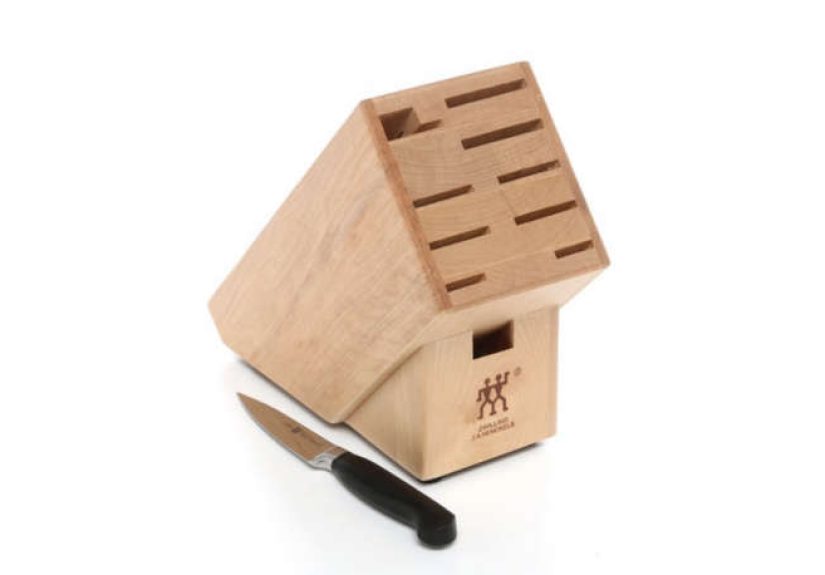
A 13 slot wood knife block is one of those “adult kitchen” upgrades that feels wildly responsible and slightly smug
(in a good way). It’s tidy. It’s safer than loose knives in a drawer. And it makes your countertop look like you
know what “mise en place” meanseven if your biggest culinary flex is perfectly toasted bagels.
But “13 slots” isn’t just a random number that sounds official. It’s a sweet spot for a lot of home cooks:
enough room for the everyday lineup (chef’s knife, bread knife, paring knife, and friends) plus steak knives,
kitchen shears, and a honing rodwithout the block becoming a wooden skyscraper that eats your counter space.
What “13 slots” actually means in real life
Knife block slot counts can be confusing because the “slots” aren’t always “knives.” A typical 13-slot layout
often includes:
- 7-ish large knife slots for your chef’s knife, bread knife, carving knife, santoku, and utility knives
- 4-ish smaller slots commonly used for steak knives
- 1 slot for kitchen shears (a real MVP, especially if you open packages like a raccoon)
- 1 slot for a honing rod to keep your edge aligned between sharpenings
The bonus of a 13 slot wood knife block is that it can handle a “normal” household knife collection without forcing
you to play kitchen Tetris. It’s also a practical size if you’re building a set graduallybecause you can start
with a few core knives and still have room to grow.
Why wood still wins (even in a world of stainless everything)
Wood knife blocks stick around for good reasons: they’re stable, they look warm and classic, and they’re kinder to
your blades than a lot of hard surfaces. The key is understanding that “wood” is a big category.
Common wood choices you’ll see
- Acacia – Dense, durable, and often naturally more moisture-resistant than softer woods.
- Maple or beech – Classic kitchen woods; sturdy and smooth, usually with a clean, simple look.
- Walnut – Gorgeous darker grain; often pricier, but very “countertop jewelry.”
- Bamboo – Technically a grass, but widely used; lightweight and popular for “eco” vibes.
The trade-off? Wood is porous and can trap moisture if knives go in wet. A wooden knife holder isn’t high-maintenance,
but it does reward a little care. Think of it like a houseplant: ignore it forever and it gets weird; pay it minor
attention and it thrives.
How to choose a 13 slot wood knife block that won’t annoy you later
A knife block is an organizer, not a magical portal. The right one should fit your knives, your kitchen layout,
and your habits. Here’s what to check before you buy.
1) Footprint and height: measure your “parking spot”
Knife blocks vary a lot in footprint. Some are compact and tall; others are longer and angled. If you have
upper cabinets, measure the vertical clearance so you’re not doing a weird wrist twist to pull knives out.
Angled blocks usually make access easier, especially in tighter spaces.
2) Slot sizes: the “chef’s knife reality check”
Not all knives fit all slots. A wide chef’s knife, a thick-handled knife, or a tall blade can be a problem if the
slots are narrow or shallow. If you own broader blades (like a santoku or cleaver-style knife), look for blocks
that clearly describe slot widths or indicate they fit “wide” knives.
Also: don’t assume “13 slots” means “13 random knives of any shape.” Many blocks are designed around a standard
mix of sizes, and specialty knives can be the wildcard.
3) Dedicated slots vs “universal” storage
Traditional slotted blocks keep knives separated and organized, but they can be picky. Universal blocks (often with
flexible inserts) accept different knife shapes more easily, but they may not be as instantly “grab-and-go” neat.
If your collection is mixeddifferent handle styles, different brands, odd sizesuniversal storage may reduce frustration.
4) Stability: non-slip feet are not a “nice-to-have”
A good block should feel planted. Rubber feet or a grippy base matter more than you thinkespecially if you’re
pulling out a longer knife one-handed while your other hand is holding a cutting board, a carrot, or your dignity.
5) Finish: sealed vs unfinished wood
Some blocks are sealed with a finish; others are more raw and need occasional conditioning. A sealed exterior can
wipe clean more easily. An unfinished surface can look more natural but may require periodic oiling so it doesn’t
dry out or stain.
The big debate: should knives go in blade-up or blade-down?
Knife people love two things: sharp edges and strong opinions. Storage orientation is one of those topics where
multiple “right” answers exist because the best choice depends on your priorities:
edge protection vs hand safety.
Blade-down: safer for fingers, potentially rougher on edges
Storing knives blade-down can reduce the chance of nicking your fingers when you reach in. The downside is that if
the sharp edge rubs the wood while inserting or removing, it can contribute to dulling over timeespecially if you’re
not careful (or if the slot is tight).
Blade-up (spine-down): gentler on the cutting edge, requires better habits
Storing knives with the spine contacting the wood (so the sharp edge faces up) can reduce edge wear. But it
demands good technique when grabbing and returning knives, and it may be a poor fit for households with small kids,
hectic kitchens, or anyone who tends to grab things quickly without looking.
A practical “best of both worlds” approach
- Prioritize safety first if your kitchen is busy, you have kids, or multiple people cook.
- If you store spine-down, commit to slow, deliberate handlingno “blind grabs.”
- Choose a block with roomy slots so you’re not scraping blades on the way in or out.
No matter which camp you join, one thing stays true: a careful, controlled motion beats a chaotic shove every time.
Your knives (and fingers) will thank you.
Keeping a knife block clean (because it’s basically a crumb hotel)
Knife blocks look clean because the mess is inside. Tiny crumbs, dust, and moisture can collect in the slots,
and if knives go in damp, the block can develop odors or even mold. Cleaning isn’t hardit just needs to happen
occasionally, like changing your toothbrush or admitting you have too many coffee mugs.
Quick maintenance: 60 seconds once a week
- Remove knives and turn the block upside down; give it a few firm shakes.
- Wipe the exterior with a lightly damp cloth, then dry it.
- Only return knives that are clean and completely dry.
Deep clean: once a month (or immediately if it smells “off”)
- Empty the block completely.
- Shake out debris, then use a pipe cleaner or a slim brush to loosen crumbs inside each slot.
- Vacuum the slots if you can (yes, your vacuum has a new side quest).
- Wash the exterior with mild soap and warm waterno soaking.
- Rinse lightly and wipe away soap residue with a clean damp cloth.
- Dry thoroughly, then let the block air-dry overnight before returning knives.
Important: don’t dunk a wood knife block in water and don’t run it through a dishwasher. The goal is “clean and dry,”
not “waterlogged and cracking.”
Wood care 101: conditioning keeps it looking good (and behaving well)
If your block is unfinished or starts looking dry, a light conditioning can help. The most common approach is
food-grade mineral oil, sometimes followed by a beeswax/mineral-oil blend for extraS-tier smoothness.
How to condition your wood knife block
- Make sure the block is clean and fully dry.
- Apply a small amount of food-safe mineral oil with a soft cloth.
- Rub it in evenly, following the grain.
- Let it absorb for a few hours (or overnight), then buff off excess.
Avoid using cooking oils (like olive oil) for wood conditioning because they can go rancid over time and leave a
sticky smell that makes your knife block feel like it’s holding a grudge.
Knife block etiquette: small habits that protect your blades
A 13 slot wood knife block isn’t just storageit’s part of your knife-care system. These habits help knives stay
sharper and last longer:
- Dry knives immediately after washingespecially around the handle and rivets.
- Don’t store dirty knives “just for a minute.” That minute becomes… a lifestyle.
- Don’t force a knife into a tight slot; you’ll scrape the edge and damage the wood.
- Use a honing rod regularly to keep the edge aligned (it’s not sharpening, but it helps).
- Keep specialty knives protected if they don’t fit wellbetter a guard than a chipped tip.
When a 13-slot knife block is perfectand when it’s not
For most kitchens, a 13-slot countertop knife organizer is a clean, efficient solution. But it’s not the only
smart way to store knives.
A 13-slot wood knife block is great if you:
- Want safe, visible storage without drilling into walls
- Have a standard mix of kitchen knives and steak knives
- Like the look of a classic wooden block on the counter
- Prefer “a place for everything” organization
Consider alternatives if you:
- Have lots of specialty blades with unusual shapes or long lengths
- Want to free up counter space entirely
- Don’t want to deep-clean slots (fair)
Alternatives include magnetic wall strips, in-drawer organizers, and individual blade guards. Each option has its own
trade-offs: magnets save space but require careful mounting; drawers hide clutter but need protection; guards are
flexible but not as “grab-and-go.”
A quick “buy smart” checklist
- Measure your space (height under cabinets + counter depth).
- Check knife compatibility (slot width, depth, and wide-blade accommodation).
- Look for stability (non-slip feet, balanced weight).
- Prefer easy cleaning (smooth exterior, good airflow, removable inserts if applicable).
- Match your habits (if you won’t maintain it, choose something lower-maintenance).
Real-World Experiences With a 13 Slot Wood Knife Block (Extra )
Owning a 13 slot wood knife block is a lot like owning a junk drawerexcept it’s classy, visible, and it judges you
silently when you shove something in the wrong spot. The first week is usually a honeymoon phase: you line up your
knives, admire how “organized” you’ve become, and suddenly you’re convinced you should start meal-prepping just to
honor the vibe.
Then real life shows up. The first surprise most people notice is that the block changes how they cook. Not in a
mystical “I am now a chef” way, but in a practical “I can actually find my paring knife” way. When knives are stored
safely and visibly, you tend to reach for the right tool more often. Instead of sawing a tomato with a dull utility
knife (we’ve all been there), you grab the serrated knife that’s been waiting patiently in its slot, like a well-trained
kitchen assistant.
The second surprise: you become weirdly aware of moisture. A wood knife block makes it obvious that “putting away a
wet knife” is a terrible idea, because you can feel the drag as it slides into the slotand you can almost hear the
future mildew forming. Many home cooks build a tiny ritual: wash, dry, a quick visual check, then store. It takes
maybe 10 extra seconds per knife, which is less time than you spend deciding which streaming service you’re mad at today.
Another common experience is “slot politics.” The chef’s knife wants the prime real estate. Steak knives are the
rowdy teenagers that somehow always go in crooked. And there’s usually one slot that nobody can agree ontoo small
for the carving knife, too big for the paring knife, and somehow perfect for the one random knife you don’t even like.
Some people solve this with a simple system: largest knives on the back row, daily drivers in front, and specialty knives
in the “VIP” slots where they won’t get bumped.
People also notice that a 13-slot block can encourage restraint. If you’re tempted to buy every cool-looking knife you see,
the block quietly asks, “And where will you put that, exactly?” It’s a surprisingly effective way to keep your collection
practical. On the flip side, if you love varietymultiple chef’s knives, extra prep knives, a couple of oddballs13 slots
can fill up fast. That’s when many cooks either rotate seasonal knives (yes, that’s a thing) or add blade guards for overflow
storage in a drawer.
And finally, there’s the “company is coming over” factor. A wood knife block makes your kitchen look instantly more pulled
together, even if your sink is full of dishes and your refrigerator contains three sauces and one sad lemon. It’s the kitchen
equivalent of putting on nice shoes for a video call: you’re still you, but you’re the version of you that looks like they
have it figured out.
Bottom line: a 13 slot wood knife block is one of those upgrades that doesn’t just store knivesit shapes your habits.
It nudges you toward safer storage, better knife care, and a more organized prep routine. And if it also makes you feel like
the main character in your own cooking montage? That’s just good countertop design.
Conclusion
A 13 slot wood knife block hits a practical middle ground: enough capacity for a real knife lineup, compact enough for
everyday kitchens, and stylish enough to look intentional on the counter. Choose one that fits your space and your knives,
keep it clean and dry, and treat the wood like the hardworking tool it is. Do that, and you’ll get safer storage, a tidier
kitchen, and knives that stay sharper longerwithout turning knife care into a full-time hobby.