Table of Contents >> Show >> Hide
- Why dark cabinets work (and why they’re not just a “trend”)
- Before you go dark: 5 fast rules that save you from regret
- 13 stunning dark kitchen cabinet ideas
- Matte black Shaker cabinets for a modern-classic look
- Deep navy cabinets that feel timeless (not nautical)
- Charcoal gray cabinets for “dark, but not black”
- Espresso brown cabinets that bring warmth and depth
- Dark walnut or stained wood cabinets for a rich, natural vibe
- Forest green cabinets for a cozy, elevated “nature” mood
- Two-tone: dark lowers + light uppers (the crowd-pleaser)
- Statement island: dark island cabinets with lighter perimeter cabinets
- Black + warm wood mix for a modern, welcoming contrast
- High-gloss or lacquer-look dark cabinets for glam impact
- Dark cabinets + reeded or fluted glass doors for texture
- Slab backsplash with dark cabinets for a seamless, high-end look
- Dark cabinets with open shelving to “breathe”
- Make hardware the headline: bold pulls on dark cabinetry
- Finish, lighting, and maintenance tips (because real kitchens exist)
- Quick FAQs
- Real-world experiences and lessons learned (extra add-on)
- Wrap-up
- SEO tags
Dark kitchen cabinets are the fashion equivalent of a great leather jacket: they make everything around them look more intentional.
Done right, a moody cabinet color can feel modern, classic, cozy, and “wow” all at oncesometimes in the same afternoon,
depending on how your sunlight hits the room. (Yes, your kitchen can have a glow-up schedule.)
This guide breaks down 13 dark kitchen cabinet ideas that look expensiveeven when they’re notplus the practical
design moves that keep a darker kitchen from turning into a cave where spatulas go to disappear.
Why dark cabinets work (and why they’re not just a “trend”)
Dark cabinetry adds contrast, depth, and a built-in focal pointespecially when you pair it with lighter surfaces and thoughtful lighting.
It also plays nicely with multiple styles: minimalist slab doors, transitional Shaker fronts, classic inset cabinetry, or a warm modern mix of wood and metal.
The secret is not “go dark everywhere,” but go dark where it counts.
Before you go dark: 5 fast rules that save you from regret
- Balance the light: Dark cabinets love bright countertops, reflective backsplashes, and good task lighting.
- Pick the right finish: Matte feels modern; satin is forgiving; glossy is dramatic but shows fingerprints like it’s their full-time job.
- Watch the undertone: “Black” can lean blue, brown, or charcoal. Test swatches in morning and evening light.
- Let hardware do its thing: Dark cabinets are the perfect stage for brass, nickel, iron, or mixed metals.
- Repeat the dark tone: Add a few supporting players (a faucet, lighting, stools, or window trim) so the cabinets don’t feel random.
13 stunning dark kitchen cabinet ideas
Matte black Shaker cabinets for a modern-classic look
Matte black cabinetry is bold without being loudthink “quiet luxury,” but in kitchen form. Shaker doors keep the vibe timeless,
while matte finish softens reflections so the room feels grounded, not glossy and harsh.- Pair with: White quartz or marble-look counters, warm wood floors, and soft white walls.
- Hardware: Unlacquered brass for warmth, or polished nickel for crisp contrast.
- Pro move: Use a lighter backsplash (subway tile, zellige-style ceramic, or a pale slab) to bounce light back.
Deep navy cabinets that feel timeless (not nautical)
Navy is the friendliest “dark” color: it brings depth like black, but it can feel softer, warmer, and more traditional depending on the undertone.
Navy also plays well with natural stone veining and aged metals.- Pair with: Creamy whites, warm grays, and natural oak accents.
- Style cue: Keep the rest of the palette calm so the cabinets look intentionalnot like you got stuck in the paint aisle.
- Great for: Transitional kitchens that want personality without going full drama.
Charcoal gray cabinets for “dark, but not black”
Charcoal is the gateway dark: moody, sophisticated, and usually more forgiving than true black. It hides everyday wear well
and can lean warm or cool depending on lighting and surrounding finishes.- Pair with: Light greige walls, white counters, and black or brushed metal accents.
- Backsplash idea: Pale gray tile with subtle texture (it keeps the look rich without going busy).
- Bonus: Great in open layouts where a pure black might feel too heavy.
Espresso brown cabinets that bring warmth and depth
Espresso (deep brown) cabinets give you a dark, luxurious look without the “stark” edge of black. It’s especially gorgeous if your home has warm woods,
creamy paints, or traditional details.- Pair with: Warm white walls, beige-toned stone, and bronze or antique brass hardware.
- Flooring: Medium oak or walnut keeps the kitchen cozy instead of gloomy.
- Not required: A home espresso bar. (But we won’t stop you.)
Dark walnut or stained wood cabinets for a rich, natural vibe
If you want depth without paint, dark stained wood is a classic move. Walnut (or walnut-look) cabinetry adds texture and warmth
and reads “high-end” because the grain does the decorating for you.- Pair with: Honed stone counters, creamy off-white paint, and soft, warm lighting.
- Best style match: Modern, mid-century, or warm contemporary kitchens.
- Tip: Choose a flatter sheen so the grain looks refined rather than shiny.
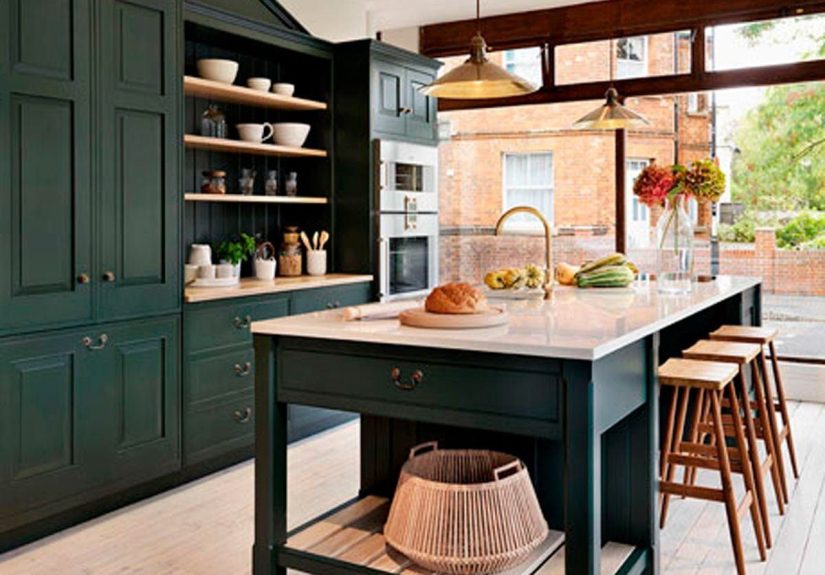
Forest green cabinets for a cozy, elevated “nature” mood
Deep green reads luxe and groundedlike your kitchen started doing Pilates and drinking water. It’s dramatic, but it also feels inviting,
especially with warm metals and natural wood.- Pair with: Brass hardware, warm white backsplash, and butcher block or creamy quartz.
- Style sweet spot: Cottage, farmhouse, and English-inspired kitchens (without the castle tax).
- Keep it polished: Repeat green subtly in a runner, art, or bar stools.
Two-tone: dark lowers + light uppers (the crowd-pleaser)
This is the “best of both worlds” layout: dark base cabinets anchor the room, while light uppers keep the kitchen airy.
It’s especially smart in smaller kitchens or spaces with limited natural light.- Try: Black lowers + warm white uppers, or charcoal lowers + creamy beige uppers.
- Why it works: Lower cabinets take the most scuffsdarker colors hide wear better.
- Finishing touch: A simple light backsplash that connects both tones.
Statement island: dark island cabinets with lighter perimeter cabinets
Want drama without committing to a full-dark kitchen? Make the island your centerpiece. A dark island reads custom and designer-y,
even if the rest of the kitchen stays light and bright.- Pair with: Light perimeter cabinets, matching countertops, and bold pendants over the island.
- Color ideas: Inky blue, black, deep green, or charcoal.
- Extra credit: Add fluted panels or furniture-style legs for a bespoke look.
Black + warm wood mix for a modern, welcoming contrast
Combine black or charcoal cabinets with oak (open shelves, a hood surround, or an island) to keep the kitchen from feeling severe.
The wood acts like a warm “bridge” between dark cabinetry and bright surfaces.- Pair with: Light stone counters and a simple backsplash so the materials can shine.
- Hardware: Black for a sleek look, or brass to add glow.
- Design note: Keep wood tones consistent (too many stains = visual clutter).
High-gloss or lacquer-look dark cabinets for glam impact
Glossy dark cabinets reflect light and feel ultra-luxe. They’re fantastic in contemporary spaces where clean lines and drama are the point.
The tradeoff? Smudges and fingerprints become… enthusiastic participants in your kitchen design.- Pair with: Minimal hardware, sleek counters, and strong lighting.
- Best for: Adults who enjoy wiping things down. (Or households with a dedicated “microfiber phase.”)
- Smart compromise: Gloss on the island only, matte elsewhere.
Dark cabinets + reeded or fluted glass doors for texture
Glass-front uppers can lighten a dark kitchen without sacrificing the moody vibe. Reeded/fluted glass adds privacy,
softens the look, and gives your cabinetry that “custom showroom” feel.- Pair with: Interior cabinet lighting to create a warm glow at night.
- What to display: Matching dishes, simple glassware, or neutral ceramics (avoid the rainbow mug collection unless that’s your brand).
- Style win: Works in modern and traditional kitchens alike.
Slab backsplash with dark cabinets for a seamless, high-end look
A full-height slab backsplash (using the same material as your countertop) makes the kitchen feel cohesive and expensive.
It’s a clean, modern move that balances dark cabinets with a continuous, elegant surface.- Pair with: Veined quartz, marble-look surfaces, or stone with subtle movement.
- Why it works: Less grout = less visual noise (and less scrubbing).
- Tip: Keep open shelving minimal so the slab can be the star.
Dark cabinets with open shelving to “breathe”
Open shelves can break up a wall of dark cabinetry and keep the kitchen feeling open. This is especially helpful in smaller rooms
or kitchens with fewer windows.- Pair with: A light backsplash and warm shelf material (oak is a classic).
- Rule: Style shelves simplytwo to three repeating items look curated, not chaotic.
- Reality check: Open shelves are not for everyone. If you hate dusting, choose glass-front cabinets instead.
Make hardware the headline: bold pulls on dark cabinetry
Dark cabinets are basically a runway for hardware. Oversized pulls, mixed metals, or vintage-inspired knobs can turn plain doors
into a statementwithout redoing the whole kitchen.- Try: Unlacquered brass + black cabinets, or polished nickel + navy for a crisp look.
- Modern option: Integrated or edge pulls on slab fronts for a sleek finish.
- Budget trick: Swap hardware first; it’s one of the highest-impact changes you can make.
Finish, lighting, and maintenance tips (because real kitchens exist)
Choose a finish that matches your lifestyle
- Matte: Modern and velvety, hides minor flaws, but can show grease if the product isn’t durable.
- Satin: The practical sweet spotwipes clean more easily, still looks rich.
- Semigloss/high gloss: Reflective and dramatic, but fingerprints and smudges are more visible.
Light like you mean it
- Layer lighting: recessed + pendants + under-cabinet lights.
- Use warm-white bulbs to keep dark cabinets feeling inviting, not icy.
- If you have a window, don’t block it with a heavy valancelet the sunshine do its job.
Keep dark cabinets looking fresh
- Use gentle cleaners and microfiber cloths to avoid dulling the finish.
- Pick a durable cabinet-grade paint or finish system if you’re repainting.
- Consider a darker color on lowers if you’re worried about scuffs near traffic zones.
Quick FAQs
Do dark kitchen cabinets make a kitchen look smaller?
They canif you go dark everywhere and skip lighting. But when you balance dark cabinets with light counters, reflective backsplash,
and good lighting, dark finishes often add depth rather than shrink the room.
What countertops look best with dark cabinets?
Light quartz, marble-look surfaces, and pale granites create classic contrast. Warm options like butcher block or creamy stone can soften the look.
If you love dark-on-dark (dark cabinets + dark counters), add extra lighting and keep the backsplash lighter or more reflective.
What backsplash works with dark cabinets?
Bright subway tile, zellige-style ceramics, light stone slabs, or pale patterned tile all work. If your cabinets and counters are dark,
a lighter backsplash keeps the room from feeling too heavy.
Real-world experiences and lessons learned (extra add-on)
If you’re wondering what it’s actually like to live with dark kitchen cabinets, here’s the honest version: it’s wonderful,
it’s dramatic, and it occasionally turns you into a person who notices fingerprints the way some people notice birds.
One common homeowner story starts with a bold decision“Let’s do black!”and ends with a surprisingly emotional moment when the last door goes up.
Dark cabinetry can make a kitchen feel finished in a way light cabinets sometimes don’t. The room suddenly has a center of gravity.
It looks designed, not just assembled. Even a simple Shaker cabinet can feel more expensive because the color adds instant contrast.
The happiest dark-cabinet kitchens usually share one habit: the owners tested the color like it was a new relationship.
They taped big samples to multiple cabinet doors and watched them for a few days. Morning light? Gorgeous.
Evening light under warm bulbs? Cozy and sophisticated. Midday glare? Maybe a bit harsherso they adjusted the bulb temperature,
added under-cabinet lighting, or chose a slightly softer “off-black” instead of a true, inky black.
That tiny step (watching the color in real life) prevents the “why does this look different than my Pinterest board?” moment.
Another real-life lesson: finish matters as much as color. People who chose high-gloss black often loved the wow factor,
but some admitted they didn’t expect the daily maintenance. A glossy cabinet reflects everythinglight, movement, and yes,
the ghost of the toddler who touched every drawer while holding a sticky peach. The folks who went with satin or matte
still got the drama, but with fewer “who put their whole hand here?” mysteries.
Hardware also changes the experience more than you’d think. Switching from small knobs to longer pulls can make cabinets feel easier to use
(and reduces the temptation to grab the door edge, which helps keep things cleaner). Warm metals like brass tend to make dark cabinets feel
inviting and “alive,” while cooler finishes like polished nickel or chrome lean crisp and modern.
Several homeowners said the hardware choice was the moment the kitchen finally felt like their style, not just “dark cabinets.”
The biggest surprise? Dark cabinets can actually feel cozier. Instead of bouncing light everywhere, they create a calm visual boundary,
especially in open-concept homes where the kitchen is always on display. With the right lighting and a lighter countertop,
a dark kitchen becomes less “cave” and more “favorite room in the house.”
Wrap-up
Dark kitchen cabinets aren’t risky when you design them with intention. Pick a shade with the right undertone,
balance it with light surfaces, and give it great lightingthen let texture (wood, stone, tile) and hardware do the rest.
Whether you go full matte black or keep it simple with a dark island, the result can be striking, timeless, and surprisingly livable.