Table of Contents >> Show >> Hide
- Why We Love Animated Alternate History
- 15 Animated Movies That Rewrite Human History
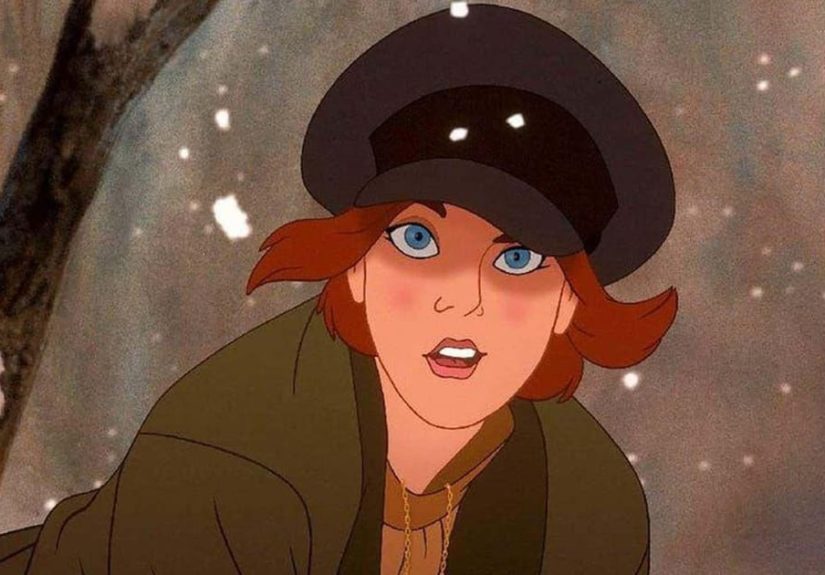
- 1. Anastasia (1997)
- 2. The Prince of Egypt (1998)
- 3. Pocahontas (1995)
- 4. Mulan (1998)
- 5. The Good Dinosaur (2015)
- 6. The Croods (2013)
- 7. Ice Age (2002)
- 8. Atlantis: The Lost Empire (2001)
- 9. Titan A.E. (2000)
- 10. How to Train Your Dragon (2010)
- 11. Hercules (1997)
- 12. Coco (2017)
- 13. April and the Extraordinary World (2015)
- 14. Batman: Gotham by Gaslight (2018)
- 15. Wolfwalkers (2020)
- What These Films Get Wrong (and Why That’s Okay)
- How to Watch History-Rewriting Animation Thoughtfully
- Experiences & Takeaways: Living With Rewritten History on Screen
- Conclusion: Cartoons, Timelines, and the Stories We Choose
History class gave us dates, wars, and pop quizzes. Animated movies gave us
talking dragons, surviving princesses, and dinosaurs running family farms.
When you put those together, you get one of the most entertaining subgenres
on screen: animated movies that rewrite human history.
From ancient Egypt to alternate futures where Earth is dust, these films
play fast and loose with timelines, myths, and major events. Some are
surprisingly thoughtful, some are gloriously bonkers, and most are a mix of
both. They’re not replacements for textbooks, but they are great for
sparking curiosity, starting conversations, and reminding us that history
itself is a kind of story humans keep rewriting.
Why We Love Animated Alternate History
Critics and fans alike have pointed out that animation is perfect for
“what-if” storytelling. It can visualize ancient civilizations, biblical
plagues, or post-apocalyptic futures with the same ease it gives a dinosaur
a cowboy hat. Pixar’s The Good Dinosaur, for example, explicitly
imagines a world where the asteroid missed and non-avian dinosaurs never
went extinct, letting humans and dinos share the same frontier landscape.
Other films, like Anastasia or Pocahontas, remix real
historical figures and events so heavily that they inhabit an alternate
timeline rather than the one historians recognize.
The result is a wild playground where human history becomes an open
sandbox: part fairy tale, part commentary, part fan fiction. Just remember:
enjoy the story, then double-check the facts.
15 Animated Movies That Rewrite Human History
1. Anastasia (1997)
Set in an alternate 1920s, Anastasia imagines that the youngest
Romanov daughter survived the revolution and grew up with amnesia, only to
rediscover her royal identity years later.
Historically, the Romanov family was executed, but the movie turns a real
conspiracy theory (“What if Anastasia survived?”) into a romantic,
musical fairy tale complete with an undead Rasputin. It’s less a history
lesson and more a glossy alternate universe where the fall of the Russian
Empire feels like a Broadway show with magic green sparkles.
2. The Prince of Egypt (1998)
DreamWorks’ The Prince of Egypt retells the biblical story of
Moses leading the Hebrews out of Egypt, compressing complex religious texts
and historical debates into a cinematic character arc.
It simplifies timelines, heightens drama, and reframes the Exodus as a
deeply personal conflict between adopted brothers. While drawn from
scripture rather than strict archaeology, it absolutely reshapes how many
viewers visualize ancient Egypt, pharaohs, and plaguescomplete with
thunderous musical numbers.
3. Pocahontas (1995)
Disney’s Pocahontas is infamous for turning a tragic real-life
story into a romantic, color-saturated fable. Historical research shows
that the real Pocahontas was a young girl whose life was marked by
coercion, violence, and colonization, not a consensual love story with John
Smith.
The film rewrites early American colonial history with soaring ballads and
talking trees, flattening complex Indigenous experiences into a simplified
tale of mutual understanding. Beautiful? Yes. Historically accurate?
Absolutely not.
4. Mulan (1998)
Mulan is based on the ancient Chinese legend of Hua Mulan, a
woman who disguises herself as a man to take her father’s place in the
army.
Disney turns that ballad into a fast-paced war story with dragons, musical
numbers, and a compressed timeline of invading forces. The movie
reimagines gender roles, honor, and heroism in a way that’s more about
modern conversations on identity than about precise Chinese history. It’s
less “this is how it was” and more “this is how we’d like to remember it.”
5. The Good Dinosaur (2015)
Pixar’s The Good Dinosaur asks a simple question: what if the
asteroid never hit Earth and dinosaurs evolved alongside humans?
Suddenly, you’ve got dinosaur farmers, frontier landscapes, and a human
child who behaves more like a pet. Scientifically, it’s nonsense; as some
reviewers note, surviving dinosaurs wouldn’t look like 65-million-year-old
holdovers in cowboy cosplay.
But as an emotional alternate history, it cleverly reframes human
development and family dynamics through a dino-sized lens.
6. The Croods (2013)
The Croods follows “the world’s first prehistoric family” as
they’re forced out of their cave and into an evolving, fantastical world.
The film mashes different prehistoric eras into one surreal road trip,
filled with impossible hybrid animals and out-of-time inventions. It’s not
trying to match the fossil record; it’s using prehistory as a metaphor for
the fear of change, with evolution turned into a bright, slapstick family
comedy.
7. Ice Age (2002)
The original Ice Age takes place near the end of the Pleistocene,
as glaciers retreat and animals migrate to survive.
In reality, humans, mammoths, and saber-toothed cats didn’t hang out in
quippy, mismatched found families. The film turns a massive climatic shift
and complex extinction events into a buddy road movie, where history’s
biggest environmental drama becomes the backdrop for jokes, baby
rescues, and acorn-chasing chaos.
8. Atlantis: The Lost Empire (2001)
Atlantis: The Lost Empire is set in 1914 and imagines that the
legendary lost city not only existed, but preserved advanced technology and
a hidden culture beneath the ocean.
The movie blends steampunk aesthetics with early-20th-century exploration
fever, reshaping our ideas of both Atlantis and the era’s archaeology.
Instead of cautious excavation, we get crystal-powered flying machines,
magical energy sources, and a secret civilization that could radically
change human historyif it weren’t, you know, fictional.
9. Titan A.E. (2000)
Titan A.E. literally labels its future timeline “After Earth.”
Aliens destroy the planet, humanity scatters across the galaxy, and the
remnants of our species pin their hopes on a hidden ship that can seed a
new world.
The film rewrites human history by fast-forwarding to a point where Earth
is gone, nations are meaningless, and “human” becomes a refugee identity
rather than a planetary one. It’s a space opera, but underneath the laser
blasts is a provocative question: who are we when our entire history is
reduced to memory and myth?
10. How to Train Your Dragon (2010)
DreamWorks’ How to Train Your Dragon imagines a Viking society
that builds its identity around fighting dragonsuntil one awkward kid
befriends the enemy and rewrites his culture’s entire worldview.
Historically, Vikings did not commute to work on domesticated Night Furies,
but the film uses a mythic version of Norse culture to explore how a single
generation can completely change tradition, warfare, and even the way
history remembers “monsters.”
11. Hercules (1997)
Hercules takes classical Greek mythologyalready a blend of
religion, storytelling, and political spinand punches it up into a
celebrity-saturated sports movie. While based on the legendary hero
Heracles, the film rewrites ancient Greek cosmology into a world of merch,
fan clubs, and gospel-choir narrators. It doesn’t just reframe myth; it
reimagines how ancient heroes might look if they were born into modern
celebrity culture rather than marble temples.
12. Coco (2017)
Pixar’s Coco isn’t alternate history in the sense of changing
wars or revolutions, but it does rewrite one small family’s past. By
revealing hidden truths about Miguel’s ancestors, it shows how stories
passed down through generations can get edited, censored, or misunderstood.
The film turns genealogy into detective work, reminding us that “family
history” is often a curated narrativeand that rewriting it can be an act
of healing.
13. April and the Extraordinary World (2015)
This French–Belgian–Canadian animated film (often highlighted in alternate
history discussions) imagines a world where scientists mysteriously
disappear, stalling technological progress in the 19th century and locking
humanity into a sooty, steam-powered timeline.
Instead of electricity and modern industry, you get endless coal, iron,
and smog. Human history literally diverges, and the film uses that fork in
the road to explore environmental damage, authoritarian control, and the
cost of losing innovation.
14. Batman: Gotham by Gaslight (2018)
Technically a superhero movie, Batman: Gotham by Gaslight is also
an animated alternate history piece that drops Batman into a Victorian
Gotham and pits him against a Jack the Ripper–style killer.
By mashing comic-book lore with 19th-century urban history, it rewrites both.
Industrialization, policing, and gender politics all get filtered through a
cape-and-cowl lens, turning a grim era into a moody “what-if” thriller.
15. Wolfwalkers (2020)
Wolfwalkers takes place in 17th-century Ireland under English
rule, but overlays that period with Celtic magic and shape-shifting
legends. While rooted in real tensions around colonization and land
control, the film rewrites history so that nature itself fights back
through enchanted guardians. It’s less about strict timelines and more
about reimagining whose storiesand whose spiritsget to define a country’s
past.
What These Films Get Wrong (and Why That’s Okay)
If you watched these movies and then walked into a history exam, you would
have… a rough time. They mix eras, simplify politics, invent romances, and
sometimes ignore real suffering. Critics have rightly called out films like
Pocahontas and Anastasia for softening or romanticizing
trauma tied to colonization and revolution.
But as long as we treat them as stories that reveal cultural attitudes
rather than primary sourcesthey can still be valuable.
The key is using them as conversation starters: “That was a great song.
Now, do you want to know what really happened?” When we do that, these
movies become gateways into deeper learning instead of replacements for it.
How to Watch History-Rewriting Animation Thoughtfully
- Enjoy the fantasy. Let the singing pharaohs and dragon
rides do their thing. - Spot the changes. Ask what the film changed from the
historical or mythic sourceand why. - Listen for whose story is centered. Is the perspective
Indigenous? Colonial? Outsider? Comic relief? - Follow up with real sources. After the credits, look
up the true story, whether it’s the Exodus, the Romanovs, or the
real-life Pocahontas.
Experiences & Takeaways: Living With Rewritten History on Screen
One of the most interesting things about these animated movies is how they
quietly shape our mental picture of history long after the credits roll.
Many people first “met” Moses, Pocahontas, Mulan, or even the idea of
Atlantis through animation, not textbooks. That means your first emotional
connection to those stories may come from a soaring song or a stunning
visual sequencenot a classroom lecture.
For families, that can be both a gift and a responsibility. Watching
Prince of Egypt with kids, for instance, can open the door to
talking about faith, oppression, and freedom in age-appropriate wayseven
if you’re clear that the film compresses and stylizes its source. A movie
like Mulan can spark questions about gender roles, bravery, and
how different cultures honor their heroes, while also giving you a chance
to talk about the difference between a Western studio’s interpretation and
Chinese history and folklore.
With films that heavily distort real eventsPocahontas is a
prime exampleviewers often share mixed experiences. On one hand, the
film may introduce younger audiences to the idea of Indigenous nations and
early colonial encounters. On the other hand, many Native writers and
activists have described the discomfort of seeing a painful historical
reality reframed as a glossy romance. Using that discomfort as a teaching
momentacknowledging the harm of erasure and whitewashingcan be a powerful
way to grow media literacy.
On the more speculative end, movies like The Good Dinosaur,
The Croods, or Titan A.E. tend to spark a different kind
of conversation: not “what really happened?” but “what else could have
happened?” Viewers often come away imagining evolutionary detours, lost
civilizations, or completely new futures for humanity. That sense of
possibility is part of why alternate history is so appealing. It invites
you to question how fragile the path of human development ishow different
we might be if a single asteroid missed, a single city survived, or a
single decision went another way.
For many fans, marathoning these films turns into an unintended crash
course in critical thinking. You start noticing how often stories center
empires rather than the oppressed, how frequently tragedies get rewritten
as personal triumphs, and how myth and memory blend into something that
feels true even when it isn’t factual. That awareness doesn’t ruin the
magic; it deepens it. You can still cry at the emotional climax of
Anastasia while fully understanding that the real Romanov story
ended very differently.
Ultimately, these animated movies remind us that history is not just a
frozen list of dates. It’s a living narrative that cultures revisit,
reinterpret, and sometimes completely remix. When you watch them with open
eyeslaughing at the jokes, admiring the art, and then asking harder
questions afterwardyou turn entertainment into a meaningful, ongoing
conversation with the past, present, and future of human storytelling.
Conclusion: Cartoons, Timelines, and the Stories We Choose
15 Animated Movies That Rewrite Human History shows just how
elastic our collective past becomes in the hands of animators. Some of
these films gently bend history; others snap it in half and rebuild it from
scratch. But all of them reveal what we wish were true: that courage wins,
that families endure, that lost cities can be found, and that even after
disaster, humanity can start again.
Watch them for the fun, stay for the questions, and never be afraid to say,
“That was an amazing movienow let’s talk about what really happened.”