Table of Contents >> Show >> Hide
- Why Open Concept Living Rooms Need a Plan
- 15 Ways to Style an Open Concept Living Room
- 1. Start by Defining the Room’s Main Job
- 2. Create Zones With Area Rugs
- 3. Float Your Furniture Instead of Pushing Everything Against the Walls
- 4. Use the Back of the Sofa as a Divider
- 5. Keep the Color Palette Cohesive
- 6. Repeat Materials and Textures Across the Space
- 7. Use Lighting to Mark Each Zone
- 8. Choose Furniture That Fits the Scale of the Space
- 9. Leave Plenty of Negative Space
- 10. Build a Strong Focal Point
- 11. Add Flexible Seating That Can Move Easily
- 12. Use Curves to Soften All the Hard Angles
- 13. Carve Out a Mini Entry if There Isn’t One
- 14. Layer in Warmth With Natural Elements
- 15. Add Personality Without Breaking the Flow
- Final Thoughts
- Real-Life Experiences With Styling an Open Concept Living Room
- SEO Tags
An open concept living room sounds dreamy on paper. More light. More flow. More room to host friends, supervise kids, and pretend you always keep the kitchen spotless. In real life, though, an open floor plan can feel like a giant blank box where the sofa is floating in existential confusion and the dining table is wondering why it was invited to the same party.
That is exactly why styling an open concept living room takes more strategy than simply buying a big sectional and hoping for the best. The most beautiful open spaces feel connected without looking identical, organized without feeling stiff, and comfortable without turning into a maze of chairs, poufs, and decorative objects that serve no earthly purpose.
If you want your open floor plan to feel polished, practical, and genuinely cozy, these ideas will help. Below are 15 smart, stylish ways to shape your space so it works harder, looks better, and feels like one intentional home instead of three roommates sharing square footage.
Why Open Concept Living Rooms Need a Plan
The biggest challenge in an open concept living room is simple: there are fewer walls to do the visual heavy lifting. In a traditional layout, walls naturally define where one room ends and another begins. In an open concept space, you have to create that structure yourself through furniture arrangement, color, lighting, rugs, materials, and scale.
The good news? Once you understand how to define zones, protect traffic flow, and repeat design elements across the room, styling becomes much easier. Think of it less like decorating one giant room and more like directing a really good ensemble cast. Everyone has a role, and nobody should be shouting over the lead actor.
15 Ways to Style an Open Concept Living Room
1. Start by Defining the Room’s Main Job
Before you buy a single lamp or argue with yourself about boucle versus linen, decide how the space actually needs to function. Is this room mostly for movie nights, entertaining, family hangouts, reading, or all of the above? A smart open concept living room layout begins with real life, not fantasy life.
When you know the room’s primary purpose, it becomes easier to choose the right seating, storage, table surfaces, and layout. A house that hosts often needs flexible seating. A family room needs durable finishes. A quiet lounging zone may need fewer pieces and better lighting. Function first; dramatic throw pillow decisions second.
2. Create Zones With Area Rugs
Few tools work harder in an open floor plan than a great area rug. Rugs visually anchor the living room and help separate it from the dining area, kitchen, or entry without building actual barriers. They tell the eye, “This is the living zone,” which is surprisingly helpful when walls are off on vacation.
Choose a rug large enough for at least the front legs of your main seating pieces to sit on it. A too-small rug can make the room feel scattered and stingy. A properly sized rug makes the furniture arrangement feel grounded, intentional, and much more expensive than your search history would suggest.
3. Float Your Furniture Instead of Pushing Everything Against the Walls
One of the most common open concept living room mistakes is lining the furniture along the perimeter and leaving the middle of the room wide open like a dance floor nobody requested. Floating the sofa and chairs inward creates a defined conversation area and gives the space a stronger sense of purpose.
This setup also improves flow because it helps establish natural pathways around the seating area. In many open concept spaces, the back of a sofa can act as a subtle divider between the living room and dining room. It is a quiet little hero in upholstery form.
4. Use the Back of the Sofa as a Divider
Speaking of heroes, the sofa back is one of the easiest ways to organize an open concept room. Positioning a sofa between the living room and dining area creates instant structure without blocking light or making the space feel chopped up. It is a clean, low-drama way to separate functions.
You can make that division even stronger with a console table behind the sofa. This adds storage, display space, and a crisp visual break while keeping the overall look airy. Bonus points if the table holds lamps, books, or baskets instead of random mail and a single lonely charging cable.
5. Keep the Color Palette Cohesive
Open concept spaces almost always look better when the major colors relate to one another. That does not mean every area has to match like a furniture showroom in witness protection. It means the tones should feel connected, whether through repeated neutrals, accent colors, or similar undertones.
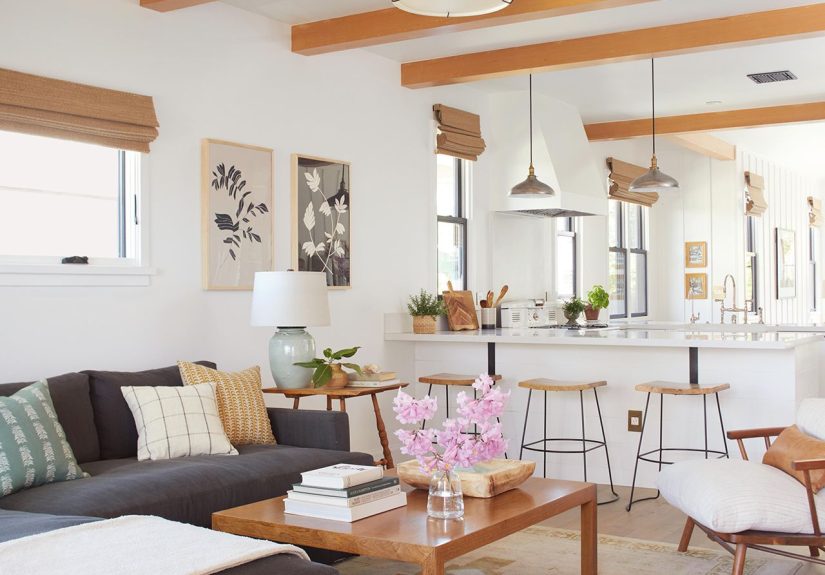
For example, you might use warm white walls, camel wood tones, black accents, and muted green textiles across the living, dining, and kitchen zones. Repetition creates flow. It helps the space feel unified, which is especially important when your eyes can take in multiple areas at once.
6. Repeat Materials and Textures Across the Space
One of the easiest ways to make an open concept living room feel finished is by echoing materials from one zone to another. If your kitchen has white oak stools, consider white oak in a coffee table or picture frames. If your dining area features black metal lighting, repeat that finish in floor lamps or curtain rods.
Texture matters just as much as color. Woven baskets, linen upholstery, wood finishes, stone accents, and soft rugs can create a rhythm that makes the whole room feel intentional. The result is a layered, collected look instead of a “we decorated each corner on a different planet” effect.
7. Use Lighting to Mark Each Zone
Lighting is one of the smartest ways to define an open concept living room. A pendant over the dining table, a chandelier above the sitting area, and table lamps around the sofa can create clear visual boundaries without interrupting sightlines. In an open plan, light fixtures are practically drawing invisible walls for you.
The trick is to vary the fixture shapes while repeating finishes or style cues. That keeps each zone distinct but still coordinated. Layering ambient, task, and accent lighting also makes the room feel warmer and more functional, which is important because overhead lighting alone can make everything look like a dentist’s waiting room.
8. Choose Furniture That Fits the Scale of the Space
Open concept rooms often invite people to go too big or too small. An oversized sectional can swallow the room. Tiny furniture can make the space feel disconnected and underfurnished. The sweet spot is selecting pieces that have presence without overwhelming the footprint.
Pay attention to seat depth, arm thickness, and leg visibility. Raised-leg furniture can feel lighter, while bulky, skirted pieces may read heavier. If your living area is on the smaller side, consider slimmer silhouettes, swivel chairs, or a bench that can move around when needed.
9. Leave Plenty of Negative Space
Not every inch of an open concept living room needs to be filled. In fact, one of the most sophisticated design moves is knowing when to stop. Negative space helps the eye rest, keeps traffic paths clear, and allows the best pieces in the room to stand out instead of fighting for attention.
Resist the urge to stuff every corner with a chair, pedestal, basket, or ornamental object with a mysterious purpose. Empty space is not wasted space. It is what keeps an open floor plan from feeling crowded, cluttered, and mildly stressed out.
10. Build a Strong Focal Point
Every living room needs a visual anchor, and that goes double in an open layout. Your focal point might be a fireplace, a large piece of art, a bank of windows, built-ins, or even a striking media wall. Whatever it is, your furniture arrangement should support it instead of awkwardly ignoring it.
A clear focal point gives the seating area direction. It helps determine where the sofa goes, where accent chairs should face, and where the eye naturally lands when entering the room. Without one, the space can feel like a collection of nice things that never quite became a room.
11. Add Flexible Seating That Can Move Easily
Open concept living rooms work best when they can adapt. That is why movable pieces like stools, ottomans, benches, and lightweight accent chairs are so useful. They can expand seating during gatherings, shift between zones, and disappear when you want more breathing room.
This kind of flexibility is especially helpful if your living room also shares space with dining or kitchen traffic. A bench can tuck under a console. Poufs can slide beside a coffee table. A swivel chair can face the sofa during conversation and then turn toward the view or TV. Functional and slightly smug.
12. Use Curves to Soften All the Hard Angles
Many open floor plans are full of straight lines, right angles, and long sightlines. That can make the room feel a little rigid. Curved furniture pieces, such as a rounded coffee table, arched floor lamp, or curved sofa, can soften the architecture and make the layout feel more fluid.
Curves also help guide movement through the space and break up the boxiness that open concept homes sometimes struggle with. You do not need to turn the room into a geometry lesson. Even one or two rounded pieces can make the whole setup feel more welcoming.
13. Carve Out a Mini Entry if There Isn’t One
In many open concept homes, the front door opens straight into the living area with all the grace of a surprise guest arriving early. Creating a small entry zone helps the whole space feel more organized. A narrow bench, small rug, round table, or wall mirror can establish a simple landing area.
This move is practical, but it also adds polish. It signals where people should pause, drop keys, or take off shoes before drifting into the main seating area. Even a tiny entry moment can make the larger room feel better planned and less like a stylish free-for-all.
14. Layer in Warmth With Natural Elements
Because open concept spaces can feel large and exposed, they benefit from materials that add warmth and texture. Wood, stone, woven accents, leather, linen, and greenery all help soften the openness and make the room feel more lived in. Natural elements are the antidote to a room that looks good but feels emotionally unavailable.
Try a wood coffee table, a stone vase, woven baskets, textured curtains, or a few plants that do not require emotional support from you every afternoon. These details add dimension and make the room feel grounded instead of overly slick.
15. Add Personality Without Breaking the Flow
The final step in styling an open concept living room is giving it soul. Art, books, collected objects, family photos, vintage finds, and meaningful decor are what make the room feel like yours. The trick is to distribute personality thoughtfully so the space feels layered, not chaotic.
A gallery wall, sculptural lamp, patterned pillows, or a favorite antique can all work beautifully. Just keep the overall palette and mood consistent enough that the room still reads as one connected environment. Personality should be memorable, not loud enough to startle the dining chairs.
Final Thoughts
Styling an open concept living room is really about balance. You want openness, but not emptiness. Cohesion, but not sameness. Comfort, but not clutter. When you define zones, choose the right furniture scale, repeat materials, and leave room for the space to breathe, your layout starts to feel effortless even though it absolutely was not.
The best open floor plan living rooms are the ones that make daily life easier while still looking polished. They welcome conversation, support movement, and create visual harmony from one area to the next. In other words, they do the impossible: they look put together even when someone left a mug on the console and the dog stole a throw pillow.
Real-Life Experiences With Styling an Open Concept Living Room
What people often discover after actually living in an open concept space is that beauty alone is not enough. A room can look gorgeous in photos and still frustrate you every single day if the layout does not support how you move through it. That is why experience matters so much with this kind of design. Once you live in an open floor plan, you quickly notice the little things: where traffic gets jammed, where sound bounces, where the lighting falls flat at night, and where furniture placement either helps or quietly sabotages daily life.
One of the most common experiences homeowners mention is how dramatically a rug can change the room. Before the rug, the seating area often feels like it is drifting. After the rug, the room finally clicks. The same goes for lighting. Many people start with one ceiling fixture and assume that is enough, then realize the room feels cold and unfinished after sunset. The addition of table lamps, floor lamps, and a pendant or chandelier over a nearby dining zone can completely transform the mood.
Another real-world lesson is that open concept living rooms need stronger editing than people expect. In a closed room, visual clutter can stay somewhat contained. In an open plan, every basket, chair, and side table becomes part of the full picture. That means clutter travels fast. A few extra pieces that seemed harmless in the store can suddenly make the room feel crowded and confused. Many people learn that an open layout often looks better after removing one or two items, not adding five more.
There is also the experience of learning what kind of seating actually works. A massive sectional may seem like the obvious answer, but it is not always the best one. Some households find that a sofa plus swivel chairs offers better flexibility and flow. Others realize that benches and ottomans are more useful than formal accent chairs because they can move where needed. Open concept rooms reward furniture that adapts instead of locking the room into one rigid setup.
And then there is the emotional side of the room, which people do not always talk about enough. Open concept spaces can feel wonderfully social, but they can also feel exposed if they are not warmed up with texture, art, and softer elements. That is why the most successful rooms are rarely the ones that chase a perfect catalog look. They are the ones that balance openness with intimacy. A cozy rug, a reading lamp, a favorite framed print, a stack of books, a wood table with a little wear on it; those details make the room feel human.
Over time, the best experience with an open concept living room comes from treating it like a living space instead of a stage set. You tweak the layout. You notice where people naturally gather. You move the chair, swap the lamp, add the console, remove the extra table, and gradually let the room tell you what it needs. That is usually when the design starts to feel right. Not perfect. Not frozen. Just deeply comfortable, highly functional, and finally worthy of all that square footage.