Table of Contents >> Show >> Hide
- What Makes a Pastry Taste Bakery-Quality?
- 17 Pastry Recipes That Taste Like They Came from a Bakery
- 1. Classic Butter Croissants
- 2. Pain au Chocolat
- 3. Berry Cream Cheese Danish
- 4. Apple Turnovers
- 5. Morning Buns
- 6. Sticky Buns
- 7. Kouign-Amann
- 8. French Palmiers
- 9. Rustic Fruit Galette
- 10. Lemon Curd Tartlets
- 11. Mille-Feuille or Napoleon Slices
- 12. Cream Puffs
- 13. Éclairs
- 14. Rugelach
- 15. Puff Pastry Cinnamon Twists
- 16. Hand Pies
- 17. Portuguese Custard Tarts
- Easy Tricks That Make Any Pastry Better
- How to Build a Bakery-Worthy Pastry Spread at Home
- The Real Experience of Making Bakery-Style Pastries at Home
- Conclusion
There are two kinds of home bakers: the ones who say, “I’ll just pick up pastries,” and the ones who stare down a stick of butter like it personally challenged them. This article is for the second group, plus anyone who wants their kitchen to smell like a tiny neighborhood bakery where the croissants are flaky, the fruit tarts gleam like jewelry, and someone always seems to be dusting powdered sugar over something dramatic.
The good news is that bakery-style pastries are not reserved for professionals with French rolling pins and suspiciously calm energy. Many of the best pastry recipes come down to a handful of repeatable habits: keep the butter cold, chill the dough when it starts acting clingy, use egg wash for shine, and don’t rush layers that are supposed to puff, rise, or crisp. The result is a lineup of pastries that look expensive, taste luxurious, and make people ask, “Wait, you made these?”
What Makes a Pastry Taste Bakery-Quality?
Before we dive into the list, let’s talk pastry strategy. The secret is not magic. It is temperature, texture, and a little patience. Cold butter creates steam as it bakes, which helps form those flaky layers everyone wants. Chilling dough between folds keeps the butter from melting into the flour too soon. Egg wash gives pastries that glossy, golden finish that practically screams “display case.” And when you want impressive results with less effort, frozen all-butter puff pastry is not cheating. It is time management wearing a chef’s hat.
Bakery-style pastries also win on contrast. You want crisp edges and tender centers. You want fillings that are rich but not heavy, sweet but not syrupy. A good pastry should look delicate while delivering serious flavor. That balance is why the best ones often pair butter with fruit, cream cheese with citrus, chocolate with salt, or nuts with a hint of spice.
17 Pastry Recipes That Taste Like They Came from a Bakery
1. Classic Butter Croissants
If there is a crown jewel of pastry baking, it is the croissant. A good one is bronzed on the outside, honeycombed on the inside, and shatters into buttery flakes the second you look at it too confidently. Croissants take time because laminated dough needs folds, rests, and careful rolling, but the payoff is spectacular. For the best bakery-style result, let the dough and butter stay cool but pliable, and proof the shaped croissants until visibly puffy before baking.
2. Pain au Chocolat
Think of this as the croissant’s chocolate-loving cousin. Pain au chocolat uses the same layered dough, but instead of a crescent shape, it is rolled around dark chocolate batons or chopped chocolate. The result feels polished and very “fancy bakery near a train station.” Use bittersweet chocolate so the filling stays rich rather than sugary, and bake until the edges are deeply golden and the bottoms are crisp.
3. Berry Cream Cheese Danish
This is the pastry that makes brunch guests hover near the kitchen. A good cheese Danish combines tangy cream cheese filling, jam or fresh berries, and flaky pastry that puffs around the edges like a picture frame. You can make it with homemade Danish dough, but high-quality puff pastry is a smart shortcut. Add lemon zest to the filling for brightness, and don’t overload the center or the pastry will go soggy instead of elegant.
4. Apple Turnovers
Apple turnovers are proof that bakery flavor can live inside a portable triangle. The filling should taste like actual apples, not just cinnamon sugar wearing an apple costume. Cook diced apples briefly with butter, brown sugar, cinnamon, and a pinch of salt before filling the pastry. That quick step concentrates the flavor and prevents watery centers. Finish with a light glaze once they cool, and suddenly breakfast feels suspiciously luxurious.
5. Morning Buns
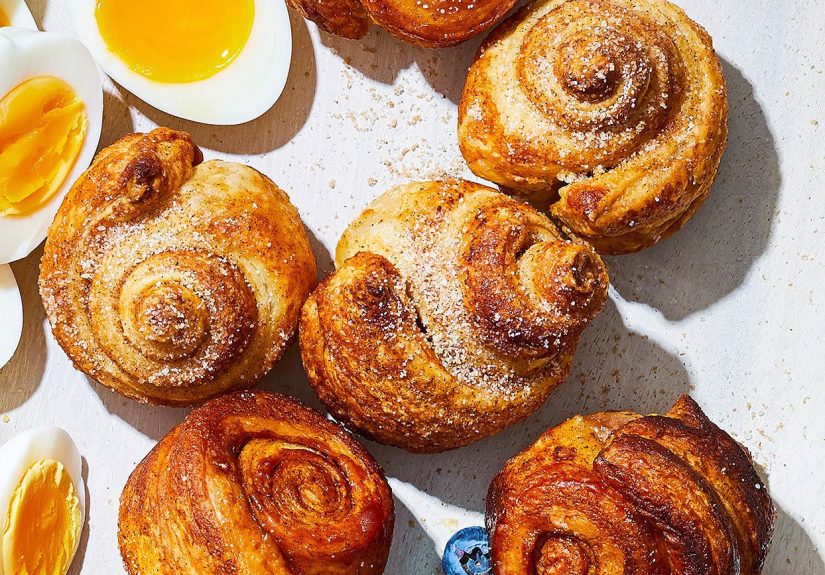
Morning buns are what happen when a cinnamon roll and a croissant have a very flaky, very buttery friendship. They are usually rolled with sugar, citrus zest, and cinnamon, then baked in muffin cups so the bottoms caramelize. They come out sticky, crisp, and wildly aromatic. If you want a pastry that tastes like it costs too much at a boutique coffee shop, this is your moment.
6. Sticky Buns
Sticky buns are unapologetically dramatic. They have soft yeasted dough, swirls of cinnamon filling, and a sticky caramel base loaded with pecans. Once inverted, the buns emerge glossy and glorious, looking like they spent the morning under professional lighting. The trick is balance: the dough should stay airy, while the topping should be gooey without crossing into candy territory. A little salt in the caramel keeps everything from becoming overwhelmingly sweet.
7. Kouign-Amann
Kouign-amann is the pastry equivalent of wearing sequins to the grocery store. It is bold, buttery, and extra in the best possible way. This Breton pastry is made by laminating dough with butter and sugar, which caramelizes in the oven and creates crisp, burnished layers. It is not the easiest project on the list, but it tastes astonishingly bakery-worthy. If croissants are elegant, kouign-amann is elegant with excellent gossip.
8. French Palmiers
Palmiers look charming, bake quickly, and make people think you are more organized than you probably are. These “elephant ear” pastries are made by folding puff pastry with sugar until the cut slices resemble hearts or scrolls. As they bake, the sugar caramelizes and the layers separate into crisp, delicate sheets. Add cinnamon, orange zest, or even a little cardamom if you want them to taste especially gift-box ready.
9. Rustic Fruit Galette
A galette is the pastry for people who want maximum praise with minimal geometric stress. It is essentially a free-form tart, and that casual shape is part of the charm. Use peaches, berries, apples, pears, or plums depending on the season. Toss the fruit with sugar and a little starch so the juices thicken instead of flooding the crust. Fold the dough up around the fruit, brush it with egg wash, sprinkle with coarse sugar, and bake until it looks like something displayed near the register of a chic bakery.
10. Lemon Curd Tartlets
Every pastry spread needs one bright, glossy option that cuts through all the butter. Lemon curd tartlets do exactly that. The shells can be pâte sucrée, pie dough, or even puff pastry cups, but the filling should be smooth, vibrant, and properly tart. Top with berries, whipped cream, or a dusting of powdered sugar. These are perfect for showers, brunches, and any occasion where you want dessert to look neat and impossibly cheerful.
11. Mille-Feuille or Napoleon Slices
Few pastries look more convincingly bakery-made than a Napoleon. It is all about the layers: crisp pastry, silky pastry cream, then more pastry, then more cream, then the kind of tidy top that makes you feel temporarily European. The smartest move here is to bake the puff pastry between sheet pans so it rises evenly and stays flat enough for neat slicing. Clean layers are the whole game.
12. Cream Puffs
Cream puffs rely on pâte à choux, one of the great miracles of baking. You cook the dough on the stovetop, beat in eggs, pipe it, and somehow it puffs into hollow shells ready for whipped cream, pastry cream, or even ice cream. They look impressive but are far less intimidating than laminated dough. The key is baking them long enough to dry out the interior so they do not collapse into sad little pastry sighs.
13. Éclairs
If cream puffs are cute and round, éclairs are sleek and a little dramatic. Pipe the same choux dough into logs, fill them with pastry cream, and top with chocolate glaze. They belong in every conversation about bakery-style pastries because they combine texture like professionals mean it: thin shell, creamy filling, glossy top. A pinch of espresso powder in the chocolate glaze makes them taste even more grown-up.
14. Rugelach
Rugelach brings bakery quality in a smaller package. The cream cheese dough bakes up tender and rich, while fillings can range from cinnamon-walnut to apricot, raspberry, chocolate, or poppy seed. Their little crescent shape looks refined, and they hold beautifully for gifting or brunch trays. These are the kind of pastries people casually eat three of while pretending they are just “sampling.”
15. Puff Pastry Cinnamon Twists
Not every bakery-style pastry needs a three-day timeline. Puff pastry cinnamon twists are quick, crisp, and deeply snackable. Cut strips of puff pastry, brush with butter, sprinkle with cinnamon sugar, twist, and bake until caramelized and flaky. Dip one end in melted chocolate if you want to push them from “easy” to “dangerously easy.” These are perfect when you need a pastry that looks intentional without requiring emotional recovery afterward.
16. Hand Pies
Hand pies are like turnovers with even more personality. They can be filled with apple, cherry, blueberry, peach, or savory ingredients if you want to cross into lunch territory. The bakery trick is restraint: not too much filling, well-sealed edges, a vent on top, and a proper chill before baking. That final rest helps the pastry hold its shape and bake up flaky rather than chaotic. A coarse sugar sprinkle adds crunch and visual polish.
17. Portuguese Custard Tarts
If you want a pastry that looks like it came from a specialty bakery with a line out the door, make custard tarts. Their magic is the contrast between crackly pastry and silky custard with deeply caramelized spots on top. They taste rich, toasty, and just a little dramatic. Bake them hot so the tops blister and the crust browns fast. They are one of the best examples of how texture alone can make a homemade pastry taste professional.
Easy Tricks That Make Any Pastry Better
Even the simplest pastry improves when you borrow a few bakery habits. Chill shaped pastries before baking to help them puff higher and spread less. Use parchment paper so bottoms bake evenly without sticking. Rotate pans halfway through for consistent color. Let fillings cool before assembly so butter-based doughs stay flaky. And when in doubt, under-fill. Overstuffed pastries tend to leak, collapse, or look like they had a rough morning.
One more thing: color matters. Pale pastries often taste underbaked, while deeply golden pastry brings nuttier, toastier flavor. Don’t pull them too early just because they smell amazing. Pastry loves commitment.
How to Build a Bakery-Worthy Pastry Spread at Home
If you are serving guests, mix textures and sizes. Pair one laminated pastry, one fruit pastry, one creamy pastry, and one easy crisp bite. For example: mini Danishes, a fruit galette, cream puffs, and palmiers. That combination looks abundant, varied, and very intentional. Add strong coffee, fresh fruit, and napkins thick enough to survive butter. Suddenly your dining table is giving “weekend café” energy.
You can also work smarter by choosing one dough and making multiple shapes. A batch of puff pastry can become turnovers, palmiers, cinnamon twists, and tartlets. One choux batch can turn into cream puffs and éclairs. This is the pastry version of outfit repeating, and honestly, it is efficient and chic.
The Real Experience of Making Bakery-Style Pastries at Home
There is something wonderfully ridiculous and deeply satisfying about deciding to make pastries at home. It usually begins with confidence. You imagine a calm morning, a lightly floured counter, maybe some music playing in the background, and by noon you will have a tray of glossy, flaky masterpieces. Then reality arrives holding a rolling pin. Butter gets too soft. Dough sticks. Flour appears on your shirt, your phone, and somehow your elbow. You begin to understand why bakeries charge what they charge.
But then the strange magic of pastry starts working in your favor. You fold dough one more time. You chill it. You roll it again. You pipe the choux and think, “These look a little odd,” which is normal and practically part of the recipe. The house starts to smell like toasted butter, caramelized sugar, vanilla, and fruit. At that point, morale improves dramatically. Even before the first batch is done, the kitchen feels warmer, more alive, and much more charming than it did when you were still glaring at a block of butter.
The best part of the experience is how pastry teaches patience without being preachy about it. You cannot rush laminated dough. You cannot demand crisp layers from warm butter. You cannot ask a custard tart to set before it is ready. Pastry has boundaries, and honestly, good for pastry. Once you stop fighting the process, the whole thing becomes more enjoyable. You begin to notice the small wins: dough that finally feels smooth, edges that crimp neatly, sugar that caramelizes exactly the way you hoped.
Then comes the moment of truth: the oven window stare. Few kitchen experiences are as thrilling as watching pastry puff. A flat, slightly unpromising rectangle turns into a golden, layered miracle. Cream puffs rise into hollow shells. Fruit galettes bubble at the edges. Sticky buns perfume the room like they are trying to attract neighbors. Even the imperfect batches have personality. In fact, homemade pastries often look better because they are not too perfect. They look generous, real, and ready to be eaten, which is the whole point.
Sharing them is another joy entirely. People react to homemade pastries differently than they react to regular dessert. Cake gets a polite smile. A tray of fresh pastries gets a full investigation. Someone always asks which bakery they came from. Someone else reaches for a second one before finishing the first. Crumbs appear instantly. Compliments get louder. It is one of the most rewarding things you can make because the effort is visible in every flaky layer and glossy finish.
And yes, sometimes a batch goes sideways. A filling leaks. A bottom browns too fast. A croissant looks less Paris and more “abstract butter crescent.” That still counts. Every baker who makes great pastry has also made weird pastry. The experience is part skill-building, part comedy, part butter therapy. The more you do it, the more your hands learn what cold dough feels like, what properly proofed pastry looks like, and when golden is truly golden.
That is why bakery-style pastries are worth making at home. Not because every batch will be flawless, but because the process is immersive, delicious, and strangely memorable. You end up with better instincts, a happier kitchen, and at least one pastry that makes you pause after the first bite and think, “Well, that is dangerously good.”
Conclusion
The best pastry recipes do not just copy what you see behind bakery glass. They recreate the feeling: flaky layers, rich fillings, crisp edges, glossy tops, and the kind of aroma that makes everyone wander into the kitchen “just to check.” Whether you go all in on croissants and kouign-amann or keep things practical with Danishes, turnovers, and palmiers, these 17 pastry recipes prove that bakery-quality baking can absolutely happen at home. All it takes is cold butter, a little patience, and the willingness to make your countertop look like a flour storm briefly passed through.