Table of Contents >> Show >> Hide
- Who Is Miguel Vasquez, and Why Are His “Real-Life Cartoons” So Viral?
- Why These Images Feel “Off” (In the Best Possible Way)
- How 3D Artists Make a “Realistic” Cartoon (Without Summoning Anything)
- The 17 Realistic Cartoon Character Versions (and Why Each One Works)
- 1) Homer Simpson
- 2) SpongeBob SquarePants
- 3) Patrick Star
- 4) Luigi
- 5) Mike Wazowski
- 6) Nigel Thornberry
- 7) Phineas
- 8) Bubble Bass
- 9) Ferb
- 10) SpongeBob and Patrick (together)
- 11) Eddy
- 12) Edd (Double D)
- 13) Courage the Cowardly Dog
- 14) Ed
- 15) Demon Joker
- 16) Ed, Edd and Eddy (group shot)
- 17) SpongeBob (alternate version)
- Why We Can’t Look Away: The Internet Reaction Loop
- Is It “Okay” to Reimagine Famous Characters? A Practical, Non-Lawyer Reality Check
- How to Appreciate Vasquez’s Work Without Ruining Your Childhood
- Experiences: What It Feels Like to Encounter “Realistic Cartoons” in the Wild (Extra )
- Conclusion
There are two kinds of people in this world: (1) the ones who watched cartoons as a kid and thought, “I’d totally hang out with those characters,” and (2) the ones who have seen Miguel Vasquez’s realistic cartoon character versions and now keep the lights on during snack time.
Vasquez is known online for turning beloved animated icons into hyper-detailed, unsettlingly “real” 3D humans (and near-humans). The results are weirdly fascinating: you recognize the character instantly, but your brain also whispers, “This feels illegal.” That tensionnostalgia meeting realism at a dark alley is exactly why his work spreads like wildfire across the internet.
In this article, we’ll break down what makes Miguel Vasquez’s realistic cartoon character versions so viral, why they hit the uncanny valley so hard, and how the craft of 3D modeling turns simple shapes into something you might accidentally make eye contact with in a gas station at 2 a.m. Then we’ll walk through 17 of his most shared character reimaginations and what each one reveals about design, anatomy, and our collective inability to handle pores on cartoon skin.
Who Is Miguel Vasquez, and Why Are His “Real-Life Cartoons” So Viral?
Miguel Vasquez is a digital artist/3D creator whose “realistic cartoon” experiments exploded online for one simple reason: they take the visual rules of cartoons and force them to live under the laws of human biology. When a character’s eyes are comically huge, teeth are simplified into two buck teeth, or a head is basically a balloon with eyebrows, animation makes it charming. Realism makes it… complicated.
Multiple entertainment and culture outlets have covered his work because it triggers instant reactions: laughter, horror, and the kind of stunned silence usually reserved for stepping on a LEGO barefoot. The images are shareable because they’re conversation starters: “Look at this,” followed immediately by “I hate it,” followed immediately by “Wait… show me the next one.”
Why These Images Feel “Off” (In the Best Possible Way)
The secret sauce behind Vasquez’s realistic cartoon character versions is a psychological phenomenon people love to cite right before they send you something disturbing: the uncanny valley. In simple terms, the uncanny valley is the dip in comfort we feel when something looks almost humanbut not quite. The closer it gets, the more our brains scrutinize tiny details (eyes, skin, movement, teeth), and small “errors” feel huge.
What’s clever about these reimaginings is that the “errors” aren’t mistakesthey’re the cartoon’s original design traits made realistic. A character might have a head that’s 70% face, a mouth that’s too small for the skull, or a nose that’s basically a decorative comma. In 2D, that’s style. In realistic 3D, it’s a creature feature.
The cartoon-to-human translation problem
Cartoons cheat. They compress anatomy, simplify textures, and ignore physics. Realism doesn’t let you do that without consequences. When you “translate” a cartoon faithfully, you often end up with:
- Eyes that feel too wet (because realistic eyes are glossy, reflective spheres)
- Teeth that feel too toothy (because enamel texture is not a vibe on a kids’ character)
- Skin that feels too detailed (pores and stubble are surprisingly emotional)
- Proportions that feel medically suspicious (heads, jawlines, and necks start telling on you)
How 3D Artists Make a “Realistic” Cartoon (Without Summoning Anything)
If you’ve ever wondered how a 3D artist takes a flat cartoon and turns it into something that looks like it could apply for a driver’s license, the workflow is equal parts art and technical wizardry.
Step 1: Modeling the form (the “skeleton” of the idea)
The artist starts with a 3D meshbasically a digital sculpture. This is where the biggest decisions happen: Do you keep the character’s proportions exactly, or do you “normalize” them just enough to make the result feel plausible? Vasquez’s work tends to keep signature shapesthen lets realism do the scaring.
Step 2: Texture mapping (where reality sneaks in)
Texture mapping is what makes a smooth model look like skin, fabric, hair, rubber, or whatever else your nightmares require. It’s the process of projecting 2D images (textures) onto a 3D surface so the character gains believable detailwrinkles, pores, freckles, grime, and the kind of “lived-in” surface information cartoons never had to worry about.
Step 3: Specular and roughness (the “why does it look moist?” controls)
Real materials reflect light differently. Skin has oil. Eyes are glossy. Lips are reflective. Teeth are shiny. In 3D rendering, maps control where an object is shiny or dull. This is a big reason realistic versions feel so intense: once you add accurate reflections, your brain treats the image like a real faceeven when the face is, objectively, a cartoon fish person.
Step 4: Lighting and rendering (the final betrayal)
Lighting can make a character look cinematic, creepy, comedic, or like they’re standing under a bathroom fluorescent light contemplating their life choices. Vasquez’s versions often lean into gritty realism, which turns familiar characters into something closer to a live-action reboot nobody asked for.
The 17 Realistic Cartoon Character Versions (and Why Each One Works)
Below are 17 of Miguel Vasquez’s most-circulated realistic cartoon character versionseach one a tiny case study in what happens when childhood icons get upgraded with anatomy, texture detail, and the ability to haunt you politely.
1) Homer Simpson
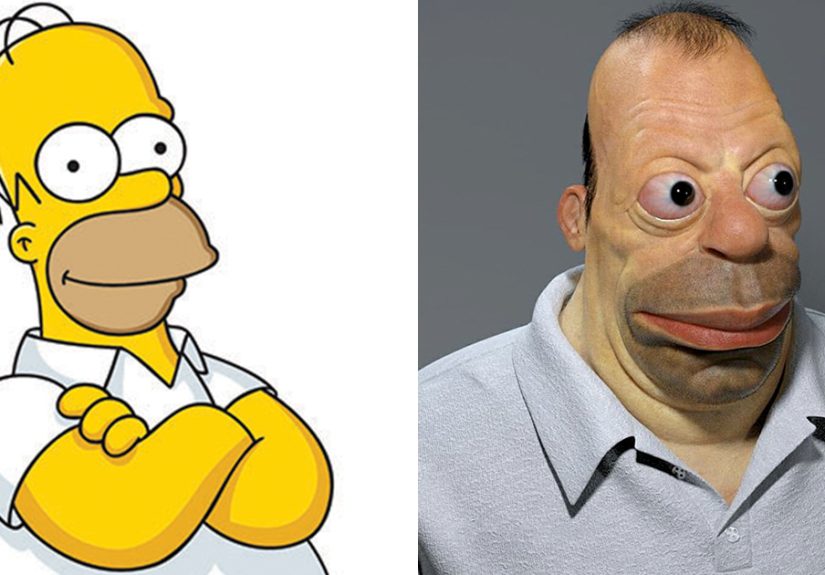
Homer is a masterclass in “cartoon features that should never become skin.” The iconic shape reads instantly, but realism exposes how strange the design really is: the head-to-body ratio, the mouth placement, and the overall vibe of a man who looks like he’d ask you to hold his beerthen evaporate.
2) SpongeBob SquarePants
SpongeBob is cheerful in 2D because he’s basically a living kitchen sponge with optimism. In realism, that square body becomes a human-ish torso with exaggerated proportions. The eyes and teeth land right in uncanny valley territory, where your brain recognizes “face,” but your soul recognizes “warning label.”
3) Patrick Star
Patrick’s simple design becomes unsettling fast when translated into human anatomy. Without the cartoon abstraction, the lack of certain facial structures (ears, nose detail) becomes noticeable. Realism forces you to confront the question: “If Patrick were real, where would his… anything… go?” Exactly.
4) Luigi
Luigi is one of the most interesting examples because he already has a semi-human template. That makes him closer to “live-action plausible,” but it also means small stylizationslike facial proportions and expression become extremely noticeable. Result: charming, eerie, and oddly like a guy you’d see at a theme park taking his job too seriously.
5) Mike Wazowski
Mike is basically a single eyeball with limbs. In animation, it’s adorable. In realism, it becomes a biological puzzle. When the central eye is rendered with human-like wetness and depth, it feels like it can look into your browser history.
6) Nigel Thornberry
Nigel’s cartoon face is already exaggerated: the mustache, the nose, the grin. Realism leans into those shapes and makes them feel like a person who would corner you at a party and say “Smashing!” while you quietly plan your escape route.
7) Phineas
A triangular head works in simple line art. In realistic 3D, it becomes a geometry problem that looks like it was solved by a haunted protractor. This version highlights how cartoons often use extreme shapes to read instantlyrealism makes those shapes feel like a medical condition.
8) Bubble Bass
Bubble Bass is a reminder that “gross” can be a design feature. The realistic texture detailespecially around skin, facial hair, and the overall “grimy” realismpushes the character into a strange space where you can almost smell the image. (Respectfully, no thank you.)
9) Ferb
Ferb’s long face and minimal expression become dramatically more intense when rendered realistically. The design is quiet in 2D; in realism, that quiet turns into the kind of calm that makes you check if your doors are locked.
10) SpongeBob and Patrick (together)
Seeing the duo in one frame is where your brain tries to reboot. Their friendship is iconic, but realism makes them look like they met in a support group for experimental character design. It’s a fun reminder that context changes everything: two unsettling figures can become oddly hilarious side-by-side.
11) Eddy
Eddy’s cartoon confidence becomes something else when given realistic eyes and skin texture. The character still reads as “hustler kid,” but realism makes that energy feel like he’s about to sell you a suspicious timeshare from inside a locker.
12) Edd (Double D)
Edd’s hat and facial structure are key identifiers, but realism turns his neat, anxious personality into a hyper-specific type of person you’ve definitely met: the guy who says “Actually…” before you even finish your sentence.
13) Courage the Cowardly Dog
Courage already lives in a universe that flirts with horror. Making him realistic is like putting a haunted house inside another haunted house. The result amplifies his anxious expression in a way that’s both sympathetic and unsettlinglike he’s seen things and wants to file a complaint.
14) Ed
Ed’s lovable goofiness is built on exaggerated features and simple expressions. In realism, those same features can feel heavy and intense, especially when skin texture and realistic lighting are applied. This version shows how “big, simple” cartoon faces don’t always survive a high-definition makeover.
15) Demon Joker
The Joker is already designed to be unsettling, so realism becomes a multiplier. When a character’s identity is tied to a grin, realism makes that grin feel physically realand suddenly you’re thinking about gums, saliva, and other things you didn’t consent to while reading an art roundup.
16) Ed, Edd and Eddy (group shot)
Group images are fascinating because they reveal consistency: shared lighting, similar surface realism, and the way each character’s distinct design language translates into “real.” Together, they look like a casting call for a live-action adaptation that would dominate streaming for one week and then disappear forever for legal reasons.
17) SpongeBob (alternate version)
An alternate SpongeBob render shows how different choices in expression, lighting, and texture intensity can change the emotional impact. Same character, same basic shapesdifferent “vibe.” One looks like a meme, the other looks like a cautionary tale.
Why We Can’t Look Away: The Internet Reaction Loop
Vasquez’s realistic cartoon character versions thrive online because they’re engineered (intentionally or not) for maximum shareability:
- Instant recognition: you know the character in half a second.
- Instant surprise: you did not expect them to look like that.
- Instant debate: “Is this brilliant or cursed?” (Answer: yes.)
Some coverage of his SpongeBob and Patrick renderings points out that the discomfort is part of the pointthese aren’t meant to be cute; they’re meant to challenge how we translate stylized designs into realism. That’s a big reason the work stays culturally sticky: it’s not just “creepy,” it’s a visual thought experiment with a sense of humor.
Is It “Okay” to Reimagine Famous Characters? A Practical, Non-Lawyer Reality Check
Since these versions remix well-known characters, it’s natural to wonder how this fits into copyright rules. In the U.S., fair use is evaluated case-by-case using four factors (purpose, nature of the work, amount used, and market effect). That means there’s no magic “safe” label you can slap on a fan render and call it a day.
For artists and publishers, the safest approach is to treat this as a spectrum: parody and commentary tend to be viewed differently than straight commercial exploitation, and the specifics matter. If you’re creating similar work for a business (or republishing images), it’s worth getting proper permissions or legal guidance. If you’re a fan enjoying the art, congratsyou can simply be disturbed in peace.
How to Appreciate Vasquez’s Work Without Ruining Your Childhood
If you want to enjoy these realistic cartoon character versions without permanently altering your relationship with Saturday morning TV, try this:
- Think like a designer: focus on what traits make the character recognizable (silhouette, eyes, mouth, props).
- Notice the craftsmanship: skin detail, lighting, and material realism are hard to do well.
- Watch your mood: if you’re already anxious, maybe don’t binge “realistic cartoon humans” at midnight.
- Share responsibly: warn your group chat. Don’t just drop a realistic Homer like it’s normal news.
Experiences: What It Feels Like to Encounter “Realistic Cartoons” in the Wild (Extra )
There’s a very specific modern experience that didn’t exist 20 years ago: casually scrolling your phone, minding your business, and suddenly being confronted with a realistic version of a cartoon character you used to trust with your happiness. It starts innocentlysomeone posts it with a caption like “LOL” or “WHY WOULD ANYONE DO THIS”and you click because you’re human, and humans are weak around curiosity.
The first emotion is usually recognition. Your brain lights up: “I know that guy!” This is the comfort of nostalgia, the warm fuzzy memory of snack foods and theme songs. But then realism kicks in. The texture detail tells your brain it’s looking at a real facepores, wrinkles, subtle color variation, specular shine on lips, moisture in the eyes. That’s when your brain tries to hold two conflicting thoughts at once: “This is my childhood” and “This is a person who might ask me for directions.”
For a lot of people, the second emotion is laughterbecause the absurdity is undeniable. A cartoon that was designed to be simple and iconic looks ridiculous when forced into realism. The shapes are too bold, the proportions too extreme, the expression too intense. It’s like seeing a stick figure show up in a business suit and try to act normal. Your laughter is partly delight (the concept is clever) and partly defense (your brain needs an exit ramp).
Then comes the “uncanny pause.” You stare a little longer than you meant to. Your eyes keep scanning for what’s wrong, because something feels wrong. The mind becomes a detective: the teeth are too many, the gaze is too direct, the skin is too human for a character that used to be made of sponge or felt or pure animation logic. This is where the experience becomes oddly interactiveyou aren’t just looking at art, you’re negotiating with your instincts.
If you’re a creative person (designer, illustrator, 3D hobbyist), the experience shifts again. You start appreciating the technical choices: the material detail, the lighting, the balance between accuracy and exaggeration. You realize the creepiness isn’t a cheap trick; it’s an outcome of disciplined craft. You can almost feel the workflow behind itthe sculpting decisions, the texture passes, the tweaks to roughness and specular shine that make something feel “alive.” Even if you hate the final vibe, you respect the skill it takes to get there.
And finally, there’s the social layer: you want to send it to someone else, because the experience is better when shared. These images are conversation machines. They spark debates about art, nostalgia, and why our brains draw a hard line between “stylized” and “real.” They also create a weird form of bonding: friends united by the same reactionhorrified laughter, followed by “Okay, but show me the next one.” It’s modern folklore in image form: a cursed remix that you can’t unsee, but also can’t stop talking about.
Conclusion
Miguel Vasquez’s realistic cartoon character versions are viral because they do something deceptively simple: they take designs built for symbolic, exaggerated animation and force them to obey realism. The result is a perfect storm of recognition, discomfort, humor, and genuine 3D craftsmanship. Whether you see them as nightmare fuel or brilliant design experiments, they prove one thing: sometimes the distance between “adorable” and “absolutely not” is just a texture map away.