Table of Contents >> Show >> Hide
- Why Fall Color Gets So Wild (and How to Help It Along)
- 10 Fiery Fall Trees (Big Color, Bigger Impact)
- 1) Sugar Maple (Acer saccharum)
- 2) Red Maple (Acer rubrum)
- 3) Japanese Maple (Acer palmatum)
- 4) American Sweetgum (Liquidambar styraciflua)
- 5) Black Gum / Black Tupelo (Nyssa sylvatica)
- 6) Sourwood (Oxydendrum arboreum)
- 7) Serviceberry / Juneberry (Amelanchier spp.)
- 8) Shumard Oak (Quercus shumardii)
- 9) Ginkgo (Ginkgo biloba)
- 10) Quaking Aspen (Populus tremuloides)
- 9 Fiery Fall Shrubs (Color at Eye Level)
- 11) Oakleaf Hydrangea (Hydrangea quercifolia)
- 12) Virginia Sweetspire ‘Henry’s Garnet’ (Itea virginica)
- 13) Fothergilla ‘Mount Airy’ (Fothergilla spp.)
- 14) Chokeberry (Aronia spp.)
- 15) Highbush Blueberry (Vaccinium corymbosum cultivars)
- 16) Fragrant Sumac (Rhus aromatica)
- 17) Ninebark (Physocarpus opulifolius)
- 18) Viburnum (choose a fall-color star, like Blackhaw) (Viburnum spp.)
- 19) Spicebush (Lindera benzoin)
- How to Design with Fall Color (So It Looks Intentional, Not Accidental)
- Real-World Fall Color Lessons (Experience-Based Tips, ~)
- Conclusion
Fall foliage is basically nature’s way of saying, “I could have been a boring green all year… but I chose drama.”
If your yard feels a little too “spreadsheet beige,” the right trees and shrubs can turn it into a full-on
outdoor fireworks showcrimson, orange, copper, gold, and occasionally “is that leaf purple?” Yes. Yes it is.
Below are 19 reliable showstoppersmixing iconic classics (hello, sugar maple) with underused MVPs (sourwood,
I’m looking at you). You’ll also find practical notes on USDA hardiness zones, sun and soil preferences, and a
few cultivar shout-outs if you want predictable color (because surprise is fun… unless it’s “why is my maple
still green in October?”).
Why Fall Color Gets So Wild (and How to Help It Along)
Leaves turn fiery when chlorophyll (the green pigment) fades as days shorten and temperatures cool. What’s left
behindcarotenoids (yellows/oranges) and anthocyanins (reds/purples)finally gets its spotlight moment.
Translation: your tree has been holding back all season.
Want more reliable red/orange fall foliage? Give plants what they like during the growing season: correct light,
steady moisture while they establish, and soil that isn’t fighting them (acid-loving shrubs in alkaline soil
will sulk, and sulking shrubs don’t do fireworks).
Quick “Fiery Foliage” Checklist
- Sun matters: Many plants color best in full sun (some tolerate part shade just fine).
- Water early, not forever: Deep watering during the first 1–2 years helps roots, which helps color.
- Don’t over-fertilize late: Too much late-season nitrogen can push soft growth instead of color.
- Match plant to place: Wet-tolerant shrubs are happier in rain-garden spots than “dry-as-toast” beds.
- Pick non-invasive options: Your yard shouldn’t become the villain origin story for your neighborhood ecosystem.
10 Fiery Fall Trees (Big Color, Bigger Impact)
1) Sugar Maple (Acer saccharum)
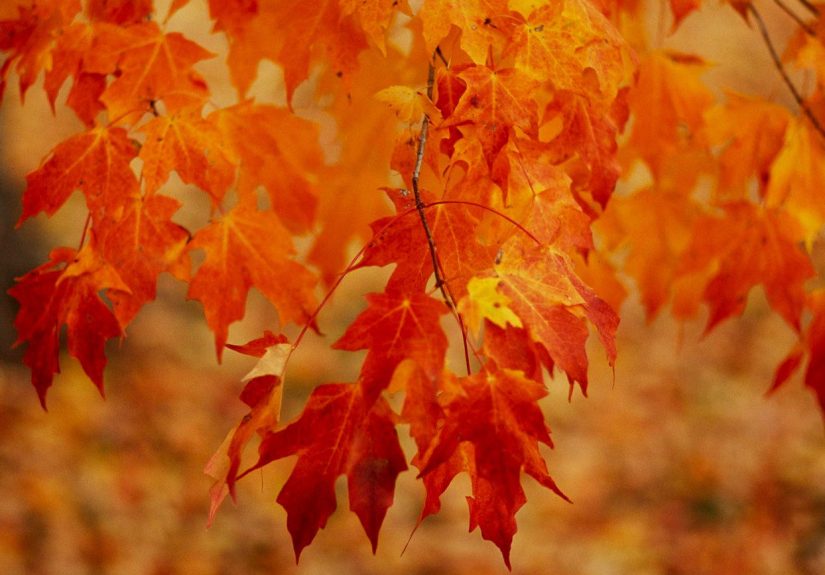
The celebrity of fall colorfamous for a full palette of yellow, orange, and red that can look like someone
turned up the saturation slider.
- Best for: Shade + classic autumn landscaping
- Zones: Commonly grown in cooler-to-moderate regions (often zones 3–8)
- Pro tip: Give it room. This is not a “cute little patio tree.” It’s a “future family heirloom” tree.
2) Red Maple (Acer rubrum)
If you want dependable red-orange fall foliage, red maple deliversespecially with known performers like
‘October Glory’ or ‘Red Sunset’ (both widely used for strong, late-season color).
- Best for: Faster shade and bold, warm color
- Zones: Broadly adaptable in much of the U.S. (many cultivars used roughly zones 4–9)
- Watch for: Site selection matterssome maples can develop surface roots over time.
3) Japanese Maple (Acer palmatum)
Small tree, huge attitude. Japanese maples can glow in scarlet, orange, or burgundyperfect when you want
“front-yard wow” without planting something that blocks your entire house.
- Best for: Entryways, courtyards, and smaller landscapes
- Design tip: Use it like living sculpturepair with evergreens so the red looks even redder.
4) American Sweetgum (Liquidambar styraciflua)
Star-shaped leaves, multi-color fall show: yellow, orange, red, purplesometimes all on one tree like it can’t
commit to a single vibe.
- Best for: Big yards and parks where you want maximum autumn drama
- Zones: Commonly grown in zones 5–9
- Good to know: Some types drop “gumballs” (spiky seed pods). If you prefer less mess, look for seedless/low-fruit cultivars.
5) Black Gum / Black Tupelo (Nyssa sylvatica)
One of the most consistently gorgeous fall trees, often shifting through yellow, orange, red, and purple.
It’s the kind of tree that makes you slow down in the car and whisper, “Okay, wow.”
- Best for: Strong fall color + wildlife value
- Zones: Often grown roughly zones 4–9
- Style note: Looks especially good as a specimen tree with a simple understory (let it be the main character).
6) Sourwood (Oxydendrum arboreum)
Sourwood is a sleeper hit: elegant form, summer flowers, and fall leaves that can go brilliant red to
purplish-red. It’s like the indie band that suddenly headlines the festival.
- Best for: Medium-sized yards that want standout fall color
- Zones: Commonly grown in zones 5–9
- Bonus: Flowers are loved by pollinators; sourwood honey has a real fan club.
7) Serviceberry / Juneberry (Amelanchier spp.)
Four-season value: white spring blooms, edible berries in early summer, and orange-to-red fall color.
‘Autumn Brilliance’ is a popular pick for dependable performance.
- Best for: Small landscapes, native-style gardens, and wildlife-friendly yards
- Design tip: Plant near a window. You’ll get spring flowers and fall color from your couchpeak efficiency.
8) Shumard Oak (Quercus shumardii)
Want a strong, long-lived shade tree that still brings the color? Shumard oak can turn red to red-orange in fall,
and it tolerates tough urban conditions better than many people expect.
- Best for: Big, sturdy canopy + autumn color
- Zones: Often used roughly zones 5–9
- Wildlife perk: Acorns support birds and other wildlife (aka “nature’s snack aisle”).
9) Ginkgo (Ginkgo biloba)
Not redpure, luminous yellow. When ginkgo turns, it can look like the tree is lit from inside.
It’s also famously tolerant of many city conditions.
- Best for: Clean-lined landscapes and “golden fall” impact
- Zones: Commonly grown in zones 3–8
- Important: Choose a male cultivar to avoid messy, smelly fruit from female trees.
10) Quaking Aspen (Populus tremuloides)
Aspen is the shimmer-and-glow option: leaves flutter in the breeze and turn a clear, bright yellow. It’s a
stunning lookespecially in groves.
- Best for: Cooler climates and naturalized areas
- Heads-up: Aspens often spread by roots (great for groves, less great right next to delicate hardscaping).
9 Fiery Fall Shrubs (Color at Eye Level)
11) Oakleaf Hydrangea (Hydrangea quercifolia)
Big leaves, big mood. Oakleaf hydrangea can shift into rich burgundy, wine, and purple-red tones, and the
dried flower heads add texture well after the leaves drop.
- Best for: Part shade borders and woodland edges
- Cultivar ideas: ‘Ruby Slippers’ (compact), ‘Pee Wee’ (smaller), ‘Snow Queen’ (upright blooms)
- Pruning note: Many bloom on old woodprune right after flowering if needed.
12) Virginia Sweetspire ‘Henry’s Garnet’ (Itea virginica)
A native shrub with white, bottlebrush-style flowers in late springand fall foliage that can roll through
orange, burgundy red, and purple. It also tolerates wetter soils, which is rare and wonderful.
- Best for: Rain-garden edges, low spots, and mixed borders
- Color tip: More sun usually means more intense fall color.
13) Fothergilla ‘Mount Airy’ (Fothergilla spp.)
Fothergilla is fall confetti in shrub formgold, orange, red, and sometimes purple undertones on the same plant.
Spring brings fuzzy white “bottlebrush” flowers too, so it earns its keep.
- Best for: Foundation plantings and feature shrubs in smaller yards
- Likes: Moist, acidic soil for best performance
14) Chokeberry (Aronia spp.)
Chokeberry (especially red or black types) is a fall-color workhorse. Expect glossy foliage that turns
vibrant shades (often red to orange) plus berries that birds appreciate.
- Best for: Native borders, hedges, and wildlife gardens
- Bonus: Fruits can hang on, adding seasonal interest beyond leaf drop.
15) Highbush Blueberry (Vaccinium corymbosum cultivars)
Blueberries aren’t just for muffins. They can offer fall foliage in yellow, orange, and redwhile also giving
you flowers and berries. It’s a two-for-one: ornamental + edible.
- Best for: Sunny spots and edible landscaping
- Soil must-have: Acidic soil (this is non-negotiable; blueberries are picky in the most relatable way).
16) Fragrant Sumac (Rhus aromatica)
Tough, drought-tolerant, and colorfulfragrant sumac can turn orange to red to purplish-red. Low-growing forms
like ‘Gro-Low’ are great for slopes or the front of a border.
- Best for: Erosion control, mass planting, and low-maintenance color
- Good to know: Can spreaduse it where you’d welcome a living carpet.
17) Ninebark (Physocarpus opulifolius)
Ninebark brings texture (exfoliating bark) plus foliage color options. Some cultivars have deep purple leaves
all season, then shift toward redder tones in fall. And the shrubs are generally hardy and adaptable.
- Best for: Hedges, screens, and “I need something that can handle my life” planting
- Cultivar idea: ‘Summer Wine’ is known for dark foliage and reddish fall tones.
18) Viburnum (choose a fall-color star, like Blackhaw) (Viburnum spp.)
Many viburnums deliver red-to-purple fall foliage, plus clusters of berries that pull in birds. Blackhaw
viburnum is a classic for multi-season interest.
- Best for: Mixed shrub borders and naturalistic plantings
- Planting tip: Some viburnums fruit better with more than one plant for pollination.
19) Spicebush (Lindera benzoin)
Spicebush is a native understory shrub with aromatic leaves (yes, they smell spicy when crushed) and clear
yellow fall color. Female plants can produce bright berries that stand out after leaf drop.
- Best for: Part shade, woodland edges, and “I want native charm” landscapes
- Color tip: More sun often improves fall color intensity.
How to Design with Fall Color (So It Looks Intentional, Not Accidental)
The easiest way to make fiery fall trees and shrubs look “designed” is to layer them by height and repeat
colors like you’re styling a roomonly your throw pillows are… leaves.
Three foolproof combos
- Red + Gold: Pair a red maple with ginkgo nearby for a two-tone, high-contrast fall scene.
- Woodland glow: Serviceberry + oakleaf hydrangea + spicebush = spring flowers, summer berries, fall color, and year-round structure.
- Rain-garden brilliance: Sweetspire + chokeberry + black gum thrives where water occasionally lingers, then turns the whole corner into a fall spotlight.
Spacing reality check
Most planting regrets come from one sentence: “It looked small at the nursery.” Give trees the room they’ll
need at maturity, and keep shrubs out of “constant haircut” zones unless you truly enjoy weekend pruning.
Real-World Fall Color Lessons (Experience-Based Tips, ~)
If you’ve ever planned a “perfect fall yard” in your head and then watched it turn into “three yellow leaves
and a stick,” you’re not alone. In real gardens, fall color is part science, part weather, and part timing.
Gardeners who get the most consistent results usually do three things: they pick plants suited to their region,
they plant them where they’ll actually be happy, and they stop expecting a stressed plant to put on a Broadway
finale.
One common learning curve is sunlight vs. shade. Lots of shrubs will survive in part shade,
but “survive” and “look like a magazine cover” are not the same job description. Blueberries, sweetspire,
and many maples tend to color up best with more sun. If you’re working with shade, lean into plants that still
perform thereoakleaf hydrangea and certain viburnums can bring color without demanding an all-day spotlight.
Think of shade as a softer stage: fewer neon reds, more wine and bronze tones.
Another real-life lesson: soil is a mood setter. Acid-loving plants (hello, blueberries and
fothergilla) can get cranky in high-pH soils. The foliage might still turn, but the plant won’t look vigorous,
and the color can be muted. Gardeners who test soil earlyand adjust with the right amendmentsoften report
stronger growth and more satisfying fall displays over time. (Also, healthier plants generally resist pests and
leaf issues better, which matters because spotted, diseased leaves don’t scream “fiery fall,” they whisper
“please call the extension office.”)
Timing is its own adventure. Some plants peak early, others late. Red maples can glow while oaks are still
deciding what to wear. Sweetgum might hold leaves longer, stretching the show. A practical approach is to
plant for a sequence: an early performer (serviceberry), a mid-season headliner (sugar maple),
and a late closer (certain red maples or oaks). When you do that, your yard doesn’t have one dramatic week and
then a long, gray encoreit has a whole season of highlights.
And then there’s the honest truth about maintenance: the most impressive landscapes usually have
simple, repeatable care. Deep watering during the first year, a mulch ring (not a mulch
volcano), and occasional pruning at the right time beats complicated routines every time. If you want color
without constant babysitting, use tough shrubs like fragrant sumac or ninebark in “problem areas,” and reserve
higher-expectation plants for spots you’ll actually notice and tend.
Finally, remember that fall color is also about contrast. A scarlet tree looks scarlet-er next
to dark evergreens. A golden ginkgo pops against a brick wall or deep green hedge. Gardeners who plan the
backgroundfences, conifers, even the color of nearby mulchoften get a much bigger visual payoff. The leaves
bring the fire, but your design choices provide the oxygen.