Table of Contents >> Show >> Hide
- What Counts as “Core” (Hint: It’s Not Just Abs)
- Before You Start: Quick Safety Checklist
- Your 20-Minute Seated Core Routine
- Form Fixes That Make This Routine Safer (and More Effective)
- How Often Should Seniors Do Seated Core Exercises?
- Progressions and Smart Add-Ons (When This Gets Easier)
- FAQ: Quick Answers Seniors Actually Want
- Real-Life Experiences: What This 20-Minute Routine Feels Like Over Time
- Conclusion
- SEO Tags
If you’ve ever stood up from a chair and thought, “Wow, my body just played the Windows shutdown sound,” you’re not alone. The good news: your core can get stronger without getting down on the floor, wrestling a yoga mat, or negotiating with your knees.
This chair-based routine is designed to take about 20 minutes, target the muscles that support your spine and pelvis, and help you feel steadier for real lifegetting out of a chair, carrying groceries, reaching into cabinets, and walking with better posture. No crunches required. Your neck thanks you in advance.
What Counts as “Core” (Hint: It’s Not Just Abs)
Your core is a team sport. It includes the deep abdominal muscles (like the transverse abdominis), the obliques (side-waist muscles), the muscles around your pelvis and hips, and the muscles along your back that help you sit tall. When these muscles work together, they help you stay upright, transfer force safely (like when you turn to reach for a seatbelt), and keep you stable when your balance gets challenged.
Why Seated Core Work Is Especially Helpful for Older Adults
- Better posture: A stronger “trunk” can make it easier to sit and stand taller, which can reduce fatigue.
- More stability: Core strength supports balance and steady movementkey for staying independent.
- Back-friendly strength: Gentle core training can support the spine and reduce “tired back” feelings.
- Safer training option: A chair reduces fall risk and makes exercise more accessible on low-energy days.
- Daily-life payoff: Rolling in bed, getting up from the couch, and climbing steps all rely on trunk control.
Before You Start: Quick Safety Checklist
Choose the Right Chair
- Use a sturdy, non-rolling chair (no wheels, no wobble).
- If possible, choose a chair without arms so you can move freely.
- Place the chair on a non-slip surface. Wear supportive shoes if your feet slide.
Comfort Rules (No Heroics)
- Work at a “moderate” effort: you should be able to talk in full sentences.
- Stop for sharp pain, dizziness, or numbness. Mild muscle effort is okay; pain is not the goal.
- If you have osteoporosis, recent surgery, severe back pain, or uncontrolled blood pressure, check with a clinician or physical therapist first.
The Two Cues That Make Everything Work Better
- Breathe: Exhale gently as you “work.” Avoid holding your breath.
- Brace lightly: Imagine zipping up snug jeansfirm, not rigid. You’re aiming for support, not a statue.
Your 20-Minute Seated Core Routine
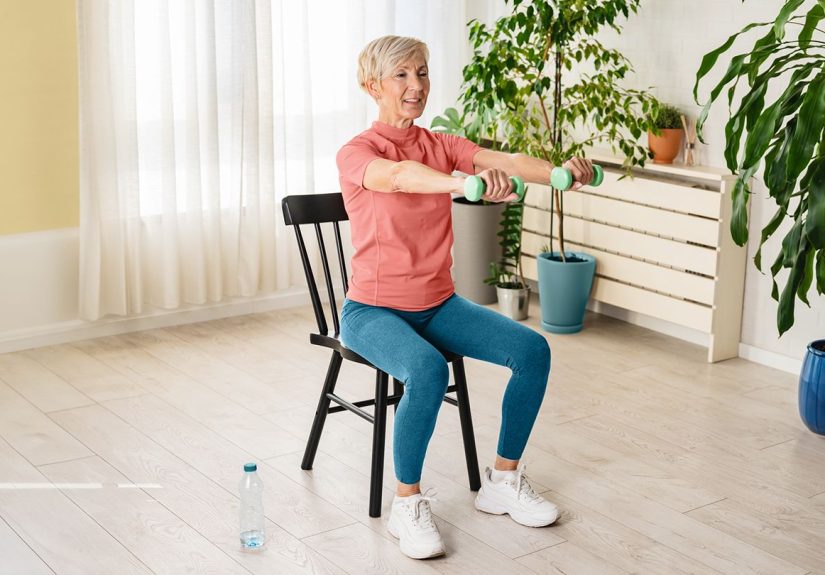
How it’s structured: 3-minute warm-up + 14-minute main circuit + 3-minute cool-down. For the main circuit you’ll do 7 exercises for 1 minute each, then repeat once. Move slowly and with control.
Tip: Sit slightly forward on the chair (not leaning on the backrest) to encourage your core to “show up.” Keep feet hip-width apart unless a move asks for one foot lifted.
Minutes 0–3: Warm-Up & Activation
- Posture Reset (45 seconds): Sit tall, shoulders relaxed. Imagine a string lifting the top of your head. Gently draw shoulder blades back and down.
- Diaphragmatic Breathing (60 seconds): One hand on belly, one on chest. Inhale through the nose (belly expands), exhale through pursed lips (belly softens).
- Seated Pelvic Tilts (75 seconds): Rock pelvis slightly forward and back. Think “tiny motion,” not a dance remix. Exhale as you tilt back and gently engage your lower belly.
Minutes 3–17: Main Circuit (2 Rounds)
| Exercise (1 minute each) | What it trains | How to do it (simple cues) | Make it easier | Make it harder |
|---|---|---|---|---|
| 1) Seated March + Brace | Deep core, hip flexors, posture control | Sit tall. Exhale and gently brace. Lift one knee a few inches, lower, switch. Keep ribs stacked over hipsno leaning back. | Lift lower, slow down, hold chair sides lightly. | Pause 2 seconds at the top of each lift without leaning. |
| 2) Knee Lift Holds | Lower abs, hip stability | Lift one knee, hold 2–3 seconds, lower with control. Alternate. Think “quiet torso.” If your shoulders hike up, soften them. | Shorter hold or smaller lift. | Hold 4–5 seconds, keep breathing steady. |
| 3) Heel Taps (Seated) | Core endurance, coordination | March lightly but instead of lifting high, tap heel forward (like a gentle kick), return foot under knee, alternate. Keep spine long. | Tap closer to the chair, slower rhythm. | Tap farther forward or add a 1-second brace on each tap. |
| 4) “Prayer Press” Anti-Rotation | Deep core stability (resisting twist) | Hands together at chest. Exhale and press hands straight out, then bring back in. Keep torso facing forwardno rocking. | Press out halfway. | Press out and hold 3 seconds; lift one heel slightly while holding. |
| 5) Cross-Body Reach (Gentle) | Obliques, trunk mobility | Reach right hand toward left knee (or left hip), return. Switch sides. Rotate from the ribs lightlyavoid forcing a big twist. | Reach to midline only (no twist). | Hold the reach 2 seconds; keep shoulders relaxed. |
| 6) Seated Side Lean + Return | Side core (obliques), spine support | Slide right hand down the outside of your thigh as you lean slightly right, then return to center. Alternate sides. Keep hips anchored on the chair. | Smaller lean, slower pace. | Pause 2 seconds at the lean while breathing steadily. |
| 7) Hip Hinge “Sit Tall” Reps | Trunk control, back-line endurance | Keep spine long. Hinge forward from hips a few inches (like a tiny bow), then return to tall sitting. Exhale as you return tall and gently brace. | Hinge less; use hands on thighs for support. | Hover hands off thighs; add a 2-second hold in the tall position. |
Round timing: Do exercises 1–7 (7 minutes). Rest 30–45 seconds. Repeat (another 7 minutes). If you’re newer to exercise, do just one round and use the extra time for the cool-down.
Minutes 17–20: Cool-Down (Keep It Easy)
- Seated Cat-Cow (60 seconds): Gentle rounding and arching through the upper back. No big swings.
- Side Stretch (60 seconds): One arm reaches up, lean slightly to the opposite side. Breathe into the ribs.
- Slow Breathing + Posture Reset (60 seconds): Inhale 4 seconds, exhale 6 seconds, sit tall.
Form Fixes That Make This Routine Safer (and More Effective)
1) Don’t Let Your Ribs Flare
A common habit is lifting the chest and arching the back when trying to “sit up straight.” Instead, think: ribs stacked over hips. You’ll feel your deep core engage more naturally.
2) Keep the Movement Small and Smooth
Fast reps can turn core work into momentum practice. Slow down. If you can’t control the return, the exercise is doing the driving, not you.
3) Exhale on Effort
Exhaling during the “hard part” helps core engagement and prevents breath-holding, which can spike pressure and make you feel lightheaded. Gentle, steady breathing wins.
How Often Should Seniors Do Seated Core Exercises?
For most people, 2–4 days per week is a sweet spot for core trainingenough to improve strength and endurance without feeling like you’re “training for the Chair Olympics.” On non-core days, walking, light cycling, water exercise, or balance work can round out your week.
A Simple Weekly Example
- Mon: 20-minute seated core routine
- Tue: 20–30 minute walk + gentle stretching
- Wed: Seated core routine + light upper-body strength (optional)
- Thu: Balance practice (heel-to-toe walk near a counter) + short walk
- Fri or Sat: Seated core routine
- Sun: Recovery movement (easy stroll, mobility, breathing)
Progressions and Smart Add-Ons (When This Gets Easier)
Add Time Before Adding Intensity
First, try increasing the work portion from 40 seconds to 50 seconds per minute, keeping transitions quick. If you feel steady, add a third round (that’s 27 minutes total with warm-up and cool-down).
Add Light Resistance
- Light hand weights (1–3 lbs): Hold them during cross-body reaches or the prayer press.
- Resistance band: Wrap around a stable post to create a gentle “press out” challenge (anti-rotation).
- Pillow or small ball: Squeeze gently between knees during marches to recruit hips and lower core.
Graduate to “Less Support”
Sit a bit more forward on the chair, hover hands, or lift one heel during the prayer presstiny changes that teach your trunk to stabilize in real-life situations.
FAQ: Quick Answers Seniors Actually Want
Will these exercises flatten my belly?
They’ll strengthen the muscles under the surface, improve posture, and often help you feel “held together.” Body shape changes usually depend more on total activity, nutrition, sleep, and consistency over time.
What if twisting bothers my back?
Skip cross-body reaches for now and focus on anti-rotation (prayer press), marches, and hip hinges. Use smaller ranges, and consider a physical therapist if pain is persistent.
Can I do this every day?
Many people can do some version daily, but keep it light on off-days: one round, slower pace, and more breathing. Muscles still appreciate recoveryyes, even the ones you can’t see.
Real-Life Experiences: What This 20-Minute Routine Feels Like Over Time
In real-world chair exercise classes and home routines, the first “win” people notice often isn’t a six-packit’s how much easier it feels to sit tall without turning it into a full-time job. During week one, many older adults report that the hardest part is simply remembering to breathe while moving. That’s normal. Core work is sneaky like that: it asks your body to coordinate, not just “work hard.” Once breathing becomes automatic, the movements feel smoother and less tiring.
Another common experience is discovering which side feels “awake” and which side feels like it hit the snooze button. One hip may lift higher during marches, or one side bend may feel tighter. That asymmetry isn’t a moral failureit’s useful information. Over a few weeks, as the nervous system gets more confident, the “sleepy” side usually starts catching up, especially when people slow down and focus on control instead of speed.
Many seniors also describe a subtle but meaningful change in daily transitions: standing up from the chair feels steadier, turning to reach for something feels less wobbly, and walking posture improves because the trunk isn’t collapsing forward as easily. A surprising number of people say they feel more comfortable sitting for longer periods toonot because sitting is the goal, but because the body has more support and doesn’t have to rely on slumping for relief.
If someone has arthritis or general stiffness, the routine can feel “tight” at firstespecially the hip hinge and side lean. But when they keep the range small and treat the movements like gentle practice (not punishment), the stiffness often eases as circulation and mobility improve. People who start with one round frequently find they can add the second round within a couple of weeks. The secret is consistency, not intensity: five calm sessions beat one heroic session followed by three days of “Why did I do that?”
The mental side matters too. A 20-minute chair routine is approachable, and that approachability lowers the “activation energy” needed to start. Seniors often say they’re more likely to do it because it doesn’t require special equipment, a gym trip, or getting on the floor. That consistency builds momentumand momentum builds confidence. When exercise feels doable, it becomes part of the day rather than a big event that’s easy to avoid.
Finally, people commonly report that core work helps them feel more “connected” from ribs to hipslike their body moves as a coordinated unit instead of a stack of separate parts. That’s what functional strength is: not just stronger muscles, but better teamwork. And in the long run, teamwork is what helps you keep doing the things you actually care aboutwalking, traveling, gardening, playing with grandkids, or simply moving through the day with fewer “oof” moments.
Conclusion
Seated core exercises can be a practical, low-impact way for seniors to build trunk strength, improve posture, and feel steadier in everyday lifewithout needing to get down on the floor. Start with the 20-minute routine as written, keep the movements slow, breathe through the effort, and choose consistency over intensity. If your body gives you a clear “nope,” scale the range down or ask a clinician or physical therapist for guidance. Stronger core support isn’t about showing offit’s about showing up for your life.