Table of Contents >> Show >> Hide
- Why “New Uses for Old Things” Never Goes Out of Style (Unlike That Drawer of Phone Chargers)
- 25 Greatest New Uses for Old Things (The Greatest Hits Edition)
- 1. Use Tights to Corral Gift Wrap
- 2. Use Eggshells to Fertilize Soil (But Do It the Fast Way)
- 3. Use a Tennis Ball to Erase Floor Scuffs
- 4. Use a Penny to Check Tire Tread Depth
- 5. Use an Empty Toilet Paper Roll to Vacuum Tiny Crevices
- 6. Use a Fitted Sheet to Cover a Picnic Table
- 7. Use a Paper Straw to Pack a Necklace
- 8. Use a Pillowcase to Dust a Ceiling Fan (Without a Dust Blizzard)
- 9. Use Tension Rods to Store Baking Sheets Upright
- 10. Use a Toothpick to Keep Packing Tape Ready
- 11. Use Clear Nail Polish to Help Prevent Rust Rings on Shaving Cream Cans
- 12. Use a Bobby Pin to Hold a Tiny Nail
- 13. Use an Emery Board to Refresh Suede
- 14. Use Rubber Bands to Straighten Wobbly Taper Candles
- 15. Use a Coffee Filter to Clean Mirrors
- 16. Use an Empty Tissue Box to Dispense Plastic Bags
- 17. Use a Wine Bottle to Water Plants While You’re Away
- 18. Use Banana Peels to Dust and Shine Waxy Leaves
- 19. Use Salt to Stretch a Candle’s Burn Time (Carefully)
- 20. Use a Warm Glass to Soften Butter Fast
- 21. Use a Slice of Bread to Keep Soft Cookies Softer
- 22. Use a Potato + Salt to Rescue Rusty Cast Iron
- 23. Use a Rubber Band to Open Stubborn Jars
- 24. Use Used Coffee Grounds to Deodorize the Fridge
- 25. Use Ice Cubes to Lift Furniture Dents in Carpet
- Field Notes: of Real-World Repurposing Experience (What Actually Happens When You Try These)
- Conclusion
The best “new uses for old things” have a certain magic: they save money, cut clutter, and make you feel like a resourceful wizard who can MacGyver a solution using nothing but what’s already in the junk drawer. For 25 years, REAL SIMPLE has been quietly turning everyday leftoverstights, coffee filters, tissue boxes, even a single potatointo the kind of repurposing ideas you immediately want to text to your group chat.
Below are 25 of the cleverest, most practical, most “wait… why didn’t I think of that?” household reuse tricks inspired by the magazine’s greatest hitsrewritten, expanded, and updated with extra context so you can actually use them without accidentally creating a new mess. Consider this your fun-size guide to upcycling hacks, DIY organization, and low-effort sustainable living… with a side of laughter.
Why “New Uses for Old Things” Never Goes Out of Style (Unlike That Drawer of Phone Chargers)
Let’s be honest: most of us don’t need more stuff. We need systems. And the fastest systems are the ones that use things you already own. That’s why “new uses for old things” works so well as a lifestyle: it reduces friction. No special tools. No complicated crafts. Just a quick twist that solves a real problemstorage, cleaning, cooking, travelwithout sending you on a “quick” errand that turns into three stores and an emotional support latte.
It also fits the moment. Upcycling isn’t just trendy; it’s practical. Reusing what’s on hand means fewer purchases, less packaging, and fewer “Where did all my money go?” moments. And from an organizing standpoint, it’s brilliant: a repurposed item often becomes a dedicated toolthe one thing in your home that does one job extremely well.
25 Greatest New Uses for Old Things (The Greatest Hits Edition)
Each idea below is written for real life: small apartments, busy schedules, kids/pets/roommates, and the universal human condition of losing scissors the moment you need them.
1. Use Tights to Corral Gift Wrap
Got wrapping paper that keeps unrolling like it’s auditioning for a dramatic movie scene? Slide the roll into the leg of an old pair of tights. The gentle compression keeps paper from fraying and prevents “mystery dents” that appear during storage. Bonus: it works on rolled posters or prints you keep swearing you’ll frame “this weekend.”
2. Use Eggshells to Fertilize Soil (But Do It the Fast Way)
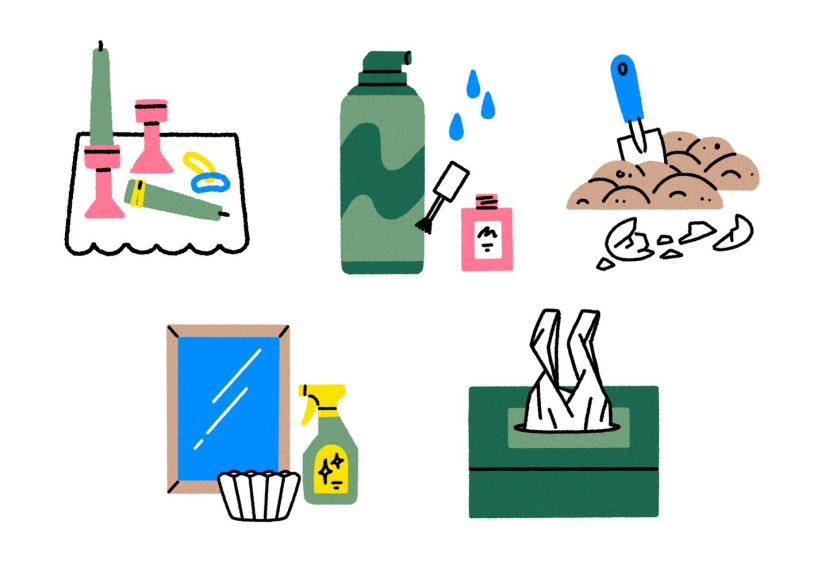
Rinse eggshells, let them dry, then grind them into a fine powder before sprinkling around houseplants or adding to compost. Finely ground shells break down faster than big shards, making nutrients like calcium more available. Reality check: eggshells aren’t a miracle cure for every plant issue, but they’re a solid, low-waste soil boost when used consistently.
3. Use a Tennis Ball to Erase Floor Scuffs
A tennis ball is basically a gentle scrubber in disguise. Cut a small slit, slip it over a broom handle (or just hold it), and rub scuff marks like you’re erasing your past mistakes. It’s especially handy on hardwood and tile where you want frictionwithout gouging the surface or bathing the room in chemical cleaner.
4. Use a Penny to Check Tire Tread Depth
The “penny test” is the fastest driveway reality check. Insert a penny into a tire groove with Lincoln’s head pointing down. If you can see his whole head, your tread is getting too low and it’s time to think replacement. Many safety sources point to 2/32 inch as the bare-minimum tread depth for passenger tiresso treat this like a safety tool, not a party trick.
5. Use an Empty Toilet Paper Roll to Vacuum Tiny Crevices
Vacuum attachments go missing the way socks do: mysteriously and with zero accountability. A cardboard toilet paper roll can become a custom crevice tool. Slide it over the vacuum hose and pinch one end into a narrow opening. Suddenly you can reach window tracks, car consoles, keyboard edges, and that space beside the fridge where crumbs go to start a new civilization.
6. Use a Fitted Sheet to Cover a Picnic Table
Picnic tables are charming until you meet the splinters. Stretch a twin fitted sheet over the tabletop and benches like a giant elastic tablecloth. It hugs the table in the wind, feels cleaner, and is way easier than wrestling a flimsy plastic cloth that behaves like it’s alive.
7. Use a Paper Straw to Pack a Necklace
To stop chains from knotting into a single metal brain teaser, thread a necklace through a straw, then clasp it. Long chain? Link multiple straws, or cut to size. You’ll arrive with jewelry that’s wearable, not emotionally challenging.
8. Use a Pillowcase to Dust a Ceiling Fan (Without a Dust Blizzard)
Slide an old pillowcase over one blade at a time, pinch the fabric around it, and pull outward slowly. The dust gets trapped inside the case instead of floating down onto your couch like glitter you never invited. Shake it outside, then wash the case. Your lungs will thank you.
9. Use Tension Rods to Store Baking Sheets Upright
If your baking sheets live in a teetering stack that claps loudly every time you grab one, tension rods can turn a cabinet into a file system. Install rods to create vertical slots so pans, cutting boards, cooling racks, and muffin tins stand upright. You’ll stop playing “pan Jenga” before dinner.
10. Use a Toothpick to Keep Packing Tape Ready
The end of packing tape disappears faster than your motivation on laundry day. After you cut tape, tuck a toothpick under the free edge. Next time, you’ll find it instantlyno peeling, scratching, or spiraling into rage.
11. Use Clear Nail Polish to Help Prevent Rust Rings on Shaving Cream Cans
Metal cans + wet tub ledges = that stubborn rusty ring nobody wants to scrub. Brush a thin layer of clear nail polish around the can’s bottom edge. It creates a little barrier that helps reduce corrosion from sitting water. (Still: store cans on a dry shelf when you can. Prevention is cheaper than elbow grease.)
12. Use a Bobby Pin to Hold a Tiny Nail
When a nail is too small to grip safely, feed it through a bobby pin and hold the pin instead of sacrificing your thumb. It’s a simple trick that keeps your fingers farther from the hammer while still giving you control. Beauty aisle, meet toolbox.
13. Use an Emery Board to Refresh Suede
Suede can look sad after one wrong sidewalk encounter. Gently rub an emery board over scuffs in the direction of the nap. It can lift minor marks and revive texturelike a tiny spa day for your shoes, minus the cucumber water.
14. Use Rubber Bands to Straighten Wobbly Taper Candles
A leaning taper is not “whimsical.” It’s a fire hazard. Wrap a rubber band (or two) around the candle base to fill the gap in the holder and add grip. The goal is upright and stablelike your best friend at brunch.
15. Use a Coffee Filter to Clean Mirrors
Coffee filters are surprisingly great for streak-free glass: they’re lint-free and don’t shred like some paper towels. Spritz mirror cleaner (or a diluted vinegar solution), wipe with a filter, and enjoy a shine so clear you’ll briefly wonder who that well-rested person is.
16. Use an Empty Tissue Box to Dispense Plastic Bags
If your plastic bag storage system is “a plastic bag full of plastic bags,” this is your upgrade. Stuff bags into an empty tissue box and pull them out one at a time. It’s tidy, compact, and weirdly satisfyinglike a low-stakes magic trick.
17. Use a Wine Bottle to Water Plants While You’re Away
Clean an empty wine bottle, fill it with water, and make a tiny hole through the cork. Invert the bottle into soil at an angle. Water slowly drips out, helping keep plants hydrated during short trips. It’s not a full irrigation system, but it’s a helpful “don’t die on me” backup plan.
18. Use Banana Peels to Dust and Shine Waxy Leaves
Dust on leaves can reduce light absorption (plants do prefer sunlight without a grime filter). For waxy-leaf plants, rub the inside of a banana peel gently along the surface, then buff with a soft cloth. You’ll lift dust and add shineno aerosol sprays, no weird residue, and no botanical drama.
19. Use Salt to Stretch a Candle’s Burn Time (Carefully)
After extinguishing a candle, sprinkle a tiny pinch of salt into the melted wax pool (keep it away from the wick), stir gently with a toothpick, and let it re-harden. Some candle lovers swear it slows melting slightly, helping the candle last longer. Always follow basic candle safety: trim wicks, keep away from drafts, and never leave flames unattendedno matter how “cozy” your playlist is.
20. Use a Warm Glass to Soften Butter Fast
Baking emergency? Fill a glass with hot water, let it warm up, dump the water, then cover a stick (or pieces) of butter with the inverted warm glass. The gentle heat creates a mini “butter sauna” that softens evenly without the microwave’s chaos. This trick is widely tested in cooking circles because it’s simple, controlled, and doesn’t turn your butter into a puddle.
21. Use a Slice of Bread to Keep Soft Cookies Softer
Storing cookies in an airtight container with a slice of bread helps keep them chewy. The bread gives off moisture that cookies can absorb over time, reducing that “why is this cookie a hockey puck?” outcome. Use plain white bread if you don’t want flavor transferand accept that the bread is doing important work and deserves respect.
22. Use a Potato + Salt to Rescue Rusty Cast Iron
Sprinkle coarse salt over rust spots, cut a raw potato in half, and scrub in circles. The salt acts as a gentle abrasive, and the potato contains oxalic acid that can help loosen rust. Rinse, dry thoroughly, then re-season your cast iron with a thin layer of oil. Your skillet can be redeemed. So can your confidence.
23. Use a Rubber Band to Open Stubborn Jars
Wrap a wide rubber band around a jar lid for grip and cushioning, then twist. The added traction helps you open lids without straining your hands (or asking the strongest person in the house to do their one annual task). If it’s still stuck, try tapping the lid edge gently or running warm water over it before round two.
24. Use Used Coffee Grounds to Deodorize the Fridge
Dry out used coffee grounds and place them in a shallow bowl in the refrigerator. Coffee’s porous texture and nitrogen content can help neutralize odors rather than just masking them. Swap the grounds every couple of weeks, and enjoy the satisfaction of turning “trash” into a natural air freshener.
25. Use Ice Cubes to Lift Furniture Dents in Carpet
Put an ice cube on each dent, let it melt slowly, blot excess water, then fluff fibers with your fingers (or a spoon). The moisture helps carpet fibers bounce back. It’s a classic “cheap but effective” home trickespecially after you rearrange furniture and discover your rug has been permanently stamped with the silhouette of your coffee table.
Field Notes: of Real-World Repurposing Experience (What Actually Happens When You Try These)
Here’s the part nobody tells you in a perfectly styled photo: repurposing is gloriously imperfect. It’s not about crafting a museum-worthy solutionit’s about making your day easier with less effort, less spending, and fewer “where did I put that?” moments. The best experience-based tip is this: start with the problem, not the item. If you begin by staring at an object and whispering, “What else can you be?” you might invent something… or you might just end up holding a toilet paper roll like it’s a philosophical question. Instead, focus on pain points: tangled jewelry, dusty fan blades, cluttered cabinets, funky smells, stuck lids, travel chaos.
Another real-life lesson: small wins compound. The tissue-box bag dispenser doesn’t just store bags; it reduces visual clutter, which makes the room feel calmer, which makes you more likely to keep tidying. The tension-rod baking sheet organizer doesn’t just save space; it prevents the pan avalanche that makes you avoid baking in the first place. You’re not just upcyclingyou’re removing tiny daily annoyances, one at a time.
People also discover that the “best” hack is the one they’ll actually repeat. The pillowcase ceiling fan trick gets repeated because it’s fast and contained. The coffee filter mirror trick gets repeated because it’s streak-free and doesn’t leave lint confetti everywhere. The warm-glass butter trick gets repeated because it produces reliably soft butter without gambling on a microwave. And yes, the rubber band jar trick gets repeated because it prevents the deeply humbling experience of losing to a pickle jar in front of your own refrigerator.
A practical caution: match the hack to your materials. Steam or moisture can warp cheap composite fan blades, so use the pillowcase method dry or barely damp, and always turn the fan off first. Eggshell powder can be helpful in soil over time, but it won’t instantly “fix” a nutrient deficiency; compost and balanced plant care still matter. With cast iron, the potato-and-salt scrub can help with surface rust, but you must dry thoroughly and re-seasonor you’ll be right back where you started, wondering why your skillet is acting like it lives at the bottom of the ocean.
Finally, the most underrated repurposing skill is emotional: giving yourself permission to be practical. You do not need the “perfect” container, the “right” gadget, or the trendiest organizing system. If a fitted sheet makes your picnic nicer, it’s a win. If a toothpick saves you 90 seconds of tape-end hunting every time you ship a package, it’s a win. If a penny keeps you safer on the road by nudging you to check tire tread before a stormy drive, it’s a huge win. Over time, these small habits turn into a home that runs smootherbecause you’ve trained it to work with you, not against you.
Conclusion
The whole point of “new uses for old things” is freedom: freedom from clutter, from unnecessary purchases, and from tiny daily hassles that drain your energy. If you try just three ideassay, the pillowcase fan trick, the tissue-box bag dispenser, and the warm-glass butter softeneryou’ll feel the payoff immediately. Then you’ll start spotting opportunities everywhere, like a superhero whose power is “mildly genius household fixes.” And honestly? That’s the kind of power we all deserve.