Table of Contents >> Show >> Hide
- Everyday inventions that quietly changed daily life
- Mary Dixon Kies a new method of weaving straw with silk
- Josephine Cochrane the first practical dishwasher
- Martha Coston marine signal flares
- Anna Connelly modern fire escape innovations
- Margaret Knight the flat-bottom paper bag machine
- Mary Walton anti-pollution technology
- Sarah Boone the improved ironing board
- Maria Beasley the improved life raft
- Mary Anderson the windshield wiper
- Lyda Newman the improved hairbrush
- Alice H. Parker a gas-powered central heating system
- Marion Donovan the waterproof diaper cover
- Ruth Wakefield the chocolate chip cookie
- Communication, office, and tech inventions with a woman behind them
- Marie Van Brittan Brown the home security system
- Hedy Lamarr frequency-hopping communication technology
- Bette Nesmith Graham Liquid Paper
- Evelyn Berezin the computerized word processor
- Lisa Lindahl, Hinda Miller, and Polly Smith the sports bra
- Marian Croak Voice over Internet Protocol (VoIP) technology
- Edith Clarke the Clarke Calculator
- Radia Perlman Spanning Tree Protocol
- Chieko Asakawa the Home Page Reader
- Science, medicine, materials, and energy breakthroughs
- Why these inventions still matter
- The experience of finally noticing women’s inventions everywhere
- Conclusion
Note: Clean body-only HTML for web publishing. Unnecessary citation artifacts have been removed.
When people picture great inventors, they often imagine a parade of famous men in dusty labs, dramatic lighting included. But real innovation has always been more crowded, more practical, and much more interesting than that. Women have introduced, patented, co-created, and transformed inventions that shape modern life every single day. In many cases, they solved problems nobody else bothered to notice. In other cases, they took a rough concept and turned it into something people could actually use. That is not a footnote. That is invention.
This list highlights 25 inventions you may not have known were introduced by women. Some changed households. Some changed medicine. Some changed how we communicate, travel, work, exercise, and stay alive. Together, they make one thing very clear: the history of innovation looks wildly incomplete when women are edited out of it.
So let’s fix that, one excellent invention at a time.
Everyday inventions that quietly changed daily life
Mary Dixon Kies a new method of weaving straw with silk
In 1809, Mary Dixon Kies became the first woman in the United States known to receive a patent in her own name. Her method for weaving straw with silk or thread helped strengthen the hat-making industry in New England. It may not sound flashy, but it was a huge moment: a woman had officially entered the U.S. patent record, and that mattered far beyond bonnets.
Josephine Cochrane the first practical dishwasher
Josephine Cochrane did not invent the vague dream of a machine that cleaned dishes. She invented the practical version that actually worked. Her design used water pressure and wire compartments sized for plates, cups, and saucers. In other words, she did not just imagine convenience; she engineered it. Every time someone loads a dishwasher and walks away like kitchen royalty, they owe her a nod.
Martha Coston marine signal flares
Martha Coston took an incomplete idea and turned it into a workable system of color-coded signal flares used by ships. Her invention improved naval communication during the Civil War and later became vital for maritime safety. That is the sort of innovation people appreciate very quickly when the ocean is dark, the weather is bad, and yelling is not a strategy.
Anna Connelly modern fire escape innovations
Anna Connelly introduced crucial fire escape improvements in the late 19th century, helping shape the outdoor fire escapes that became common on urban buildings. Her designs made emergency escape systems more practical and more accessible for crowded cities. It is the kind of invention people hope they never need, which is exactly why it matters so much.
Margaret Knight the flat-bottom paper bag machine
Before Margaret Knight’s machine, paper bags were awkward and less useful. Her invention could cut, fold, and glue flat-bottom bags automatically, making mass production possible. That humble grocery bag is not humble at all when you think about how retail, lunch packing, and everyday shopping depended on someone figuring out how to make it stand up like it had somewhere to be.
Mary Walton anti-pollution technology
Mary Walton patented a system that redirected smokestack emissions into water tanks, reducing air pollution. She also developed a way to reduce noise from elevated railways. Long before “environmental innovation” became a polished phrase, Walton was already tackling smoke, soot, and urban noise with practical engineering. She was doing pollution control before it was trendy, which is to say, before it was profitable.
Sarah Boone the improved ironing board
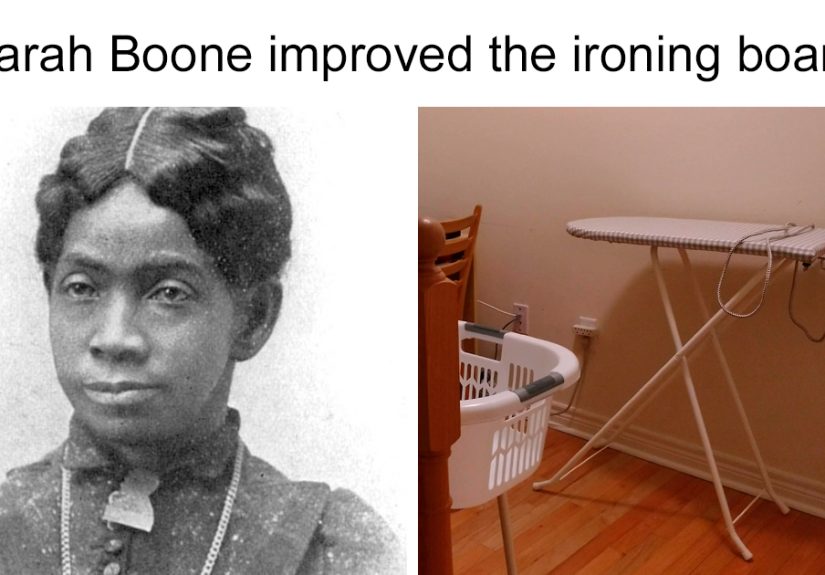
Sarah Boone patented an improved ironing board designed to better handle the curved shapes of garments, especially women’s clothing. Her version was narrower and more efficient than the boards that came before it. This was not glamorous work, but it was smart design rooted in real use. Good inventions often start with someone staring at an annoying task and deciding it has offended them for the last time.
Maria Beasley the improved life raft
Maria Beasley patented a more practical and buoyant life raft design, one that improved safety and storage. She also held multiple patents in other areas, proving she was not a one-idea wonder. Her raft mattered because survival technology only counts when it works under pressure. Literally.
Mary Anderson the windshield wiper
Mary Anderson patented a hand-operated windshield wiper after noticing how difficult it was for drivers to see in bad weather. At the time, some people thought the idea would distract drivers. History, as usual, had other plans. Now the only thing more distracting than windshield wipers would be not having them.
Lyda Newman the improved hairbrush
Lyda Newman patented a better hairbrush with durable synthetic bristles and a design that allowed for easier cleaning and better airflow. It was an everyday object improved through clever thinking, which is often where women inventors have historically been overlooked. A device used constantly by millions of people somehow still gets treated like a minor detail. It is not. Better daily tools improve life in quiet, repeated ways.
Alice H. Parker a gas-powered central heating system
Alice Parker patented a central heating system that used natural gas and multiple individually controlled burners. Her design helped point the way toward more modern, efficient home heating. The result was not just comfort but a smarter approach to distributing heat through a house. Winter has been slightly less rude ever since.
Marion Donovan the waterproof diaper cover
Marion Donovan’s waterproof diaper cover solved a very real parenting problem: cloth diapers that leaked and clothing that paid the price. Her work later helped pave the way for the disposable diaper industry. This was invention at its most practical, born from frustration, observation, and the powerful desire to stop laundering everything in sight.
Ruth Wakefield the chocolate chip cookie
Yes, one of America’s most beloved desserts came from a woman. Ruth Wakefield created the original chocolate chip cookie recipe at the Toll House restaurant in Massachusetts. That means one person’s kitchen improvisation turned into a national comfort food and a permanent threat to self-control. Innovation comes in many forms. Some arrive in labs. Some arrive on a baking sheet.
Communication, office, and tech inventions with a woman behind them
Marie Van Brittan Brown the home security system
Marie Van Brittan Brown co-invented an early home security system that used cameras, monitors, and a way to communicate with authorities. Her design helped lay the groundwork for modern home surveillance and security systems. She saw a safety problem in her own neighborhood and did what inventors do best: built a solution instead of waiting for one.
Hedy Lamarr frequency-hopping communication technology
Hedy Lamarr was not just a movie star with excellent lighting. She co-invented a frequency-hopping communication system designed to prevent signal jamming. The idea later influenced technologies behind Wi-Fi, GPS, and Bluetooth. If your internet connection had a Hall of Fame speech, she would deserve a thank-you line.
Bette Nesmith Graham Liquid Paper
Bette Nesmith Graham created correction fluid after seeing painters cover mistakes instead of erasing them. That insight became Liquid Paper, a product that rescued generations of typists, secretaries, and office workers from tiny, career-threatening errors. It was a brilliant example of cross-industry thinking: art techniques solving office problems before “design thinking” became the buzzword of the week.
Evelyn Berezin the computerized word processor
Evelyn Berezin developed one of the first computerized standalone word processors for business use. That mattered because it changed writing from a rigid, mechanical process into something easier to edit and manage. For anyone who has ever deleted a terrible sentence and felt immediate relief, Berezin’s contribution lives on.
Lisa Lindahl, Hinda Miller, and Polly Smith the sports bra
The Jogbra was not a gimmick. It was a real design breakthrough that helped women participate more comfortably in sports and running. Lisa Lindahl, Hinda Miller, and Polly Smith created the first sports bra to solve a problem mainstream athletic design had largely ignored. Sometimes an invention is world-changing simply because it finally takes women’s bodies seriously.
Marian Croak Voice over Internet Protocol (VoIP) technology
Marian Croak helped advance VoIP technologies, which convert voice into digital signals that can travel over the internet. Her work made modern internet calling, audio conferencing, and much of remote communication practical. In other words, a lot of modern meetings, calls, and video chats happen because she pushed the technology forward. Whether that is a blessing or a Monday problem depends on your calendar.
Edith Clarke the Clarke Calculator
Edith Clarke invented a graphical calculator that simplified complex calculations for electrical transmission lines. Her work made electrical engineering more efficient at a time when computing resources were extremely limited. It was a major technical achievement, and it helped move power systems toward the scale and reliability people now take for granted.
Radia Perlman Spanning Tree Protocol
Radia Perlman created the Spanning Tree Protocol, a foundational networking innovation that helped Ethernet scale into larger, more reliable networks. She is sometimes called the “mother of the internet,” and for good reason. Her work made networks smarter and more stable, which is not flashy in the way movies like, but it is exactly how real modern infrastructure works.
Chieko Asakawa the Home Page Reader
Chieko Asakawa invented the Home Page Reader, the first practical voice browser that gave blind and visually impaired users far better access to the internet. It was a breakthrough in accessible technology and a reminder that innovation should expand participation, not just add features. Great design does not merely impress people; it includes them.
Science, medicine, materials, and energy breakthroughs
Stephanie Kwolek Kevlar
Stephanie Kwolek discovered the polymer chemistry that led to Kevlar, a fiber famous for being extraordinarily strong relative to its weight. It is used in protective gear, aerospace components, cables, and more. The material is one of those inventions that sounds specialized until you realize it helps save lives in both military and civilian settings.
Patsy Sherman Scotchgard
Patsy Sherman co-created Scotchgard after an accidental lab spill led to a useful discovery. The product became one of the best-known stain-repellent and soil-resistant treatments in the world. This is a classic reminder that accidents in science are only lucky when someone smart notices what just happened.
Patricia Bath laserphaco cataract surgery
Dr. Patricia Bath invented laserphaco, a device and surgical technique for removing cataracts more precisely. She also became the first Black woman physician to receive a U.S. patent for a medical invention. Her work restored sight and expanded access to better eye care. That is the kind of innovation that changes not just technology, but human possibility.
Gertrude Elion 6-mercaptopurine and other lifesaving drugs
Gertrude Elion helped develop major pharmaceutical breakthroughs, including the leukemia treatment 6-mercaptopurine and drugs that supported kidney transplantation. Her research reshaped modern medicine and improved survival for countless patients. This is what invention looks like in medicine: not one dramatic gadget, but lifesaving compounds that quietly alter the odds.
Maria Telkes solar thermal storage systems
Maria Telkes pioneered solar energy applications, including solar thermal storage systems, solar distillation, and solar-powered home design. Long before clean energy became a global talking point, she was proving that sunlight could be engineered into practical solutions. Nicknames do not usually matter much, but “Sun Queen” is hard to argue with.
Why these inventions still matter
The big takeaway is not that women invented a few surprising things. The real takeaway is that women have long been central to the story of invention, especially in areas shaped by daily experience, overlooked needs, and practical problem-solving. That matters because invention is not just about prestige industries or dramatic machines. It is about solving real problems in homes, hospitals, offices, streets, factories, and classrooms.
It also matters for how history is taught. When girls and young women only hear about innovation through a narrow set of names, they get an incomplete picture of who belongs in science, technology, engineering, medicine, and entrepreneurship. When boys get that same incomplete history, they inherit a distorted one. Better storytelling is not cosmetic. It changes expectations, confidence, and who gets recognized as a builder of the future.
And frankly, it makes the story far more interesting. A glamorous actress helping inspire wireless communication. A mother redesigning diapers. A secretary inventing office correction fluid. A physician restoring sight with a patented surgical device. A runner helping invent the sports bra. That is not side history. That is the main event.
The experience of finally noticing women’s inventions everywhere
One of the strangest and most powerful experiences tied to this topic is what happens after you learn these names. You cannot really unsee them. A normal day starts to look different. You open the dishwasher and suddenly Josephine Cochrane is no longer a trivia answer; she is part of your routine. You buckle into a car, drive through rain, and Mary Anderson is there in the sweep of the windshield wiper. You grab a paper bag, tie your shoes for a run, log onto a video call, or watch a relative recover from eye surgery, and the story of invention becomes less abstract and more personal.
That shift can feel surprising, even a little embarrassing, because many people realize they were taught a version of history with giant holes in it. It is not that women inventors were completely absent. It is that they were often mentioned like bonus material, tucked into a sidebar as if they wandered into the lab by accident. Learning the fuller story creates a specific kind of intellectual whiplash: how did all of this shape modern life without becoming common knowledge?
There is also something deeply human about the kinds of problems many of these women chose to solve. Their inventions often came from lived experience. A parent tired of leaky diapers. A woman wanting safer homes. A runner wanting support that the market ignored. A scientist noticing an unexpected chemical property. A physician determined to restore sight. These are not distant, mythical moments of genius descending from the heavens on a thundercloud. They are grounded, observant, practical acts of intelligence. That can make innovation feel closer and more possible.
For readers, students, and creators, that recognition can be energizing. It changes the emotional tone of the subject. Instead of thinking invention belongs only to the loudest person in the room or the person with the most famous name, you start to see it as careful attention plus persistence. You start to notice that plenty of world-changing ideas begin with everyday annoyance, underestimation, and a refusal to accept “that’s just how it is.” Honestly, that may be the most relatable origin story in all of human progress.
There is joy in that realization too. Real joy. The history gets richer. The room gets more crowded. The cast gets better. And future inventors get a more truthful inheritance. Once you see women’s inventions woven through ordinary life, the world feels less like a museum of isolated geniuses and more like a shared project built by people who noticed what was broken and got to work. That is a much better story. It is also a much more useful one.
Conclusion
The next time someone talks about famous inventions as though innovation has always worn the same face, this list is a pretty good response. Women introduced and advanced inventions that changed kitchens, cities, offices, medicine, communication, sports, safety, and energy. Some of these breakthroughs are legendary. Others are hiding in plain sight, doing their jobs so well we barely think about them anymore.
Maybe that is the final irony: the more successful an invention becomes, the easier it is to forget the person who made it possible. These 25 women deserve to be remembered not as exceptions, but as essential figures in the history of modern life.