Table of Contents >> Show >> Hide
- Why Kindergarten Class Photos Hit So Hard
- The Real Magic of School Picture Day
- Why the Awkwardness Makes Them Better
- Kindergarten Class Photos as Tiny Social History
- What These Photos Mean to Parents
- Why Adults Love Looking Back at Them
- How to Preserve the Value of School Portraits
- What Makes #25 So Awesome
- More Experiences Related to Kindergarten Class Photos
- Conclusion
There are fancy joys in life, and then there are the tiny, sneaky ones that punch way above their weight. Kindergarten class photos belong firmly in the second category. They are gloriously awkward, emotionally loaded, and somehow more powerful than half the things we spend real money framing. One second, it is a sheet of smiling kids in itchy sweaters. The next, it is a time machine with bangs.
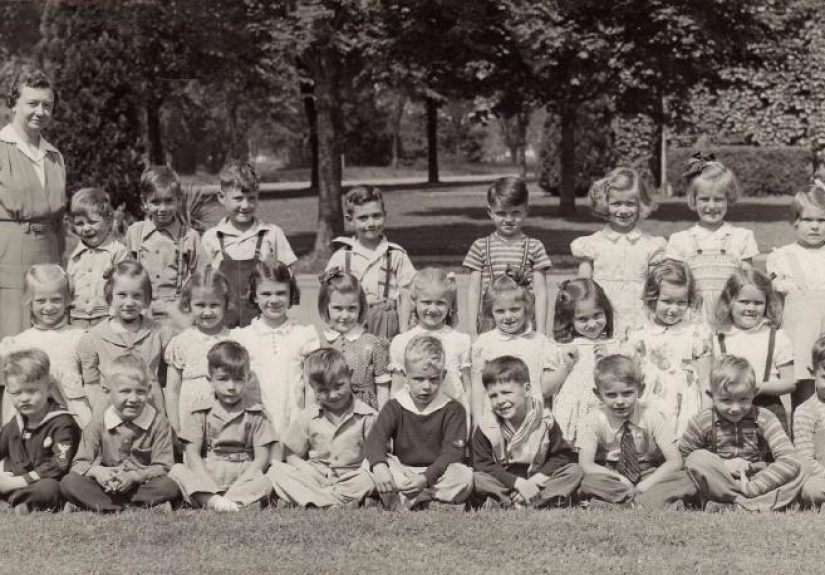
That is the charm behind #25 Kindergarten class photos in the spirit of 1000 Awesome Things. On the surface, these pictures are simple school portraits. Underneath, they are miniature museums of childhood. They preserve the era of Velcro shoes, tiny plastic chairs, blunt-cut bangs, name tags, lunch boxes, and the very serious belief that glue sticks were gourmet snacks. A kindergarten class photo does not just show what a child looked like. It captures who they were before they learned to pose, self-edit, or pretend they were too cool for anything.
That is why these photos remain one of the most lovable forms of school picture day nostalgia. They are not polished. They are not aspirational. They are charming because they are honest. If adulthood is a long lesson in trying to look put together, kindergarten class photos are sweet proof that nobody starts there.
Why Kindergarten Class Photos Hit So Hard
A great childhood photo does more than freeze a face. It freezes a feeling. When you look at a kindergarten portrait years later, you are not just seeing a haircut that should probably come with a formal apology. You are meeting an earlier version of yourself. You remember the smell of crayons, the squeak of cafeteria shoes, the terror of being asked to share, and the thrill of finally being trusted with safety scissors. Suddenly, the picture is not flat anymore. It has sound, smell, and a suspicious amount of Elmer’s glue energy.
This is why childhood memories often arrive through small visual triggers. A class photo can unlock details you did not know you still had tucked away: the kid who always wore dinosaur shirts, the teacher with the cheerful voice and steel-nerved patience, the classmate who cried every Monday, and the one child who somehow looked like a 42-year-old accountant at age five. Memory is funny like that. It does not always save the “important” stuff. Sometimes it saves the paper crown from the Thanksgiving play.
That makes kindergarten class photos different from most modern images. Today, pictures are everywhere. We take hundreds and keep very few in our hearts. But old school portraits were limited. They had weight. A family would order them, hold them, pass them around, tuck them into albums, and laugh about them for years. These were not disposable files buried in a cloud. They were artifacts.
The Real Magic of School Picture Day
School picture day has always been a weird little theater production. The preparation alone deserves its own soundtrack. Parents smooth collars like they are preparing a small diplomat for a summit. Hair gets brushed, re-brushed, and occasionally negotiated with. Smiles are practiced in the mirror with the intensity of an Olympic event. Meanwhile, the child often looks like they would rather discuss dinosaurs than personal branding.
And yet, this mild chaos is part of the magic. Picture day gives ordinary families an annual milestone. It says, “Here you are. This is what this year looked like.” It marks growth in a way daily life usually hides from us. When you see a series of school portraits lined up together, the transformation is impossible to miss. Missing front teeth become braces, round cheeks sharpen, baby faces become school-age faces, and the expression changes from “I just learned the alphabet song” to “I have opinions about everything.”
That is one reason school portraits matter so much. They turn the blur of raising children into visible chapters. Parents often live childhood in fast-forward. One day, they are labeling tiny jackets. The next, their kid is rolling their eyes and asking for privacy. A family photo album full of school pictures helps interrupt that blur. It says: pause right here. This mattered.
Why the Awkwardness Makes Them Better
Let us be honest. The best kindergarten class photos are not the perfect ones. They are the ones where one kid is blinking, one is beaming like they just discovered joy itself, one is visibly offended by the entire concept of cameras, and one has a cowlick that looks like it qualified for independent citizenship. In other words, the imperfections are the product.
There is something deeply lovable about a picture that refuses to be elegant. A crooked collar, a jelly stain, a pair of oversized glasses, a sweater chosen by a parent with “special event” ambition and zero understanding of temperature control, all of it becomes comedy later. These tiny details make the photo human. They also make it unforgettable.
That awkwardness is especially important in early childhood because kindergarten is one of the last stages where children tend to be fully themselves in public. They have not yet mastered image management. They are open, expressive, and blissfully inconsistent. Their smile may be enormous, missing, sideways, or absent on principle. That unpredictability is part of the charm of picture day traditions. The camera catches children before self-consciousness starts doing quality control.
Kindergarten Class Photos as Tiny Social History
Beyond family nostalgia, these photos also work as small pieces of cultural history. Look at a kindergarten class photo from any decade and you can spot the trends immediately. Hairstyles, collars, colors, patterns, and poses all reveal their moment. Some years look aggressively beige. Some look neon enough to signal planes. Some feature bowl cuts in such alarming numbers that society as a whole should probably have held a meeting.
That is what makes old school portraits so fascinating. They are not just about one child. They are group snapshots of an era. A class photo can reveal how schools looked, how families dressed children, and what visual cues a community considered “presentable.” Even facial expressions tell a story. Earlier school photography often leaned more formal, while more modern pictures tend to allow a bit more personality. So yes, your kindergarten smile may be adorable, but it is also a tiny historical document. No pressure.
What These Photos Mean to Parents
For parents, a kindergarten class photo is rarely just cute. It is emotional evidence. It marks one of the first big handoffs of childhood: the season when a little kid starts belonging to a world outside the house. A child has classmates now. A teacher. A cubby. A routine. A version of the day that the parent does not fully witness.
That can feel beautiful and brutal at the same time. The photo becomes a way to hold onto the version of the child who still needed help opening snacks, still believed stickers had significant legal power, and still thought the grown-up in charge probably knew everything. Parents often keep these portraits because they remember the stage, not just the face. They remember the backpack that looked enormous, the tears at drop-off, the excitement over making a new friend, and the first drawing that came home with a gold star and approximately no identifiable shapes.
In that way, kindergarten class photos are not just for children. They are keepsakes for parents who are trying, unsuccessfully and heroically, to slow time down with cardstock.
Why Adults Love Looking Back at Them
Adults treasure these photos for a different reason. They remind us of a version of life that was smaller, stranger, and sometimes sweeter. The world in kindergarten was not easy, exactly, but it was organized around manageable drama. Your biggest concern might have been who got the purple marker first. Your greatest triumph might have been gluing macaroni in a way that seemed architecturally important.
That perspective is oddly comforting. Looking back at a kindergarten class photo can shrink modern stress for a minute. Bills, deadlines, inboxes, and taxes lose a little power when you are staring at your former self in overalls, looking thrilled to be alive and mildly confused by sleeves. The photo does not erase adult problems. It simply reminds you that you once existed without a calendar app, and somehow that feels medicinal.
This is one reason nostalgia remains so powerful. It helps people reconnect with identity, relationships, and meaning. A kindergarten photo reminds adults that they were once new to the world, once seen with uncomplicated affection, and once surrounded by ordinary moments that later became priceless. It is hard not to feel something about that.
How to Preserve the Value of School Portraits
If you have old kindergarten class photos tucked in a drawer, congratulations: you are already richer than you think. These little prints are worth saving well. Slip them into albums. Scan them. Label the backs with names, years, schools, and whatever details future-you will forget. If possible, write down a few memories from that year too. Who was the teacher? What did the child love? What was funny, hard, or unexpectedly sweet?
This matters because photos age better when stories stay attached to them. A smiling face is wonderful. A smiling face with context is treasure. It turns a generic image into a personal archive. It also helps children, later on, understand their own beginnings. A photo says, “This is what you looked like.” A caption says, “This is who you were becoming.”
You can also make the most of these portraits in practical ways. Create a family photo album dedicated to school years. Frame a few side by side. Make a keepsake book that mixes portraits with drawings, report cards, or quotes from each age. None of this has to be fancy. Childhood memory-keeping works best when it is sincere, not overproduced.
What Makes #25 So Awesome
At its core, the beauty of #25 Kindergarten class photos is simple: they celebrate the small stuff. They elevate an ordinary school ritual into something worth cherishing. That is the whole genius of the “awesome things” way of looking at life. It teaches us that joy is often hiding in plain sight, taped inside old envelopes, waiting for us to notice.
A kindergarten class photo is funny, yes. It is also tender. It shows us who we were before the years got crowded. It captures the first public version of a little person learning how to be in the world. It keeps a record of innocence, fashion crimes, and impossible earnestness. It reminds us that not everything valuable has to be dramatic. Sometimes the best things are just a row of tiny humans sitting still for half a second.
And honestly, any object that can make a whole room laugh, sigh, and say, “Oh wow, look at you,” deserves a place on the list of awesome things.
More Experiences Related to Kindergarten Class Photos
One of the funniest experiences with kindergarten class photos is that nobody remembers picture day the same way. Parents remember the scramble. Teachers remember trying to keep twenty tiny people lined up and lint-free. Kids remember one random detail, like the photographer saying “cheese,” the stool being too tall, or the injustice of being told not to make a silly face. Years later, all of those memories get poured into one little rectangle of paper.
For some families, these photos come out once a year at holidays and trigger the same conversation every time. Somebody points at the haircut. Somebody else swears the child insisted on that shirt. An aunt laughs so hard she has to sit down. Then the room goes soft for a second, because behind the jokes is a quiet realization: that tiny person is not tiny anymore. The photo becomes a family ritual, not just a picture.
There is also the oddly emotional experience of seeing your own child reach the same age you were in your kindergarten portrait. Suddenly, what once felt like an old photo becomes a mirror across generations. You notice the same smile, the same stubborn eyebrows, maybe the same unfortunate cowlick. That connection can hit hard. It reminds adults that childhood is not just something behind them. It is something being handed forward.
Then there is the personal experience of looking at your own class photo alone. No audience, no jokes, no family commentary. Just you and that small version of yourself. Those moments can be surprisingly moving. You want to tell that kid a few things. You want to say the future will be weird, but mostly okay. You want to say that one day they will laugh at the shoes, appreciate the teacher, and wish they could revisit one ordinary afternoon when the biggest achievement in life was getting picked to hold the classroom door.
That is why these photos last. Not because they are technically perfect, but because they keep generating meaning. They age with us. At five, they are just school pictures. At fifteen, they are embarrassing. At twenty-five, they are funny. At forty-five, they become evidence of tenderness, survival, family, and time. Very few objects manage a career arc like that.
So yes, kindergarten class photos are awesome because they are adorable. But they are even more awesome because they keep changing as we do. They grow from snapshots into stories, from school paperwork into emotional landmarks. They are little reminders that life is built from ordinary moments we barely notice while living them. Then one day we see them again, frozen in a crooked grin under fluorescent lights, and realize they were never ordinary at all.
Conclusion
If you want proof that life’s sweetest joys are usually the least flashy, pull out a kindergarten class photo. It has everything: innocence, comedy, nostalgia, family history, and a level of accidental fashion experimentation no adult would survive socially. More importantly, it captures a child at the exact stage when the world is still enormous, school still feels new, and personality is already bursting through every uneven smile.
That is why #25 Kindergarten class photos deserves its place among life’s small delights. It reminds us that the best keepsakes are not always expensive or dramatic. Sometimes they are just slightly glossy prints of tiny humans trying their best to sit still. And somehow, that is enough to become unforgettable.