Table of Contents >> Show >> Hide
- First, a Quick Reality Check: What “Yellow Sapphire” Can Actually Be
- Way #1: Verify the Paper Trail (AKA: “Trust, But Verify… With a Report Number”)
- Way #2: Use Smart Visual Checks (At-Home Observations That Don’t Wreck the Stone)
- Way #3: Get Professional Gem Testing (The “Numbers Don’t Lie” Method)
- Putting It All Together: A Simple 3-Step Checklist
- Bonus: of Real-World Experiences Checking Yellow Sapphire
- Conclusion
Yellow sapphire sounds like sunshine you can wear. It’s also one of those gemstones that attracts “too-good-to-be-true” listingsbecause it’s valuable, it’s popular, and it’s easy for sellers to toss around words like “natural,” “Ceylon,” “untreated,” and “Vedic-quality” the way some people toss confetti.
So how do you check a yellow sapphire without turning your kitchen into a questionable science lab (or accidentally scratching a stone you paid good money for)? Here are three practical, real-world waysfrom the simplest buyer checks to the professional-level verificationwritten for normal humans, not gemstone robots.
First, a Quick Reality Check: What “Yellow Sapphire” Can Actually Be
Before you verify anything, it helps to know what you’re verifying. In the marketplace, “yellow sapphire” might refer to:
- Natural yellow sapphire (a yellow variety of corundum).
- Heat-treated sapphire (common and often stable, but should be disclosed).
- Diffusion-treated sapphire (color altered by adding elements during heating; disclosure matters a lot).
- Lab-created (synthetic) sapphire (real corundum, human-made; must be clearly disclosed).
- Simulants (not sapphire at allcould be glass, quartz, or something else pretending at a distance).
The goal isn’t to panic. The goal is to get the truthbecause the value, care needs, and resale can change drastically depending on what the stone really is and what’s been done to it.
Way #1: Verify the Paper Trail (AKA: “Trust, But Verify… With a Report Number”)
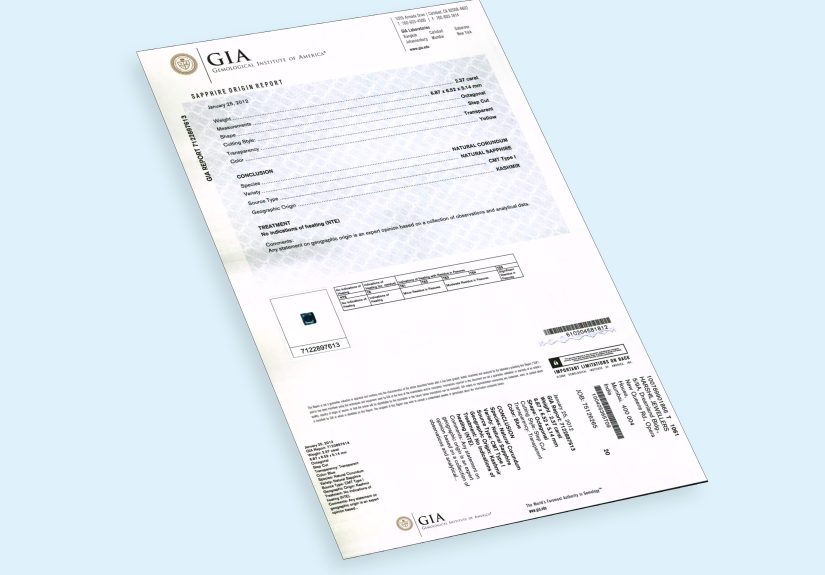
If you only do one thing, do this: ask for an independent lab report or buy from a seller who already provides one from a recognized gem lab. A lab report is the closest thing gemstones have to a birth certificateminus the baby photo and the awkward middle name.
What a good report can confirm
- Identity: that it’s sapphire (corundum), not a look-alike.
- Natural vs. lab-created: whether it formed in the earth or in a lab.
- Treatments: heat, diffusion, fracture filling, etc. (wording varies by lab).
- Sometimes origin: geographic origin may be offered as an expert opinion by some labs.
How to check a report like a pro (without wearing a monocle)
- Match the basics: shape, measurements, carat weight, and color description should match what you’re buying.
- Check the report number online: reputable labs typically let you verify that the report exists in their database.
- Read the treatment section slowly: this is where value-altering info lives.
- Watch for vague language: phrases like “may have been treated” or “no indications observed” can be legitimate, but ask the seller what they mean in plain English.
Questions you should ask the seller (copy/paste friendly)
- Is this sapphire natural or lab-created?
- Has it been heat-treated?
- Has it been diffusion-treated (including beryllium diffusion)?
- Has it been fracture-filled or clarity enhanced in any way?
- Do you provide an independent lab report from a recognized lab?
Why this matters: In the U.S., marketing gemstones truthfully and disclosing relevant treatments is a big deal in consumer protection guidance. Even honest sellers can make sloppy claims; a report helps keep everyone aligned with reality.
Way #2: Use Smart Visual Checks (At-Home Observations That Don’t Wreck the Stone)
You can’t “prove” authenticity at home with 100% certainty (that’s what labs are for), but you can catch a surprising number of red flags using your eyes, good lighting, and a $10 loupe.
Tools that help (and won’t get you banned from the dining table)
- 10x loupe (a jeweler’s magnifier)
- Daylight or a neutral LED light (avoid overly warm yellow bulbs)
- A plain white background (paper works)
- Your phone camera (for zoom + documenting what you see)
What a natural yellow sapphire often looks like
Natural sapphires commonly show tiny inclusionsinternal features like needles, crystals, or faint “silk.” Inclusions can be beautiful and normal. In fact, a stone that looks too perfect can sometimes be suspicious (not alwaysbut it should make you ask better questions).
Red flags you can spot at home
- Curved growth lines (curved striae): these can be a classic sign of some lab-created corundum methods.
- Round gas bubbles: lots of bubbles can suggest glass or certain synthetics (natural stones can have cavities, but “bubble city” is suspicious).
- Color concentrated near edges: some diffusion-treated stones show stronger color near the surface. This isn’t always obvious, but if color looks like it’s “painted on,” ask questions.
- Patchy color + surface wear: a coated stone can show uneven wear over time (coatings are not as durable as the gemstone itself).
- Suspiciously low price + big claims: “Natural, unheated, top color, huge size, bargain price” is the gemstone version of “free puppy, also it does your taxes.”
A simple “three-angle” viewing routine
Try this quick check in good light:
- Face-up view (top): Look for evenness of color, brilliance, and any obvious cloudiness.
- Side view (profile): Check if color appears stronger near the surface than deeper inside.
- Back view (pavilion): Look for obvious bubbles, curved lines, or a “watery” glassy look.
What NOT to do (please don’t)
- Don’t do a scratch test. Yes, sapphire is hard. No, that doesn’t mean you should test it by scratching it (or letting it scratch something else).
- Don’t use harsh chemicals. Some treated or filled stones can be sensitive, and you could damage the surface.
- Don’t rely on “thermal conductivity” gadgets. Those are mainly for diamonds and can mislead you with colored stones.
Bottom line: Visual checks help you decide whether a sapphire seems consistent with natural corundumand whether you should demand a report before money changes hands.
Way #3: Get Professional Gem Testing (The “Numbers Don’t Lie” Method)
If you’re buying a yellow sapphire as an investment piece, an engagement ring center stone, or anything you’d be sad to replace, professional verification is the best move. A qualified gemologist or an independent lab can test properties you can’t reliably measure at home.
Core gem ID tests used for sapphire
- Refractive Index (RI): Sapphire (corundum) has a well-known RI range; measuring it helps confirm identity.
- Birefringence: Sapphire is doubly refractive; this supports identification.
- Specific Gravity (SG): Density testing helps separate sapphire from common look-alikes.
- Microscopy: Inclusions and growth features can indicate natural vs. synthetic and reveal treatment clues.
- Spectroscopy / advanced analysis: Used for deeper treatment detection and origin work in lab settings.
Why treatment detection is where pros really earn their keep
Many sapphires are heat-treated, and that can be stable and widely acceptedas long as it’s disclosed. Diffusion treatments (including certain high-temperature diffusion processes) can significantly affect value and how the stone should be represented. Identifying the “how” behind the color is often the hardest partand it’s exactly what labs are built to do.
Choosing where to get it checked
- Independent gemologist appraiser: Great for in-person evaluation and purchase guidance.
- Recognized gem lab: Best for formal documentation, treatment calls, and sometimes origin opinions.
- Jewelry store “in-house check”: Can be helpful, but ask what instruments they used and whether they’re independent.
What to bring (so you don’t leave with more questions than you arrived with)
- The stone (loose if possiblesettings can hide features)
- Any seller paperwork
- Your purchase listing/description (print or screenshot)
- A short list of questions: natural vs. synthetic, treatments, and any care concerns
Putting It All Together: A Simple 3-Step Checklist
If you want the quickest safe strategy, here it is:
- Start with documentation. Ask for a reputable lab report and verify the report number.
- Do visual sanity checks. Use a loupe to look for red flags like bubbles, curved growth, or suspicious surface color effects.
- Get a pro involved for high-stakes purchases. Confirm identity and treatments with proper instruments and an independent opinion.
Bonus: of Real-World Experiences Checking Yellow Sapphire
Let’s talk about what checking yellow sapphire looks like outside of perfect lab conditionswhere lighting is weird, sellers are confident, and your brain is trying to be both excited and responsible. (A difficult combo. Like eating salad at a donut shop.)
Experience #1: The “It’s Certified!” moment. A common situation: someone proudly says their yellow sapphire is “certified,” and they show you… a laminated card with fancy fonts. That’s not necessarily a scam, but it’s also not automatically meaningful. The best outcome is when the seller provides a real lab report number that you can verify on the lab’s site, and the report details match the stone in your hand. The worst outcome is when the “certificate” is basically a decorative bookmark. In practice, I’ve seen buyers save themselves a lot of money by politely asking, “Which lab issued this, and can I verify the report number online?” If the seller gets defensive or tries to change the subject, that’s your cue to become emotionally attached to another sapphire.
Experience #2: The loupe reveal. People often expect a loupe to show something dramatic, like a tiny billboard inside the gem that says “Hello, I am fake.” Real life is subtler. The loupe is more like a truth flashlight: it doesn’t guarantee a conclusion, but it shows you whether the stone’s internal world looks natural. Sometimes you’ll spot neat little inclusions that look like wisps or tiny crystalsfeatures that can be totally normal for natural corundum. Other times you see very round bubbles, repeated patterns, or curved growth lines that look a bit too “manufactured.” That doesn’t mean every clean stone is synthetic, but it does mean you should shift from “this is a fun purchase” to “let’s involve a lab.”
Experience #3: The lighting trap. Yellow sapphires can look wildly different under different lights. Under warm indoor lighting, a stone can look richer and more golden; under cooler daylight, it might look paler or slightly greenish. I’ve seen buyers fall in love with a stone at night and feel confused in the morninglike the gem pulled a Cinderella, but backwards. A smart habit is asking to view the sapphire in at least two lighting conditions, or stepping near a window with neutral daylight. If the color only looks good under one specific light, you’re not necessarily seeing the stoneyou’re seeing the lighting.
Experience #4: The treatment conversation. Some buyers get nervous when they hear “heat-treated,” but heat treatment is common in sapphires and can be stable. The real issue is not “treated equals bad.” The issue is undisclosed treatment, or treatments that dramatically change value without the buyer realizing it. In real purchases, the best sellers are comfortable discussing treatments clearly: what was done, whether it’s permanent, and whether it affects care. The sketchy sellers use foggy language like “enhanced by nature” (which is poetic, but not helpful). A simple “What treatments does the report list?” can cut through the fog fast.
Experience #5: The peace-of-mind upgrade. When someone is buying a yellow sapphire for a milestonean engagement ring, a family gift, a “I survived this year” celebrationthe best feeling comes from certainty. The cost of an independent appraisal or lab verification often feels small compared to the cost of regret. I’ve watched people go from anxious to confident just by getting the stone professionally identified and documented. That confidence matters, because it turns your sapphire from “a pretty rock I hope is real” into “a gem with receipts.”
Conclusion
Checking a yellow sapphire doesn’t have to be intimidatingor involve questionable experiments worthy of a late-night reality show. Start with the paper trail, follow up with smart visual checks, and for any serious purchase, lean on professional gem testing. You’re not just buying a color. You’re buying identity, treatment history, and trust.
If you remember one line, make it this: When the claims get bigger, the verification should get stronger.