Table of Contents >> Show >> Hide
- What Is a Sycamore Tree (in the U.S.)?
- At a Glance: The 3 Best Ways to Identify a Sycamore Tree
- 1) Identify a Sycamore by Its Bark (the Easiest Clue)
- 2) Identify a Sycamore by Its Leaves (Maple-Like, But Not a Maple)
- 3) Identify a Sycamore by Its Seed Balls, Twigs, and Winter Silhouette
- Bonus Clues That Help Confirm a Sycamore
- Common Sycamore Look-Alikes (and How Not to Get Fooled)
- How to Identify a Sycamore in Every Season
- A Simple 30-Second Sycamore ID Checklist
- Final Thoughts
- Field Notes & Real-World Experiences Identifying Sycamores (Extended Section)
If trees had a “main character” energy award, the sycamore would win by a mile. It’s big, bold, a little messy, and impossible to ignore once you know what you’re looking for. In the U.S., the American sycamore (Platanus occidentalis) is one of the easiest large native trees to recognizeespecially when that signature bark starts peeling like nature’s camouflage wallpaper.
But here’s the plot twist: people often confuse sycamores with maples (because of the leaves) or London plane trees (because they’re close relatives and look very similar). The good news? You do not need a botany degree or a dramatic woodland montage to figure it out.
In this guide, you’ll learn 3 reliable ways to identify a sycamore tree using bark, leaves, and fruit/twigsplus a few seasonal clues and common look-alike mistakes to avoid. By the end, you’ll be able to spot one on a neighborhood walk, along a riverbank, or in a park and say, “Ah yes, classic sycamore behavior.”
What Is a Sycamore Tree (in the U.S.)?
In standard American usage, “sycamore” usually means American sycamore (Platanus occidentalis), also called American planetree or buttonwood. It’s a massive deciduous hardwood native to much of the eastern and central United States and is especially common along streams, rivers, and bottomlands.
It grows fast, gets very large, and develops a broad crown with heavy branches. Mature sycamores are often planted as shade trees, but they’re also famous for littering twigs, bark flakes, and seed balls like confetti from a very enthusiastic parade.
At a Glance: The 3 Best Ways to Identify a Sycamore Tree
- Check the bark: Look for peeling, patchy bark with white/gray/green-brown mottling.
- Check the leaves: Large, simple, lobed leaves that look maple-like, but with an alternate arrangement.
- Check the fruit and twigs: Round hanging seed balls (often one per stalk on American sycamore), plus zigzag twigs and hidden buds.
Let’s break each one down so you can identify a sycamore in any season.
1) Identify a Sycamore by Its Bark (the Easiest Clue)
If you only remember one thing from this article, make it this: sycamore bark is a dead giveaway. The bark peels off in irregular patches, exposing lighter inner bark beneath. This creates a mottled pattern that often looks like camouflage in shades of white, cream, gray, tan, green, and brown.
What the bark looks like
- Upper trunk and branches: Smooth to patchy, often very light-colored (white to creamy gray).
- Lower trunk (older bark): Darker gray-brown plates that may look rougher or scaly.
- Overall effect: A patchwork trunk that stands out from far away, especially in winter.
On mature trees, the upper limbs can almost glow pale white in the canopy. That’s one reason sycamores are easy to spot even from a distance when leaves are gone.
Why sycamore bark peels
Sycamore bark is relatively brittle and doesn’t stretch as easily as the growing trunk underneath. So instead of expanding smoothly, it flakes and sloughs off in patches. That peeling reveals the younger, lighter bark beneathand gives the tree its signature look.
Pro tip for beginners
Don’t judge only the base of the trunk. The lower trunk may be darker and less dramatic. Look up at the mid-trunk and large branches, where the mottled exfoliating bark is usually most obvious.
2) Identify a Sycamore by Its Leaves (Maple-Like, But Not a Maple)
Sycamore leaves are large, broad, and often mistaken for maple leaves. That confusion is totally normal. The trick is to look beyond “it looks maple-ish” and check a few specific features.
Sycamore leaf features
- Leaf type: Simple (not compound)
- Arrangement: Alternate on the twig (not opposite)
- Shape: Palmately veined with 3 to 5 lobes
- Margins: Coarsely toothed
- Size: Usually largecommonly around 4 to 8+ inches wide
In plain English: the leaf is big, lobed, and dramatic, with veins radiating from a central point like fingers from a palm.
The most useful leaf clue: alternate vs. opposite
This is where many IDs get fixed instantly. Maples have opposite leaves (two leaves/buds directly across from each other on a twig). Sycamores have alternate leaves (staggered, one per node).
So if you’re staring at a “maple-looking” leaf and wondering what it is, check the twig arrangement before you overthink it. That one habit will save you from a lot of wrong guesses.
Another cool sycamore leaf clue
On sycamore, the leaf stalk (petiole) base can enclose the bud. In other words, the bud is partly hidden where the leaf attachesan unusual and useful ID trait, especially when learning winter twigs and buds.
Seasonal note
Fresh spring leaves may look fuzzy or hairy, especially underneath. As the season goes on, that texture may become less noticeable. Don’t panic if your leaf doesn’t look exactly like a field guide photo taken in a different monthtrees love seasonal wardrobe changes.
3) Identify a Sycamore by Its Seed Balls, Twigs, and Winter Silhouette
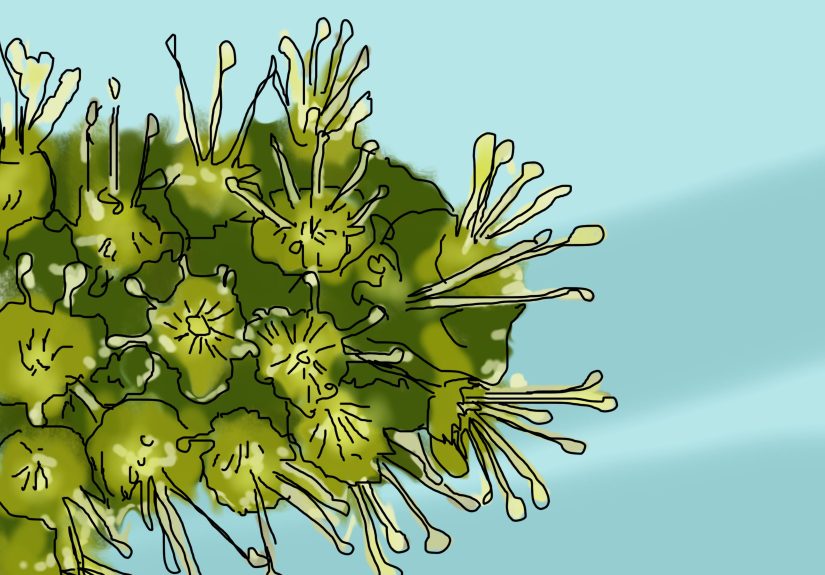
Sycamore identification gets even easier once fruit develops. The tree produces round, ball-like fruiting structures made of many tiny seed units (achenes). These often hang on slender stalks and can persist into winter, when they look like ornaments left up a little too long.
What sycamore fruit looks like
- Shape: Round, fuzzy-to-bristly ball
- Size: Often around 1 inch (varies)
- Position: Hanging from a slender stalk (peduncle)
- Timing: Often visible in fall and winter
These “buttonballs” are one reason sycamore is also called buttonwood or buttonball tree.
American sycamore vs. London plane tree (important look-alike)
American sycamore and London plane tree are close relatives and can be tricky to separateespecially in urban areas. A practical clue is the fruit count:
- American sycamore: Usually one fruit ball per stalk
- London plane tree: Often two fruit balls per stalk (sometimes more variability)
Bark color can help too. Sycamore often looks whiter overall, while London plane may show more olive/khaki tones in the exfoliating patches. That said, hybrids and variation can blur the lines, so use multiple clues together.
Twigs and winter clues
In winter, sycamore twigs are often described as zigzag and somewhat stout, with lateral buds that can be tucked under the petiole base before leaf drop. On large mature trees, you may also notice a coarse branching pattern and a massive trunk that screams, “I have been here longer than your HOA.”
Bonus Clues That Help Confirm a Sycamore
Habitat and location
In the wild, American sycamore is strongly associated with moist sitesespecially riverbanks, floodplains, bottomlands, creek edges, and other riparian areas. If you spot a giant, mottled-bark tree growing near water in the eastern U.S., sycamore should be high on your list.
It can also be planted in parks, campuses, and large landscapes, so habitat is a cluenot a rule.
Size and growth habit
Sycamores are among the largest hardwoods in eastern North America. Mature trees can become enormous, with broad crowns and very thick trunks. If the tree looks like it could host a family reunion in the shade, you may be in sycamore territory.
Common Sycamore Look-Alikes (and How Not to Get Fooled)
1) Maple trees
Why the confusion happens: The leaves can look similar from a distance.
How to tell them apart: Check leaf arrangement. Maples are opposite; sycamores are alternate. Also, maples make winged seeds (samaras), not round hanging seed balls.
2) London plane tree
Why the confusion happens: Similar exfoliating bark, similar leaves, same genus (Platanus).
How to tell them apart: Count the fruit balls (one vs. often two), compare bark tones (sycamore often looks whiter), and consider the setting (wild riparian site vs. heavily planted urban street tree).
3) Sweetgum (sometimes from a quick glance)
Why the confusion happens: Both can have “star-ish” leaves to beginners.
How to tell them apart: Sweetgum leaves are more star-shaped and the fruit is a spiky ball, not a sycamore-style hanging buttonball made of many achenes. Sweetgum bark also lacks the classic sycamore camouflage pattern.
How to Identify a Sycamore in Every Season
Spring
- New large lobed leaves emerge
- Alternate arrangement becomes obvious
- Young leaves/twigs may appear fuzzy
Summer
- Huge leaves provide dense shade
- Mottled bark remains visible on trunk/upper limbs
- Tree size and broad form stand out
Fall
- Seed balls become easier to spot
- Leaves drop, revealing bark patterns better
- Great time to compare fruit with look-alikes
Winter
- Best season for bark ID from a distance
- Persistent hanging seed balls act as clear markers
- Zigzag twigs and massive branching silhouette help confirm
A Simple 30-Second Sycamore ID Checklist
Use this quick checklist on your next walk:
- Bark: Patchy, peeling, white/gray/green-brown camouflage? ✅
- Leaves: Big, lobed, maple-like but alternate? ✅
- Fruit: Round hanging seed ball(s), often persistent into winter? ✅
If you’re getting three yeses, there’s a very good chance you’ve found a sycamore (or a close plane tree relative). Add habitat clues and fruit count, and your confidence goes way up.
Final Thoughts
Learning how to identify a sycamore tree is one of the most satisfying wins in tree ID because the clues are big, visual, and available most of the year. Start with the bark, confirm with the leaves, and finish with seed balls and twigs. Once you’ve seen a true sycamore up close, you’ll start noticing them everywhereespecially near streams and in older parks.
And yes, you may become the person who pauses mid-walk to admire bark patterns. Welcome. We have snacks and field guides.
Field Notes & Real-World Experiences Identifying Sycamores (Extended Section)
One of the most useful “experience-based” lessons with sycamore identification is that beginners often notice the size first, while experienced tree watchers notice the bark first. A new observer might say, “That tree is huge,” which is fairsycamores can be giants. But after a few walks, the eye starts to lock onto the mottled trunk before anything else. It becomes a pattern-recognition game: pale upper limbs, peeling patches, broad shape, then confirmation with leaves or fruit.
Another common experience happens in late summer when someone confidently calls a sycamore a maple because the leaf shape looks familiar. This is not a bad mistakeit’s practically a rite of passage. The fix is usually immediate once you look at how the leaves attach to the twig. After people learn the “opposite vs. alternate” trick, they start using it constantly on other trees too. In that sense, sycamore is a great teacher tree: it helps you build a skill that transfers beyond this one species.
In cities and suburbs, a frequent real-world challenge is telling American sycamore from London plane tree. Many planted street trees are London planes, and from a distance they can look nearly identical. Experienced observers often wait for the fruit to settle the argument. If the stalk has one ball, sycamore becomes more likely; if there are two, London plane jumps ahead. Still, nature loves exceptions and hybrids, so the most reliable approach is to use multiple clues together rather than betting everything on one feature.
Winter is where many people unexpectedly “graduate” in tree ID. Without leaves, a lot of trees become harder to identifybut sycamores often become easier. The pale, patchy bark stands out dramatically against darker winter woods, and persistent seed balls can hang like ornaments. People who thought tree identification was only a spring-and-summer hobby often discover that sycamore is one of the best gateway trees for winter learning.
A final practical experience: sycamores are often associated with water, so hikers and anglers start spotting them along creeks and floodplains almost by habitat instinct. Over time, you may find yourself scanning streambanks for that white-and-gray trunk pattern before you even look at the canopy. It’s a satisfying moment when your brain starts connecting place, bark, leaf arrangement, and fruit into one quick ID. That’s the real joy of learning sycamoresnot just naming a tree, but learning how to read the landscape a little better every time you go outside.