Table of Contents >> Show >> Hide
- Why Combination Locks Feel Like They’re Gaslighting You
- LSI Keywords You’ll See Covered
- First, Identify What Kind of Combination Lock You’re Dealing With
- 3 Legit Ways to Regain Access Without “Cracking” the Lock
- What Not to Do (Even If the Internet Says It’s “Easy”)
- How to Prevent This Next Time (Future You Will Send a Thank-You Card)
- Specific Examples: What This Looks Like in Real Life
- Bottom Line
- Real-World Experiences (500+ Words): The Human Side of Forgetting a Combo
Picture this: you’re standing in front of a combination lock like it personally owes you money. You spin the dial with confidence… then realize your confidence is not, in fact, a number. Maybe it’s a gym locker. Maybe it’s a school lock. Maybe it’s your suitcase two hours before a flight. Either way, you’re locked out, the lock is thriving, and your brain has suddenly “forgotten everything it ever knew.”
Before we go any further: I can’t help with methods that bypass or “crack” a lock without authorization. Those techniques can be used to break into property that isn’t yours, and that’s not something I can support. What I can do is give you three legit, practical, ownership-friendly ways to regain accesssteps that work for real people in real situations (without turning you into a cartoon burglar).
Why Combination Locks Feel Like They’re Gaslighting You
Combination locks are simple on purpose: few moving parts, no key to lose, and a dial that makes you feel like you’re opening a safe in an old movie. But that simplicity has a tradeoff: if you don’t know the combination (and the lock wasn’t designed with an easy owner reset), the lock is doing its job perfectlystaying locked.
That’s why the most reliable path isn’t “defeat the lock,” it’s “prove you own the lock (or the stuff behind it) and use the right recovery channel.”
LSI Keywords You’ll See Covered
Forgot combination lock code, lost combination, reset combination lock, padlock combo reset, locker lock lost code, manufacturer support, locksmith for combination lock, gym locker lock help.
First, Identify What Kind of Combination Lock You’re Dealing With
Different locks have different recovery options. Take 30 seconds to identify yours:
- Dial padlock (round dial with numbers): common for school and gym lockers.
- 3- or 4-digit push-button / dial ring lock: common for luggage, lockers, and storage units.
- Built-in locker lock (attached to a locker door): often managed by a school, gym, or facility.
- Specialty locks (TSA luggage locks, toolboxes, cabinets): usually have manufacturer-specific support rules.
This matters because some “reset” designs require knowing the current combo first (so you can change it), while others allow a verified owner recovery through the manufacturer or facility manager.
3 Legit Ways to Regain Access Without “Cracking” the Lock
1) Recover the Combination Through Your Records (Yes, Past You Might Have Saved the Day)
If the lock is yours and you set the combination, the fastest “open” often happens outside the lock. Your best bet is to search for where you wrote it down, snapped a photo, or stored it “temporarily” (also known as “forever”).
Where people actually find their missing lock code:
- Notes app (search for “lock,” “combo,” “locker,” “gym,” “padlock,” or the brand name)
- Password manager (some people store it like a PIN)
- Photos (search your gallery for a picture of the lock, packaging, or a sticky note)
- Email or texts (you may have messaged it to a parent, partner, or roommate)
- Paper trail (planner, school notebook, the back of a receipt, or “that one drawer”)
Pro tip: If you remember part of it (like “it ends in 7” or “it’s my birthday-ish”), write down 10–20 likely combos and try them calmly. The goal isn’t to brute force thousands of optionsit’s to test the small set that matches your memory. Keep it structured so you don’t repeat the same guess twelve times and start blaming the lock for your math.
When this works best: personal gym locks, school locks you set yourself, and any lock where you’re the only “administrator.”
2) Use the Official Reset or Ownership-Recovery Path (Manufacturer or Facility)
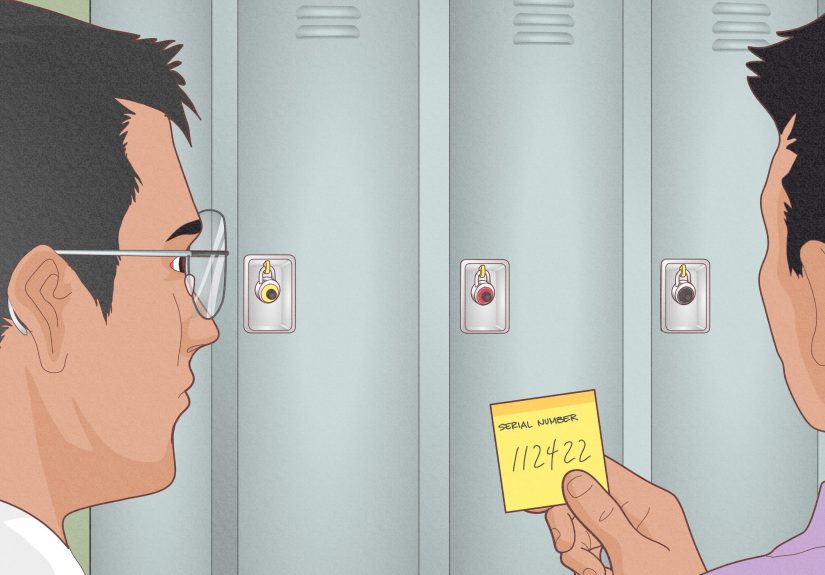
This is the most “grown-up” option, and it’s surprisingly effectiveespecially if you still have the packaging, a serial number, or proof of purchase. Many reputable lock brands and facilities have procedures to help owners regain access or replace a lock when the combination is lost.
A) If it’s a facility-managed lock (school, gym, workplace):
- Go to the front desk, administration office, or facilities team.
- Bring ID and any proof that the locker or storage space is assigned to you.
- Follow their policy. Many places can verify ownership and help you access your locker safely.
B) If it’s your personal lock (padlock, suitcase lock, toolbox lock):
- Look for the brand and model (often on the lock body or original packaging).
- Check the manufacturer’s support pages for “lost combination” or “combination recovery” policies.
- Be ready to provide proof of ownership (receipt, photo of the lock on your property, serial number, registration info).
Important reality check: many combination locks are designed so the manufacturer can’t simply hand you the comboeither because it’s user-set or because giving it out would be a security risk. In those cases, the official solution may be replacement or professional assistance rather than “here’s your code.” It’s not them being difficult; it’s them being responsible.
When this works best: built-in locker systems, branded locks with serial numbers, and situations where a facility can confirm the locker is yours.
3) Get Help From a Professional (Locksmith or Authorized Maintenance)
If the lock is protecting something you own and you can prove it, a locksmith or facility maintenance team can often help you regain access in a way that minimizes damage and avoids chaos. This is especially useful when:
- You’re dealing with a workplace or school policy (they may require authorized staff).
- The contents are valuable or urgent (medication, tools for work, travel documents).
- You want to avoid damaging the locker, suitcase, or whatever the lock is attached to.
What to expect:
- You’ll likely need to show ID and proof of ownership/authorization.
- Fees vary based on lock type, urgency, and location.
- For some situations, the practical outcome may be removal and replacement of the lock under proper authorization.
When this works best: storage units, business toolboxes, lockers with strict rules, and high-stakes “I need this open today” scenarios.
What Not to Do (Even If the Internet Says It’s “Easy”)
There are lots of viral “no-code” lock-opening tricks floating around online. The problem is that they often cross the line into bypassing security. Even if you personally have good intentions, sharing or using those methods can create real-world harm.
If you’re locked out of something you own, the safest path is: recover → reset officially → authorize professional help. It’s boring. It’s also the path that won’t get you in troubleor damage your stuff.
How to Prevent This Next Time (Future You Will Send a Thank-You Card)
Create a “Lock Code” System That Doesn’t Betray You
- Store the combination securely in a password manager or a locked note.
- Name it clearly (e.g., “Gym locker lock – black dial padlock”).
- Avoid obvious combos like 1234, 0000, birthdays, or anything someone could guess.
- Use a memory hook: choose a number pattern you can remember without making it guessable (e.g., a personal, non-public sequence).
Keep Proof of Purchase or Model Info
A quick photo of the packaging (or the model number) can save you later if you need manufacturer support. Think of it like a user manual you’ll never read… until you absolutely need it.
Specific Examples: What This Looks Like in Real Life
Example 1: School Locker
You forgot the combo. The lock is on a school locker assigned to you. The correct move is to go to the office with your student ID and follow school policy. Schools typically have procedures for locker access that protect students and prevent unauthorized entry.
Example 2: Gym Padlock
It’s your personal padlock and your gear is inside. Try your saved records first (notes/photos), then contact gym staff if the locker is facility-owned. If it’s your lock on your own bag, a locksmith can help if you can prove it’s yours and you need access urgently.
Example 3: Suitcase Lock Before a Flight
If it’s a TSA-style luggage lock or a built-in suitcase combo lock, go through the manufacturer’s support channels and keep your purchase info. If you’re traveling, consider airport luggage services or authorized support rather than experimenting with sketchy “quick tricks” under time pressure.
Bottom Line
If you’re locked out of a combination lock, the most reliable “no-code” solution is not a secret hackit’s a legit recovery process: find your combo, use official reset/recovery options, or get authorized professional help. That approach protects your stuff, your time, and your peace of mind.
Real-World Experiences (500+ Words): The Human Side of Forgetting a Combo
I once watched someone at a gym stare at a combination lock like it was a pop quiz in a class they never attended. They tried “their usual code,” then “their other usual code,” then the universal panic combo: “maybe it’s 1-2-3… wait, no, I’m not a cartoon.” The lock didn’t budge. The situation escalated from confident twisting to bargaining (“If you open, I’ll never forget you again”).
What solved it wasn’t force or clevernessit was boring organization. They searched their phone, found a note titled “Gym stuff,” and there it was: the combination, sitting quietly like it had been right all along. That moment is the perfect lesson: the best lock-opening tool is often your own documentation.
Another common scenario is school lockers. Students (and honestly, adults too) forget combos because life is chaos and brains are busy. But schools can’t just let anyone open any locker, for obvious reasons. The smoothest “experience” is when you bring your ID, explain the issue, and let staff follow policy. It feels formal, but it’s designed to protect everyone. In a lot of cases, the staff has a standard process to help you access your locker without turning the hallway into a dramatic scene.
Then there’s travelthe land of time pressure and sweaty decision-making. Picture being at home the night before a flight, trying to pack, and suddenly your suitcase lock becomes your greatest enemy. In that moment, it’s tempting to go down a rabbit hole of questionable online advice. But the smarter move is to pause and try a calm checklist: check your notes app, check your photos, look for the packaging or model info, and search any email confirmation if you bought the lock online. Travel stress makes people rush, and rushing makes you forget what you already know.
My favorite “real life” detail is how often combinations are stored in the most human places: a sticky note in a drawer, a text to a parent (“In case I forget…”), or a photo taken in a parking lot because someone had the rare flash of responsibility. If you’re reading this while locked out, don’t underestimate the power of searching your own digital trail. Type a few keywords into your phone: “lock,” “combo,” “locker,” the brand name, the location (“gym”), even the color (“blue lock”). You’re not trying to be cleveryou’re trying to find evidence of Past You being slightly more prepared than Present You.
And if you truly can’t find it? That’s where authorized help shines. A locksmith or facility maintenance team isn’t just a “last resort”they’re the correct route when access matters and you have proof the property is yours. It’s less glamorous than a movie montage, but it’s safer, legitimate, and usually faster than experimenting while your stress level climbs. The best experience is the one that ends with your stuff recovered and your day still intact.