Table of Contents >> Show >> Hide
- Money, Work, and “Wait, That’s Legal?”
- 1. Tipping isn’t a bonusit’s the business model
- 2. A screen asks for a tip… for handing you a muffin
- 3. The price tag is… not the price
- 4. Healthcare comes with a dictionary
- 5. Ambulances can be financially terrifying
- 6. You can lose your job fast (and not because you did something dramatic)
- 7. Vacation time isn’t guaranteed by the federal government
- 8. Parental leave is a patchwork quilt
- The Food & Drink Universe
- 9. Your water arrives… icy, immediately, and without permission
- 10. Free refills feel like a cheat code
- 11. Portions are big enough to have their own zip code
- 12. Drinks are huge, and “small” is emotionally misleading
- 13. Eating while driving is normal
- 14. Drive-thru everything
- 15. Coffee orders can sound like a short novel
- Car Country & Distance Math
- Social Life & Everyday Manners
- Systems, Rules, and “Why Is This So Complicated?”
- Conclusion
- Bonus: of Culture-Shock Field Notes
If you drop a European into everyday life in the United States, they’ll adjust fast. Americans aren’t mysterious.
We’re just… aggressively practical in a way that sometimes looks like a social experiment. Why is the water full of ice?
Why does the price on the tag lie? Why is everyone smiling like they’re running for mayor?
The funny part is that most “American weirdness” isn’t weird to Americans at allit’s just the default settings we grew up with.
This list is for European travelers, new expats, and curious culture nerds who love that moment when you realize
you’ve been doing something your whole life and the rest of the planet is like, “You do WHAT?”
Money, Work, and “Wait, That’s Legal?”
1. Tipping isn’t a bonusit’s the business model
In many U.S. restaurants, the “real” cost of your meal includes a tip, usually around 15–20% for sit-down service.
Europeans often think tipping is for exceptional service; Americans treat it like the last step of checkout.
2. A screen asks for a tip… for handing you a muffin
Many cafés and counters now flip a tablet toward you with tip buttons that start at surprisingly bold numbers.
Europeans tend to see it as awkward social pressure. Americans see it as modern life: “Please select your guilt level.”
3. The price tag is… not the price
Sales tax usually isn’t included in posted prices, so the total changes at the register depending on where you are.
To Europeans used to VAT-included pricing, this feels like a magic trick with your wallet as the volunteer.
4. Healthcare comes with a dictionary
“Deductible,” “copay,” “coinsurance,” “in-network,” “out-of-network”Americans casually throw around insurance terms
like they’re ordering coffee. Europeans are often stunned that a basic doctor visit can involve paperwork, phone calls,
and unexpected bills.
5. Ambulances can be financially terrifying
In many places, calling an ambulance can lead to a big bill. That reality changes behavior:
people hesitate, ask to be driven, or try to “wait it out.” For Europeans, the idea that emergency transport might be a
budget decision feels surreal.
6. You can lose your job fast (and not because you did something dramatic)
Many American workers are “at-will,” meaning employment can end quickly for lots of reasons (except illegal ones).
Europeans from countries with stronger job protections often find the flexibilityand vulnerabilityshocking.
7. Vacation time isn’t guaranteed by the federal government
In the U.S., paid vacation is often negotiated with your employer rather than guaranteed nationwide.
That’s why Americans sometimes talk about “two weeks off” like it’s a trophy, while Europeans blink like,
“That’s… it?”
8. Parental leave is a patchwork quilt
The U.S. has job-protected leave rules for some workers, but paid family leave isn’t universally guaranteed nationwide.
Europeans are often stunned that having a baby can come with a countdown clock: heal, bond, and sleep againquickly.
The Food & Drink Universe
9. Your water arrives… icy, immediately, and without permission
Many American restaurants bring tap water right away, often packed with ice like it’s trying to preserve a dinosaur.
Europeans may expect to ask, pay, or choose still vs. sparkling. Americans expect hydration to show up like a supportive friend.
10. Free refills feel like a cheat code
In many casual U.S. spots, soft drinks and brewed coffee can be refilled at no extra charge.
Europeans used to paying per bottle or per serving can’t decide if it’s generous or suspiciouslike,
“Are you sure this isn’t a trap?”
11. Portions are big enough to have their own zip code
American portions often lean large, and taking leftovers home is normal, not embarrassing.
Europeans may think the kitchen misheard the order and fed the entire table. Americans call it “tomorrow’s lunch,” then feel smug about it.
12. Drinks are huge, and “small” is emotionally misleading
A “small” soda in the U.S. can still look like it’s training for a marathon.
Europeans are often shocked by the default sizesespecially at cinemas and fast-food spotswhere cup holders do half the engineering.
13. Eating while driving is normal
Americans have perfected the one-handed lifestyle: steering wheel in one hand, burrito in the other, and somehow still texting (please don’t).
Europeans tend to see eating as a sit-down ritual. Americans see it as a portable activity with extra napkins.
14. Drive-thru everything
Drive-thru isn’t just burgers. In many areas it’s coffee, pharmacies, banking, and sometimes even weddings (yes, reallyAmerica stays on brand).
Europeans often find it both efficient and slightly dystopian, like a convenience store sponsored by your car.
15. Coffee orders can sound like a short novel
Americans customize coffee like it’s a character build: size, milk type, sweeteners, flavors, temperature, extra shots.
Europeans who order “an espresso” may feel like they’ve wandered into a high-stakes theater improv.
Car Country & Distance Math
16. Walking can be treated like a hobby
In many U.S. places, daily life is designed around driving. Sidewalks can vanish. Distances are long.
So when Americans say, “Let’s go for a walk,” Europeans sometimes realize that was the only walking planned all week.
17. Big vehicles are everywhere
SUVs and pickup trucks are common, and their size can surprise Europeans used to narrower streets and smaller cars.
The vehicle becomes a lifestyle choice: family transport, road-trip machine, moving van, and personal fortress rolled into one.
18. Parking is expectedand often enormous
Many American stores come with parking lots that look like they were designed for a concert.
In lots of towns, free parking is treated as a basic human right. Europeans may quietly miss the drama of hunting one street spot.
19. Turning right on red (after stopping) is a thing
In many parts of the U.S., you can turn right at a red light after a full stopunless a sign says you can’t.
Europeans often react like, “So… the red light is more of a suggestion?” Americans swear it’s normal (and then argue about it endlessly).
20. Miles, gallons, Fahrenheitwelcome to the unit multiverse
The U.S. still uses customary units in everyday life. Temperatures in Fahrenheit. Roads in miles. Fuel in gallons.
Europeans may do mental math like they’re decoding ancient runes, while Americans confidently announce it’s “like… 75 out,” expecting you to feel that.
21. State-to-state travel feels like crossing countries
Americans casually say things like “It’s only a six-hour drive” with a straight face.
Europeans used to crossing borders quickly sometimes forget how huge the U.S. is. Here, a “weekend trip” can involve time zones and a playlist strategy.
Social Life & Everyday Manners
22. “How are you?” is a greeting, not a health assessment
Americans say “How are you?” the way Europeans might say “Hello.”
The expected answer is brief“Good, you?”not a full report on your emotional ecosystem.
Europeans who answer honestly may catch Americans blinking like a computer rebooting.
23. Smiling at strangers is normal
Americans smile in elevators, on sidewalks, at cashiers, at dogs, at the concept of Tuesday.
Europeans sometimes read it as fake; Americans read it as polite. Think of it as a low-commitment social handshake.
24. Casual friendliness with first names (even at work)
In many American workplaces, people use first names quicklyeven with managers, professors, and clients.
Europeans from more formal cultures can find it startling. Americans think titles are for royalty and email spam.
25. The volume level can be… enthusiastic
Many Europeans notice Americans speak louder in public, especially in restaurants.
It’s not always rudesometimes it’s just excitement plus big rooms plus a national talent for storytelling.
Europeans may lean in and wonder if the next table is performing a podcast.
26. Bathroom stalls leave… surprising visual gaps
American restroom stall doors often have gaps that feel like a design choice made by someone who hates secrets.
Europeans used to more privacy can be genuinely horrified. Americans just develop the thousand-yard stare of survival and carry on.
27. Shoes indoors isn’t automatically “wrong”
Many American households don’t strictly enforce “shoes off” rules, especially with guests.
Europeans often find this wild, like inviting the outside world onto your carpet. Americans counter with: “We vacuum. Sometimes.”
Systems, Rules, and “Why Is This So Complicated?”
28. Your credit score can affect everyday life
In the U.S., credit history can influence renting an apartment, setting up utilities, or getting a phone plan.
Europeans from countries where credit scores aren’t as central often find it intenselike your teenage self is still being judged for that one late payment.
29. College can cost a lot, and student loans are common
American higher education can be expensive, and borrowing to pay for it is common enough that it’s practically a cultural subplot.
Europeans from lower-tuition systems may be stunned that “What did you study?” can quietly mean “And what did it cost you?”
30. HOAs and lawn culture: your neighbors might have a rulebook
In many neighborhoods, a homeowners association (HOA) can set rules about landscaping, paint colors, parking, and more.
Europeans often find it bizarre that you can own a home yet still get a strongly worded letter about your hedge.
Americans call it “keeping property values up” and pretend they like it.
Conclusion
A lot of American norms that stun Europeans come from the same roots: a huge country built around cars, regional laws, and a very
“figure it out as you go” approach to daily life. None of it is inherently better or worseit’s just different.
And if culture shock is the price of admission, at least the water is free, the refills are endless, and someone will smile at you while you’re confused.
Bonus: of Culture-Shock Field Notes
Picture this: your European friend lands in the U.S. confident, jet-lagged, and armed with two phrases“Hello” and “Where is the train?”
The first surprise arrives in a restaurant within two hours. Water hits the table like it’s an emergency service: free, immediate, and so full of ice
it could keep seafood fresh. Your friend takes a sip and looks personally betrayed by the temperature. “Why is it… aggressive?” they whisper.
The server smiles warmly and vanishes, leaving behind an existential question and a glass that clinks like a wind chime.
Then comes the bill. Your friend does the math, nods, and starts to payuntil you mention the tip. Their face cycles through the five stages of grief:
denial (“It’s included, right?”), bargaining (“But service is their job?”), and finally acceptance (“Fine, but I’m writing a letter to someone in charge.”).
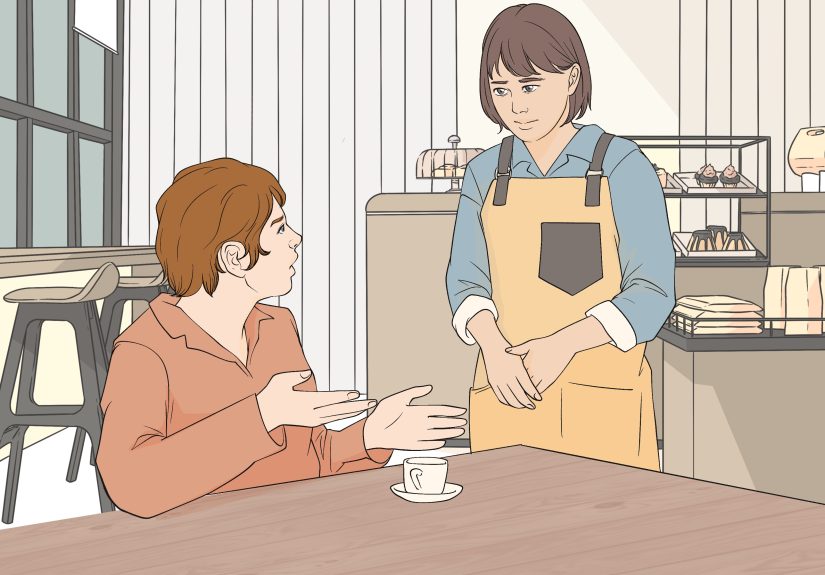
Later, at a café, a tablet asks if they’d like to tip 25% for a muffin that was placed into a bag with the emotional intensity of a librarian stamping a book.
Your friend stares at the screen like it’s a hostage negotiation.
On day two, you go shopping. A price tag says $9.99, which feels comfortingsimple, tidy, honest. At the register the total becomes $10.87.
Your friend turns to you slowly. “Why is it more?” they ask, as if you personally invented sales tax to spice up their afternoon.
You explain that taxes vary by state and sometimes city, and now you’re both staring into the middle distance, thinking about the idea of “transparent pricing”
like it’s a rare bird.
By day three, your friend has learned America’s secret language: drive-thru. Coffee without leaving the car. Pharmacy without leaving the car.
Bank without leaving the car. At this point, walking begins to feel rebellious. They ask where the pedestrians are, and you gesture vaguely at a jogging trail,
which seems to satisfy them in the same way a single salad satisfies a hungry teenager: technically yes, emotionally no.
The grand finale is the restroom experience. They discover the stall gaps and come out looking like they’ve seen a ghost.
“This is not a door,” they announce. “This is a suggestion of privacy.” You nod like someone who has lived through it.
And yetsomewhere between the free refills, the spontaneous small talk, and the sheer convenience of doing everything from a car,
they start to admit it: culture shock can be weirdly fun. Confusing, yes. But fun.