Table of Contents >> Show >> Hide
- Why these stories resonate right now
- The big themes behind a faith crisis
- 31 things that shook people’s faith
- What’s really happening underneath: deconstruction, not just “leaving”
- The role of scandal: trust, betrayal, and the “if they hid that…” effect
- Science, scripture, and the moment the “two worlds” collide
- Moral injury: when conscience becomes the loudest voice in the room
- What people often miss: leaving can be grief, not rebellion
- So what do people do after faith is shaken?
- Experiences people relate to (extra reflections to deepen the story)
- Conclusion
- SEO tags
Every so often, the internet does the thing it does best: it crowdsources a topic that’s usually whispered about in the car after service, debated in dorm rooms at 2 a.m., or politely avoided at Thanksgiving.
In one popular online thread (later rounded up by Bored Panda), people shared the moments, patterns, and experiences that made their faith wobblesometimes gently, sometimes like a Jell-O mold in an earthquake.
This isn’t a “religion bad” rant, and it’s not a victory lap for disbelief either. It’s a tour through the messy middle: doubt, disappointment, anger, grief, curiosity, and, occasionally, the dark humor you develop when your childhood answers stop fitting your adult questions.
For some, these stories ended with leaving organized religion. For others, they led to rebuilding faith in a new formquieter, less certain, but more honest.
Why these stories resonate right now
In the U.S., more people than ever identify as religiously unaffiliated (“nones”), and surveys consistently find that skepticism about religious teachings, lack of belief, and disillusionment with institutions play major roles.
Online threads feel like group therapy with memes: anonymous enough to be candid, public enough to find “Oh wow, me too.”
The big themes behind a faith crisis
People rarely walk away from faith because of a single “gotcha” fact. More often it’s a slow drip: contradictions you can’t unsee, behavior that doesn’t match the message, or personal pain that collides with tidy theology.
Below are 31 common “faith-shakers” that show up again and again in deconstruction conversationseach one a door some people couldn’t stop themselves from opening.
31 things that shook people’s faith
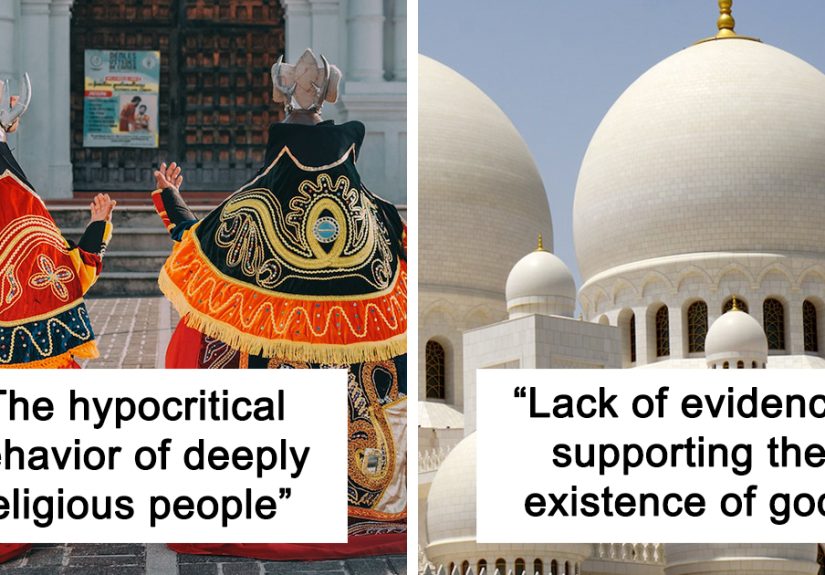
- Hypocrisy up close. When the loudest “holiness” comes with the quietest kindness, people notice.
- The “problem of evil.” Sufferingespecially of childrencan make simple answers feel unbearable.
- Leaders protected, victims ignored. Institutional self-preservation can look like spiritual betrayal.
- Sexual abuse scandals. Learning how widespread abuse wasand how often it was mishandledbreaks trust fast.
- “Love” used as a weapon. “We love you” paired with shame, threats, or control doesn’t land as love.
- Anti-LGBTQ teachings and treatment. Many people hit a moral wall when dignity becomes negotiable.
- Sexism dressed up as “design.” If women can do the work but can’t lead, people start asking why.
- Racism in the pews. Segregation by habitor silencecan feel like a contradiction to the faith’s stated values.
- Politics taking over the pulpit. When sermons sound like cable news, some people feel spiritually homeless.
- Prosperity gospel. “If you believe hard enough, you’ll be rich” can sound like blaming the poor for being poor.
- Prayer that felt unanswered. Especially after repeated, desperate, specific requests.
- “You just need more faith.” Used to dismiss questions instead of addressing them.
- Fear-based messaging. If faith is held together by terror, eventually the tape peels.
- Hell used as leverage. Eternal punishment can become a compliance tool rather than a theological idea.
- Contradictions in scripture. Noticing inconsistencies can be jolting if you were taught “perfectly literal, always.”
- Science vs. literalism. When your biology textbook feels more honest than your youth group, it creates friction.
- “One true way” claims. Exclusive truth claims can feel troubling in a world full of sincere believers elsewhere.
- Different religions, similar certainty. Watching everyone be equally sure can make certainty itself suspicious.
- Rules that seem arbitrary. Why is this a sin, but that isn’t? People start pulling the thread.
- Purity culture aftermath. Shame around bodies and sex can linger long after the ring ceremonies are over.
- Judgment disguised as “discernment.” Some communities treat compassion like a loophole.
- Conditional community. The friends vanish the moment your beliefs change.
- Weaponized forgiveness. “Forgive and forget” becomes a way to silence boundaries.
- Selective outrage. Minor “sins” get megaphones; major harms get hush money (socially, not just financially).
- Historical and textual questions. Learning how texts were compiled, translated, and debated can complicate certainty.
- Miracle claims that don’t hold up. Especially when the “proof” is always a story… from someone’s cousin… from another state.
- Spiritual experiences that faded. Emotional highs can feel less like God and more like group psychology over time.
- Being told doubt is sin. For many, honest questions are the beginning of integrity, not rebellion.
- Trauma and tragedy. Loss can make platitudes feel insulting instead of comforting.
- Clashing moral intuition. When your conscience disagrees with your community, you start listening harder to one of them.
- The gap between the message and the fruit. People expect a faith to produce compassion; when it produces cruelty, they reconsider the tree.
What’s really happening underneath: deconstruction, not just “leaving”
A lot of people call this process religious deconstruction: pulling apart inherited beliefs to see what’s structural, what’s cultural, what’s fear, what’s love, and what’s simply habit.
Deconstruction isn’t always anti-faith. Sometimes it’s anti-denial. People aren’t trying to be edgy; they’re trying to be honest.
Institution vs. belief
Many stories in threads like these aren’t about suddenly concluding “God isn’t real.” They’re about concluding, “This institution isn’t safe,” or “This community doesn’t reflect what it preaches,” or “The answers I was given don’t work anymore.”
That distinction matters because a person can lose trust in organized religion and still remain spiritualor even deeply religiousjust in a different shape.
Why hypocrisy hits so hard
Hypocrisy exists everywhere, but it lands differently in a religious context because the stakes are framed as ultimate: truth, salvation, morality, eternity.
When a community claims moral authority, its failures don’t just disappointsometimes they rewrite a person’s entire map of reality.
When politics becomes the “real religion”
Plenty of religious people are politically active in thoughtful ways. The issue people describe is when political identity becomes the test of faithwhen belonging depends less on compassion, humility, or integrity and more on voting patterns and culture-war slogans.
For some, this is the moment faith starts to feel like a brand.
The role of scandal: trust, betrayal, and the “if they hid that…” effect
Abuse scandals, cover-ups, and institutional resistance to accountability show up repeatedly in modern faith-crisis stories.
Even for people who never experienced abuse personally, the pattern can be shattering: if leaders claimed spiritual authority while harming peopleor protecting those who didwhat else was misrepresented?
Importantly, people in these discussions often separate individual believers from institutions. Many still value the kindness of a grandparent’s faith or a supportive congregation.
But large-scale scandal creates a trust earthquake that local goodness can’t always repair.
Science, scripture, and the moment the “two worlds” collide
Another frequent theme is the collision between a literalist religious upbringing and mainstream science education.
When someone has been taught that faith requires a particular reading of scripture (for example, strict creation timelines), new information can feel like an attacknot just on an idea, but on identity.
Some people respond by rejecting science. Others reinterpret scripture. And others decide they were handed a false choice: “Believe facts or be faithful.”
Once that false choice is exposed, the old framework can collapse quickly.
Moral injury: when conscience becomes the loudest voice in the room
A surprisingly common “final straw” isn’t intellectual at allit’s ethical.
People describe watching a faith community treat certain groups as less human (LGBTQ people, women, immigrants, people of other religions) and realizing, “If love is central, why does love feel so absent here?”
This is where humor shows up in threads, toonot because the issue is funny, but because sarcasm is a life raft:
“Apparently the all-powerful Creator of the universe is deeply concerned about my tank top.”
What people often miss: leaving can be grief, not rebellion
A faith crisis can feel like losing a language you once spoke fluently. Rituals, music, prayer, communitythese can be beautiful, even when the surrounding structure becomes unbearable.
Many people don’t leave triumphantly. They leave exhausted.
The social cost
Online threads are full of people describing what happened after their beliefs changed: strained family relationships, awkward holidays, friendships that evaporated, or the subtle loneliness of realizing your entire calendar used to be built around church life.
That’s why “just leave” is rarely simple advice. For many, it’s not one door; it’s a hallway of doors.
The mental and emotional strain of spiritual struggle
Religious doubt can be emotionally intense, especially if someone was taught that questioning equals danger.
Research and clinical writing on “spiritual struggle” notes that intense conflict about belief can be linked with higher distress for some people, particularly when the struggle is isolating or shame-driven.
In other words: a faith crisis isn’t just a debateit can be a psychological experience.
So what do people do after faith is shaken?
The endings in these stories aren’t all the same, and that’s the point. Common paths include:
- Rebuilding faith differently (more symbolic, less literal; more humble, less certain).
- Finding a new community (often smaller, less performative, more accountable).
- Staying spiritual but not religious (prayer, meditation, awe, ethicsminus the institution).
- Letting it go (and focusing on meaning through relationships, nature, service, creativity).
What many shareregardless of where they landis a craving for integrity: a life where beliefs, values, and behavior stop contradicting each other.
If religion helps someone become kinder and more grounded, that’s fruit. If it makes them fearful, cruel, or dishonest, people eventually question the tree.
Experiences people relate to (extra reflections to deepen the story)
If you’ve ever read a thread like this and felt your stomach do a small, inconvenient flipwelcome to the club nobody applied for.
The experiences people describe tend to cluster into a few painfully relatable categories.
1) The “Sunday version” of people. One of the most common stories is watching someone be deeply devout in public and deeply unkind in private.
It’s not that religious people are uniquely hypocritical; it’s that religion sometimes gives hypocrisy a costume. When someone can harm others and still feel “right with God,” outsiders (and insiders) start asking what the moral system is actually doing.
The moment gets seared into memory: a parent shaming their kid in the parking lot after singing about grace, or a leader preaching forgiveness while nursing a grudge like it’s a hobby.
2) The grief collision. Another set of experiences involves lossillness, death, betrayaland the sudden inadequacy of the phrases people reach for.
“God needed another angel” can land like a slap when you’re burying a teenager. “Everything happens for a reason” can sound less like comfort and more like moral outsourcing.
Many people don’t stop believing because they hate God; they stop because the version of God they were taught can’t hold the weight of real suffering without cracking.
3) The moral line you didn’t expect to draw. Plenty of people describe thinking, “I can handle mystery,” until they encounter cruelty justified as doctrine.
The experience is often specific: a friend comes out and is treated like a contagion; a girl is blamed for a man’s behavior; a survivor is urged to “forgive” while the abuser stays protected.
In those moments, conscience becomes louder than tradition. People realize they can’t keep calling something “holy” if it keeps producing harm.
4) The slow-burn education effect. For others, it’s not one dramatic event. It’s years of learninghistory, science, comparative religionuntil the old certainty starts to feel less like confidence and more like a script.
They notice how often the “right” religion lines up with geography and family, and how many other sincere people are equally convinced elsewhere.
That doesn’t automatically disprove any faith, but it does make people more cautious about absolute claims delivered with absolute confidence.
5) The “I still miss parts of it” confession. One of the most honest experiences people share is missing the good parts: singing together, shared rituals, the feeling of being held by community.
Leaving can feel like breaking up with someone you loved, even if the relationship wasn’t healthy.
And that’s why threads like this matter: they give people permission to tell the truth in full sentences, not just in slogans.
Conclusion
The stories collected in that Bored Panda roundup aren’t simply “reasons people hate religion.” They’re snapshots of what happens when real life meets tidy theology, when institutions fail, when morality and doctrine collide, and when people decide they can’t pretend anymore.
Whether someone leaves faith, rebuilds it, or reshapes it into something quieter, the common thread is this: people want a belief system that can survive honesty.