Table of Contents >> Show >> Hide
- Why Pop Culture Trivia Makes the Best (Worst) Love Language
- Act I: TV & Live-Show Lore (AKA “The Bleachers Are Our Studio Audience”)
- 1) Saturday Night Live debuted in 1975and the first host was George Carlin
- 2) The “Jeopardy!” thinking music started as a lullaby
- 3) “Sesame Street” premiered in 1969and changed kids’ TV forever
- 4) “I Love Lucy” helped popularize the three-camera sitcom setup
- 5) The “M*A*S*H” finale drew a jaw-dropping audience in 1983
- 6) The “Friends” finale in 2004 still ranks as a modern TV viewing monster
- 7) “The Simpsons” first aired in 1989 and became a pop-culture institution
- 8) The Grammys were televised for the first time in 1959
- Act II: Movies & Animation (Cue the Dramatic Brass)
- 9) The original “Star Wars” hit theaters in 1977
- 10) “May the Fourth” wasn’t invented by Lucasfilm
- 11) “Jaws” helped define the modern summer blockbuster
- 12) “Toy Story” was the first fully computer-animated feature
- 13) “Shrek” won the first Oscar for Best Animated Feature
- 14) Netflix’s first shipped DVD was… “Beetlejuice”
- 15) Netflix started streaming in 2007 (and nothing was the same after)
- 16) Comic-Con began in 1970before it became a pop-culture supernova
- Act III: Music Moments (Our Crush Is Definitely Listening, Right?)
- 17) MTV launched with “Video Killed the Radio Star”
- 18) “Thriller” remains the best-selling album of all time
- 19) “Bohemian Rhapsody” got a major chart second life thanks to “Wayne’s World”
- 20) The Beatles’ first Ed Sullivan appearance drew about 73 million viewers
- 21) Early Super Bowl halftime shows were basically “marching band & vibes”
- 22) The halftime show got a major glow-up in the early ’90s
- 23) One marching band became a Super Bowl regular
- 24) Marching bands still show up in the modern halftime ecosystem
- Act IV: Internet & Tech Trivia (The Drumline Starts Typing)
- Act V: Toys, Games & Fandom (Mascot Energy Activated)
- Encore: What These Random Pop Culture Facts Say About Us
- Bleacher Love Songs: of Pop-Culture-Marching-Band Experiences
There are two kinds of people in the world: the ones who flirt normally, and the ones who weaponize trivia like it’s a
glitter cannon. If you’ve ever screamed a fun fact across a football field like it was a love balladand the marching band
just happened to hit a perfect cymbal crashwelcome home.
This is pop-culture trivia with big “teen movie montage” energy: TV milestones, movie history, internet lore, and music moments
that live rent-free in our brains. And yes, we’re singing them to our crush from the bleachers, because nothing says
“I’m emotionally available” like yelling, “THE FIRST YOUTUBE VIDEO WAS ME AT THE ZOO!”
Why Pop Culture Trivia Makes the Best (Worst) Love Language
Pop culture trivia hits different because it’s shared memory. Even when you weren’t there, it feels like you werethanks to reruns,
streaming, memes, and that one friend who can recite every quote from a movie they saw once in 2009.
It’s also low-stakes intimacy: you’re not confessing your feelings; you’re casually revealing that you know exactly when something premiered
and how many people watched it. (Romantic? Debatable. Memorable? Absolutely.)
Act I: TV & Live-Show Lore (AKA “The Bleachers Are Our Studio Audience”)
1) Saturday Night Live debuted in 1975and the first host was George Carlin
SNL premiered on October 11, 1975, with comedian George Carlin as host. Imagine starting a show and immediately deciding,
“Let’s make it live, chaotic, and culturally defining.” Honestly? A bold strategy that worked out.
2) The “Jeopardy!” thinking music started as a lullaby
That iconic “time’s almost up” tune (known to most of us as pure panic) began as a lullaby by Merv Griffin. Which means a song
originally meant to soothe a child now fuels adrenaline in adults everywhere. Growth!
3) “Sesame Street” premiered in 1969and changed kids’ TV forever
Sesame Street premiered on November 10, 1969. The show didn’t just teach letters and numbersit helped define what educational,
culturally aware children’s TV could look like. Also: it gave us characters who feel like family.
4) “I Love Lucy” helped popularize the three-camera sitcom setup
I Love Lucy was filmed using a three-camera setup on 35mm film in front of a live studio audienceone reason it looked so good
and was easier to rebroadcast. Translation: Lucy didn’t just make people laugh; she helped build the sitcom blueprint.
5) The “M*A*S*H” finale drew a jaw-dropping audience in 1983
The M*A*S*H series finale in 1983 became legendary for its massive U.S. audienceone of those “everyone watched it” moments
that TV simply doesn’t produce in the same way anymore.
6) The “Friends” finale in 2004 still ranks as a modern TV viewing monster
The Friends series finale aired May 6, 2004, and drew about 52.5 million viewers. That’s not an episodethat’s a national group chat
that existed before group chats.
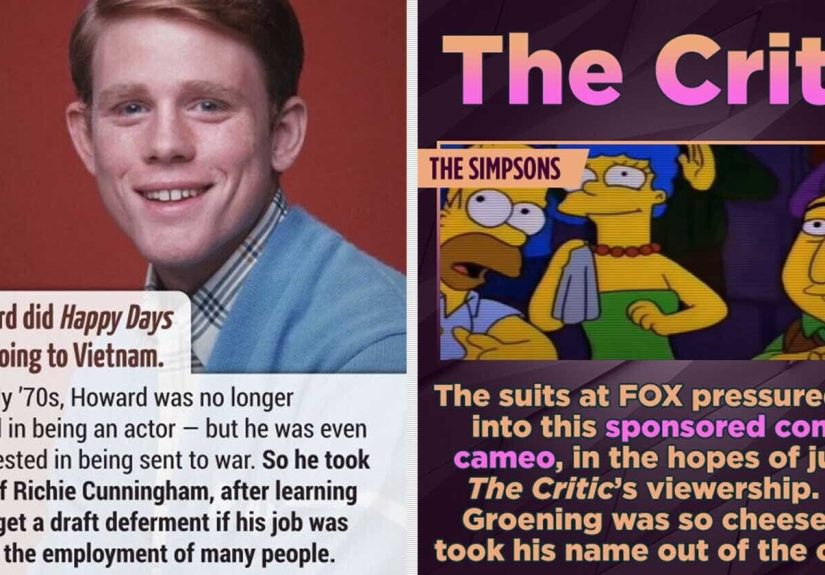
7) “The Simpsons” first aired in 1989 and became a pop-culture institution
The Simpsons debuted December 17, 1989, and became the longest-running American scripted primetime series. It’s basically a living museum
of jokes, cultural references, and eerily accurate predictions.
8) The Grammys were televised for the first time in 1959
The Grammys started in 1959and that same year, the second ceremony became the first to be televised. Which means music awards have been
delivering speeches, surprises, and “please wrap it up” orchestra cues for a very long time.
Act II: Movies & Animation (Cue the Dramatic Brass)
9) The original “Star Wars” hit theaters in 1977
Star Wars premiered May 25, 1977, and pop culture has been living in its gravitational pull ever since. One movie, countless catchphrases,
and an entire galaxy of merch.
10) “May the Fourth” wasn’t invented by Lucasfilm
“May the Fourth be with you” started as a fan-powered pun that grew into Star Wars Day. The important part: it’s proof that nerd joy is unstoppable
and will absolutely calendar-invite itself.
11) “Jaws” helped define the modern summer blockbuster
Released June 20, 1975, Jaws became a template for the summer blockbuster era: big marketing, big crowds, and a cultural moment so powerful
it made people side-eye the ocean like it had personal beef.
12) “Toy Story” was the first fully computer-animated feature
When Toy Story arrived in 1995, it wasn’t just charmingit was historic. It’s widely credited as the first fully computer-generated theatrical feature,
proving pixels could make people cry about friendship and abandonment issues (thanks, Woody).
13) “Shrek” won the first Oscar for Best Animated Feature
At the 74th Academy Awards (for 2001 films), Shrek won the inaugural Oscar for Best Animated Feature. A fairy-tale parody winning a brand-new category
feels extremely on-brand for the early 2000s.
14) Netflix’s first shipped DVD was… “Beetlejuice”
Netflix’s early DVD-by-mail era has a fun origin story: the first DVD it shipped to a customer in 1998 was Beetlejuice. Honestly, a chaotic pick.
We respect it.
15) Netflix started streaming in 2007 (and nothing was the same after)
Netflix began streaming in 2007, and entertainment habits pivoted hard. “Be kind, rewind” slowly became “Are you still watching?” which is… less kind,
if we’re being honest.
16) Comic-Con began in 1970before it became a pop-culture supernova
Comic-Con International traces back to 1970 in San Diego, long before it became the place where trailers drop, fandoms roar, and someone inevitably
proposes in cosplay. It started small. It did not stay small.
Act III: Music Moments (Our Crush Is Definitely Listening, Right?)
17) MTV launched with “Video Killed the Radio Star”
MTV’s first music video was “Video Killed the Radio Star” on August 1, 1981. It’s the kind of poetic choice that makes you wonder
if the universe has a screenplay department.
18) “Thriller” remains the best-selling album of all time
Michael Jackson’s Thriller is widely cited as the best-selling album ever, with enormous worldwide sales estimates and massive U.S. certifications.
Translation: that album didn’t just break recordsit rearranged them.
19) “Bohemian Rhapsody” got a major chart second life thanks to “Wayne’s World”
Queen’s “Bohemian Rhapsody” surged back into the spotlight after Wayne’s World, re-entering the Billboard Hot 100 and climbing all the way to No. 2.
One headbang scene, infinite cultural impact.
20) The Beatles’ first Ed Sullivan appearance drew about 73 million viewers
On February 9, 1964, roughly 73 million Americans tuned in to watch the Beatles on The Ed Sullivan Show. If you ever wondered what a true “event”
looks like, that was it.
21) Early Super Bowl halftime shows were basically “marching band & vibes”
In the Super Bowl’s early decades, halftime often featured college marching bands, drill teams, and performance ensemblesmore like a classic football
halftime than a global concert stage.
22) The halftime show got a major glow-up in the early ’90s
A key turning point came when counter-programming pulled viewers away during halftimeprompting the NFL to rethink the slot and book bigger, can’t-ignore stars.
That shift helped transform halftime into a pop-culture event of its own.
23) One marching band became a Super Bowl regular
Grambling State’s marching band has appeared at a record number of Super Bowls across decades. It’s like being a recurring character in America’s biggest
annual TV episode.
24) Marching bands still show up in the modern halftime ecosystem
Even in the era of superstar headliners, marching bands remain part of the Super Bowl’s DNAappearing in collaborations and musical moments that remind you
the show’s roots are literally brass-and-drumline deep.
Act IV: Internet & Tech Trivia (The Drumline Starts Typing)
25) The first YouTube video was “Me at the zoo”
The first YouTube upload was “Me at the zoo,” posted on April 23, 2005. It’s short, simple, and accidentally iconiclike the internet’s baby photo before
it learned how to meme.
26) The hashtag became a thing on Twitter in 2007
The hashtag was proposed on Twitter on August 23, 2007. It’s wild that one suggestion turned into the organizing system for basically
everything: fandoms, activism, jokes, and your aunt’s extremely passionate gardening posts.
27) Steve Jobs introduced the first iPhone in 2007
The iPhone was introduced January 9, 2007, pitching a phone, an iPod, and an internet communicator in one device. And yes, that moment basically rewired
how we live, flirt, and procrastinate.
28) Google started as a Stanford project called “BackRub”
Before it was Google, it was “BackRub”a Stanford project focused on analyzing backlinks. If you ever needed proof that even world-changing ideas can start
with a name that sounds like a chair massage, here you go.
29) The name “Google” nods to “googol”
“Google” plays on “googol,” the number 1 followed by 100 zerosbecause the mission was big: organize the world’s information. Honestly, that’s the kind of
confidence we need when texting our crush.
Act V: Toys, Games & Fandom (Mascot Energy Activated)
30) Barbie debuted in 1959 at the American International Toy Fair
Barbie made her debut in 1959 at the American International Toy Fair in New York. She wasn’t just a dollshe became a cultural mirror reflecting
changing ideas about style, work, and identity (and an entire aisle at every store).
31) The Game Boy’s U.S. era helped make portable gaming a lifestyle
Nintendo’s Game Boy era reshaped how people played, and Tetris became inseparable from that story. Portable gaming stopped being a novelty and started
feeling like a permanent human needright next to snacks and batteries.
32) Pokémon Red and Blue launched in the U.S. in 1998
Pokémon Red and Blue launched in the U.S. in September 1998and the rest is history. Trading, battling, collecting, arguing about starters: it was basically
a nationwide after-school ritual.
Encore: What These Random Pop Culture Facts Say About Us
Pop culture trivia isn’t just “stuff we know.” It’s tiny time capsules: where we were, who we watched with, what we replayed, what we quoted,
and what we still love. Also, it’s a surprisingly effective way to start a conversationbecause everyone has at least one fact they’ll defend like it’s
their family name.
And if you’re reading this because you want to impress someone? Try this: don’t just drop a fact. Turn it into a moment. Add the marching-band flourish.
Smile like you’re in a movie. Then walk away like you didn’t plan it. (You did. We all did.)
Bleacher Love Songs: of Pop-Culture-Marching-Band Experiences
Picture a Friday night where the stadium lights make everything feel more cinematic than it has any right to be. The field is basically a giant green screen
for teenage imagination. The marching band is warming up below, and every brass note sounds like it was written specifically for your internal monologue.
You’re in the bleachers, pretending you came for “the game,” but you’re really there because your crush exists somewhere in the general direction of the
concession stand.
This is when pop-culture trivia becomes a social superpower. Someone says, “I love old shows,” and your brain instantly launches a mental slideshow:
I Love Lucy… three cameras… 35mm film… live audience… and suddenly you’re not just talkingyou’re performing. You don’t even mean to shout it,
but the fact escapes your mouth like a confetti popper. Your friend groans. Your crush laughs. The band hits a drum accent at the exact same time.
Coincidence? Or destiny? (It’s coincidence. But we’re in our feelings, so it’s destiny.)
Then there’s the classic move: trivia as a flirtation test. You toss out an easy one“First YouTube video?”and wait. If they say “Me at the zoo,” you
immediately imagine a future together where you share fries and argue about which Pokémon starter is objectively correct. If they don’t know it, that’s fine.
That’s your opening! You get to be the hero who explains it, casually, as if you’re not thrilled to have an excuse to keep talking.
Sometimes trivia becomes a whole chorus of shared nostalgia. A friend mentions “the hashtag,” and suddenly you’re all remembering early internet days when
everything felt smaller and weirder. Somebody else brings up the iPhone reveal like it’s a historical event (because it kind of was). Another person starts
humming the Jeopardy! thinking music, and the rest of you instinctively panic, as if you’re about to wager your dignity in Final Jeopardy.
The band, meanwhile, is rehearsing something that sounds suspiciously like a movie theme. Everyone pretends not to notice the goosebumps.
The funniest part is how trivia turns into storytelling. Saying “The Beatles had 73 million viewers on Ed Sullivan” is a fact, surebut it’s also a scene:
living rooms, families, teenagers screaming, adults confused, and a country collectively realizing, “Oh, pop culture can move like a tidal wave.”
And when you tell it from the bleachers, with the band thundering below, it doesn’t feel like homeworkit feels like myth.
Eventually, the game ends. The lights click off. People shuffle out. But you’re still buzzing, because for a moment, you were bold enough to be a little
ridiculous in publicsinging your personality at full volume, wrapped in trivia and brass and hope. Maybe your crush didn’t fall in love on the spot.
But they’ll remember you. And honestly, in the bleachers of life, that’s a pretty solid encore.