Table of Contents >> Show >> Hide
- What Makes Balsamic Vinegar So Hard to Replace?
- How to Choose the Right Balsamic Vinegar Substitute
- 1. Red Wine Vinegar + Sweetener (The Classic Stand-In)
- 2. Apple Cider Vinegar + Brown Sugar or Honey
- 3. White Wine Vinegar (or White Balsamic) + Sugar
- 4. Soy Sauce–Based Blends for Depth and Color
- How to Adjust Balsamic Vinegar Substitutes to Your Taste
- Quick Reference: 4 Easy Balsamic Vinegar Substitutes
- Real-Life Experiences with Balsamic Vinegar Substitutes
- Final Thoughts
You’re halfway through making a gorgeous salad, your pan of roasted veggies is sizzling,
and then it hits you: the balsamic vinegar bottle is… completely empty. Tragic, but not
hopeless. The good news is that you can absolutely fake that rich, sweet-tart balsamic
vibe with ingredients you probably already have in your pantry.
In this guide, we’ll walk through four reliable balsamic vinegar substitutes, when to use
each one, and exactly how to mix them so your dressing, marinade, or glaze still tastes
balanced and delicious. We’ll also cover what makes balsamic special in the first place,
plus some real-world cooking experiences that prove these swaps actually worknot just
on paper, but on dinner plates.
What Makes Balsamic Vinegar So Hard to Replace?
Balsamic vinegar isn’t just “fancy vinegar.” Traditional balsamic starts with grape must
(crushed grapes with skins and stems), which is slowly cooked down and aged in wooden
barrels. Over years of aging, the flavor turns dark, syrupy, complex, and slightly sweet.
Even most supermarket balsamic, though less aged, is still:
- Acidic – it’s vinegar, after all, so it has a bright tang.
- Sweet – it contains natural sugars from grapes.
- Rich and layered – with notes of fruit, caramel, and wood.
- Dark and glossy – which affects the color of your dish.
When you look for balsamic vinegar substitutes, you’re trying to mimic three main things:
acidity, sweetness, and a bit of depth.
Most good substitutes therefore combine a vinegar with a sweetener, and sometimes with
an extra umami boost.
How to Choose the Right Balsamic Vinegar Substitute
Before you start mixing, ask yourself two quick questions:
- What am I making? A salad dressing? A marinade? A drizzle for strawberries?
- How important is the color? Are you okay with a darker glaze, or do you want to keep things light?
If you’re dressing salads or marinating chicken, you mostly care about flavor.
If you’re splashing it over fresh mozzarella or white fish, you might care about color too.
The four balsamic vinegar substitutes below cover both situations, with options that range
from dark and bold to light and citrusy.
1. Red Wine Vinegar + Sweetener (The Classic Stand-In)
If balsamic had a cousin, it would be red wine vinegar. It’s made from wine grapes, it’s
fruity, and it has a familiar tang. The main difference? Red wine vinegar is much more
acidic and nowhere near as sweet. That’s why almost every serious substitute starts with:
red wine vinegar + something sweet.
Best Ratio
For most home cooking, a simple, reliable mix is:
- 1 tablespoon red wine vinegar
- 1/2 teaspoon honey, maple syrup, or brown sugar
Stir until the sweetener dissolves, and you’ll get a tangy-sweet blend that feels surprisingly
close to balsamic in dressings and marinades. If you want a more intense drizzlesomething
closer to a thick balsamicuse a bit less vinegar and a touch more sweetener.
When to Use It
- Salad dressings: Mix with olive oil, mustard, garlic, and herbs.
- Marinades: Great for steak, pork, or chicken.
- Roasted vegetables: Toss veggies in the mix before or after roasting.
This combination shines when you want that deep, grape-based tang without being too picky
about the exact flavor notes. It’s the most versatile balsamic vinegar substitute on this list
and works in the majority of recipes that call for everyday balsamic.
2. Apple Cider Vinegar + Brown Sugar or Honey
Apple cider vinegar (ACV) brings its own personality to the party. It’s fruity, a little funky,
and slightly sweeter than white or red wine vinegar. That makes it an excellent option when
you want a balsamic substitute that feels a bit softer and more rounded.
Best Ratio
For a quick balsamic-style swap, use:
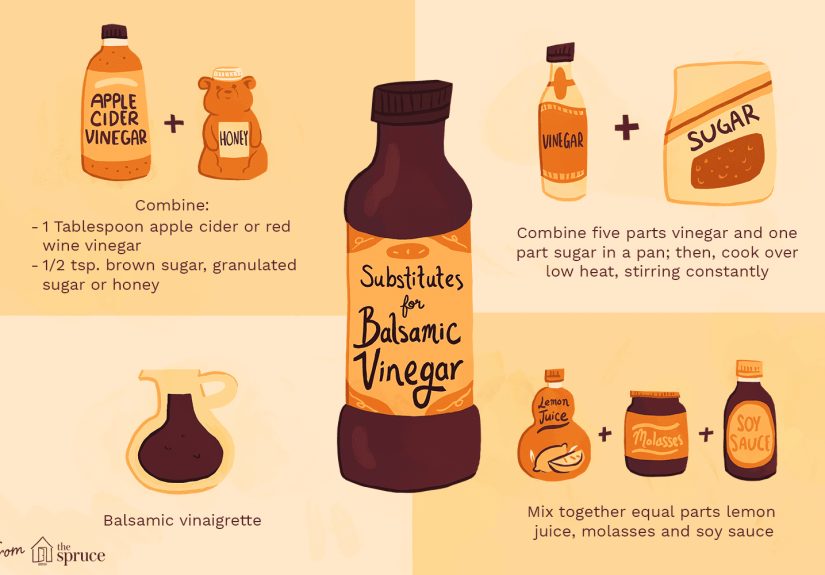
- 1 tablespoon apple cider vinegar
- 1/2 teaspoon brown sugar or honey
Brown sugar gives you a touch of caramel flavor that leans closer to balsamic. Honey works too,
especially in dressings that already include mustard or citrus.
When to Use It
- Chicken and pork dishes: ACV pairs beautifully with lighter meats.
- Coleslaws and grain salads: It brings a bright fruitiness that works with cabbage, quinoa, or farro.
- Everyday dressings: ACV-based vinaigrettes feel fresh and slightly rustic.
The flavor will be less grape-forward and slightly more apple-driven, but if your recipe is
forgivingthink salad bowls, sheet-pan dinners, or warm grainsmost people won’t miss the balsamic.
3. White Wine Vinegar (or White Balsamic) + Sugar
Sometimes you want the taste of balsamic without the mood lighting. Regular dark
balsamic can turn your pretty pasta salad into a brownish situation. That’s where lighter
substitutes come in, especially white wine vinegar and white balsamic.
White wine vinegar is clean, bright, and fairly mild. White balsamic
is made from the same grape must as regular balsamic but processed at lower temperatures to keep
it pale and delicate. White balsamic is the closest flavor match, but white wine vinegar can
still work if you add sweetness.
Best Ratios
For regular white wine vinegar, try:
- 1 tablespoon white wine vinegar
- 1/2 teaspoon sugar, honey, or maple syrup
For white balsamic, you can often use it 1:1 in place of dark balsamic in
dressings, then add a pinch of sugar if your dish needs extra sweetness.
When to Use It
- Caprese salads: When you want mozzarella and tomatoes to stay bright and pretty.
- Light salads and seafood: Great with shrimp, white fish, and delicate greens.
- Fruit salads: Drizzle over peaches, nectarines, or berries with a touch of sugar.
Think of this option as your “stealth balsamic” move. You get brightness and gentle sweetness
without turning everything dark and moody.
4. Soy Sauce–Based Blends for Depth and Color
This one surprises a lot of people, but it makes sense once you think about it. Balsamic
has sweetness, acidity, and depth. Soy sauce has serious umami and a naturally
dark color. When you blend soy sauce with vinegar and a sweetener, you get a rich, complex
stand-in that works especially well in savory dishes.
Simple Soy Sauce Balsamic-Style Mix
For a quick, bold substitute, whisk together:
- 1 tablespoon soy sauce
- 2 teaspoons red wine or rice vinegar
- 1 teaspoon honey, maple syrup, or even grape jelly
This mixture is salty, sweet, tangy, and darkperfect for marinades, glazes, and roasted
vegetable “finishing” sauces. If it tastes too salty, add a bit more vinegar or a splash of water.
When to Use It
- Marinades for steak, pork, or portobello mushrooms
- Glazes for roasted Brussels sprouts or carrots
- Hearty grain bowls and stir-fry–style dishes
This is not the substitute you’d use on fresh strawberries, but when you want depth and color
more than pure grape flavor, soy-based blends are rock stars.
How to Adjust Balsamic Vinegar Substitutes to Your Taste
Even with good ratios, every kitchen is a little different. Your honey might be extra floral,
your vinegar extra punchy, or you might simply prefer your dressings a bit sweeter or milder.
Use these general tweaks to dial things in:
- Too sharp? Add a touch more sweetener or a splash of olive oil.
- Too sweet? Thin with more vinegar or add a squeeze of lemon for brightness.
- Too salty (with soy blends)? Dilute with vinegar or water, or add a pinch of sugar to balance.
- Too thin? Let it simmer briefly to reduce, or whisk in a bit more syrup or honey.
Always taste your substitute before adding it to the whole dish. If you like it on a spoon,
you’ll probably like it on your salad or roasted veggies.
Quick Reference: 4 Easy Balsamic Vinegar Substitutes
- Red wine vinegar + honey or maple syrup – best all-purpose swap.
- Apple cider vinegar + brown sugar – fruity and cozy, great with chicken and pork.
- White wine vinegar or white balsamic + sugar – lighter color, delicate flavor.
- Soy sauce + vinegar + sweetener – bold, dark, and savory for marinades and glazes.
None of these will be a perfect replica of a beautifully aged balsamic from Modena, but they’ll
save your recipe and keep your dinner plans on track.
Real-Life Experiences with Balsamic Vinegar Substitutes
Knowing the theory is one thing; trusting a substitute on a busy weeknight is another. Here are
some real-world style scenarios and lessons learned that can help you feel confident when you
reach for a balsamic replacement.
1. The Weeknight Salad Emergency
Picture this: it’s Tuesday, you’ve got mixed greens, cherry tomatoes, some leftover grilled
chicken, and a block of feta. You’re already committed to “healthy tonight,” and then you
realize the balsamic is gone. In that moment, the red wine vinegar + honey combo is a hero.
Whisk together red wine vinegar, a spoonful of honey, a pinch of salt, black pepper, and a glug
of olive oil. The greens still get that sweet-tangy punch you expect from a balsamic vinaigrette,
and nobody at the table realizes there was a “crisis” in the pantry five minutes earlier.
2. When Color Really Matters
If you’ve ever tossed a pretty pasta salad with balsamic and watched it slowly turn beige,
you understand the power of choosing a lighter substitute. White wine vinegar or white balsamic
with a pinch of sugar can keep your dish vibrant while still giving it an appealing tang.
This really shows up with dishes like:
- Caprese salad with heirloom tomatoes and fresh mozzarella
- Orzo salads with cucumber, tomato, and herbs
- Seafood dishes where you want the fish to stay bright, not brown
Once you try a light-colored balsamic-style dressing on these, it’s hard to go back to the
dark version unless you really crave that deep caramel note.
3. Leveling Up Roasted Vegetables
Roasted Brussels sprouts, carrots, or broccoli love balsamic. But if you’re out, a soy-based
blend can actually taste even more complex. Toss your vegetables with olive oil, salt, and
pepper as usual. Then, in the last few minutes of roasting, drizzle on a mixture of soy sauce,
rice or red wine vinegar, and a bit of honey or maple syrup.
The veggies come out with crispy edges, a glossy coating, and a sweet-savory depth that feels
restaurant-level. People may assume you spent more timeor more moneythan you actually did.
4. Swapping in Health-Conscious Kitchens
Some home cooks use balsamic sparingly because they’re watching sugar intake. Interestingly,
many of the substitute blends let you control sweetness more precisely. For example,
mixing apple cider vinegar with just a small amount of brown sugar or maple syrup can create
that hint of balsamic-like richness without committing to a sweeter bottled product.
If you’re tracking calories or carbs, you can:
- Use less sweetener than a typical ratio calls for.
- Balance with extra herbs, garlic, or mustard for flavor.
- Thin dressings with a bit of water or broth rather than extra oil.
The result: a vinaigrette or marinade that still tastes special but fits better into your
overall eating plan.
5. Getting Comfortable with “Good Enough” Substitutes
Maybe the most important experience many cooks share is this: once you’ve successfully swapped
balsamic a few times, you become much more relaxed about substitutions in general. You begin
to understand that flavor is about balance, not strict rules. If you can remember the basic
formulaacid + sweet + depthyou can improvise based on what you have:
- No red wine vinegar? Try apple cider vinegar.
- No honey? Use maple syrup, agave, or even a bit of sugar.
- No soy sauce? A dash of Worcestershire or fish sauce plus vinegar can add umami.
Over time, you’ll develop your own “house blend” balsamic-style dressing or glaze, the one
you can whip up in under a minute without looking at a recipe. That’s when you know you’ve
moved from panicking over missing ingredients to truly understanding how flavors work together.
Final Thoughts
Running out of balsamic vinegar doesn’t have to derail your recipe. With a few pantry staples
red wine vinegar, apple cider vinegar, white wine vinegar, soy sauce, and some kind of sweetener
you can build a balsamic-style flavor that’s close enough for everyday cooking and, in some
cases, even better suited to what you’re making.
Keep the four main balsamic vinegar substitutes in mind, taste as you go, and don’t be afraid
to adjust. Once you get comfortable blending acid and sweetness, you’ll never feel at the mercy
of that one bottle in the back of the cupboard again.