Table of Contents >> Show >> Hide
- Why Air Purifiers Matter So Much in 2025
- How to Shop Like a Pro (Without Becoming One)
- Quick Comparison: The 4 Best Air Purifiers in 2025
- The 4 Best Air Purifiers in 2025 (Deep-Dive Reviews)
- Buying Guide: Matching the Purifier to Your Actual Life
- FAQ: Quick Answers to Common Air Purifier Questions
- Conclusion
- Real-Life Experiences with Air Purifiers in 2025 (The Extra You Asked For)
Shopping for the best air purifiers in 2025 can feel like trying to buy “air” on the internet:
everyone promises it’s cleaner, fresher, and somehow also “smart.” The good news: you don’t need a PhD in
Particle Drama™ to pick a great unit. You just need a handful of proven performers, a little CADR sanity,
and a basic understanding of what filters can (and can’t) do for allergies, pet dander, wildfire smoke, and
that suspicious “why does my living room smell like last night’s tacos?” situation.
Below are four standout picks that kept showing up across serious lab testing, long-term home trials, and
real-world “this actually helped” feedback. We’ll break down who each purifier is for, what it does best,
what it costs to live with, and how to choose the right size without turning your home into a wind tunnel.
Why Air Purifiers Matter So Much in 2025
In 2025, indoor air got a glow-up on everyone’s priority list. Between longer allergy seasons, more time spent
indoors, and the occasional “why is the sky orange?” wildfire week, many households realized that cracking a
window isn’t always the romantic solution it sounds like.
A good purifier is basically a dedicated air vacuum: it pulls room air through a filter stack designed to trap
particles like dust, pollen, smoke, and pet dander. Some models also use activated carbon to reduce odors and
certain gases (think cooking smells and some VOCs). The key is matching the machine’s cleaning muscle to your
room sizeotherwise you’re just paying for a fancy fan with a night light.
How to Shop Like a Pro (Without Becoming One)
1) Start with CADR, Not Vibes
CADR (Clean Air Delivery Rate) is the most useful “speedometer” you’ll see on air purifiers. Higher CADR generally
means faster particle removal in a given room. If you’re choosing between two models and one has a meaningfully
higher smoke CADR, that one is usually better for wildfire season and everyday PM2.5.
2) Right-Size the Room Coverage
Brands love to advertise giant “up to” coverage numbers, often based on slower cleaning. For bedrooms and living
rooms, it’s smarter to pick a purifier that can clean your room multiple times per hour (faster turnover,
better results). A “medium-room” purifier used in a truly large room won’t fail… it’ll just take forever and you’ll
run it on high, which is how you end up yelling over your “quiet” appliance.
3) HEPA (Real HEPA) Still Reigns
For particlesdust, pollen, smokemechanical filtration wins. Look for language like “True HEPA” (not “HEPA-like”
or “HEPA-style”). If you care about odors or cooking fumes, look for a meaningful carbon stage, not a token charcoal
sheet that looks like it was borrowed from a fish tank filter.
4) Don’t Ignore Filter Costs
The best air purifier isn’t just the one that cleans fastestit’s the one you’ll keep running. If replacement filters
are pricey or hard to find, people “forget” to replace them, and then wonder why the purifier is now just a
decorative cube of regret.
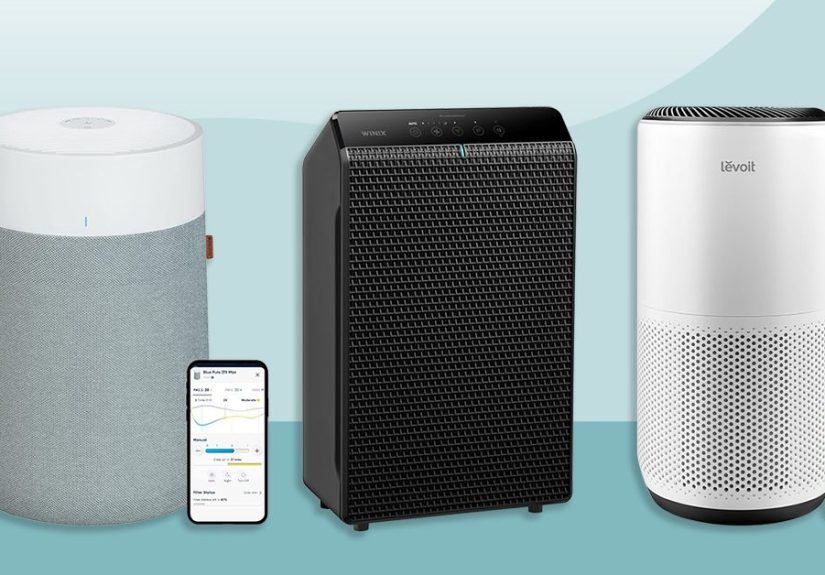
Quick Comparison: The 4 Best Air Purifiers in 2025
| Pick | Best For | Room Type | Standout Strength | Heads-Up |
|---|---|---|---|---|
| Blueair Blue Pure 311i+ Max | All-around performance + smart features | Medium rooms | Fast cleaning, quiet operation | Not ideal for truly huge spaces |
| Coway Airmega Mighty (AP-1512HH) | Value, reliability, everyday allergies | Bedrooms / offices | Great balance of cleaning + efficiency | Design is practical, not “art gallery” |
| Winix 5500-2 | Odors, pets, solid value | Medium rooms | Strong odor control for the price | Bulky footprint |
| Honeywell HPA300 | Large-room cleaning on a budget | Big bedrooms / living rooms | Workhorse airflow and simple controls | No “smart” extras; can be loud on turbo |
The 4 Best Air Purifiers in 2025 (Deep-Dive Reviews)
1) Blueair Blue Pure 311i+ Max Best Overall for 2025
If you want one purifier that feels like it was designed in this decadefast cleaning, legitimately quiet behavior,
and smart controls that don’t make you regret installing an appthis Blueair model is a strong “set it and forget it”
pick. It’s especially good for typical U.S. homes where the purifier needs to handle a mix of dust, pollen, cooking
particles, and pet fluff without sounding like a leaf blower audition.
What makes it shine is the combination of speed and livability. In everyday terms: it can run in the background
without you turning it off because a meeting started, a baby fell asleep, or you suddenly became aware that you own
ears. The washable outer pre-filter is also a nice “small win” featureless gunk reaches the main filter, and you
can rinse the fabric wrap when life gets dusty.
Who should buy it
- Anyone who wants a top-performing air purifier for allergies and everyday indoor air quality
- People who care about quiet operation (bedrooms, nurseries, WFH spaces)
- Smart-home folks who actually use schedules and auto mode
Real-world example
For a medium bedroom, this is the kind of purifier you can leave on auto and stop thinking about. It’s also a strong
“kitchen helper” if your cooking occasionally produces… character. (Hi, cast-iron sear. We love you. Please stop
smoking up the place.)
Watch-outs
If you’re trying to clean a huge open-plan area or a finished basement the size of a bowling alley, you’ll either need
a bigger unit or multiple purifiers. The 311i+ Max is excellent, but physics remains undefeated.
2) Coway Airmega Mighty (AP-1512HH) Best Value “Do-It-All” Pick
The Coway Mighty has been the “most people should just buy this” air purifier for years, and in 2025 it’s still hard
to beat for the price-to-performance ratio. It’s compact, effective, and built around a straightforward filtration
stack that targets the stuff most households actually care about: dust, pollen, smoke particles, and general airborne
funk.
It also nails the basics that keep people using a purifier long-term: an easy-to-understand air quality indicator,
auto mode that makes sense, and an energy-saving approach that doesn’t require you to manage it like a houseplant.
(No offense to houseplants. They’re doing their best. They’re just not an air purifier.)
Who should buy it
- Allergy sufferers who want noticeable relief without premium pricing
- Apartment dwellers and bedroom users who need strong performance in a compact footprint
- Anyone who wants a reliable purifier that “just works”
Specific use cases
The Mighty is a great fit for a primary bedroom, a kid’s room, or a home officeplaces where you want cleaner air
consistently, not just during peak pollen week. It’s also a smart “starter” purifier if you’re buying your first unit
and want proven results.
Watch-outs
Aesthetics are subjective, but the Mighty is more “practical appliance” than “minimalist sculpture.” If your home decor
is curated like a boutique hotel, you may prefer a design-forward modeljust be sure it still has the performance to match.
3) Winix 5500-2 Best for Pets and Odors (Without Luxury Pricing)
If your home contains pets (or roommates who cook like they’re competing on a reality show), the Winix 5500-2 is a
fan-favorite because it combines solid particle filtration with better-than-average odor control for the money.
Translation: it can help with pet dander and the “wet dog + last night’s fish” fragrance profile that no candle
should have to fight alone.
The 5500-2 is also popular because it’s not fussy. You get auto mode, a sleep setting, and a washable carbon filter that
makes ongoing maintenance less annoying. In 2025, that matters: people want improvements they can sustain, not chores
disguised as wellness.
Who should buy it
- Pet owners (dander + odor management)
- People who want strong performance at a reasonable price
- Homes where cooking smells linger longer than the memories
Specific use cases
Put this in a living room where pets hang out, or near the area where odors build up (litter box zone, kitchen-adjacent
space). Many people run it on auto during the day and switch to sleep mode at night.
Watch-outs
It’s a bit bulky, and like most purifiers, the highest speed is for short burstsnot for “I enjoy shouting over appliances”
as a lifestyle.
4) Honeywell HPA300 Best Large-Room Workhorse
The Honeywell HPA300 is what you buy when you want strong, no-nonsense air cleaning for a bigger space and you don’t
care if your purifier can text you. It’s basically the “pickup truck” of air purifiers: not fancy, not subtle, but it
gets the job doneespecially when you need to move a lot of air in a living room, large bedroom, or open area.
The reason it keeps making “best of” conversations is simple: airflow and effectiveness. If you’ve ever bought a purifier
that looked sleek but didn’t seem to change anything, the HPA300 is the opposite vibe. You’ll feel it workingsometimes
literally, because it’s moving air like it has somewhere to be.
Who should buy it
- People with larger rooms who want fast particle reduction (dust, smoke, pollen)
- Anyone prioritizing performance over smart features
- Households that want a proven, widely available model with straightforward operation
Specific use cases
Great for big bedrooms during allergy season, or a main living area where everyone gathers (and sheds skin cells, and
stirs up dust, and occasionally burns toast). It’s also a strong choice when you want a “single unit” to make a noticeable
difference in one large, frequently used space.
Watch-outs
It can be louder at top speed, and it’s not the cheapest model to run if you’re blasting turbo all day. The upside is
you usually don’t need turbo constantly once the room is under control.
Buying Guide: Matching the Purifier to Your Actual Life
If Your Main Problem Is Allergies
Prioritize strong particle filtration and a CADR that matches your bedroom or living room. Run the purifier consistently
(especially overnight in the bedroom), and keep doors/windows reasonably managed so you’re not purifying the entire
neighborhood.
If You’re Dealing with Wildfire Smoke
Smoke is the classic “tiny particle” problem. Look for a strong smoke CADR and run the unit more aggressively during smoke
events. A purifier helps most when you also reduce indoor particle sources (no candles, no frying marathons, no “let’s
vacuum everything” during peak smoke).
If Odors and VOCs Are the Big Issue
A HEPA-style filter can’t “catch” gases. For odors, you want a carbon stage with enough material to actually adsorb
compounds. The Winix is a good value pick here; premium units often go heavier on carbon, but you’ll pay for it.
If You Want the Best Results for the Money
Two medium-room purifiers placed strategically often outperform one “big” unit for the entire homeespecially if your house
has closed-off rooms. Put one where you sleep and another where you live (bedroom + living room is the classic combo).
FAQ: Quick Answers to Common Air Purifier Questions
Where should I put my air purifier?
Put it where you spend the most time, with some clearance around the intake and exhaust. Bedrooms are top priority. If you
only buy one unit, choose the room where clean air delivers the biggest payoff: sleep.
Should I run it all day?
Many people run purifiers continuously on auto or low. That’s typically better than “sometimes,” because particles return
quickly. If noise bothers you, use auto by day and sleep mode at night.
Do air purifiers help with dust?
Yes, especially airborne dust. They won’t prevent dust from forming (humans are dust factories), but they can reduce how
much is floating around and settling constantly.
Will an air purifier remove mold?
It can help reduce airborne spores, but it won’t fix a moisture problem. If mold keeps returning, the real solution is
controlling humidity and addressing the source.
Conclusion
The best air purifier in 2025 is the one that fits your room, your budget, and your habitsthen quietly does its job while
you live your life. If you want a modern, quiet, smart all-around winner, go Blueair. If you want proven value and
reliability, Coway is the classic pick. If pets and odors run the household, Winix earns its keep. And if you need a big-room
workhorse that moves serious air, Honeywell brings the muscle.
Whichever you pick, remember the “three boring truths” that lead to great results: right-size the CADR, replace filters on
schedule, and run it consistently. Clean air is wonderfully un-dramaticlike a good friend who shows up, fixes the problem,
and doesn’t ask you to clap for them.
Real-Life Experiences with Air Purifiers in 2025 (The Extra You Asked For)
If you’ve never owned an air purifier, the first week can be oddly emotional. Not because you’ll suddenly hear angelic
choirs, but because you’ll realize how many “normal” indoor smells and irritants you accepted as the background noise of
adulthood.
Experience #1: The “I thought my home was clean” moment. Someone I know (definitely not me) placed a purifier
in a bedroom, ran it on auto for two days, then wiped the dresser and found noticeably less dust. The surprise wasn’t that
dust existed; it was the feeling of betrayal. Like, “I vacuum. I’m a responsible citizen.” And yet dust still shows up
daily like it pays rent. A purifier won’t end dust forever, but it can lower the amount that keeps floating around and
re-settling. Less dust on surfaces often means fewer sneezes, fewer itchy eyes, and fewer existential debates about where
dust even comes from.
Experience #2: Cooking smells vs. reality. In 2025, more people cooked at home and learned a universal law:
the better the food, the longer the smell stays. Pan-seared salmon? Delicious. Also: your couch smells like a dock. This is
where a purifier with decent carbon filtration feels like a small miracle. You’ll still want ventilation, but the purifier
helps pull fine particles and some odor compounds out of the air faster. The “aha” moment is when guests stop saying,
“Wow, you were cooking!” five hours after dinner.
Experience #3: Wildfire season makes believers. During smoky weeks, people often notice symptoms before they
see obvious haze indoors: scratchy throat, headaches, irritated eyes, and that faint “campfire” scent you didn’t sign up
for. A strong purifier in the bedroom can be the difference between sleeping like a human and waking up like you spent the
night at a bonfirewithout the fun part where someone brings marshmallows. The practical routine many households adopted:
keep windows closed, run the purifier higher than usual, and avoid adding indoor smoke sources (candles, incense, frying).
Experience #4: Pets are adorable… and also airborne. If you have a dog or cat, you already know the truth:
fur is a lifestyle. Dander is a lifestyle. The Winix-style “pet-friendly” setup can make the room feel fresher, especially
when combined with basic cleaning. The funniest part is watching the air quality indicator react when you brush your pet.
The purifier is basically saying, “I love that you’re bonding, but please stop releasing a snowstorm of fluff into my
workspace.”
Experience #5: The quiet-factor is the deciding factor. Many people buy a purifier for health reasons and
keep it for sleep reasons. A gentle “white noise” hum can be comforting. But there’s a fine line between soothing and
“airplane taxiing.” The most successful setups tend to be: auto mode by day, sleep mode by night, and a purifier that’s
appropriately sized so it doesn’t need max speed to be effective.
The big takeaway from 2025: air purifiers aren’t magic, but they are wonderfully practical. They reward consistency, they
make indoor air feel “lighter,” and they can reduce the invisible stuff that makes allergies and smoke exposure miserable.
And if nothing else, they provide a comforting illusion that you have at least some control over the chaos of modern
liferight next to your password manager and your emotional support water bottle.