Table of Contents >> Show >> Hide
- What Counts as a “Garage Storage System” (and Why It Matters)
- Quick Comparison: The 4 Best Garage Storage Systems (2025)
- Best Overall: Gladiator Steel Garage Storage System (17-piece)
- Best Wall Track System: Rubbermaid FastTrack Garage Rail System
- Best Cabinet System for a Workshop Feel: NewAge Bold / Pro Cabinet Systems
- Best Overhead Storage: Fleximounts Classic Overhead Garage Storage Rack (4×8)
- How to Choose the Right Garage Storage System for Your Space
- Editor Tips That Actually Make Garage Organization Stick
- Extra 2025 Editor Experiences: What It’s Really Like Living With These Systems (500+ Words)
- Conclusion
A garage is basically a giant, concrete-floored inbox. Everything lands there “for now,” and thenmysteriouslylives there forever.
If you’ve ever stepped on a rogue screw at 7 a.m., you already know: it’s time for a real garage organization system.
For this 2025 roundup, we synthesized hands-on editor testing and long-term use notes from major home and automotive outlets, then cross-checked
key specs (materials, capacity, modularity, installation requirements) with manufacturer documentation. The result: four editor-loved systems
that solve the most common garage storage problemswithout turning your weekend into a multi-season streaming series.
What Counts as a “Garage Storage System” (and Why It Matters)
A single shelf is nice. A storage system is nicer because it’s designed to work together:
cabinets for “hide the chaos,” wall tracks for grab-and-go tools, and overhead storage for bulky seasonal bins that shouldn’t be living on your floor.
The best garage storage systems do three things well:
- They reclaim space: especially vertical wall space and overhead ceiling space.
- They control clutter: by giving every category (tools, sports gear, yard stuff) a predictable home.
- They stay sturdy: because garage temperatures and humidity swings are not exactly “spa conditions.”
Quick Comparison: The 4 Best Garage Storage Systems (2025)
These picks cover the four most useful “storage zones” in a typical garage: full-system modular setup, wall track storage, heavy-duty cabinets,
and overhead ceiling racks.
| Pick | Best For | System Type | Big Strength | Keep in Mind |
|---|---|---|---|---|
| Gladiator Steel Garage Storage System (17-piece) | All-in-one garage makeover | Cabinets + workbench + wall rails | Highly configurable, comprehensive | Not every cabinet locks |
| Rubbermaid FastTrack Rail System | Tools, yard gear, “hang it all” storage | Wall-mounted track + hooks | Modular, efficient vertical storage | Items stay visible (great… or not) |
| NewAge Bold/Pro Cabinet Systems | Workshop-style organization | Modular steel cabinet sets | Serious cabinet ecosystem + upgrades | Big sets are heavy and time-consuming |
| Fleximounts Classic Overhead Rack (4×8) | Seasonal storage, bulky bins | Ceiling-mounted overhead rack | Frees floor space fast | Install requires help and planning |
Best Overall: Gladiator Steel Garage Storage System (17-piece)
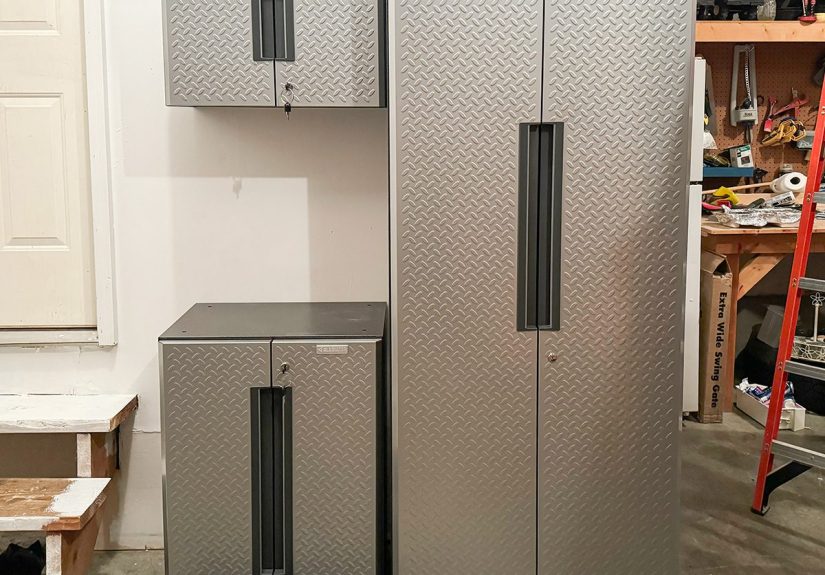
If you want the “I can park a car in here again” transformation, this is the type of comprehensive garage storage system that actually pulls it off.
Editors liked it as a complete package: cabinets, a workbench, bins, and wall storage that can be rearranged as your needs evolve.
Why it made the list
- It’s a real system: cabinets + workbench + wall rails means you’re not stuck piecing together mismatched parts.
- Modular layout: you can reconfigure components as you build new habits (or new hobbies you swear you’ll keep up with).
- Editor-loved for durability: steel construction and a long warranty signal it’s built for garage life, not hallway life.
Best for
One-car garages that need maximum efficiency, two-car garages where you want half parking / half workshop, and anyone who wants
a cohesive look (instead of “yard sale chic”).
What to know before you buy
- Locking isn’t universal: some configurations lock certain cabinets, but not all components are lockable.
- Plan your zones: put daily-use items on wall rails at arm height, heavier items lower, and “rarely touched” stuff higher.
- Assembly is manageable: tab-and-loop style assembly is designed to reduce tool drama, but it’s still a full project.
A practical setup example
Create three zones: (1) work zone (bench + chargers), (2) tool zone (wall rails + hooks), (3) bulk zone (base cabinets for paint, car care, hardware).
The goal is to keep the floor clear enough to sweep in under five minutesbecause if sweeping is hard, the mess wins.
Best Wall Track System: Rubbermaid FastTrack Garage Rail System
Wall track storage is the fastest way to “get your life off the floor.” The FastTrack approach is simple: mount rails into studs, then move hooks and accessories
around whenever your storage needs change. Editors found it straightforward to install and reliably sturdy in real garage use.
Why it made the list
- Modular by design: you can shift hook placement as seasons change (hello rakes and snow shovels).
- Great for awkward items: long-handled tools, hoses, folding chairs, laddersstuff that laughs at traditional shelving.
- Solid weight strategy: distribute loads across rails and studs rather than gambling on drywall anchors.
Best for
Anyone who wants visible, grab-and-go organization: gardeners, DIYers, families with sports equipment, and households where “put it away”
needs to be doable in 12 seconds.
What to know before you buy
- Studs matter: track systems work best when anchored into studs (use a stud finder and a level).
- Hook capacities vary: choose locking hooks for heavier items and don’t overload a single point.
- It’s not for hiding clutter: if you want the garage to look like a catalog, pair FastTrack with cabinets or opaque bins.
A practical setup example
Use one 8–10 foot wall section as the “active gear wall”: brooms, rakes, leaf blower, extension cords, bike helmets, cooler bags.
Leave a 2–3 foot gap near the garage door track so nothing fights your door hardware.
Best Cabinet System for a Workshop Feel: NewAge Bold / Pro Cabinet Systems
If your garage doubles as a workshop, cabinets aren’t just storagethey’re workflow. NewAge is popular because it offers complete sets
that look built-in, plus upgrade-friendly options like worktops, lighting support, and cable routing so chargers and power tools can live neatly.
Why it made the list
- Choose your toughness level: the Bold line is designed for compact garages, while Pro steps up with thicker steel and bigger capacity.
- Designed for real projects: features like cable routing and workspace lighting support help keep the bench functional.
- Modular expansion: start with a set, then add cabinets, drawers, or wall storage as your tool collection grows.
Bold vs. Pro: which should you pick?
Pick Bold if you want a cleaner, more organized garage without going full “commercial shop.”
Pick Pro if you store heavier tools, want a more premium feel, or plan to spend serious hours in the space.
Either way, think of cabinets as the “quiet storage” layer that keeps visual clutter down.
Best for
Car enthusiasts, home mechanics, woodworking/light fabrication setups, and anyone who wants the garage to feel like a dedicated work space
instead of a chaotic holding pen.
What to know before you buy
- Big sets are heavy: delivery day is not the day you want to “just wing it.” Clear a path, protect floors, recruit help.
- Give yourself time: larger cabinet systems take real assembly and layout planning, especially if you’re wall-mounting uppers.
- Measure twice, park once: confirm cabinet depth won’t steal your car door swing space.
A practical setup example
Build a “command center” wall: tall lockers at the ends, workbench in the middle, upper cabinets above.
Add a small rail or pegboard strip near the bench for the tools you use every day (tape measure, driver bits, gloves).
Best Overhead Storage: Fleximounts Classic Overhead Garage Storage Rack (4×8)
Overhead storage is the cheat code for garages that are out of real estate. Instead of stacking bins into a wobbly tower on the floor,
you move them up near the ceilingfreeing parking space and protecting items from the occasional garage-floor water situation.
Why it made the list
- Huge space payoff: a 4×8 rack can swallow multiple large storage bins in one clean footprint.
- Stability-minded design: integrated grid style helps keep loads more stable while sliding bins on and off.
- Adjustable height: you can choose clearance that works for your vehicle and your ceiling.
Best for
Holiday decorations, camping gear, bulky coolers, backup paper towel reserves (no judgment), and anything you only need a few times a year.
What to know before you buy
- Installation is a two-person job: overhead racks are safest with helpboth for lifting and for aligning into joists.
- Respect weight limits: overhead storage is not the place to store your entire dumbbell collection.
- Plan access: put the “once a year” stuff in the far spots and keep “every season” bins closer to the ladder side.
A practical setup example
Use one overhead rack above the “front third” of the garage (near the door) for holiday décor and seasonal clothing bins.
Leave the area above your garage door tracks and opener clear unless the rack is specifically designed to work around them.
How to Choose the Right Garage Storage System for Your Space
Step 1: Take a 15-minute inventory (seriously, just 15)
You don’t need a spreadsheet. You need categories. Walk the garage and bucket items into:
Daily (tools you grab weekly), Seasonal (holiday bins, camping), Bulky (strollers, coolers),
and Hazard-prone (chemicals, sharp toolsstore safely and out of reach of kids).
Step 2: Use all three zones: wall, floor, and ceiling
The best garage organization is layered:
- Wall storage for long-handled tools and frequently used gear.
- Floor cabinets/shelving for heavy items and anything that should be protected from dust.
- Ceiling racks for bulky, rarely used bins.
Step 3: Measure like you mean it
Measure wall length, ceiling height, andcruciallycar door swing space.
It’s painful to install a gorgeous cabinet set and then discover you have to exit your car like a gymnast.
Step 4: Prioritize safe installation
Wall-mounted systems should be anchored into studs, and overhead systems must be installed into joists with appropriate hardware.
If you’re unsure about your garage’s structure, consult a qualified professionalespecially for heavy overhead loads.
Editor Tips That Actually Make Garage Organization Stick
Label the “boring stuff”
Labels aren’t for aesthetics; they’re for preventing the “miscellaneous bin” from becoming a black hole.
Label bins by category (camping, car wash, holiday lights) and store like with like.
Keep heavy items low and centered
Heavy items belong in lower cabinets or on lower shelves. Overhead racks are for bulky/light-to-medium loads, not dense weight.
Make a “landing zone”
The garage gets messy because it’s a transition space. Create one controlled landing zone: a shelf for packages, a hook for backpacks,
a bin for sports gear. One zone. Not seven. (Seven is how you get a garage that looks like it’s hosting a yard sale every day.)
Extra 2025 Editor Experiences: What It’s Really Like Living With These Systems (500+ Words)
Here’s the part most “best of” lists don’t tell you: garage storage isn’t just about buying the right productit’s about how it behaves on a random Tuesday
when you’re late, tired, and holding three grocery bags like a competitive sport. These are the most common real-world experiences editors and DIYers
report when they actually live with garage storage systems.
1) The Stud Finder Olympics are real
Wall track systems are awesome, but the first hour can feel like a weird home improvement scavenger hunt. Studs aren’t always where you expect,
drywall can hide surprises, and your garage may have sections with different framing. The win: once the rails are mounted correctly, you get flexible storage
that adapts to your life. The lesson: don’t rush mounting dayaccurate studs and a level now prevent the heartbreak of “why is my shovel slowly sliding into chaos?”
later.
2) You will underestimate how many hooks you need
People buy a starter kit and think, “Great, we’re organized.” Then the garage reminds you: brooms, rakes, leaf blowers, hoses, extension cords,
folding chairs, scooter helmets, sports bags… suddenly your hooks are fully booked. The system itself isn’t the problemit’s the reality that hanging storage is addictive
because it works. Expect to add a few accessories once you learn your “real” inventory.
3) Cabinets are where visual stress goes to die
If your brain likes calm, cabinets are your best friend. That said, cabinet systems teach you a humbling truth: clutter doesn’t disappear,
it relocates. The magic happens when you assign homes inside the cabinetsbins for hardware, trays for chargers, a drawer for tape and fasteners.
Otherwise, you’ve built a high-end hiding place for a mess. (A mess in a tuxedo is still a mess.)
4) Overhead racks are the “wow” momentplus one mild regret
The wow: you install an overhead rack, move eight giant bins up, and your garage floor suddenly looks like it took a deep breath.
The regret: you’ll forget what’s up there unless you label the bin fronts or keep a simple “overhead inventory” note.
A quick fix: store holiday items by season (winter holidays together, summer gear together) and use matching bins so you can spot categories fast.
5) The best setup is usually a hybrid
Many editors end up with a hybrid approach: wall rails for daily tools, cabinets for messy/small items, and one overhead rack for seasonal bins.
Why? Because garages store a weird mix: sharp, long, bulky, dusty, valuable, sentimental, and occasionally sticky. No single product handles all of that perfectly,
but a layered system handles it beautifully.
6) Maintenance is shockingly simple (if you make it a habit)
The garages that stay organized are not magically cleanerthey just have a five-minute reset routine.
Once a week, do a micro-reset: return tools to hooks, toss cardboard, and put “I’ll deal with it later” items into one temporary bin.
Then actually deal with that bin monthly. This is how you prevent the garage from becoming a museum exhibit titled “Stuff We Didn’t Put Away.”