Table of Contents >> Show >> Hide
- Why Guitar Tuning Pegs Seem to Fail
- Tools You May Need
- 1. Tighten Loose Tuner Screws and Bushings
- 2. Restring the Guitar the Right Way
- 3. Reduce Friction at the Nut and String Contact Points
- 4. Replace Worn or Damaged Tuning Pegs
- How to Tell If the Problem Is the Peg, the String, or the Setup
- What Not to Do When Fixing Guitar Tuning Pegs
- When to Call a Guitar Tech
- Real-World Experiences: What Fixing Guitar Tuning Pegs Actually Feels Like
- Conclusion
If your guitar refuses to stay in tune, it is tempting to blame the tuning pegs immediately. They are right there on the headstock, staring at you like six tiny chrome suspects in a musical crime lineup. But here is the good news: many tuning peg problems are easy to fix at home, and some are not even true “bad tuner” problems in the first place.
Loose screws, sloppy string winding, friction at the nut, and worn-out hardware can all make it seem like your tuners have given up on life. In reality, a simple adjustment is often all it takes to get your guitar tuning smoothly again. That means fewer mid-song panic attacks, less angry twisting, and far less muttering at your headstock.
In this guide, you will learn four simple ways to fix guitar tuning pegs, plus how to tell whether the problem is actually your tuners, your strings, or another part of the guitar setup. Whether you play acoustic, electric, or that one old guitar you keep swearing you will restore “someday,” these tips can help you improve tuning stability without turning your instrument into a DIY disaster.
Why Guitar Tuning Pegs Seem to Fail
Before you grab a screwdriver like you are performing emergency surgery, it helps to know what tuning pegs actually do. Also called tuning machines or machine heads, they adjust string tension so each string reaches the correct pitch. When everything is working properly, the peg turns with steady resistance, the string tightens smoothly, and the guitar stays in tune.
When something is wrong, you might notice one or more of these symptoms:
- The tuning key feels wobbly or rattly
- The string slips flat after tuning
- The peg feels stiff, jerky, or rough
- The button turns but pitch changes unpredictably
- The tuner has obvious wear, cracks, bent shafts, or damaged gears
Here is the sneaky part: poor tuning stability is often caused by loose tuner hardware, improper string wraps, or friction at the nut, not by a totally ruined tuner. So the smartest move is to troubleshoot the easy stuff first.
Tools You May Need
You do not need a giant repair bench, a magnifying visor, or a soundtrack from a surgical drama. Most fixes require only a few basic items:
- Small Phillips or flathead screwdriver
- Socket wrench, spanner, or tuner bushing wrench
- Fresh strings
- String winder and cutters
- Soft cloth or towel to protect the headstock
- Nut lubricant or a little graphite from a pencil
Work on a stable surface, support the neck, and go slowly. Guitar hardware is not the place for brute force. If a screw feels like it is fighting for its life, back off and reassess.
1. Tighten Loose Tuner Screws and Bushings
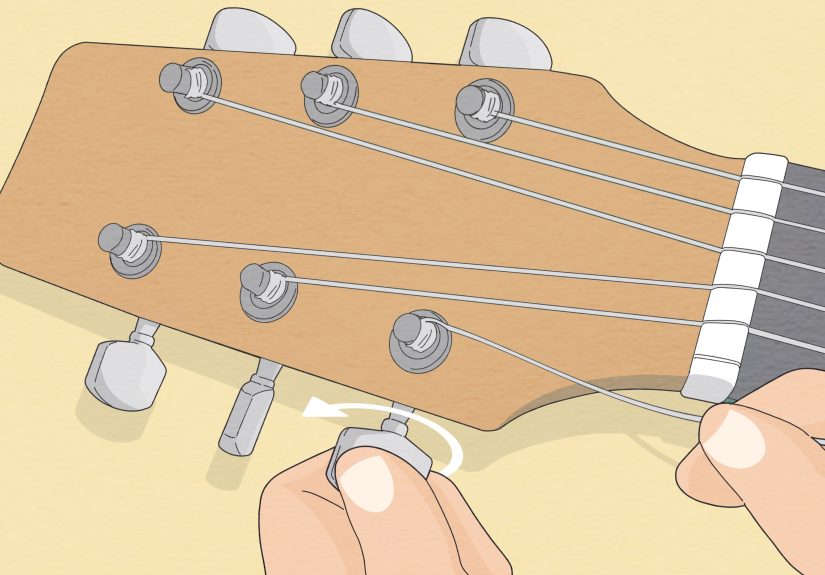
The easiest fix for guitar tuning pegs is also the one players overlook most often: tighten the hardware. Over time, vibration, string changes, travel, and general use can loosen the screws on the back of the tuner, the bushing or hex nut on the front of the headstock, or even the small button screw on some tuner styles.
How to tell this is the problem
If the tuner wiggles in the headstock, rattles, or feels less secure than the others, loose hardware is a prime suspect. A tuner that is not firmly seated cannot do its job consistently.
How to fix it
Start by checking the rear mounting screws. These are the small screws that hold the tuner body to the back of the headstock. Tighten them until they are snug, but stop before you go full superhero. Overtightening can strip the wood, and then you have upgraded from “simple maintenance” to “annoying repair project.”
Next, check the bushing or hex nut on the front of the headstock. This secures the tuner post from the top side. Use the correct wrench or tool and tighten it gently. If you slip here, you can scratch the finish, so laying a soft cloth around the area is a smart move.
Finally, if your tuners have a visible button tension screw, test the feel of the button itself. If it spins too loosely, tighten the screw a little. If it is overly stiff, loosen it just enough for smooth movement.
Common mistake to avoid
Do not crank everything down like you are tightening lug nuts on a truck. “Snug” is the goal. Too much force can strip screw holes, crack brittle buttons, or damage the finish around the bushings.
2. Restring the Guitar the Right Way
If your tuning pegs are fine but your strings are wrapped like a plate of spaghetti, your guitar may still drift out of tune. One of the most common causes of tuning instability is bad string installation.
When a string has too few wraps, too many wraps, or wraps stacked in messy layers, it can slip, settle unevenly, or gradually release tension after you tune up. The result is a guitar that sounds tuned for roughly twelve seconds.
How to fix sloppy string winding
Remove the old string and install a fresh one with clean, controlled wraps. On most non-locking tuners, aim for about three to four wraps on plain strings and a bit fewer on wound bass strings. The wraps should spiral neatly downward on the post, not pile up in a tangled mess.
As you wind, keep tension on the string so it seats firmly and evenly. After tuning to pitch, gently stretch the string by hand, retune, and repeat a few times. New strings settle in. If you skip this step, the guitar will do the settling for you in the middle of your favorite song.
What about locking tuners?
Locking tuners work differently. With those, you usually want very little excess string and minimal wrapping. Pull the string taut, lock it, and bring it to pitch. They are designed to reduce slack, not collect decorative coils.
Signs restringing solved the issue
If your peg used to “slip” but now holds tune after a proper restring, congratulations: your tuner was innocent. It was just framed by bad stringing technique.
3. Reduce Friction at the Nut and String Contact Points
This is the plot twist many players miss. Your tuning pegs may not be the real problem at all. Sometimes the string binds at the nut, string tree, or saddle, then releases in little jumps. That makes tuning feel jerky and inconsistent, and it creates the illusion of bad tuners.
A classic clue is the dreaded “ping” sound when tuning. That ping is the string sticking and then suddenly slipping through the nut slot. Your tuner gets blamed, but the nut is the actual drama queen.
How to fix it
Apply a tiny amount of nut lubricant to the nut slots and, if needed, other contact points where the strings pass. A dedicated guitar lubricant works well, but a little pencil graphite can also help as a dry, temporary solution.
If the guitar has string trees or saddles with obvious friction points, a tiny amount of the same lubricant can help there too. Just do not use too much. You want smoother travel, not a greasy science experiment living on your headstock.
When lubrication is not enough
If the nut slots are cut poorly, too narrow for your string gauge, or visibly rough, lubrication may only be a temporary improvement. In that case, the guitar may need a proper setup from a qualified tech. A badly cut nut can cause tuning trouble no matter how good your tuning machines are.
4. Replace Worn or Damaged Tuning Pegs
Sometimes a tuner really is the problem. If the gears are worn, the shaft is bent, the housing is cracked, or the button keeps loosening no matter what you do, replacement is often the smartest fix.
This is especially true on very cheap, very old, or heavily used guitars where the tuners have developed dead spots, excessive backlash, or inconsistent resistance from peg to peg. At that point, you are not fixing tuning pegs so much as negotiating with them.
How to know replacement makes sense
- The tuner still slips after tightening all hardware
- The gear feels rough or skips under tension
- The post is bent or no longer turns smoothly
- The casing is cracked or the button is damaged
- The tuner is mismatched, poorly fitted, or installed badly
How to replace a tuner
Loosen the string until there is plenty of slack, then remove the string from that tuner. Unscrew the rear mounting screw and remove the front bushing or nut. The old tuner should come free from the headstock. Install the new one carefully, making sure it fits the hole size and mounting pattern correctly before tightening anything down.
If you are replacing one tuner, compare it closely to the original. If you are replacing the whole set, choose a compatible model with the same footprint whenever possible. That helps you avoid extra drilling, ugly exposed holes, or a headstock that looks like it survived a tiny hardware tornado.
Upgrade ideas
Many players use replacement as an opportunity to upgrade to higher-ratio tuners for more precise tuning or locking tuners for faster string changes. Those upgrades can be worthwhile, but the best tuner in the world still will not fix a sticky nut or badly installed string.
How to Tell If the Problem Is the Peg, the String, or the Setup
If you want to diagnose tuning issues quickly, use this simple checklist:
If the tuner is loose in the headstock
Tighten the mounting screws and bushings first.
If the string goes flat right after restringing
Check your wraps and stretch the string properly.
If tuning feels jerky or you hear pinging
Suspect nut friction or string binding.
If one tuner feels rough, inconsistent, or mechanically damaged
That tuner may need replacement.
What Not to Do When Fixing Guitar Tuning Pegs
Some “quick fixes” cause bigger problems than the original issue. Avoid these:
- Do not overtighten screws into wood
- Do not force a wrench against the finish without protection
- Do not flood the tuner with random household oil
- Do not assume every tuning issue means you need all new tuners
- Do not buy replacement pegs without checking size, orientation, and mounting pattern
In short, use patience, not panic. Your guitar will appreciate it.
When to Call a Guitar Tech
DIY repairs are great until they stop being simple. You should consider professional help if:
- Screw holes are stripped
- The headstock wood is cracked
- The nut slots clearly need filing or reshaping
- Replacement tuners require drilling or reaming
- You are working on a valuable or sentimental instrument
There is no shame in calling a pro. Sometimes the smartest repair is knowing when not to turn a five-minute fix into a three-hour regret.
Real-World Experiences: What Fixing Guitar Tuning Pegs Actually Feels Like
The funny thing about tuning peg problems is that they almost never show up at a convenient time. They appear right before rehearsal, during a recording take, ten minutes before a coffeehouse set, or while you are trying to impress someone by casually picking up a guitar and playing something cool. Suddenly the G string is flat, the B string is moody, and the high E has decided it no longer respects authority.
One of the most common real-world experiences is buying a used guitar that “just needs new strings,” only to discover that one tuner rattles like loose change in a dryer. In many cases, the fix is beautifully anticlimactic: tighten the rear screw, snug the front bushing, restring the guitar properly, and the instrument behaves like a completely different guitar. That moment feels magical, mostly because you realize the problem was not a doomed headstock. It was one lazy screw.
Another familiar scenario happens with beginner guitars. A new player assumes the tuners are junk because the guitar will not stay in tune for long. But after a proper restring, a gentle string stretch, and a little graphite in the nut slots, the same guitar suddenly becomes much more stable. It is a good reminder that tuning stability is a system. The tuner, string, nut, and setup all have to cooperate. If one part is being difficult, the others get blamed like innocent group-project partners.
Players who switch tunings a lot often have their own tuning peg adventures too. Drop tunings, heavier gauges, and frequent string changes can expose problems faster. A tuner that feels “good enough” under normal tension may reveal backlash or stiffness when you move between tunings often. In those cases, replacing worn tuners can feel less like a luxury and more like finally retiring a pair of sneakers that have been pretending to be supportive for years.
Then there is the emotional side of the repair. Fixing your own guitar, even in a small way, builds confidence. The first time you remove a tuner, line up a replacement, tighten everything properly, and bring the string back to pitch without catastrophe, you stop seeing the instrument as mysterious. You start understanding it. That is a valuable shift for any guitarist. The guitar becomes less of a fragile object and more of a tool you can maintain with care.
And yes, sometimes the lesson is humbling. Many players spend money on upgraded tuners only to realize the true problem was a sticky nut slot the entire time. The new tuners look great, of course, and maybe they even feel smoother, but the guitar still fights tuning until the nut friction is addressed. That experience teaches a hard but useful truth: the flashiest fix is not always the right one.
Over time, these little repair experiences add up. You learn how your guitar feels when the button screw is too loose. You recognize the sound of binding at the nut. You notice when a tuner begins to develop rough spots. You stop treating every tuning issue like a full-blown emergency. Instead, you troubleshoot calmly, fix the obvious things first, and save yourself money, time, and unnecessary headstock drama.
Conclusion
If your guitar tuning pegs are acting up, do not assume the worst. In many cases, the fix is straightforward: tighten loose hardware, restring correctly, reduce friction at the nut, or replace a genuinely worn tuner. Those four simple steps solve a surprising number of tuning problems and can make your guitar feel dramatically more reliable.
The key is to diagnose the issue before throwing parts at it. A loose screw can mimic a bad tuner. A sticky nut can impersonate mechanical failure. And a messy string wrap can make a perfectly good tuner seem guilty. Start simple, work carefully, and let the guitar tell you what it actually needs.
Once your tuning pegs are working properly, the whole instrument feels better. Tuning becomes smoother, chords ring cleaner, and you can spend more time playing instead of making tiny angry adjustments between songs. Which, frankly, is what the guitar wanted all along.