Table of Contents >> Show >> Hide
There are two kinds of Easter egg people: the ones who lovingly decorate every shell like it belongs in a museum, and the ones who finish one egg, get glitter on their elbow, and call it “abstract art.” Both groups are welcome here. Easter egg displays have moved far beyond the old carton of vinegar dye and a packet of mystery tablets. These days, spring decorating is all about personality, texture, color, and clever presentation. Think floral eggs on a brunch table, speckled eggs in a moss nest, modern color-blocked eggs on acrylic stands, and playful designs that make guests grin before they even reach the deviled eggs.
If you want your Easter decorations to feel fresh this year, decorated eggs are one of the easiest ways to do it. They work in centerpieces, entry tables, mantels, tiered trays, place settings, and even on blooming branches. They can be elegant, whimsical, rustic, kid-friendly, or surprisingly chic. The secret is not just how you decorate the eggs, but how you style them once they are done.
Below, you’ll find 45 creative Easter egg ideas to display this spring, plus practical styling tips and a longer section on real-life decorating experiences so your final setup looks intentional instead of like the craft bin exploded in pastel.
Why Easter Egg Displays Still Work So Well
Easter eggs are tiny design heroes. They bring color without taking over the room, they fit almost any decorating style, and they pair beautifully with other spring staples like tulips, daffodils, moss, wicker, linen, and fresh greenery. Whether you love farmhouse Easter decor, a polished Easter tablescape, or playful DIY Easter eggs for a family gathering, eggs give you endless room to experiment.
They are also flexible. You can use hard-boiled eggs for a same-day brunch, or switch to blown-out, wooden, ceramic, or paper-mâché eggs for displays that last all season. That means your Easter egg display ideas can be as practical or as fancy as you want.
45 Creative Easter Egg Ideas to Display This Spring
Elegant Easter Egg Ideas for a More Polished Look
Monochrome Matte Eggs. Pick one soft color, like sage, blush, or powder blue, and dye every egg in slightly different shades of the same family. Display them in a white bowl for a calm, collected look that whispers “designer spring decor” instead of shouting “craft table chaos.”
Gold-Leaf Accent Eggs. Add tiny patches of metallic foil or gold leaf to solid-dyed eggs. They catch the light beautifully and look especially lovely on a mantel or sideboard with brass candlesticks.
Pressed Flower Eggs. Use decoupage to attach delicate dried flowers or petals to eggshells. These are ideal for a garden-inspired Easter centerpiece and look downright dreamy next to fresh tulips.
Blue-and-White Porcelain-Inspired Eggs. Paint simple floral or vine patterns in cobalt blue on white eggs. They give your Easter display a classic, collected look that feels a little heirloom and a little brunch-at-grandma’s-best-dishes.
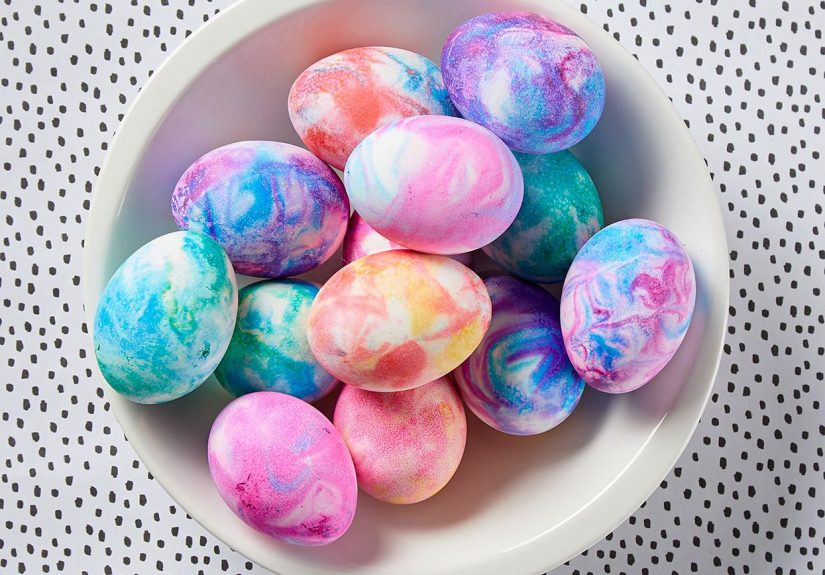
Marbled Eggs. Swirl colors for a stone-like or watercolor finish. Arrange them in a glass compote where the marbling can be seen from every angle.
Speckled Quail-Style Eggs. Flick brown paint onto pale blue, cream, or green eggs for a natural speckled finish. These work beautifully in rustic nests or shallow wooden trays.
Gingham Painted Eggs. A neat gingham pattern turns basic eggs into preppy little showpieces. These are wonderful for a farmhouse Easter table or a sweet kitchen display.
Ribbon-Wrapped Eggs. Tie slim velvet, satin, or grosgrain ribbon around each egg or egg cup. It adds texture and instantly makes the display feel more dressed up.
Black-and-White Graphic Eggs. Skip pastels and go bold with stripes, grids, dots, and doodle-like patterns. These modern Easter eggs look especially strong in minimalist homes where every object needs to earn its shelf space.
Pearl-Dotted Eggs. Tiny pearl stickers or raised paint dots create a soft, bridal look. Use these for a formal Easter brunch table or a romantic spring centerpiece.
Playful and Family-Friendly Easter Egg Ideas
Emoji Face Eggs. Paint cheerful, silly, or sleepy expressions on bright eggs and pile them into a basket. Kids love them, and adults pretend they are “for the children” while secretly choosing favorites.
Fruit-Inspired Eggs. Turn eggs into strawberries, lemons, kiwis, or watermelons with simple paint details. They look adorable on a spring snack table and feel extra fresh this time of year.
Bunny Silhouette Eggs. Add tiny bunny ears, tails, or silhouette shapes with paint or paper cutouts. These are cute without crossing into full-blown glitter-bunny territory.
Confetti Polka-Dot Eggs. Cover eggs with bright paper dots or painted circles. Display them in a clear vase so the colors do the heavy lifting.
Rainbow Ombre Eggs. Create a gradient from pale pink to coral, or mint to teal, and line them up in order. This kind of display looks incredibly satisfying, which is reason enough to make it.
Monster Eggs. Add goofy eyes, tiny teeth, and wild colors for a playful display kids can help create. They are especially fun for classroom parties or casual family Easter celebrations.
Sticker-Collage Eggs. Use stars, hearts, florals, letters, or spring-themed stickers to cover eggs in layers. This is one of the easiest no-mess Easter egg decorating ideas around.
Temporary Tattoo Eggs. Press on floral, butterfly, or illustrated tattoos for crisp designs with almost no effort. It is basically the lazy genius method, and there is no shame in that.
Crayon Resist Eggs. Draw with white crayon before dyeing to reveal secret patterns. Kids enjoy the surprise, and the finished eggs feel charmingly homemade.
Chalkboard Eggs. Paint eggs with chalkboard paint and write names, doodles, or mini messages. These work beautifully as place cards for Easter dinner.
Nature-Inspired Easter Egg Ideas for Rustic Spring Decor
Onion-Skin Dyed Eggs. Natural dyeing creates earthy, muted tones that feel organic and timeless. Display these in a wooden bowl with fresh herbs for a farmers-market-meets-Easter feel.
Turmeric Yellow Eggs. Rich golden-yellow eggs look like bottled sunshine. They are especially striking when paired with white flowers or neutral linens.
Beet-Blush Eggs. Soft pink and dusty mauve shades create a gentle, romantic palette. These are ideal for anyone who wants pastel Easter decor without the candy-store vibe.
Botanical Herb Eggs. Press parsley, dill, or small leaves against the shell before dyeing for an elegant silhouette effect. They feel handmade in the best possible way.
Moss Nest Eggs. Set simple dyed or speckled eggs into little nests of preserved moss. This is one of the prettiest Easter egg display ideas for coffee tables and entry consoles.
Raffia-Wrapped Eggs. Wrap eggs in raffia, twine, or natural fiber for texture and warmth. They look especially good mixed with wicker baskets and weathered wood.
Twig Basket Eggs. Fill a twig or grapevine basket with eggs in muted greens, creams, and robin’s-egg blue. It is simple, but it has that “I absolutely know what I’m doing” energy.
Feather-Trim Eggs. Add soft feather accents sparingly for a nest-inspired display. Keep the palette neutral so the result feels woodland-chic, not costume-party confused.
Robin’s-Egg Splatter Eggs. Use a pale blue base and tiny brown speckles for that classic spring-bird look. Style them beside branches or a bird nest motif for a cohesive display.
Linen-Wrapped Decorative Eggs. Cover wooden or faux eggs in soft linen scraps for understated texture. These are perfect for neutral spring decorating and layered table settings.
Modern and Trend-Forward Easter Egg Ideas
Color-Blocked Eggs. Paint clean sections in peach, lilac, citron, or dusty blue for a contemporary art feel. These make a great addition to a modern Easter centerpiece.
Metallic Half-Dipped Eggs. Dip or paint just the bottom half of the shell in metallic gold, silver, or copper. The contrast is sharp and surprisingly glamorous.
Terrazzo Eggs. Add tiny scattered flecks in multiple colors over a pale base. If your home loves terrazzo planters, speckled tile, or playful modern decor, these eggs will fit right in.
Abstract Brushstroke Eggs. Freeform paint strokes in bold or pastel shades create a loose, artsy finish. The best part is that slight imperfections make them look more intentional, which feels like a win.
Plaster-Look Neutral Eggs. Use chalky paint in ivory, oatmeal, or greige to mimic the look of plaster or stone. These are perfect for homes that prefer subtle spring decor over sugary pastels.
Scalloped Edge Eggs. Paint scalloped borders or arches around each egg for a sweet but graphic finish. They look especially lovely grouped on a cake stand.
Faux Ceramic Eggs. Glossy paint or glaze-like finishes can make decorative eggs resemble mini pottery pieces. Style them with ceramics and vases for a collected shelf display.
Typography Eggs. Add one word to each egg, such as “spring,” “bloom,” “hop,” or guest initials. This approach works beautifully on place settings or tiered trays.
Mini Gallery Eggs. Paint tiny florals, abstract faces, little houses, or simple patterns on each egg and set them in individual egg cups. Suddenly your Easter table doubles as a tiny art show.
Acrylic-Pedestal Eggs. Keep the egg design simple, then display each one on clear acrylic stands or minimal holders. This lets the shape and color take center stage.
Statement Display Ideas That Show Off Your Eggs
Blooming Branch Easter Tree. Hang lightweight decorative eggs from flowering branches in a vase. This creates height, movement, and instant spring drama without taking up much table space.
Candlestick Egg Towers. Perch decorative eggs on brass or glass candlesticks for a charming vertical display. This works best with a little museum wax and a steady hand.
Egg Wreath Centerpiece. Arrange decorated eggs in a wreath shape around candles, greenery, or a bunny figurine. It anchors the table and makes the whole setup feel intentional.
Cloche and Apothecary Jar Display. Tuck eggs under glass cloches or into apothecary jars with moss, shredded paper, or flowers. This turns even simple dyed eggs into something worthy of a second look.
Personalized Place-Card Eggs. Write each guest’s name on an egg and nestle it into a small bowl, napkin fold, or nest at the table. It is practical, festive, and quietly impressive.
How to Make Your Easter Egg Display Look Better Instantly
First, vary height. A flat pile of eggs in the middle of the table can look nice, but a layered display nearly always looks better. Use cake stands, egg cups, compotes, candlesticks, baskets, or stacked books under trays to create dimension.
Second, limit your palette. Not every display needs every pastel known to humankind. Pick two to four colors and repeat them across eggs, florals, ribbons, and linens. That makes the whole arrangement feel cohesive.
Third, mix texture. Pair shiny eggs with moss, smooth eggs with woven baskets, or graphic eggs with soft linen. Texture is the secret sauce that keeps a display from looking flat or overly crafty.
Fourth, choose the right egg for the right job. Hard-boiled eggs are fine for short events, but for a longer-lasting Easter decoration, use blown-out eggs or faux versions made from wood, paper, or ceramic. That way, your masterpiece survives past dessert.
Finally, remember the setting. A modern kitchen may look best with neutral plaster-look eggs and acrylic stands, while a cottage dining room might sing with botanical eggs, moss nests, and a floral runner. Decorating is easier when you style eggs for the room, not against it.
Lessons From Actually Styling Easter Egg Displays Every Spring
One of the funniest things about decorating Easter eggs is how innocent the project seems at first. You tell yourself you are going to dye “just a dozen.” That sounds reasonable. Then you start testing a pale blue next to a deeper teal, add a floral decoupage experiment, try one speckled egg for balance, and suddenly the dining table looks like a tiny seasonal design lab run by a very determined bunny. The good news is that this process teaches you a lot, especially if you care about making your Easter decorations look polished instead of random.
The first lesson is that eggs always look better in groups than alone. A single decorated egg can be cute, but a cluster of five or seven in related colors looks styled. Grouping helps the eye understand the design. A bowl of blush, cream, and gold eggs feels intentional. Three robin’s-egg blue eggs beside moss and tulips feel curated. Even playful designs, like fruit eggs or dotted eggs, look more charming when they are repeated. Repetition gives the display rhythm, and rhythm is what makes a holiday setup feel complete.
The second lesson is that the container matters almost as much as the eggs. Put beautifully decorated eggs in a flimsy plastic tray, and they lose some magic. Put simple eggs in a stoneware bowl, a glass pedestal dish, a grapevine basket, or on a cake stand, and suddenly they look elevated. This is why some of the best Easter egg display ideas are really about presentation. The eggs are the stars, but the stage still counts. A neutral vessel also helps colorful eggs stand out more, while a rustic basket softens brighter designs.
Another real-world discovery is that not every egg has to be complicated. In fact, the best displays usually mix a few detailed eggs with a lot of simpler ones. If every egg is covered in glitter, florals, ribbon, paint, stickers, and existential ambition, the arrangement can feel visually noisy. But if you combine a handful of statement eggs with plain dyed ones, the special designs get room to breathe. That balance keeps the arrangement looking stylish instead of overworked.
There is also the matter of scale. Tiny eggs in a giant basket can look lost, while oversized faux eggs may overwhelm a small place setting. When styling Easter tablescapes, it helps to think like an editor. What is the focal point? Is it the centerpiece, the mantel, the coffee table tray, or each individual plate? Once you know that, you can choose the egg size, number, and placement more wisely. A branch tree on an entry console can handle lots of hanging eggs. A brunch table may need just a few well-placed eggs near florals and candles.
And then there is color. Pastels are classic for a reason, but they are not your only option. Over time, many decorators discover that muted greens, earthy browns, creamy whites, soft yellows, and dusty pinks often feel richer than an all-out rainbow. On the other hand, if your family celebrates Easter with lots of kids, candy, and cheerful energy, brighter colors can absolutely work. The trick is committing to the mood. Soft and natural, or playful and bold. Trying to do both at once can make the display feel confused, like it got dressed in the dark.
The final and perhaps most useful lesson is that Easter egg decorating should still feel fun. The prettiest display in the world is not worth it if the process makes everyone grumpy. Some years, the best eggs are the elegant hand-painted ones. Other years, it is the crooked polka-dot egg a child made with too much enthusiasm and not quite enough coordination. A good Easter display leaves room for beauty, personality, and a little imperfection. That is what makes it memorable. Spring decor should feel alive, not over-managed. So yes, aim for beautiful. But leave a little room for joy, a little room for surprise, and maybe a little room for the egg that somehow ended up looking suspiciously like a potato. It happens.
Conclusion
The best Easter egg ideas to display this spring are the ones that match your style, your space, and your actual energy level. If you love polished Easter decor, lean into marbled, botanical, metallic, or porcelain-inspired eggs. If you want a family craft moment, sticker eggs, fruit eggs, and emoji eggs keep things easy and cheerful. If your dream is a beautiful spring centerpiece, focus just as much on vessels, height, and texture as the eggs themselves.
In other words, you do not need 45 eggs, 14 paintbrushes, and the patience of a saint to make your Easter table look lovely. Sometimes all it takes is a few smart color choices, a good bowl, and the confidence to call your favorite speckled egg “art.”