Table of Contents >> Show >> Hide
- Before You Paint: The Non-Optional Steps (So Your Curtains Don’t Turn Into Crispy Pancakes)
- Tools + Materials
- Painting Techniques That Look Good on Curtains (Not Just on Pinterest)
- 45 DIY Painted Curtain Styles
- Design Tips: Making Painted Curtains Look Expensive
- Care + Longevity: How to Make Painted Curtains Last
- Troubleshooting: Fix the Usual Curtain-Paint Drama
- FAQ
- Experience Section (Extra ): What Painting Curtains Teaches You in Real Life
Plain curtains are the sweatpants of home decor: comfy, reliable, and… not exactly turning heads. The good news?
With a little paint, you can turn basic panels into custom “designer” drapes for a fraction of the priceand you
don’t need an art degree (or a dramatic beret) to pull it off.
This guide walks you through smart, real-world ways to paint curtains so they look intentional, not “I sneezed near
the craft table.” You’ll get prep tips, foolproof techniques, and 45 DIY painted curtain styles you
can copy, remix, or proudly take credit for at brunch.
Before You Paint: The Non-Optional Steps (So Your Curtains Don’t Turn Into Crispy Pancakes)
1) Start with the right fabric
Natural fibers (like cotton or linen blends) usually accept paint more easily than slick synthetics. If you’re not
sure what you’ve got, paint a small test swatch near a hem firstfuture-you will be grateful.
2) Pre-wash and iron
New curtains often have sizing or finishes that can mess with paint adhesion. Wash and dry them first (skip fabric
softener), then iron flat so your pattern doesn’t “wobble” over wrinkles.
3) Put a barrier between layers
Slide cardboard, a plastic tablecloth, or a trash bag inside each panel. This prevents paint bleed-through, keeps
the back from sticking to the front, and protects whatever surface you’re working on.
4) Thin coats win
The secret to soft curtains is multiple thin coats, not one thick, gloopy layer. Thick paint can
crack, feel stiff, and generally behave like it’s mad at you.
Tools + Materials
- Fabric paint (easy mode) or acrylic paint + textile/fabric medium (budget mode)
- Foam roller (great for stencils and big shapes), stencil brush, and a few small artist brushes
- Painters tape (for crisp lines), measuring tape, pencil/chalk
- Stencils (store-bought, DIY freezer-paper stencils, or vinyl cutouts)
- Drop cloth and an insert barrier (cardboard/plastic) for inside the curtain
- Spray bottle with water (optional, but helpful for smoother blending)
- Iron and a pressing cloth for heat-setting once fully dry
Painting Techniques That Look Good on Curtains (Not Just on Pinterest)
Stenciling
Stenciling is the gateway technique: it gives you crisp, repeatable patterns with minimal stress. The key is to
“off-load” excess paintdab your brush/roller on a paper towel so paint doesn’t seep under stencil edges.
Tape-resist
Painter’s tape creates clean stripes, grids, and geometric shapes. Press tape edges firmly, paint lightly, and peel
tape off while paint is still slightly tacky for the sharpest lines.
Stamping + block printing
You can stamp patterns using real block-print stamps, carved erasers, foam sheets, potatoes (yep), or even a clean
sponge cut into shapes. It’s charmingly imperfect in the best way.
Ombre + gradient blending
Gradients look expensive. Achieve them with diluted paint and a damp brush (or sponge) to soften transitions. Work
in sections so the paint stays blendable.
Spray + splatter (controlled chaos)
Fabric spray paint or misting techniques can create soft fades, speckled texture, or modern “stonewash” vibes.
Mask areas with paper or tape if you want the chaos to stay in its lane.
45 DIY Painted Curtain Styles
Stripes, Lines, and Graphic Classics
- Cabana stripes: Wide vertical stripes in navy/white or black/cream. Instant resort energyeven if the “resort” is your couch.
- Pencil pinstripes: Thin lines spaced evenly for a tailored look. Great for offices, dining rooms, and anyone who owns a label maker.
- Ticking stripe: Classic farmhouse vibes with muted blue/gray stripes on natural fabric.
- Color-block bottom dip: Paint the lower third a solid color for weight and drama (and it hides scuffs near the floor).
- Two-tone split panel: One side of each panel painted a contrasting colorsubtle when closed, bold when open.
- Diagonal racing stripes: Angled tape lines for a sporty, modern punch. Works surprisingly well in kids’ rooms and modern lofts.
- Border frame: Paint a clean border around the edges like a picture frame. Minimal effort, maximum “custom.”
- Hand-drawn sketch lines: Loose, imperfect black lines on white curtains for an artsy, editorial look.
Geometric Patterns That Feel Modern
- Gingham checks: Use tape to create a grid, then paint alternating squares. Try sage + cream or charcoal + white.
- Buffalo check: Bigger, bolder gingham. Looks amazing in cozy cabins and “I own at least one flannel” homes.
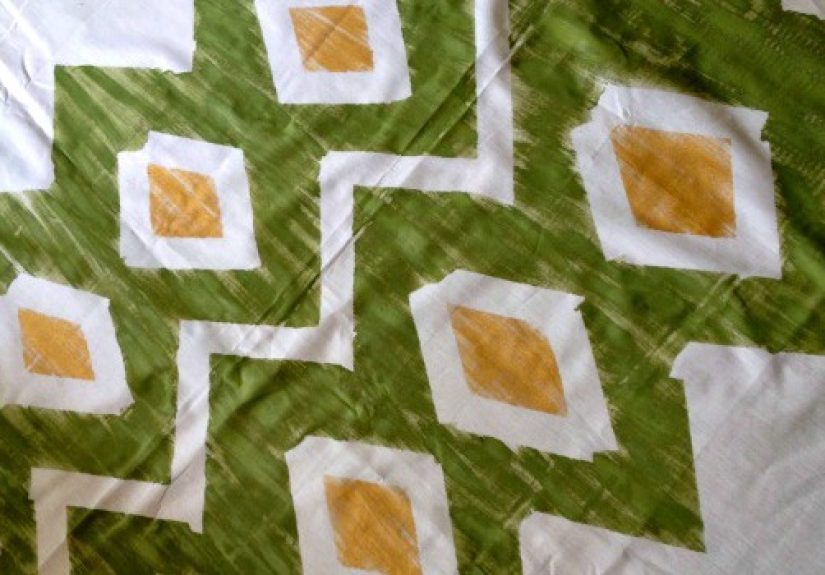
- Diamond lattice: Tape a diagonal grid for a trellis effect. Elegant in metallic paint on white panels.
- Half-moons (scallop rows): Repeat semi-circles across the curtain for a playful, mid-century feel.
- Chevron zigzags: Tape or stencil for crisp peaks. Keep it two-tone to avoid visual overload.
- Abstract triangles: Paint scattered triangles in a limited palette (3 colors max) for a clean, graphic look.
- “Memphis” squiggles: Dots, dashes, and wavy linesfun in a teen room, studio, or anywhere you want dopamine decor.
- Offset grid: Paint uneven rectangles like a modern art print. Great for hiding small mistakes (it’s a feature!).
- Honeycomb stencil: Hexagon pattern in soft neutrals for subtle texture or in bold black for statement curtains.
Botanical and Nature-Inspired Styles
- Leaf silhouette border: Paint a row of simple leaves along the bottom hemclean, calm, and forgiving.
- Vine trellis stencil: Repeating vines feel cottage-core without trying too hard.
- Wildflower scatter: Tiny flowers dotted here and there, like a meadow accidentally moved indoors.
- Fern frond prints: Use a stencil or stamp style. Looks especially good in bathrooms and sunrooms.
- Monstera cutout shapes: Big, graphic leaves for a modern tropical look.
- Tree-line ombre: Blend a dusk gradient, then stencil a simple tree line near the bottom.
- Ocean wave bands: Soft, layered curves in blues and sandy neutralsbeachy without seashells everywhere.
- Mountain silhouettes: Stencil peaks across the bottom third for a cozy “cabin postcard” vibe.
- Sunburst corner accent: Paint a radiating sunburst from one lower corner. Subtle when curtains hang, gorgeous up close.
Global, Vintage, and Pattern-Lover Favorites
- Moroccan trellis: A stencil classic. Use a foam roller for speed and a stencil brush for corners.
- Damask (light touch): Use one tone slightly darker than the base for a fancy-but-not-loud effect.
- Indigo-inspired shibori look: Create resist patterns with folding/taping sections before painting or dyeing.
- Block-print motif rows: Repeat a simple stamped motif in tidy rowsvery artisan market, very “yes I made these.”
- Toile-style silhouettes: Use stencil scenes (floral or pastoral) for vintage charm without the vintage price tag.
- Greek key border: Paint a crisp meander pattern along the edge for a tailored, hotel-like vibe.
- Folk-art florals: Loose, hand-painted flowers in a limited palettecharming, not fussy.
Artful, Abstract, and “Yes, That’s Intentional” Designs
- Watercolor wash: Dilute paint and brush on a soft wash. Let variations happen; they’re the whole point.
- Painted brushstroke columns: Vertical strokes in two or three colors elongate windows and look very gallery-wall-adjacent.
- Terrazzo speckles: Flick tiny specks in a curated palette (think clay, cream, black). Mask the top area if you want a clean header.
- Big polka dots: Use a stencil or sponge circles. Works best with lots of negative space.
- Colorful confetti: Tiny rectangles or dots sprinkled acrossperfect for playrooms and happy kitchens.
- Ink-blot mirror pattern: Paint one side, fold lightly to transfer (test first!). Gives a symmetrical, artsy result.
- Gradient sunrise bands: Horizontal bands that softly blend from warm to cool. Cozy at night, cheerful in daylight.
- Minimalist line art face: One continuous line drawing near the bottom corner. Chic, modern, and surprisingly easy.
Texture Tricks and Special Effects
- Sponge “linen” texture: Dab paint lightly with a sea sponge for subtle texture (great if your fabric is too plain).
- Metallic stencil pop: Metallic gold/bronze in a small repeat pattern adds glam without screaming about it.
- Chalky matte wash: Use matte fabric paint for a soft, velvety look (especially nice in muted, earthy colors).
- Negative-space stencil: Paint around a stencil shape so the design appears as untouched fabricclean, modern, and crisp.
Design Tips: Making Painted Curtains Look Expensive
- Scale matters: Small patterns can look busy on full-length panels; larger repeats read more “designer.”
- Repeat a room color: Pull one paint color from a rug, pillow, or wall art so the curtains feel intentional.
- Think in threes: A palette of 2–3 colors is usually enough. More than that and your curtains may start telling jokes uninvited.
- Keep the top calmer: Concentrate bold pattern toward the bottom or edges so light still feels airy near the window.
Care + Longevity: How to Make Painted Curtains Last
Let paint dry fully before moving or rehanging. Many fabric paints (and acrylic + textile medium combos) hold up best
when heat-set with an iron (use a pressing cloth and follow product guidance). Wait a few days before washing if you
can, then wash gently (often cold water) and avoid harsh cycles to reduce fading and wear.
Troubleshooting: Fix the Usual Curtain-Paint Drama
“My stencil bled!”
Use less paint. Off-load on a paper towel before touching fabric, and build color slowly. Also: press the stencil
down well and don’t rush the edges.
“It feels stiff.”
Thick paint is the culprit. Next time, use thinner coats and consider fabric medium with acrylics. If it’s already
stiff, a gentle wash after proper curing can soften the hand slightly.
“Coverage is patchy.”
Work in smaller sections, keep the fabric smooth, and apply multiple light layers. A slightly damp surface can help
paint distribute more evenly for certain techniques.
“Cracking happened.”
Usually caused by paint applied too thick or without fabric medium. Thin layers and flexible paint systems help the
fabric move like fabric.
FAQ
Can I use regular wall paint on curtains?
You can, but it’s risky: wall paint can make fabric stiff and may not hold up to washing. If you try it, use very
thin coats, test first, and treat it more like a decorative panel than something you plan to launder often.
Do I have to heat-set?
Many fabric paints and acrylic-on-fabric approaches recommend heat-setting to help durability. If your curtains will
be washed or handled a lot, heat-setting is a smart step.
How do I keep patterns aligned across two panels?
Mark a light guideline at the same height on both panels, measure your repeat, and work from the center outward.
When in doubt, step back oftenyour eyes catch drift faster than your tape measure does.
Experience Section (Extra ): What Painting Curtains Teaches You in Real Life
The first time you paint curtains, you think it’ll be like painting a canvassmooth, stable, and politely obedient.
Curtains, however, are more like a sleepy golden retriever: lovable, floppy, and determined to wiggle at the worst
possible moment. My biggest lesson? Preparation is not “extra.” Preparation is the project.
I once skipped the “insert cardboard barrier” step because I felt confident. Two hours later, I had a modern art
print on the front panel, a matching modern art print on the back panel, and a bonus modern art print on my work
surface. It was… cohesive. Not what I meant. So now I slide cardboard inside every panel like I’m tucking it in for
a nap.
The next surprise is how quickly “a simple pattern” becomes “a math problem.” Stripes look easy until you realize
your floor isn’t perfectly level and your curtain rod is living its own truth. A tiny crooked line at the top turns
into a whole-inch drift by the hem. The fix is simple: measure from the hem or from a consistent seam, mark
multiple points, and connect themdon’t trust one heroic measurement. Also, step back every few minutes. Curtains
hang vertically, so checking your work flat on the floor only tells half the story.
Stenciling brings its own personality. The first time you roll paint on a stencil, you want fast coverage (because
impatience is human). That’s exactly when bleeding happens. The “off-load paint” advice sounds boring until you see
how crisp edges look when you barely use any paint at all. Now I treat stenciling like making pancakes: the first
one is a test run, and by pancake three, you’re suddenly a professional.
Color choice is another real-world moment. Bright white curtains plus stark black paint can look incredibleunless
your room is warm-toned and cozy, in which case the curtains may feel like they’re judging everyone. Pull one color
from your room (a pillow, a rug stripe, a piece of art) and the curtains instantly look “planned” instead of “I got
bored on Saturday.”
Finally: accept the charm of tiny imperfections. A hand-painted brushstroke column looks better with visible brush
texture. A stamped motif feels more artisan when it’s not laser-perfect. Curtains are big, soft, and move with light
and airso a little organic variation reads as warm and custom. If you wanted factory perfection, you’d be shopping,
not painting. And honestly? Painting is more funand you get to brag forever.