Table of Contents >> Show >> Hide
- Why Scam Texts Keep Showing Up (Even When They’re Bad at It)
- The 53 Pathetic Scam Messages Hall of Fame
- 1) Delivery Drama: “Your Package Is… Vaguely Somewhere”
- 2) Toll Trolls: “Pay $3 or Lose Your Car… Somehow”
- 3) Banking & Payment Panic: “Your Money Is In Danger (Says a Stranger)”
- 4) Tech Support Theatre: “Your Device Has 17 Viruses (All Named Kevin)”
- 5) Job Offer Nonsense: “Congratulations, You’re Hired… For Mystery Work”
- 6) Wrong Number & Romance Crypto: “Oops! Anyway, Wanna Invest?”
- 7) Government & Tax Scare Tactics: “Official Notice (Typed in Panic)”
- 8) Prizes, Charity, and “CEO Needs Gift Cards”
- How to Spot a Scam Text in 10 Seconds
- What to Do Instead of Replying (and How to Report It)
- Why People Share These Messages (Besides the Comedy)
- Extra : Real Experiences People Have With Pathetic Scam Texts
- Conclusion: Laugh, Screenshot, Report, Repeat
There are two kinds of unexpected texts: (1) “omw” from someone you actually know, and (2) a message from a total stranger
insisting your life will fall apart in 12 minutes unless you click a link that looks like it was typed by a raccoon on espresso.
Scam text messages (aka smishing) aren’t new, but the volume is. And while plenty are scary-good, a shocking number are
so wildly sloppy that people don’t just delete themthey screenshot them, post them, and let the internet enjoy the cringe.
Think of it as community service… with memes.
Below are 53 “how did you think this would work?” scam messagesparaphrased into safe, non-clickable examplesplus the quick,
practical ways to spot and report spam texts without turning your phone into a donation box for scammers.
Why Scam Texts Keep Showing Up (Even When They’re Bad at It)
Scam texts are cheap to send, easy to automate, and perfect for playing the numbers game: if a tiny percentage of people respond,
scammers still profit. That’s why you’ll see the same themes on repeatdelivery problems, unpaid tolls, bank “alerts,” surprise job offers,
and “wrong number” conversations that magically steer into money talk.
And yes, the “pathetic” ones still matter. Even a laughably obvious message can catch someone who’s busy, stressed, sleepy, traveling,
or expecting a package. Scams don’t need to be brilliantjust timed.
The 53 Pathetic Scam Messages Hall of Fame
Note: These are intentionally paraphrased “greatest hits” based on common scam patterns people share online.
Don’t reply, don’t click, and don’t test your luck “just to see what happens.” Curiosity is how scammers get tips.
1) Delivery Drama: “Your Package Is… Vaguely Somewhere”
- “We tried to deliver your package but your address was ‘incomplete.’ Please confirm with this totally-not-suspicious link.”
- “Your parcel is held. Pay a tiny ‘redelivery fee’ (less than a dollar) or we’ll… keep it forever?”
- “Package stopped at customs. Click to submit your SSN. (Because customs definitely texts like this.)”
- “Your shipment is waiting. Reply YES to reactivate delivery.” (Bonus points for the random all-caps urgency.)
- “We detected ‘illegal items’ in your box. Pay now to avoid ‘court action.’” (Sir, this is a cardigan.)
- “Your package will be returned today. Fix it in 30 minutes.” (The countdown always does the heavy lifting.)
- “Delivery failed due to ‘weather.’ Please verify card details.” (Weather now demands your payment info?)
- “USPS/UPS/FedEx/DHL-ish: track here.” The sender name looks official; the link looks like keyboard smash.
- “We couldn’t deliver because your mailbox is full.” (My mailbox is virtual, but okay.)
- “Congrats! You have a gift waitingconfirm address.” (I didn’t order a gift; I ordered peace.)
2) Toll Trolls: “Pay $3 or Lose Your Car… Somehow”
- “Unpaid toll balance: $2.78. Pay now to avoid license suspension.” (For $2.78? Please be serious.)
- “Final notice: toll violation.” It’s “final” every week, like a TV show that won’t end.
- “Your state toll account is overdue.” I don’t even live near a toll road, but nice try.
- “Pay within 10 minutes to avoid legal action.” (My lawyer says the timer is a lie.)
- “Your vehicle plate was recorded.” The message doesn’t know my plate… or my state… or reality.
- “We couldn’t process your toll paymentupdate card.” (I don’t have a toll account, but go off.)
3) Banking & Payment Panic: “Your Money Is In Danger (Says a Stranger)”
- “Fraud alert: unusual purchase. Reply Y to approve.” (From a random number with zero bank branding.)
- “Your account is locked due to suspicious activity.” The “support link” is a sketchy misspelling of the bank name.
- “We detected a transfer to ‘BITCOIN LLC.’ Cancel now.” (I didn’t transfer. Also: BITCOIN LLC?)
- “Confirm your PIN to stop charges.” (A PIN request is basically the scammer’s love language.)
- “Your card will be disabled today.” The message includes six emojis and the grammar of a broken microwave.
- “You have a refund pending. Verify your routing number.” (Refunds don’t need your routing number, champ.)
- “Cash App/Zelle/PayPal: Your payment is waiting.” The “confirm” link looks like a trap door.
- “Someone is trying to log in. We need your code.” (Never share codes. Not even with your future self.)
- “You were overpaid. Send the difference back.” (The classic ‘oops’ scam dressed in budget drama.)
4) Tech Support Theatre: “Your Device Has 17 Viruses (All Named Kevin)”
- “Apple ID locked. Verify now.” The link screams “not Apple” in lowercase letters.
- “iCloud storage full. Click to upgrade.” (My storage is fine; your scam is not.)
- “Your computer is infected. Call this number immediately.” (My computer would like to file a restraining order.)
- “We are Microsoft Support.” The message arrives at 2:14 a.m. because that’s when Microsoft works, apparently.
- “Your Netflix will be canceled.” The sender is “NetflxBillingDeptOfficial2.” Subtle.
- “Geek Squad renewal charged.” I have never had Geek Squad. I barely have a squad of friends.
- “Your email will be deleted today.” (Email providers don’t text-threaten you like a cartoon villain.)
5) Job Offer Nonsense: “Congratulations, You’re Hired… For Mystery Work”
- “Hi! Are you still looking for a job?” I didn’t apply, and you don’t know my name. That’s a strong start.
- “Remote role: earn $300/day. Just message us on WhatsApp.” (Legit recruiters love disappearing into WhatsApp.)
- “We reviewed your resume!” Which resume? Where? When? On what planet?
- “Simple tasks. Daily pay. No interview.” (If the job sounds like a cheat code, it’s a scam.)
- “You must pay a ‘training fee’ first.” (If you have to pay to get paid, run.)
- “Kindly provide your SSN to proceed.” “Kindly” is a red flag wearing a red flag as a hat.
- “We will send you a check to buy equipment.” (That check is about to bounce harder than a trampoline.)
6) Wrong Number & Romance Crypto: “Oops! Anyway, Wanna Invest?”
- “Hi Emily, dinner at 7?” You say wrong number. They say, “Fate brought us together.” Sure, Jan.
- “Sorry, I texted the wrong personbut you seem nice.” Two messages later: “Have you heard of crypto?”
- “I’m moving to your city soon.” They don’t know your city. Or your existence beyond a phone number.
- “I want to share an amazing investment secret.” If it’s so amazing, why are you texting strangers?
- “Let’s be friends. I can teach you trading.” The flattery is free; the lesson costs everything.
7) Government & Tax Scare Tactics: “Official Notice (Typed in Panic)”
- “IRS: immediate action required.” The IRS does not text you like a bouncer outside a club.
- “You qualify for a surprise government payment. Confirm info.” (Free money texts are rarely free.)
- “Your Social Security number is suspended.” That’s not how Social Security numbers work.
- “You have legal documents. Click to view.” The link is not a court system; it’s a trap in a trench coat.
- “Final tax notice: pay today.” The message doesn’t include your name, case number, or any actual legitimacy.
8) Prizes, Charity, and “CEO Needs Gift Cards”
- “You won a prize! Pay shipping.” If you “won,” why are you paying anything?
- “We’re a charity. Send gift cards to help families.” Real charities don’t fundraise via gift cards.
- “It’s your boss. I need gift cards ASAP.” The “boss” texts from a new number with “sent from iPhone” energy.
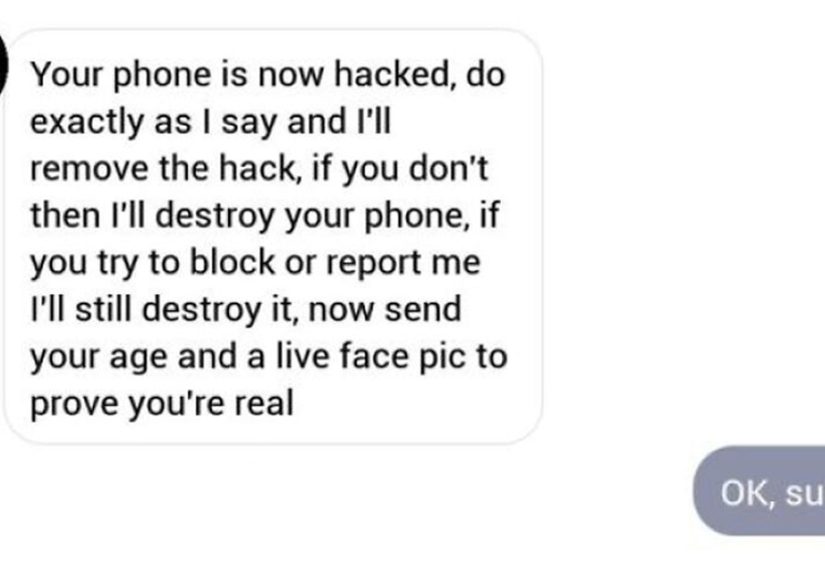
- “Your account was hackedsend money to secure it.” That’s not security; that’s a robbery with punctuation.
How to Spot a Scam Text in 10 Seconds
You don’t need to be a cybersecurity expert. You need a “wait a second” reflex. Most phishing texts collapse under basic questions:
- Unexpected + urgent: “Act now,” “final notice,” “today only,” “10 minutes.” Pressure is the point.
- Weird links: Shortened URLs, misspellings, extra hyphens, or a “company name” that ends in nonsense.
- Requests for sensitive info: PINs, one-time codes, SSNs, bank details, login credentials.
- Payment method demands: Gift cards, crypto, wire transfers, or “refund the difference.”
- Strange phrasing: “Kindly,” odd capitalization, awkward grammar, or emoji soup.
- Doesn’t address you properly: No name, generic greeting, or wrong name entirely.
- Too good to be true: “You’re hired,” “you won,” “free money,” “instant profits.”
What to Do Instead of Replying (and How to Report It)
Here’s the safest routine that protects you and helps reduce scam texts for everyone:
1) Don’t click. Don’t reply.
Clicking can lead to fake login pages, malware downloads, or payment traps. Replying can confirm your number is activelike telling a scammer,
“Yes, this phone is real and occasionally gullible.”
2) Verify using official channels you choose
If a message claims it’s from your bank, a delivery company, a toll service, or the IRS, go directly to the official app or website
by typing it yourself (or using a bookmark you already trust). Never use the link in the text to “check.”
3) Report it the easy way
- Forward to 7726 (SPAM) to report to many major U.S. wireless carriers.
- Use your phone’s built-in “Report Junk/Spam” option if it appears.
- Report scams to the FTC if you suspect fraud.
- If it’s an IRS/tax message, report it through the IRS’s published reporting channels (and don’t engage).
- If it’s a widespread smishing wave (like toll texts), consider reporting through relevant official channels such as IC3.
4) If you already clicked (no shameact fast)
- Close the page and do not enter info.
- If you entered credentials, change passwords immediately (from a clean, trusted login path).
- Enable multi-factor authentication where possible.
- Monitor financial accounts and consider contacting your bank if you shared payment details.
Why People Share These Messages (Besides the Comedy)
Posting scam texts does two helpful things: it warns friends who might be vulnerable, and it spreads the “pattern recognition” that scammers hate.
The more people recognize the scriptsdelivery panic, toll threats, “your account is locked,” or “oops wrong number”the fewer people get caught.
Just be smart when you share: blur phone numbers, don’t repost clickable links, and don’t include personal details.
The goal is to expose the scam, not help it travel faster.
Extra : Real Experiences People Have With Pathetic Scam Texts
Ask almost anyone with a phone, and they’ll tell you they’ve got a personal “Scam Museum” in their messagesusually a chaotic mix of fake delivery
alerts, random job offers, and dramatic warnings about accounts they don’t even have. The funniest part is how scams try to blend into normal life,
but can’t quite pull it off.
One common experience: the package delivery scam that hits the exact day you’re actually expecting something. You glance at the text,
your brain goes, “Oh yeah, I ordered that,” and for half a second you’re one tap away from a bad decision. Then you notice the link looks like a
scrambled license plate, or the message says your address is “incorrect” while not naming your address at all. That tiny moment of doubt is the win.
People share these screenshots because they want everyone else to build that same reflex: pause first, click never.
Another classic: the unpaid toll text scam. It’s usually a small dollar amount with a huge emotional threatfees, penalties, license
suspension, “final notice.” Folks laugh at the absurdity (“You’re going to suspend my license over $2.78?”), but the humor covers a real lesson:
scammers love “tiny payments” because they seem harmless. “It’s only a few bucks” is how a scam sneaks past your guard. People who share these messages
often mention the same strategy: they open their state’s official toll site directly (not the text link) andsurprisenothing is owed.
Then there’s the job offer text that reads like it was written by an alien who studied employment through a foggy window:
“Hello dear, we have a position. Daily salary $300-$900. No interview. Kindly contact manager on WhatsApp.” People post these because the language is
a neon sign, but also because job hunting can make anyone feel hopeful. Seeing the scam laid out in a screenshot helps others recognize that legit
employers don’t hire via mystery texts, don’t ask for money, and don’t request sensitive info before you’ve even had a real conversation.
Finally, the “wrong number” messages are a weird social experiment. Many people reply politelybecause being kind is normalonly to
watch the conversation pivot into flattery and then into investing, crypto, or “business opportunities.” When people share these threads, they’re not
bragging about being clever; they’re showing how smooth the transition can look at first. The takeaway isn’t “be rude,” it’s “be cautious.”
You can be a decent human and still refuse to engage with strangers who immediately steer toward money.
The internet laughs at pathetic scam messages because they’re ridiculous. But the deeper reason people share them is simple:
community makes everyone harder to scam. Every screenshot is a little warning sign that says, “Heydon’t let a random text rush you into giving away
your information, your money, or your peace.”
Conclusion: Laugh, Screenshot, Report, Repeat
Scam texts thrive on panic, speed, and silence. Your best defense is the opposite: slow down, verify independently, and report the message so carriers
and agencies can spot patterns. Enjoy the comedy, but keep your fingers off the links.