Table of Contents >> Show >> Hide
- What Makes a Walk-in Shower Truly Sleek and Accessible?
- Before You Pick Tile: 7 Planning Moves That Prevent Regret
- 1) Decide how “open” you really want it
- 2) Put drainage on your mood board
- 3) Prioritize waterproofing like it’s the main character
- 4) Size for comfort (not just minimums)
- 5) Control placement: make it reachable without getting blasted
- 6) Think about warmth and ventilation
- 7) Plan cleaning while you’re still optimistic
- The 53 Walk-in Shower Ideas
- Accessibility Upgrades That Look Like Design (Not “Medical Equipment”)
- Maintenance Tips That Keep It Sleek
- of Real-World Experience: What People Learn After the First Week
- Conclusion
A walk-in shower is the unicorn of bathroom remodels: it can look like a five-star spa, feel easier on your knees,
and make a small bathroom seem biggerwithout requiring you to live inside a construction zone forever (okay, almost forever).
The best part? “Accessible” doesn’t have to mean “looks like a hospital waiting room.” With smart planning, you can get
a shower that’s stylish, safer to use, and simpler to clean.
Below you’ll find practical design guidance plus 53 walk-in shower ideasfrom sleek glass layouts and
curb-free entries to storage, lighting, and fixtures that support real life (like shaving legs, washing dogs, or
rinsing off after the gym without flooding the entire bathroom).
What Makes a Walk-in Shower Truly Sleek and Accessible?
“Sleek” is mostly about visual calm: fewer visual breaks, cleaner lines, and materials that look intentional.
“Accessible” is about easy entry, confident footing, and controls you can reachwhether you’re 25,
55, or balancing on one foot like a flamingo because you refuse to sit down to wash your hair.
Key features that do the heavy lifting
- Low or no threshold: Reduces tripping and makes it easier for mobility devices (and tired humans) to enter.
- Smart water containment: The secret to doorless designs is layout, slope, and splash controlnot hope.
- Slip-aware flooring: Texture, smaller tile formats, and thoughtful transitions matter more than “pretty.”
- Reachable controls and a handheld shower: Small change, huge daily upgrade.
- Support where you need it: Blocking for grab bars, a bench or perch, and lighting that doesn’t play hide-and-seek.
Before You Pick Tile: 7 Planning Moves That Prevent Regret
1) Decide how “open” you really want it
Doorless showers look amazinguntil your bathmat becomes a sponge and your bathroom turns into a splash park.
If you love an open look, consider a single fixed glass panel or a half wall + glass
to keep the space airy while still containing spray.
2) Put drainage on your mood board
Drain placement changes everything. A linear drain can allow a one-direction slope, which can be cleaner-looking
(and sometimes easier to tile) than a center drain that needs a four-way pitch. Either can workwhat matters is a plan
that keeps water moving toward the drain, not toward your vanity.
3) Prioritize waterproofing like it’s the main character
Tile and grout are not a forcefield. The real protection comes from proper waterproofing behind the tile and a correctly built shower pan.
This is one area where “good enough” becomes “why is the ceiling below bubbling?”
4) Size for comfort (not just minimums)
Even if you’re not building to accessibility standards, borrowing the spirit of them helps: more maneuvering space,
better reach ranges, and safer clearances. If you want a shower that works for aging in place, plan circulation and
placement nowretrofits later are usually pricier.
5) Control placement: make it reachable without getting blasted
Put controls where you can reach them from the entry (or from a bench), so you don’t have to step into cold water
while hunting for the handle like it’s a hidden level in a video game.
6) Think about warmth and ventilation
Big, open showers can feel cooler. A towel warmer, radiant floor heating, or a smart ventilation plan can keep the space
comfortable and reduce moisture issues.
7) Plan cleaning while you’re still optimistic
The sleekest showers are designed to stay that way: fewer grout lines on walls, finishes that resist spotting,
and storage that keeps bottles from multiplying like gremlins.
The 53 Walk-in Shower Ideas
Use these ideas à la carte. You don’t need all 53unless you’re building a shower so fancy it needs its own zip code.
A. Layout, Entry, and Glass (1–14)
- Go curbless (zero-threshold) for a seamless entry. It’s modern, easier to step into, and great for long-term accessibility.
- Try a “wet room” concept. Waterproof more of the bathroom so the shower feels integrated, not boxed in.
- Use a single fixed glass panel instead of a full enclosure. It keeps the room open while reducing overspray.
- Choose frameless glass. Fewer metal lines = cleaner sightlines and a more spacious feel.
- Add a half wall (pony wall) with glass above. Privacy + splash control + a place for a ledge or niche.
- Angle the entry away from the main bathroom path. A subtle turn can dramatically cut splash migration.
- Build an L-shaped walk-in. The “L” acts like a built-in splash guard without needing a door.
- Use a corner shower to free up floor space. Great for small bathrooms when paired with a glass panel.
- Do a wide opening with a short “return” panel. That little return panel is the quiet hero of water containment.
- Swap a door for a high-quality shower curtain (yes, really). A ceiling track + great curtain can look intentional and soften the space.
- Choose a slightly wider shower for easier movement. Comfort improves fast once you’re not elbowing the wall every turn.
- Consider a double-entry walk-through shower. Ideal for primary suites; it feels luxe and improves flow.
- Use fluted or reeded glass for privacy. It hides water spots a bit better than crystal-clear glass, too.
- Try glass block for a retro-modern twist. It diffuses light while giving you privacy without closing the space.
B. Floors, Drains, and Slip-Smart Surfaces (15–26)
- Install a linear drain at the shower entrance. It can catch water before it escapes, especially in curbless designs.
- Place a linear drain along the back wall for a clean look. It creates a single slope and an uninterrupted visual plane.
- Use small-format floor tile (like mosaics). More grout joints can improve traction and contour to slope more easily.
- Pick matte or textured finishes for the floor. “Glossy + wet + soapy” is a physics experiment you don’t want to run.
- Extend the same floor tile just outside the shower. It creates a safer “landing zone” and looks custom.
- Create a subtle contrast border at the shower edge. Helpful for visibility and a polished design detail.
- Use a trench drain with a tile-in grate. It can visually “disappear” while still handling water efficiently.
- Try a curbless shower with a micro-slope and a discreet threshold strip. You can get near-seamless entry with better containment.
- Add radiant heat under the shower floor (where appropriate). Warm floors feel luxurious and can help surfaces dry faster.
- Choose grout that’s darker on floors. It hides wear and keeps the shower looking crisp longer.
- Use pebble floors only if you truly love the texture. They can be grippy, but they may be harder to clean and not everyone loves the feel.
- Plan a “no-slip strategy,” not a single product. Tile size, finish, slope, and maintenance all work together for safer footing.
C. Wall Materials and Style Moves (27–38)
- Run wall tile to the ceiling. It looks taller, cleaner, and more high-end.
- Use large-format porcelain panels on walls. Fewer grout lines = easier cleaning and a sleek, modern vibe.
- Go bold with color drenching. Deep blues, greens, or charcoals can make a shower feel moody and spa-like.
- Try vertical stack tile. It adds subtle structure and makes walls feel taller.
- Use a contrasting niche tile. It’s a small moment of personality that reads “designer,” not “default.”
- Add a band of texture at shoulder height. Think fluted tile, ribbed stone, or a tactile accent strip.
- Use natural stone thoughtfully. Beautiful, but plan for sealing and maintenance so it stays that way.
- Consider terrazzo for a playful-modern look. It’s speckled, forgiving, and pairs well with simple fixtures.
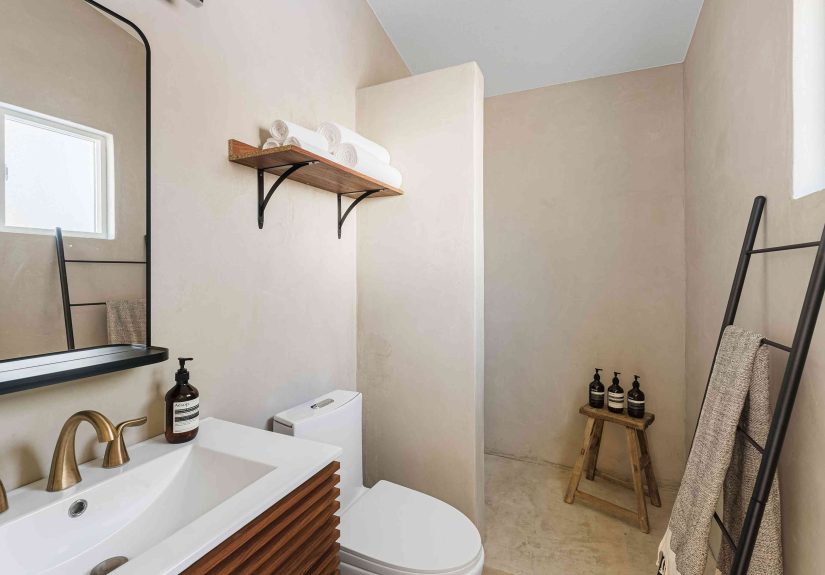
- Try plaster-style finishes (where appropriate). The look is seamless and minimalgreat for modern bathrooms.
- Use a “tile rug” pattern on the shower wall. A framed motif can add interest without cluttering the room.
- Frame a view with a shower window. Daylight makes the whole shower feel more open; use proper privacy glass or placement.
- Mix metals carefully. Two finishes (like matte black + brushed nickel) can look intentional when repeated consistently.
D. Storage, Benches, and Everyday Function (39–48)
- Build a recessed niche at a “grab-and-go” height. Keep it easy to reach without bending or stretching.
- Do a double niche. One for daily bottles, one for the “fancy stuff” you swear you’ll use more often.
- Add a footrest ledge. Small detail, big quality-of-life improvement for shaving or washing.
- Install a floating bench. It looks modern and makes cleaning the floor easier (when properly supported and waterproofed).
- Use a fold-down teak seat. Great for accessibility without taking up permanent visual space.
- Build a full-depth bench for true comfort. If you want to sit, actually sitdon’t perch like a nervous bird.
- Create a ledge along the half wall. It doubles as a spot for essentials and keeps the design streamlined.
- Add corner shelves for tight spaces. They can be less intrusive than a large niche in small showers.
- Use matching accessories for a calmer look. Coordinated dispensers and hooks instantly reduce visual clutter.
- Plan blocking in walls for future grab bars. Even if you don’t install bars now, you’ll love having the option later.
E. Fixtures, Controls, and Comfort Tech (49–53)
- Install a handheld shower on a slide bar. It supports accessibility, cleaning, and rinsing the shower itself.
- Use a pressure-balanced or thermostatic valve. It helps stabilize temperature and reduces surprise hot/cold swings.
- Pair a rain head with a handheld. Rain is relaxing; handheld is practical. You can have both.
- Choose easy-grip lever handles. Better for wet hands, arthritis, and anyone who’s ever tried turning a tiny knob with shampoo fingers.
- Add layered lighting. A bright, glare-free overhead plus niche lighting or a soft sconce makes the shower safer and more flattering.
Accessibility Upgrades That Look Like Design (Not “Medical Equipment”)
Accessibility works best when it’s baked into the design. A few high-impact moves:
- Elegant grab bars: Many now match common finishes and look like towel bars (but are built to support you).
- Bench + handheld combo: A seat and a handheld shower can support aging in place and daily comfort.
- Clear visual edges: Subtle contrast at transitions helps prevent missteps, especially in low light.
- Reach-friendly controls: Place them where you can reach from the entry or while seatedcomfort and safety in one move.
Maintenance Tips That Keep It Sleek
- Reduce grout on walls: Large-format tile or panels mean fewer grout lines to scrub.
- Choose finishes that forgive water spots: Some textures and glass types hide spotting better than ultra-clear, ultra-glossy surfaces.
- Ventilation matters: A good fan protects everythingtile, paint, cabinetry, and your patience.
- Design storage to prevent clutter: When bottles have a home, they stop living on the floor like tiny plastic squatters.
of Real-World Experience: What People Learn After the First Week
Here’s the funny thing about walk-in showers: they look straightforward on Pinterest, but daily life is where the design
either shinesor quietly annoys you at 6:40 a.m. when you’re late. Homeowners and designers often say the biggest surprise
is water behavior. Water does not respect vibes. If you go doorless, you’ll want a layout that naturally keeps spray inside
the wet zonelike an L-shape entry, a return panel, or a half wall. Otherwise, you’ll find yourself doing the post-shower
“bathroom squeegee workout,” which is a fitness plan no one asked for.
The second lesson is about where you stand. Many people choose wall tile first, then realize the floor needs to do different work.
A gorgeous, smooth tile can feel sketchy when wet. Real-world feedback tends to favor small-format mosaics or textured tiles on the floor,
especially for households with kids, older adults, or anyone who is allergic to moving slowly.
Storage is another “you’ll thank yourself later” decision. A niche that’s too low becomes a daily squat. A niche that’s too high becomes
a daily stretch. People who love their showers most tend to have storage at an easy reach height, plus a second spot for backups or
shared items. And if you’ve ever watched a bottle avalanche in the middle of shampooing, you already understand why this matters.
Benches are also more emotional than you’d think. A bench sounds like a luxuryuntil you use one while shaving, recovering from a workout,
washing a child’s hair, or simply enjoying a steamier shower. The people who skip a bench often end up adding a teak stool later.
One common tip: if you add a built-in bench, plan for comfort (depth and height) and keep it out of the main spray path unless you enjoy
sitting on a cold, wet surface like it’s a personal challenge.
Finally, there’s the “invisible comfort” stuff: reachable controls, a handheld sprayer, and lighting that makes the shower feel safe
and easy to use. These don’t photograph as dramatically as a marble slab wall, but they’re the features people mention years later
when they say, “I’d never go back.” If you want a sleek, accessible walk-in shower that feels good every single day,
design for the routinenot just the reveal.
Conclusion
The best walk-in shower ideas balance three things: clean visuals, confident safety, and daily usability.
Whether you’re planning a curb-free entry, adding a bench and handheld shower, or choosing materials that clean up fast, the goal is the same:
create a shower that looks sharp and works for real lifetoday, and for the future version of you who deserves a bathroom that doesn’t require acrobatics.