Table of Contents >> Show >> Hide
- What #533 is really celebrating (and why it works)
- A quick history lesson: the shopping cart as a modern chariot
- Why adults need “play” more than they admit
- Safety and etiquette: the “awesome” part should not involve an ER visit
- What “1000 Awesome Things” gets right about happiness
- FAQ: because the internet loves a good aisle-side debate
- Conclusion: the cart is a metaphor, the joy is the point
- Extra: 500+ words of “#533” vibeseveryday experiences that feel like a tiny victory lap
Some joys are loud. Fireworks, roller coasters, a stadium singing the same chorus like one giant karaoke monster.
And some joys are sneakyso small you almost miss them unless you’re paying attention.
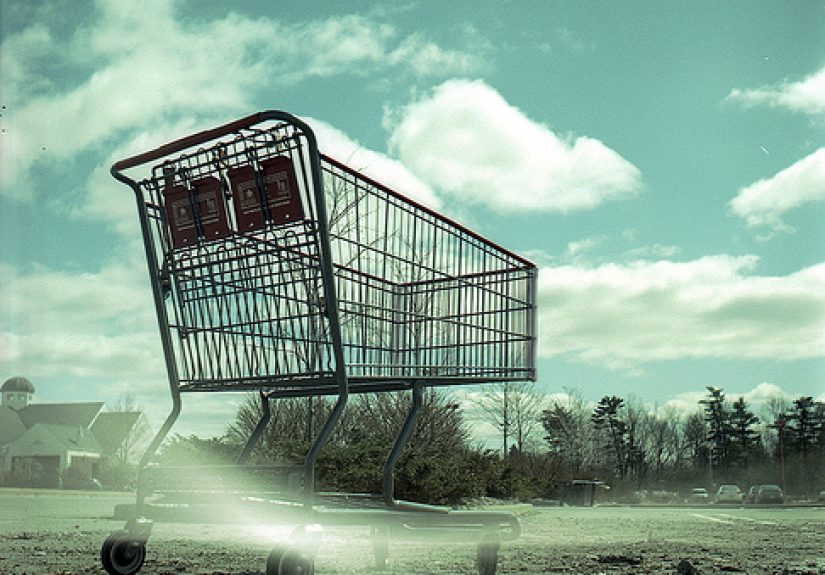
#533 “Taking a spin on a shopping cart” (from the 1000 Awesome Things universe) belongs in that second category:
a tiny, rebellious spark that turns a basic errand into a micro-adventure.
The premise is simple: you’re in a grocery store, surrounded by cereal boxes and sensible produce decisions, and for half a second you remember
you’re allowed to have fun. Not “buy a fog machine” fun. Not “announce your feelings over the intercom” fun. Just the kind of fun that fits inside
an ordinary Tuesday: a playful moment that makes the world feel less heavy.
What #533 is really celebrating (and why it works)
On the surface, “taking a spin on a shopping cart” sounds like a goofy little stunt. Under the hood, it’s something bigger:
permission. Permission to be playful. Permission to be a tiny bit ridiculous. Permission to treat the most routine environment
(fluorescent lights! aisle numbers! the suspiciously emotional music in the bakery section!) like a place where joy is allowed.
That’s why this “awesome thing” sticks. It’s not about the cart. It’s about the sudden shift from
task mode (“get milk, don’t forget trash bags”) to life mode (“oh wow, I’m actually here, doing a human day”).
Those micro-switches matter. They’re the emotional equivalent of opening a window in a stuffy room.
The magic ingredients: novelty, nostalgia, and a dash of harmless rebellion
- Novelty: Your brain perks up when something feels neweven if it’s new for two seconds.
- Nostalgia: A shopping cart is basically childhood on wheels. It carries snacks, memories, and questionable steering.
- Low-stakes rebellion: You’re not overthrowing society. You’re just refusing to be bored in aisle seven.
A quick history lesson: the shopping cart as a modern chariot
The shopping cart is one of those inventions that changed daily life so completely we stop noticing it.
It’s the unsung hero of “I can’t believe I thought I could carry all this.”
Early carts weren’t instantly belovedpeople had to be convinced this rolling basket was a helpful idea, not a public declaration of weakness.
But once the cart became normal, it quietly reshaped how supermarkets worked, how much people bought, and how errands felt.
Which is hilarious, because today the cart has two main personalities:
(1) smooth-gliding luxury vehicle, and (2) a squeaky, one-wheeled-dragging shopping gremlin that pulls left like it’s avoiding commitment.
Either way, it’s a familiar objectexactly the kind of object that becomes a stage prop for tiny moments of fun.
Why adults need “play” more than they admit
“Play” gets filed under “kid stuff,” right next to juice boxes and socks with dinosaurs on them.
But the truth is: adults don’t outgrow playthey just bury it under calendars, errands, and the fear of looking weird in public.
And that’s a shame, because playfulness is one of the easiest ways to shake off stress without needing a 12-step program or a
Himalayan retreat you saw on someone’s perfectly filtered feed.
In positive psychology, small positive emotions aren’t treated as fluff. They’re fuel.
Micro-moments of joy can broaden attention, soften stress responses, and help people build resilience over time.
Translation: tiny good feelings aren’t “silly.” They’re part of how humans stay human.
Why #533 feels so satisfying
Because it’s a reminder that joy doesn’t only live in big milestones. It also lives in:
a perfectly ripe peach, the freezer aisle blast of Arctic air, the bakery smell that makes you consider becoming a muffin full-time,
and yesthose fleeting moments when you feel light enough to laugh at yourself.
Safety and etiquette: the “awesome” part should not involve an ER visit
Let’s be real: a shopping cart is not a toy, and stores are not obstacle courses.
Cart-related injuriesespecially for childrenare a well-documented safety issue, with many injuries involving falls and head impacts.
Most stores also have policies against riding carts for the same reason you’re not supposed to juggle glass spaghetti sauce jars:
the risk-to-regret ratio is terrible.
So the spirit of #533 isn’t “do something dangerous.” It’s “find a spark of play in the ordinary.”
The cart is the symbol, not the assignment.
How to capture the same vibe (without becoming a cautionary tale)
- Make the errand a mini game: Try to shop your list in the fewest aisles possiblelike grocery-store chess.
- Practice “micro-awe”: Notice one surprisingly beautiful thing: the color gradient in the apples, the neatness of stacked cans, the weird perfection of a bell pepper.
- Lean into tiny comedy: Smile at the absurdity of adult life: you are choosing between sixteen types of hummus. This is civilization.
- Do the soundtrack trick: Mentally give your trip a movie genre. Is this a heist? A romantic comedy? A gritty documentary called Man vs. Kale?
- Be kind on purpose: Let someone merge into the aisle traffic. Return a stray cart. Small kindness is basically joy with good manners.
What “1000 Awesome Things” gets right about happiness
The bigger idea behind 1000 Awesome Things is almost sneaky in its simplicity: if you train your attention on what’s good,
you start seeing more of it. Not because life becomes magically perfect, but because your brain stops speed-running past every decent moment.
That doesn’t mean ignoring real problems or pretending everything is fine. It means refusing to let the hard parts take
every seat at the table. Awesome things can exist alongside tough things. In fact, sometimes they’re the reason you get through the day.
A practical “awesome things” checklist for your next grocery run
If you want to channel #533 energy without breaking any rules or bones, try this:
- Notice one sensory win: smell, color, texture, or sound.
- Find one tiny convenience miracle: self-checkout that actually works, a cart with wheels that don’t argue, a short line.
- Choose one small treat on purpose: not as a “reward,” but as a friendly nod to yourself for doing life.
- End with a reset moment: deep breath in the parking lot before you jump back into your day.
FAQ: because the internet loves a good aisle-side debate
Is it ever “okay” to ride or spin on a shopping cart?
In most places, no. Stores discourage it for safety and liability reasons, and injuriesespecially to kidsare common enough that major safety organizations
warn against risky cart behavior. The better move is to keep the fun in your head, your attitude, and your small choices.
Why do some carts pull to one side like they’re haunted?
Wheels take a beating: uneven floors, outdoor lots, weather, and constant use. A slightly bent wheel or misaligned caster can make a cart drift.
Think of it as the cart’s way of saying, “I’ve seen things.”
What if I feel self-conscious being playful in public?
Totally normal. Start tiny. The goal isn’t performing joy. It’s feeling it.
A quiet smile counts. A private joke counts. Choosing the good cart (the one that glides like butter) absolutely counts.
Conclusion: the cart is a metaphor, the joy is the point
#533 is memorable because it’s relatable: it captures that split-second urge to turn an ordinary moment into something lighter.
You don’t need to do anything risky to honor it. You just need to remember that daily life is made of small moments,
and you’re allowed to enjoy them.
The next time you’re in a grocery store aisle, give yourself a quiet, internal fist-bump for showing up.
Notice something pleasant. Let yourself laugh at something small. And if you feel the spirit of #533 hovering nearby,
take it as a reminder: you can be practical and playful in the same trip.
Extra: 500+ words of “#533” vibeseveryday experiences that feel like a tiny victory lap
If you’ve ever pushed a shopping cart, you’ve probably lived through at least three different grocery-store eras in one trip.
First, there’s the hopeful beginning: you grab a cart and think, “This will be quick.” Then there’s the middle chapter,
where you’re negotiating with yourself about whether you really need the family-size chips (you do),
and finally there’s the dramatic finalewhen you realize you forgot the one item you came for, and you have to loop back like a confused Roomba.
The funny part is how many tiny “moments” happen in this super normal setting. Like the instant relief of finding a cart that rolls smoothly,
as if you’ve just been assigned the luxury sedan of grocery carts. Or the opposite: you pick the cart that squeaks loudly enough to be its own
musical instrument. You don’t even need a playlistit’s already performing a solo titled Sad Clarinet in E Minor.
Then there’s the universal experience of the cart with one rebellious wheel. It doesn’t simply roll; it argues.
It drifts into displays. It makes gentle turning impossible. It forces you into a weird half-push, half-wrestling stance,
like you’re training for an extremely niche sport: “Competitive Errand Handling.”
And somehow, when you finally swap it out for a better cart, you feel like you’ve achieved personal growth.
Not the kind that looks great on a résumé, but the kind that makes you think, “Okay, I’m winning today.”
The grocery store is also a nostalgia machine disguised as a building. One aisle can time-travel you without warning:
a cereal you ate at eight years old, a snack your friend’s house always had, the smell of the bakery that feels like
every Saturday morning at once. That’s part of why #533 hitsbecause carts are tied to memory.
They’re the vehicle of family routines, late-night snack missions, “we need one thing” lies, and the oddly comforting predictability of weekly errands.
And let’s not forget the social micro-moments: the polite cart dance when two people meet at a narrow aisle and both try to be nice at the same time.
The quiet satisfaction of letting someone go first and receiving that tiny nod of gratitudean unspoken “we’re both doing our best.”
Even the little victory of returning your cart to the corral (instead of abandoning it like a tumbleweed) can feel surprisingly good,
like you just contributed one molecule of order to the universe.
If you want the “spin on a cart” feeling without the risk, it’s often hiding in the story you tell yourself while you shop.
Sometimes you pretend you’re on a mission: gather supplies, evade distractions, exit efficiently.
Sometimes it’s a comedy: you’re debating between twelve identical pasta sauces like this is a high-stakes courtroom drama.
Sometimes it’s a comfort episode: familiar aisles, familiar lights, and the gentle reminder that life is made of ordinary loops
and ordinary loops can still hold surprise.
That’s the real gift of #533: not the literal act, but the mindset. The idea that even in a place built for practicality,
you can still find a moment that feels light. You can’t control everything in your day,
but you can control whether you notice the tiny awesome things that show up anywayright there between the rice cakes and the Cocoa Puffs.