Table of Contents >> Show >> Hide
- Why Dogs Know It’s the Vet (Before You Even Start the Car)
- The 58 Hilarious Moments
- How to Make Vet Visits Less Stressful (So Your Dog Stops Writing Tragedies in Their Head)
- What to Tell Your Vet Team (So They Can Help You)
- Conclusion: Laugh Now, Plan Better Next Time
- Extra: Real-World Experiences Dog Parents Share (And What They Learned)
Every dog has two inner wolves: one that hears the word park and immediately becomes an Olympic sprinter,
and one that hears the word vet and suddenly remembers an urgent appointment to be a decorative throw pillow.
The trouble is, dogs are basically tiny detectives in fur coats. They don’t need a calendar invite to know what’s up.
They notice the car keys, the time of day, the route, the tone of your voice,
and the suspicious appearance of the “nice collar” you only use for special occasions (aka: betrayal).
This article is for anyone who’s ever watched their dog go from “LET’S GOOOO!” to “I have decided to be furniture” in under three seconds.
We’ll laugh (gently), decode the clues dogs use to predict a vet visit, and share smart ways to make appointments calmerso your pup stops
treating the clinic like a haunted house and starts treating it like… okay, maybe a mildly inconvenient spa. Progress!
Why Dogs Know It’s the Vet (Before You Even Start the Car)
Dogs are masters of pattern recognition. They don’t think in spreadsheets, but they do think in routines: shoes on at 8:00,
leash comes out, keys jingle, human says “Wanna go?” and thenboomeither park paradise or the building that smells like
disinfectant and emotional damage.
Common “Uh-Oh” Cues Dogs Pick Up On
- The “special” leash or harness that only appears for vet visits (your dog knows this like you know your bank’s overdraft fee).
- Car ride patterns: the same turns, the same stoplight, the same “why are we not at the park yet?” timeline.
- Your energy: humans get tense, dogs read it, and suddenly everyone is having a feelings-based commute.
- Lobby sounds and smells: other animals, slippery floors, unfamiliar voicessensory overload is real for dogs.
- Handling expectations: some dogs worry about being restrained or examined, especially if prior visits felt scary.
The good news: once you understand what sets your dog off, you can change the story. Modern veterinary teams increasingly use low-stress
handling strategiesthings like minimizing fear triggers, using non-slip surfaces, going slower, offering breaks, and pairing the experience
with positive reinforcement. Your dog doesn’t need to “toughen up.” They need a plan.
The 58 Hilarious Moments
Below are 58 painfully relatable “plot twists” dogs experience when they realize they’re headed to the vet instead of the park.
If any of these feel personally targeted… that’s because your dog wrote them in their head already.
- The Leash Reveal: Tail wagging… until it’s the clinic leash. Tail wagging updates to “loading…”
- The Collar Swap: You pick the nicer collar. Your dog stares like, “Why are you dressing me for court?”
- The Treat Bribe: You offer a “random” high-value treat. Your dog accepts it like a hostage negotiator.
- The Bathroom Break: You say, “Go potty first.” Your dog says, “I know what you’re doing.”
- The Car Keys Jingle: Dog rockets to the doorthen pauses. “Are those… the vet keys?”
- The Wrong Shoes: You wear the shoes you always wear to the clinic. Your dog clocks the footwear betrayal instantly.
- The Route Check: Two turns in, your dog realizes you did not take the Park Exit. The vibes collapse.
- The Sudden Silence: Your dog stops panting, stops wagging, and becomes a silent documentary about regret.
- The Dramatic Sit: In the driveway, your dog sits down like a statue of protest. “We can negotiate.”
- The Doorway Freeze: One paw out, one paw in. Your dog tries to be both “going” and “not going.”
- The Disappearing Act: Your dog vanishes behind the couch with the speed of a magician who hates vaccines.
- The Staircase Debate: Your dog climbs one step, stops, sighs, and looks back like a character leaving a small town forever.
- The Car Refusal: Your dog “forgets” how legs work the moment the car door opens.
- The Backseat Pancake: Your dog flattens into a perfect rectangle, hoping to achieve invisibility through geometry.
- The Window Stare: Your dog watches the world pass like, “Tell the park I loved her.”
- The Drool of Suspicion: A little drool appearsequal parts nerves and a dramatic flair for storytelling.
- The Whimper Whisper: A tiny sound that says, “I am not okay but I am also polite.”
- The “I’m Fine” Pant: Your dog pants like an athlete… who is emotionally sprinting.
- The Parking Lot Realization: The building comes into view and your dog’s eyes say, “This is not the park.”
- The Reverse Lean: Your dog leans backward with the strength of a forklift.
- The Lobby Statue: Your dog stands still, frozen like a museum exhibit titled Canine Disappointment, 2026.
- The Friendly Stranger Strategy: Your dog tries to charm another pet parent: “Can I come home with you?”
- The Floor Is Lava: Slippery clinic floors turn your dog into a baby deer auditioning for a reality show.
- The Scale Betrayal: Your dog approaches the scale like it’s a trap (because it is, emotionally).
- The Treat Sniff Test: Your dog sniffs the treat, then the room, then looks at you: “This is bribery.”
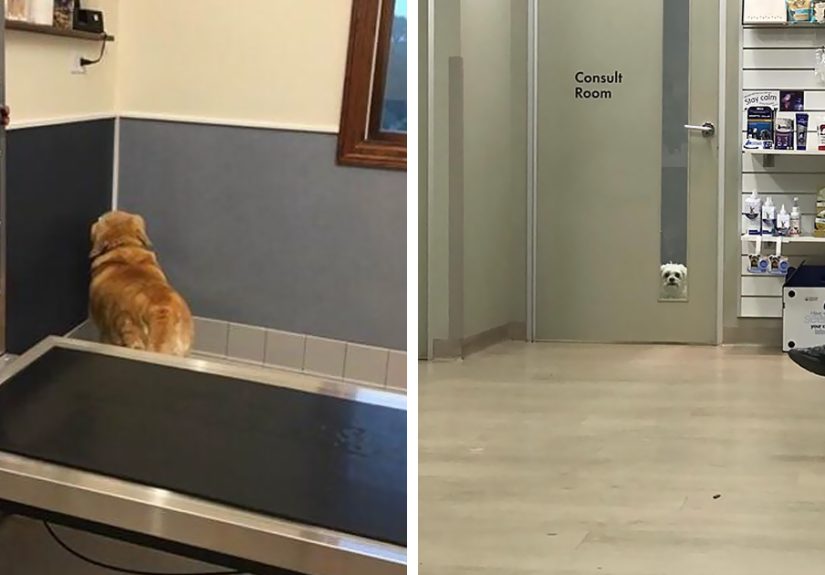
- The Exam Room Corner: Your dog chooses the farthest corner and becomes one with the wall.
- The Table Suspicion: Your dog sees the exam table and thinks, “Absolutely not, we are a floor family.”
- The Vet Coat Alert: White coat appears. Your dog’s pupils: “Oh no, it’s the Boss Level.”
- The Stethoscope Side-Eye: Your dog watches the stethoscope like it’s a suspicious snake.
- The Ear Check Opera: Your dog sings a note that is somehow both tragic and impressive.
- The Paw Withdrawal: You touch a paw. Your dog retracts it like you just asked for their social security number.
- The Nail Trim Flashback: Clippers appear. Your dog’s soul temporarily leaves their body.
- The Thermometer Horror Movie: Your dog looks at you like you personally invented thermometers.
- The Vaccine Peek: Your dog sees a syringe and suddenly becomes extremely interested in your life choices.
- The “I’m Tough” Face: Your dog tries to act brave and fails adorably at 110% effort.
- The Wiggle Escape: Your dog attempts to teleport off the table using interpretive dance.
- The Treat Refund Request: Your dog accepts treats but their eyes say, “This better cover my therapy.”
- The Vet Tech Charm Offensive: Your dog switches to “best friend mode” to avoid the actual exam.
- The Sudden Obedience: Your dog sits, stays, and offers a paw like, “See? I’m perfect. We can leave now.”
- The Belly Reveal: Your dog rolls over to show their tummy, hoping it triggers universal mercy.
- The “Not My Problem” Look: Your dog stares at you during handling like you’re the manager of this entire situation.
- The Deep Sigh: A sigh so dramatic it deserves its own soundtrack.
- The Waiting Room Symphony: Your dog whines in harmony with another dog down the hall. A duet of doom.
- The “Smells Like Fear” Moment: Your dog sniffs the air and decides the vibe is not it.
- The “Can We Reschedule?” Blink: Your dog blinks slowly, hoping time bends.
- The Treat-But-Make-It-Scared: Your dog chews a treat at half-speed, like they’re eating during a tense movie scene.
- The Muzzle Misunderstanding: Your dog sees a basket muzzle and thinks it’s a weird hat with zero benefits.
- The Breakthrough Moment: Your dog takes one step forward because the vet team goes slow and respectful. Tiny win!
- The “Floor Exam” Blessing: Your dog relaxes slightly when the exam happens where they feel safer (often on the floor).
- The Praise Power-Up: Your dog hears “good dog!” and briefly forgets they are in the Place of Needles.
- The Lobby Exit Sprint: Appointment done. Your dog moves like they’ve just been released from a very polite prison.
- The Car = Freedom Again: Your dog leaps into the car like, “I always loved vehicles. Cars are my passion.”
- The Post-Vet Shake-Off: Full-body shake: “I have removed the bad vibes. I am new.”
- The Silent Ride Home: Your dog stares out the window like a war poet returning from battle.
- The “Extra Treats” Demand: Your dog arrives home and files a formal claim for compensation.
- The Couch Recovery: Your dog collapses on the couch like a Victorian heroine who has seen too much.
- The Forgiveness Arc: Ten minutes later, your dog loves you againbecause dogs are angels with short memories and big hearts.
- The Park Redemption: You finally go to the park later, and your dog acts like you personally restored justice to the universe.
How to Make Vet Visits Less Stressful (So Your Dog Stops Writing Tragedies in Their Head)
Humor aside, fear at the vet is commonand it’s not “stubbornness.” It’s a normal response to unfamiliar sensations, restraint, noises,
other animals, and previous experiences. The best approach is not forcing your dog through it, but gradually building better associations
and working with the veterinary team on a low-stress plan.
1) Practice “Not a Vet Visit” Trips
If your clinic allows it, do short visits where nothing “bad” happens: walk in, get a treat, say hi, leave. This helps your dog learn
that the building doesn’t always lead to pokes and prods. Think of it like desensitization trainingsmall, positive exposures that
rewire expectations over time.
2) Train Handling Skills at Home (Tiny Steps, Big Payoff)
Many dogs struggle because vet care includes handling they rarely experience at home: holding still, paws touched, mouth checked,
body palpation. Practice gently and brieflytouch a paw, reward; lift a lip, reward; lightly hold a collar, reward.
Keep sessions short and upbeat. If your dog pulls away, that’s not “bad.” That’s information: go slower, make the steps smaller,
and keep it positive.
3) Reduce Car-Ride Stress
For some dogs, the car ride is the worst part. Motion sickness and anxiety can look similar (drooling, lip-licking, panting), so it’s worth
discussing with your vet. Comfort strategies can include secure restraint (crate or harness), familiar bedding, and calm, predictable trips.
The goal is to arrive with your dog under thresholdstill able to eat treats and think, not already overwhelmed.
4) Use the “Wait in the Car” Option
If the lobby is the triggerother animals, echoes, slippery floorsask if you can check in and wait outside until an exam room is ready.
Less time in a chaotic environment can mean a noticeably calmer dog.
5) Ask About Fear-Free or Low-Stress Handling
Many clinics now follow Fear Free® or other low-stress approaches: offering high-value treats, using non-slip mats, examining dogs where they
feel safest, moving at the dog’s pace, and taking breaks rather than escalating restraint. These changes can reduce fear and make future visits easier.
6) Consider Calming AidsWith Veterinary Guidance
Calming supports vary by dog and situation. Some pets benefit from pheromone products, anxiety wraps, or behavior work.
For dogs with severe fear, veterinarians may recommend pre-visit pharmaceuticals (given before stress peaks) as part of an overall plan.
This isn’t “cheating.” It’s humane careespecially when it prevents panic and makes necessary medical treatment possible.
What to Tell Your Vet Team (So They Can Help You)
Your vet team can’t read your dog’s mindno matter how confident your dog looks while quietly plotting an escape.
A quick heads-up helps the clinic adjust the appointment and handling approach.
- Triggers: Does your dog panic in the lobby, on the scale, on the table, around other dogs, or during nail trims?
- Body language signs: Panting, trembling, freezing, lip-licking, whale eye, growling, hidingwhat do you see first?
- Food motivation: Will your dog take treats at the vet? If yes, what’s “high value” (chicken, cheese, peanut butter)?
- Handling boundaries: Which areas are sensitiveears, paws, hips, mouth?
- Past experiences: Any procedures that made fear worse (or better)?
Together, you can build a plan: quieter appointment times, car waiting, shorter “happy visits,” floor exams, non-slip mats,
and (when appropriate) medication support. The goal is safer care for everyoneyour dog, you, and the veterinary staff.
Conclusion: Laugh Now, Plan Better Next Time
Yes, it’s funny when your dog realizes it’s the vet and instantly becomes a 70-pound statue. But it’s also a sign: your dog is communicating.
The best response is compassion + strategy. Small training steps, smarter logistics, and a low-stress clinic approach can change the entire experience.
And heyif your dog still gives you the “how could you” stare on the way in, just remember: they’ll forgive you as soon as you open the treat jar.
Dogs are generous like that.
Extra: Real-World Experiences Dog Parents Share (And What They Learned)
Dog parents commonly describe the “vet instead of park” moment as a full emotional plot twistbecause the shift is so fast and so specific.
One second the dog is bouncing at the door, the next they’re moving like a slow-motion documentary about heartbreak. That sudden change usually
happens because the dog has learned a pattern: the same leash, the same car ride, the same building, the same sensory overload. Once that association
forms, the dog isn’t being dramatic for funthey’re trying to cope with a situation they predict will be uncomfortable.
A frequent story goes like this: the dog is fine at home, but the anxiety ramps up in the car. The dog starts drooling, licking their lips, panting,
or tremblingthen arrives already stressed. In these cases, owners often discover the car ride itself is a trigger, sometimes complicated by motion
sickness. The “aha” moment is realizing you can’t fix the vet visit without also fixing the commute. People report improvements when they take short,
pleasant drives that don’t end at the clinic, add a familiar blanket or non-slip mat, and keep the energy calm and unhurried. It’s not glamorous,
but it can lower the dog’s baseline stress before the appointment even begins.
Another common experience: the lobby is the villain. Dogs who do okay in an exam room can unravel in a busy waiting area with barking, strange smells,
echoing voices, and other pets. Owners often say the single biggest upgrade was asking to wait in the car and text the front desk upon arrival.
Less time “soaking” in stimulation can mean the dog still takes treats, still listens, and still recovers quickly after the exam. Some people also
notice that slipping on smooth floors makes their dog feel physically insecureso adding traction (a towel, a mat, or clinic-provided non-slip surfaces)
makes the dog more willing to move and less likely to freeze.
Then there’s the handling factor. Many owners assume their dog hates the vet because of needles, but later realize the bigger issue is restraint,
body manipulation, and unfamiliar touchespecially around paws, ears, and mouth. People often see progress when they practice “consent-based”
handling at home in tiny steps: touch paw → treat, lift lip → treat, gentle hug hold → treat, brief brushing → treat. The key lesson: if the dog
pulls away, you don’t push harder; you make it easier. Over time, dogs who once panicked at an ear check may learn they can tolerate it because
it predicts good things, happens gradually, and stops if they’re overwhelmed.
For dogs with intense fear, many owners describe relief when they stop treating medication as a “last resort” and start treating it as one tool
in a humane plan. When veterinarians recommend pre-visit support (given before the dog is already panicking), owners often report the dog arrives
more able to eat treats, respond to cues, and recover faster afterward. Importantly, the most positive stories don’t rely on medication alone:
they combine it with low-stress handling, fewer triggers, shorter visits, and ongoing training. The result isn’t a dog who loves the vetit’s a dog
who can handle the vet without melting down. And for many families, that’s the difference between “we dread care” and “we can actually do this.”
The big takeaway dog parents repeat: celebrate tiny wins. If your dog walks into the building instead of freezing, that’s a win. If they step on the
scale because there are treats and traction, that’s a win. If the vet team slows down, uses breaks, and makes the experience feel safer, that’s a win.
Over time, those wins add up. And while your dog may still give you the occasional side-eye when the car turns the wrong way, you’ll both have a
calmer routineand a much funnier story that ends with your dog feeling safe.