Table of Contents >> Show >> Hide
- Before You Splurge: A Quick “Worth It” Checklist
- 1) Custom Upholstery (Especially for Your Sofa)
- 2) Panel-Ready Appliances (The “Quiet Luxury” Kitchen Move)
- 3) Custom Furniture and Built-Ins (Where “Perfect Fit” Actually Matters)
- 4) Custom Art (Because Your Walls Deserve Better Than “Generic Coastal #7”)
- 5) Custom Window Treatments (The Fastest Way to Make a Room Look “Done”)
- 6) Custom Rugs (Because Size and Material Are Everything)
- How Designers Decide What’s Truly “Worth It”
- Real-World Experiences: What It’s Like Living With These Custom Splurges (About )
- Conclusion
“Custom” can sound like a word that automatically adds a zero to the price tag. But interior designers don’t recommend custom pieces because they enjoy watching wallets cry. They recommend custom when it solves a real problem: a room that feels unfinished, a layout that refuses to cooperate, or a “close enough” purchase that becomes a “why did I buy this?” situation six months later.
The truth is, the most satisfying splurges aren’t always the flashiest. They’re the ones you use every day, the ones that make a home feel calm, cohesive, and intentionally designedlike the space finally stopped negotiating and agreed to be beautiful.
Below are six custom decor splurges designers repeatedly say are worth the moneybecause they elevate the look of your home, improve how it functions, and tend to age gracefully instead of expiring the moment a trend changes its mind.
Before You Splurge: A Quick “Worth It” Checklist
- Does it fix a daily annoyance? (Glare, clutter, awkward scale, lack of storage, uncomfortable seating.)
- Will you touch it often? The more frequently you use it, the more value you get.
- Is the room missing “finish”? Some custom upgrades make a space feel complete in a way décor accessories can’t.
- Can you buy once and keep it? If it’s timeless, durable, and fits your lifestyle, it’s rarely money wasted.
- Are you willing to wait? Custom usually means lead times. Patience is part of the purchase.
1) Custom Upholstery (Especially for Your Sofa)
If your living room had a main character, it would be the sofa. It’s the biggest visual anchor, the most-used seat, and the stage for everything from movie nights to accidental naps. Designers often recommend custom upholstery because it lets you control the three things that matter most: scale, comfort, and fabric performance.
Why designers love it
- Perfect proportions: You can adjust depth, length, arm style, seat height, and cushion firmnessso it fits your body and your room.
- Durable materials: Performance fabrics and higher-quality construction tend to outlive “fast furniture.”
- Long-term satisfaction: When you pick the exact texture and color you want, you’re less likely to replace it out of frustration.
Specific example
You have a narrow living room where a standard 40-inch-deep sofa turns the walkway into a sideways shuffle. A custom order trims the depth to 36 inches, keeps the comfort, and suddenly your space flows. Bonus: you can choose a fabric that doesn’t panic every time a dog looks at it.
How to splurge smarter
- Ask for fabric rub counts and cleaning codes, especially with kids/pets.
- Order large swatches and view them morning, afternoon, and nightbecause lighting is a liar.
- Prioritize frame and cushion quality over trendy details. A great frame can be reupholstered later.
Budget-friendly alternative: Reupholster a well-made vintage piece or choose a retailer that offers customizable fabrics on standard frames. You’ll still get a tailored look without going fully bespoke.
2) Panel-Ready Appliances (The “Quiet Luxury” Kitchen Move)
This one feels sneaky because it’s not a pillow or a paintingit’s an appliance wearing a disguise. Panel-ready appliances allow refrigerators and dishwashers to blend into cabinetry, creating a clean, furniture-like kitchen that designers describe as more timeless and less “big box store aisle.”
Why designers love it
- Visual calm: Fewer competing finishes means the kitchen feels intentional and high-end.
- Design longevity: Cabinet-front integration tends to age better than the stainless trend-of-the-week.
- Architectural cohesion: The kitchen reads like part of the home, not a separate appliance showroom.
Specific example
In an open-concept space, your kitchen is always visible from the living area. Panel-ready fronts help the room feel like one unified environment especially if you’re aiming for a warmer look with wood cabinetry and soft finishes.
How to splurge smarter
- Choose panel-ready for the largest visual offenders first: fridge and dishwasher.
- Work with your cabinet maker early so clearances, ventilation, and hinge specs are correct.
- If the budget is tight, focus on one “hero” integration (often the fridge) and keep other appliances coordinated.
Budget-friendly alternative: Add finished side panels, upgrade hardware, and select consistent appliance finishes. You won’t get full invisibility, but you can still get a calmer look.
3) Custom Furniture and Built-Ins (Where “Perfect Fit” Actually Matters)
Designers adore custom furniture for one reason: it makes the room behave. Awkward corners, weird alcoves, dead space around fireplaces, and “why is this wall shaped like that?” momentscustom solves what off-the-shelf can’t.
Why designers love it
- Function meets beauty: Storage, display, seating, and flow improve at the same time.
- Better use of space: Floor-to-ceiling solutions take advantage of vertical real estate.
- Architectural polish: Built-ins can make a home feel established and tailored, not temporary.
High-impact places to go custom
- Entry/mudroom: Benches, cubbies, and closed storage = less daily chaos.
- Living room media wall: Built-ins can hide cords, balance a TV, and add symmetry.
- Home office: A custom desk and shelves can turn “spare corner” into “real workspace.”
- Closets: Even modest custom closet systems make mornings faster and less annoying.
Specific example
You want a reading nook under a window, but standard benches either don’t fit or look like a rental workaround. A custom banquette is built to the exact width, includes hidden storage, and suddenly your home has a “designed moment” that earns compliments on autopilot.
Budget-friendly alternative: Semi-custom components or “hackable” modular systems can mimic built-ins when finished with trim and paint. You can get much of the look while spending less than full carpentry.
4) Custom Art (Because Your Walls Deserve Better Than “Generic Coastal #7”)
Art is where a home becomes personal. Designers often push clients toward custom or commissioned art because it delivers something mass-produced pieces can’t: the right scale, the right palette, and an emotional connection.
Why designers love it
- Perfect scale: Large walls need large art. Custom solves the “too small” problem instantly.
- Color control: You can echo a rug tone, a paint undertone, or a fabric accentwithout playing the endless “close enough” game.
- Meaning: A commissioned piece can reflect a story, a place, or a feelingnot just a trend.
Specific example
You have a wide wall behind a sectional and every store-bought option looks undersized. A local artist creates a large-format abstract using two colors pulled from your room. The space immediately feels more collectedand less like you were decorating under fluorescent lighting in a hurry.
How to splurge smarter
- Start at local art fairs, galleries, and open studioscustom doesn’t have to mean “auction-level.”
- Commission in phases: agree on palette and size first, then refine composition.
- Don’t forget the quiet hero: custom framing. Great framing can elevate even affordable prints and personal photography.
Budget-friendly alternative: Buy original work from emerging artists, then invest in professional framing. The frame often makes the piece look far more expensive than it was.
5) Custom Window Treatments (The Fastest Way to Make a Room Look “Done”)
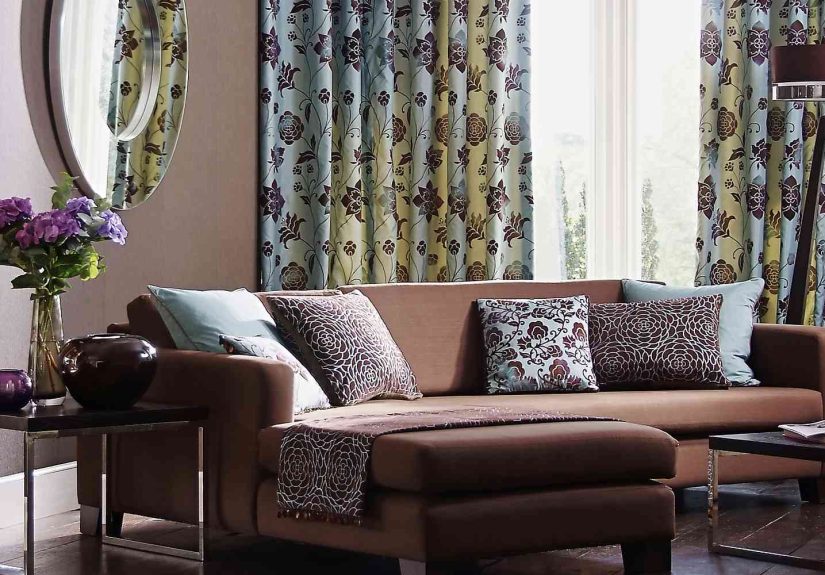
Designers say window treatments are one of the most overlooked upgradesyet they can instantly raise the perceived quality of a space. Custom drapery and Roman shades bring softness, structure, and proportion to a room in a way that no throw pillow can emotionally compete with.
Why designers love it
- Better proportions: Custom panels can be hung higher and wider, making windows look larger and ceilings feel taller.
- Function: Lining options improve privacy, light control, and even insulation.
- Material quality: Better construction and fabrics tend to hang more beautifully and wear better over time.
Specific example
A bedroom feels flat and a little echo-y. Custom linen drapes plus a blackout lining soften the room visually, improve sleep, and make the space feel like a boutique hotel instead of “bed, dresser, panic.”
How to splurge smarter
- Prioritize custom in your main living spaces first (living room, primary bedroom).
- Choose simple, timeless styles and let texture do the talking.
- Layer thoughtfully: a woven shade plus drapery gives flexibility without overdoing fabric.
Budget-friendly alternative: Buy ready-made curtains with generous width, then have them hemmed and lined locally. That tailoring step alone can make “off-the-rack” look surprisingly custom.
6) Custom Rugs (Because Size and Material Are Everything)
Rugs do more than cover floorsthey set the scale of a room. Designers routinely call rug sizing mistakes one of the biggest reasons a space feels “off.” A custom-sized rug fixes proportions, anchors furniture properly, and can even make a room feel bigger.
Why designers love it
- Right size, right placement: Custom sizing helps furniture sit comfortably on the rug (not awkwardly half-on, half-off).
- Better fibers: Wool and other durable materials tend to outperform cheaper, delicate fibers over time.
- Solves unusual layouts: Narrow rooms, open-concept zones, and odd angles benefit hugely from made-to-fit dimensions.
Specific example
Your dining room is long, and standard rug sizes either expose too much floor or trap chairs on the edge. A custom rug is made to extend beyond the table so chairs slide smoothlyno catching, no wobbling, no daily micro-annoyance.
How to splurge smarter
- Measure based on your furniture plan, not just the room dimensions.
- Choose durable fibers for high-traffic zones (wool is a common designer favorite).
- Consider custom-bound broadloom for bedrooms and stairsit can be a cost-effective “tailored” look.
Budget-friendly alternative: Layering can cheat the lookplace a larger, affordable base (like a natural fiber style) under a smaller higher-quality rug for dimension and coverage.
How Designers Decide What’s Truly “Worth It”
Designers don’t splurge randomlythey splurge strategically. Here’s a simple way to think like a pro before you invest:
| Question | Why It Matters | If “Yes,” It’s a Strong Candidate |
|---|---|---|
| Do you use it daily? | High frequency = better cost-per-use | Upholstery, window treatments, rugs |
| Does it “finish” the room? | Some upgrades make everything else look better | Window treatments, built-ins, art |
| Does it solve a layout problem? | Custom excels at fit and function | Built-ins, custom furniture, rugs |
| Will it still look good in 10 years? | Longevity protects your investment | Panel-ready appliances, timeless millwork |
If you’re nodding “yes” to two or more of those questions, you’re not splurgingyou’re upgrading with a plan. (Your future self will be smugly grateful.)
Real-World Experiences: What It’s Like Living With These Custom Splurges (About )
Designers can explain “value” all day, but the real proof shows up at homeon a random Tuesday, when your space either supports your life or subtly fights it. These are common, real-world scenarios homeowners report after investing in the six upgrades above (think of them as the greatest hits of “Oh… that’s why designers do this”).
The window treatment glow-up: One of the most repeated reactions is how custom drapery changes the entire mood of a room. People often expect curtains to be a finishing touch; instead, they feel like architecture. Hanging panels higher and wider makes windows look bigger, ceilings feel taller, and the room suddenly has “presence.” Many homeowners describe it as the moment their space stopped looking like a collection of furniture and started looking like a designed home. Bonus: with the right lining, you also gain privacy and better light controlso the room feels calmer, not just prettier.
The sofa relief: A custom sofa is usually noticed most when life gets messy. Performance fabrics mean you’re not treating your living room like a museum where nobody is allowed to blink near the cushions. People describe a shift from “careful living” to “normal living,” which is arguably the point of having a home. Comfort also becomes more personal: the seat depth that fits your height, the cushion firmness that doesn’t swallow you whole, the arms that support your book-and-coffee lifestyle without turning your elbow into a complaint department.
The built-in effect: Custom built-ins don’t always get immediate applauseuntil you realize how much they remove daily friction. Entry storage stops the shoe pile from becoming a permanent art installation. A media wall hides cords and gives everything a “place,” which cuts down on visual noise. Home offices feel more legitimate with shelves and cabinetry that match the room, not a mismatched set of furniture that looks like it was assembled during a power outage. Many people say built-ins create a feeling of “this house was meant to work this way,” which is exactly the magic.
The kitchen calm of integrated appliances: Panel-ready appliances are the kind of splurge you stop noticingbecause the point is that they disappear. Homeowners often say their kitchen feels more restful and upscale, especially in open layouts where appliances are always on display. Instead of the eye landing on a big metallic rectangle, it lands on the cabinetry, the lighting, or the viewwhatever you actually want to be the focus.
The rug and art “anchor moments”: Custom rugs and custom art tend to deliver the same emotional result: the room finally feels grounded. A properly sized rug makes furniture look intentionally placed and helps define zones in open spaces. Meanwhile, a large, meaningful art piece makes a wall feel finished and personallike the home reflects the people living there, not the default settings of a furniture catalog. The best part? These upgrades often become conversation starters, not just decorative background noise.
The biggest lesson across all six splurges is surprisingly simple: when you invest in the right “bones” (scale, fit, function, and durability), the room becomes easier to decorate. You stop buying random extras to compensate for something that never quite worked. That’s not just good designit’s good math.
Conclusion
The best custom decor splurges aren’t about showing offthey’re about ending the ongoing argument between your home and your lifestyle. If a custom upgrade improves daily comfort, solves an awkward design problem, and makes the space feel truly finished, it’s usually worth the money.
Start with the pieces that anchor a room (sofas, rugs, window treatments), then move into the upgrades that create long-term cohesion (built-ins, custom art, integrated appliances). The goal isn’t to make everything customit’s to make the right things custom, so everything else feels easier.