Table of Contents >> Show >> Hide
- 1. The Overall Mood and Lighting
- 2. Your Table Linens and Color Palette
- 3. The Centerpiece, Especially Its Height
- 4. Whether the Place Settings Feel Comfortable and Complete
- 5. The Personal Touches
- 6. Whether the Table Feels Styled or Simply Stuffed
- How to Pull It All Together Without Losing Your Mind
- Experiences Hosts Often Have With a Thanksgiving Table
- Conclusion
Thanksgiving dinner has a funny way of turning otherwise normal adults into part-time event planners, amateur florists, and panicked gravy negotiators. You may think your guests are laser-focused on the turkey, but the truth is they clock the table first. Before anyone says, “Pass the stuffing,” they’ve already noticed the mood, the layout, the details, and whether sitting down feels cozy or like boarding a crowded shuttle.
That’s the good news, actually. People are not judging whether your napkins were handwoven by woodland artisans under a full moon. They are noticing whether the table feels warm, welcoming, and thoughtfully put together. The most memorable Thanksgiving tables are not always the fanciest. They are the ones that make guests feel comfortable, cared for, and just a little bit delighted.
If you want your Thanksgiving table to look polished without tipping into overdone, focus on the details that make the biggest impression. These are the six things guests always notice, plus how to get them right without creating a centerpiece so tall it needs air traffic control.
1. The Overall Mood and Lighting
The first thing guests notice is not the salad plate. It’s the atmosphere. A Thanksgiving table can be beautifully set, but if the lighting feels harsh or the room feels cold, the whole scene loses its magic. People respond to mood instantly. They notice whether the table feels inviting, calm, festive, and comfortable enough to linger at for pie and second helpings.
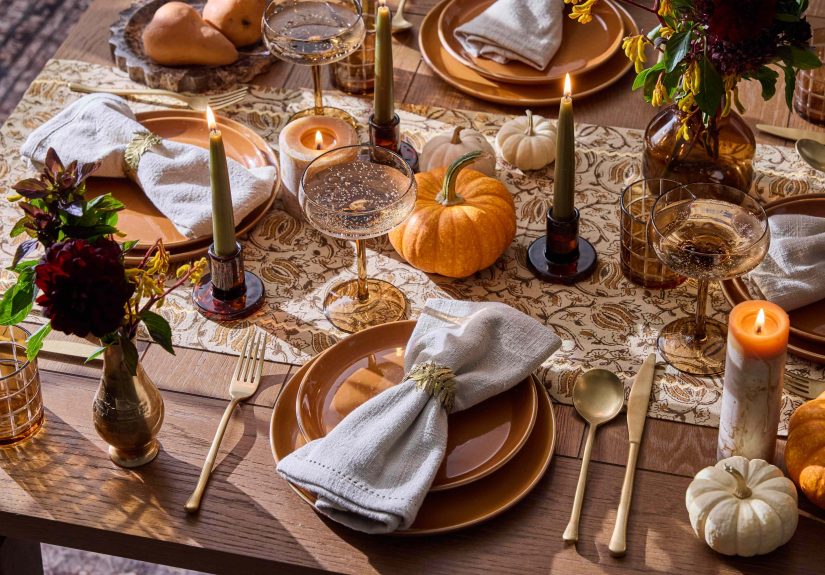
Soft lighting is your secret weapon. Warm lamps, candlelight, and a gentle glow do more for a Thanksgiving table than a dozen novelty decorations ever could. Bright overhead lighting can flatten the room and make the setup feel more like a conference lunch than a holiday meal. If possible, dim the lights, turn on nearby lamps, and add candles for a warmer effect.
How to make the mood feel effortless
Start with light sources at different heights. Taper candles, votives, and a lamp on a sideboard can create depth and make the room feel layered. Keep candles unscented so they don’t compete with the smell of turkey, sage, butter, and pie. Thanksgiving is one of the few meals where the food’s aroma is part of the event. A pumpkin-spice candle may sound festive, but next to mashed potatoes it can become weirdly aggressive.
If you host during the day, let natural light do some of the heavy lifting. Pull back heavy drapes, wipe down the windows, and let the autumn light work its flattering magic. Then as evening sets in, transition to candlelight and lamps so the mood stays warm instead of dropping into dim cave territory.
2. Your Table Linens and Color Palette
Guests may not say, “What a beautifully coordinated textile story,” but they absolutely notice the foundation of the table. The tablecloth, runner, placemats, and napkins create the visual base for everything else. When these elements feel cohesive, the whole table looks intentional. When they fight each other, the table can feel chaotic even if every piece is pretty on its own.
That does not mean you need a perfectly matched Thanksgiving tablescape. In fact, a little mixing often looks richer and more relaxed. What matters is that the color palette makes sense. Think warm neutrals, earthy greens, deep burgundy, rust, ochre, soft brown, cream, or muted gold. These tones feel seasonal without screaming, “I bought every pumpkin-themed object within a 20-mile radius.”
What guests notice here
They notice whether the table feels polished. Quality cloth napkins, even simple ones, instantly elevate the setup. A runner can anchor the center of the table. Woven placemats add texture. A linen or cotton tablecloth softens the look and helps the meal feel more special than an average Tuesday dinner where someone is still answering emails between bites.
If your dishes are simple, let the linens carry the personality. If your dinnerware is patterned or colorful, keep the fabric quieter. Texture often matters more than complexity. A natural linen runner, soft napkins, and a few woven accents can look far more sophisticated than a table overloaded with glossy seasonal décor.
One more thing: wrinkles matter. Not in a terrifying, perfectionist way. But if the linens look freshly unfolded from a closet exile, guests will notice. A quick steam or tumble in the dryer can make everything look more intentional.
3. The Centerpiece, Especially Its Height
Ah yes, the Thanksgiving centerpiece: beloved symbol of autumn abundance and longtime enemy of eye contact. Guests always notice the centerpiece because it sits directly in the middle of the action. It sets the tone, but it can also make dinner awkward if it is too tall, too bulky, too fragrant, or too messy.
The best centerpieces add beauty without interrupting conversation or stealing precious serving space. Low arrangements are almost always the smartest choice. Guests should be able to see one another easily, pass dishes without gymnastics, and avoid leaning sideways around a vase like they are trying to get a better view at a parade.
What works beautifully
Think low bowls of seasonal fruit, mini pumpkins mixed with greenery, a row of taper candles, herbs tucked among pears or pomegranates, or a loose arrangement of branches and leaves. Fresh flowers are lovely, but they do not need to look like a wedding exploded on your dining table. Thanksgiving centerpieces tend to feel best when they look organic, grounded, and just a little abundant.
Edible centerpieces are especially smart. A board with fruit, nuts, cheeses, herbs, and bread can look gorgeous and serve a real purpose. Small clusters of apples, figs, gourds, or cranberries can create color and texture without taking over the table. These details signal abundance, but in a way that still lets the meal function.
Freshness counts too. Wilted leaves, dusty faux stems, and tired flowers can drag down the entire setup. Guests might not inspect your centerpiece like museum curators, but they will definitely feel the difference between fresh and forgotten.
4. Whether the Place Settings Feel Comfortable and Complete
Guests notice right away whether their seat feels prepared for them. A complete, comfortable place setting sends a subtle message: you thought this through, and you’re glad they’re here. A cramped setting with missing utensils, no water glass, and elbows touching three neighboring dinner rolls sends a different message entirely.
A good Thanksgiving place setting does not have to be formal, but it should be functional. Each guest should have the basics they actually need: plate, napkin, flatware, water glass, and enough room to eat without performing delicate wrist choreography. If you use wine glasses, place them neatly. If you are serving several courses or family-style sides, make sure the setup supports that flow.
The comfort test
Before guests arrive, sit in each seat for a second. Can you move comfortably? Is the centerpiece in your way? Does the chair bump into another chair? Is there enough room for serving dishes to land on the table without forcing someone’s elbow into the cranberry sauce? This tiny rehearsal can reveal a lot.
Spacing matters as much as style. If you are hosting a bigger group, consider moving some serving dishes to a buffet, sideboard, or kitchen counter. That frees up room at the table and makes the meal feel less cramped. A crowded table may look lush in a photo, but in real life guests notice when there is nowhere to set down a bread basket without risking structural collapse.
Comfort also comes from practical extras. A small bread plate, a labeled drink station, salt and pepper within reach, and a clear path for passing dishes all make the experience smoother. People remember when a meal felt easy.
5. The Personal Touches
This is where your table stops being attractive and starts being memorable. Guests always notice the little details that feel personal: handwritten place cards, a sprig of rosemary tucked into each napkin, a tiny note of gratitude, a family heirloom bowl, or a seating plan that clearly took personalities into account.
Personal touches do not need to be expensive. In fact, the best ones usually are not. A leaf with a guest’s name written in metallic pen, a simple card at each place, or a mini favor like wrapped chocolates can make the table feel thoughtful rather than generic. These details create that lovely moment when a guest sits down and realizes this was not thrown together five minutes before arrival while someone shouted, “Does anyone know where the good forks are?”
Why personalization matters
Thanksgiving is emotional in the best and messiest ways. It is about family, friendship, gratitude, memory, and food that tends to require two hours of recovery. Personal details make the table feel human. They can also help with logistics. Place cards reduce confusion, prevent awkward seat-swapping, and subtly support better conversation.
You can personalize the table through story as well as décor. Use your grandmother’s serving dish. Mix in vintage glasses. Fold in handmade details from kids. Add one or two meaningful pieces that reflect your family traditions. That warmth is what guests remember most.
6. Whether the Table Feels Styled or Simply Stuffed
Here is the line hosts walk every Thanksgiving: abundance is charming, clutter is exhausting. Guests notice right away whether your table feels thoughtfully styled or just overfilled. More décor is not always better. More serving bowls are not always better. More tiny decorative pumpkins definitely are not always better.
A table should feel layered, not crowded. There is a difference. Layering means you have variation in texture, height, color, and materials. Crowding means nobody has a place to put their water glass because a ceramic turkey is occupying prime real estate.
How to avoid visual overload
Pick a focal point and edit the rest. Maybe it is the runner and candles. Maybe it is a fruit-and-greenery centerpiece. Maybe it is gorgeous amber glassware. Once you have that anchor, let supporting elements stay simple. Not every square inch needs decoration. Open space is not emptiness; it is breathing room.
Function should always win the final argument. If something makes it harder to eat, talk, pass dishes, or see the person across from you, it probably does not belong on the table. The prettiest Thanksgiving tables balance beauty with usability. They do not make guests work for their dinner.
And yes, guests notice that balance immediately. They may not put it into design language, but they will feel it. A clean, intentional table feels calm. A cluttered one feels stressful. On a holiday that already involves oven timing, family dynamics, and at least one person asking whether the turkey is “supposed to look like that,” calm is a gift.
How to Pull It All Together Without Losing Your Mind
If all of this sounds like a lot, take a breath and step away from the emergency cornucopia. You do not need a magazine-perfect setup. You need a table that feels welcoming, works well, and reflects your style. Start with a simple formula: soft lighting, cohesive linens, a low centerpiece, complete place settings, one personalized detail, and enough empty space for actual eating.
Set the table a day or two in advance if you can. That gives you time to make adjustments without racing the clock. Once it is set, walk into the room like a guest would. What catches your eye first? What feels crowded? What feels inviting? A quick edit often makes the biggest difference.
The best Thanksgiving table is not the one that looks expensive. It is the one that makes people want to sit down, stay awhile, and ask for another spoonful of stuffing. Preferably before the pie disappears.
Experiences Hosts Often Have With a Thanksgiving Table
Anyone who has hosted Thanksgiving knows the table has a personality of its own. It can be calm and charming, or it can stage a quiet rebellion at exactly 4:17 p.m. One of the most common experiences hosts talk about is realizing that the table looked perfect in an empty room but completely different once actual humans sat down. Suddenly the floral arrangement seemed huge, the candles felt too close to sleeves, and the carefully arranged serving bowls started a turf war with the gravy boat.
That is why experienced hosts often become less obsessed with “perfect” and more focused on “pleasant.” They learn that guests rarely remember whether the napkins matched the runner exactly. They remember whether they could hear each other, whether the seat felt comfortable, and whether the table felt festive without being fussy. In many homes, the best compliment is not, “This looks like a magazine spread.” It is, “This feels so nice.”
Another common experience is discovering that personalized details have an outsized effect. A simple place card, a handwritten note, or a tiny sprig tucked into a napkin can become the detail everyone comments on. These little touches make guests feel seen. For hosts, that is encouraging because it means meaningful does not have to mean expensive. Some of the most charming Thanksgiving tables are built from grocery-store flowers, backyard greenery, pantry fruit, and a little imagination.
Hosts also learn quickly that Thanksgiving tables need flexibility. The number of guests changes. Kids need different seating. Someone brings an extra pie. Someone else arrives with a casserole dish the size of a toddler’s sled. The table that works best is usually the one designed with a little breathing room. Veterans of holiday hosting often set up a sideboard, buffet, or kitchen counter for extra food so the dining table can remain a place for people, not a storage unit for fourteen side dishes.
There is also the emotional side of the table, which is easy to underestimate. Thanksgiving tables often hold family traditions, memory, and a surprising amount of nostalgia. The old platter from a grandparent, the inherited candlesticks, the chipped but beloved serving bowl, or the kids’ handmade name cards can matter more than trendier décor. Guests notice authenticity. A table with personal history feels different from one assembled entirely for show.
And then there is the universal host experience of noticing what did not work after everyone leaves. Maybe the scented candle was too strong. Maybe the centerpiece blocked conversation. Maybe the chairs were tighter than expected. Oddly enough, this is not failure. It is how great holiday tables are built over time. Each year teaches something useful. You edit. You simplify. You learn what your guests actually respond to.
In the end, the most successful Thanksgiving tables usually share the same quality: generosity. Not just in the food, but in the feeling. Guests notice when a table invites them in instead of trying to impress them from a distance. They notice when it feels warm, usable, and sincere. That is the real secret. A beautiful Thanksgiving table is not just seen. It is felt.
Conclusion
Your Thanksgiving table does not need to be complicated to be unforgettable. Guests notice the mood, the linens, the centerpiece, the comfort of the place settings, the personal details, and whether the whole setup feels intentional rather than overstuffed. Get those six things right, and your table will do what every holiday table should do: welcome people in, support the meal, and make the gathering feel special.
So set out the good napkins, keep the centerpiece low, light the candles, and leave room for the mashed potatoes. That is not just decorating. That is hospitality with a side of gravy.