Table of Contents >> Show >> Hide
Note: Source links intentionally omitted for web publication. Body-only HTML as requested.
Every gardener has a spring fantasy. It usually involves cheerful blooms, warm coffee, and the smug satisfaction of being more organized than last year. Then reality arrives in the form of squirrels, chipmunks, voles, or mice that treat your bulb bed like an all-you-can-eat buffet.
If you have ever planted tulips in fall only to discover little crime-scene holes by winter, welcome to the club. The good news is that you do not have to surrender your spring display to furry bandits. Some bulbs are far less appealing to rodents because they are toxic, bitter, sulfur-scented, or just plain weird in a way that makes animals lose interest. In other words, nature has already invented a few excellent “do not snack” labels.
This guide rounds up seven of the best bulbs to plant now if you want gorgeous spring color without sending out engraved dinner invitations to the neighborhood rodent population. You will also find planting tips, design ideas, and a few reality checks, because “rodent resistant” is not the same thing as “rodent-proof.” Gardeners love a miracle, but we still have to work with actual squirrels.
Why Some Bulbs Get Raided and Others Get Ignored
Rodents are opportunists. They go after bulbs that are easy to locate, easy to dig, and pleasant to eat. Tulips and crocus often top the menu. By contrast, bulbs such as daffodils contain compounds animals find toxic or distasteful. Alliums bring the onion-family attitude, which means sulfur compounds and a strong taste. Fritillaria bulbs are famous for a musky, slightly skunky odor that makes many gardeners wrinkle their noses and many critters head elsewhere.
That does not mean you can toss resistant bulbs into wet clay, forget them, and expect floral greatness. Good drainage, correct planting depth, and smart grouping still matter. Think of rodent-resistant bulbs as a strong opening move, not permission to garden like a chaos goblin.
7 Bulbs Rodents Usually Leave Alone
1. Daffodils (Narcissus)
If there were a valedictorian for rodent-resistant bulbs, daffodils would already be on stage wearing a sash. These classic spring bulbs are widely recommended for gardens where squirrels, mice, voles, and deer make regular inspections. They are toxic and distasteful, which is a very nice quality when your goal is to keep bulbs in the ground instead of in somebody else’s digestive system.
Daffodils also earn bonus points for reliability. They are long-lived, easy to recognize, and available in far more than basic yellow. You can find white, apricot, creamy bicolor, frilly doubles, miniature forms, and elegant trumpet types that look as if they take themselves very seriously. Many naturalize well, meaning they can return and multiply over time if the site suits them.
Best use: Mass plantings, borders, naturalized drifts, and under deciduous trees.
Style note: Plant them in sweeping groups rather than tiny, lonely dots. Five bulbs are a suggestion. Fifteen looks intentional.
2. Alliums (Ornamental Onions)
Alliums are what happens when the onion family decides to get glamorous. Their globe-shaped flowers float above the garden on tall stems, adding structure, height, and a little drama. And unlike many dramatic performers, they are surprisingly low-maintenance once established.
Rodents usually leave alliums alone because the bulbs and foliage contain sulfur compounds that produce that telltale oniony scent and taste when disturbed. So while the flowers may look sophisticated, the bulb underneath is basically saying, “Back off, I contain attitude.”
Alliums also thrive in sunny spots and generally prefer well-drained soil. Many are drought tolerant once established, which makes them excellent for gardeners who want spring flair without coddling.
Best use: Mixed perennial borders, sunny beds, gravel gardens, and spots that need vertical interest.
Style note: Pair tall alliums with mounding perennials so the fading foliage gets politely hidden instead of making a dramatic mess.
3. Fritillaria
Fritillaria is for gardeners who like their spring flowers with a side of eccentricity. Some species, such as crown imperial, are bold and architectural. Others, like snake’s head fritillary, are daintier and carry that charming checkerboard pattern that looks hand-painted.
Why do rodents often avoid fritillaria? Two words: strange smell. Many fritillaria bulbs, especially crown imperial, have a musky or skunky odor that helps repel browsing animals. Humans do not usually plant them for perfume, but the flowers are so distinctive that most gardeners forgive the bulb for smelling like it has opinions.
Fritillaria can be a strong choice when you want something that looks less expected than daffodils. They bring texture, movement, and a slightly theatrical feel to spring planting plans.
Best use: Accent plants, collector gardens, cottage-style borders, and layered bulb schemes.
Style note: Put crown imperial where it can be admired from a distance, not necessarily where people kneel beside it and conduct a scent investigation.
4. Snowdrops (Galanthus)
Snowdrops are proof that small flowers can still deliver a major emotional payoff. They are among the earliest bulbs to bloom, often appearing when the garden still looks half asleep and winter seems unwilling to leave politely.
These delicate white flowers are often recommended as pest-resistant choices, and that alone makes them precious little heroes. They are especially useful for gardeners who want very early color without planting a buffet for voles.
Snowdrops prefer rich, well-drained soil and can take a few years to form impressive clumps, so patience is part of the deal. Still, once they settle in, they create the sort of understated, elegant look that makes people lean in and say, “Oh wow, what are those?” in a voice they reserve for fancy pastries and expensive handbags.
Best use: Woodland edges, under deciduous trees, along paths, and near entryways where early blooms are easy to appreciate.
Style note: Plant generously. Snowdrops are tiny, and tiny things need backup singers.
5. Grape Hyacinths (Muscari)
Grape hyacinths are the blue-jean workhorses of spring bulbs. They are compact, charming, and capable of forming carpets of color that make a garden look unexpectedly polished. The flowers are clustered like miniature bunches of grapes, which explains the common name and saves everyone from having to squint and guess.
Muscari shows up again and again on lists of bulbs that deer and rodents tend to tolerate poorly or avoid more often than tulips and crocus. It is also valued for its ability to naturalize, which means you can get more visual impact over time without redoing the whole plan every fall.
The caution here is enthusiasm. In the right conditions, grape hyacinths can spread with the confidence of a guest who assumes “make yourself at home” was legally binding. That is wonderful in an informal bed, less wonderful if you like strict geometry.
Best use: Edging paths, under shrubs, weaving through daffodils, and naturalized drifts.
Style note: Blue Muscari beside yellow daffodils is a foolproof spring combo. Some pairings are classic for a reason.
6. Glory-of-the-Snow (Chionodoxa)
Glory-of-the-snow sounds like a flower invented by a Victorian poet, but it is also a practical choice for gardeners dealing with hungry wildlife. These early-blooming bulbs produce starry flowers in shades of blue, violet-blue, or pale lavender with bright centers that pop beautifully against late-winter ground.
They are often praised for naturalizing quickly in the right conditions, which makes them especially useful if you want that lovely “I swear this meadow just happens to look magical” effect. They stay low, fit neatly into rock gardens, and can be tucked around larger bulbs without stealing the spotlight.
Rodents may not read plant labels, but glory-of-the-snow is among the smaller bulbs commonly recommended for gardens where animal pressure is a concern.
Best use: Rock gardens, lawns, woodland margins, and front-of-border drifts.
Style note: Combine with snowdrops and early daffodils for a layered early-spring sequence instead of a one-week wonder.
7. Winter Aconite (Eranthis hyemalis)
If you like your spring flowers absurdly early, winter aconite deserves a spot on your radar. These bright yellow cup-shaped blooms often emerge before the rest of the garden has fully clocked in, bringing a burst of cheer just when most landscapes look like they need coffee and a better attitude.
Winter aconite is another bulb-like plant often listed among the better choices for rodent-prone gardens. It works especially well in woodland-style settings and beneath deciduous trees, where it can soak up light before the canopy fills in.
Give it rich, well-drained soil and a site that does not stay soggy. Once established, it can create lovely golden patches that feel almost improbably cheerful for such a chilly season.
Best use: Woodland gardens, beneath trees, early-spring carpets, and mixed naturalized plantings.
Style note: Plant it where you can see it from a window. A yellow bloom in late winter hits differently when everything else is still pretending to be mulch.
How to Plant Rodent-Resistant Bulbs for the Best Results
Wait for Cool Soil
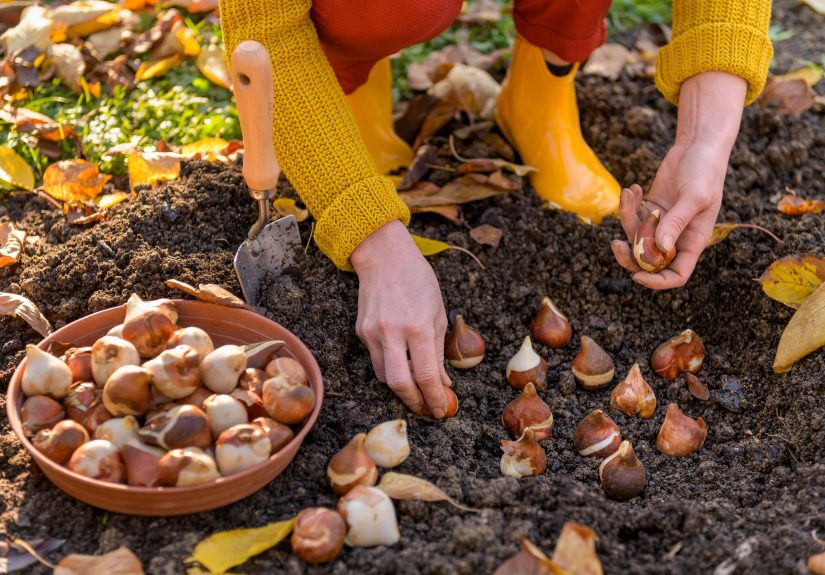
For most spring-blooming bulbs, the ideal planting window is fall, once the soil cools down but before the ground freezes hard. Cool soil encourages root development without triggering premature top growth. If you plant too early during warm weather, bulbs may get confused and start acting like it is already spring, which rarely ends well.
Use the Right Depth
A solid rule of thumb is to plant bulbs about two to three times as deep as their diameter, unless the packaging gives a more specific instruction. In heavy clay, stay on the shallower end. In sandy soil, a bit deeper is usually fine. Good drainage matters more than bravado.
Plant in Drifts, Not Dots
Most bulbs look best in groups or sweeps. A few scattered bulbs can look accidental, while a drift looks lush and intentional. This is especially true for smaller bulbs like snowdrops, Muscari, and glory-of-the-snow.
Keep the Bed Well Drained
Even rodent-resistant bulbs will fail in soggy soil. Amend compacted ground with organic matter if needed, and avoid places where winter water sits like it is paying rent.
Use Extra Protection Where Needed
If your yard has elite-level bulb thieves, go ahead and use hardware cloth or chicken wire over freshly planted areas. Resistant bulbs are a smart first step, but there is no shame in adding security. Think of it as a garden fence, not a personal vendetta against squirrels. Even if, emotionally, it is absolutely a personal vendetta against squirrels.
Bulbs to Avoid in Heavy Rodent Areas
If your garden regularly hosts mice, voles, or chipmunks, save yourself the heartbreak and be cautious with tulips and crocus. They are beautiful, yes. They are also famously tempting to wildlife. You can still grow them, but place them near the house, protect them with wire barriers, or mix them into beds dominated by less tasty neighbors.
Final Thoughts
If you are tired of planting spring bulbs only to watch rodents enjoy them more than you do, the solution is not to give up on bulbs. It is to plant smarter. Daffodils, alliums, fritillaria, snowdrops, grape hyacinths, glory-of-the-snow, and winter aconite all offer beauty with a much better chance of surviving the underground buffet line.
The best spring garden is not always the fanciest one. Often, it is the one that actually comes back. So plant in generous drifts, choose a sunny and well-drained site, and let the tulips go break someone else’s heart for once.
Garden Experience: What I Learned Planting Rodent-Resistant Bulbs Year After Year
The first time I really understood the value of rodent-resistant bulbs, I had just planted a bed full of tulips with the confidence of someone who had watched exactly three gardening videos and now believed they were basically a landscape architect. Two weeks later, the bed looked as if tiny pirates had come through with spoons. Holes everywhere. Bulbs missing. One lonely tulip bulb sat on top of the mulch like a note from the thieves saying, “Try harder.”
That was the season I started shifting my strategy. I planted daffodils in broader drifts instead of buying a random mix of whatever looked pretty in a bag. The result was not just more practical, it was better-looking. In spring, those daffodils came up in a bold sweep of color and looked far more intentional than my old patchwork approach. Even better, they stayed in the ground long enough to bloom, which is a surprisingly important quality in a bulb.
Alliums taught me another lesson: you can solve a practical problem and still get high design. Their flower heads hovered above the border like little purple satellites. Visitors noticed them immediately. Nobody ever asked, “Are those rodent-resistant?” because they were too busy asking what those amazing round flowers were. That is the sweet spot in gardening, when a plant quietly handles a problem while still showing off.
Fritillaria was a different experience. I bought crown imperials after reading that rodents tend to avoid them, and when I opened the bag, I understood why. The bulbs smelled like they had seen things. I laughed, planted them anyway, and by spring they had become one of the strangest and most talked-about features in the yard. They are not subtle, and that is part of their charm.
Snowdrops and winter aconite felt more emotional than dramatic. They were the first signs that winter was loosening its grip. On cold mornings, seeing those tiny flowers push through made the garden feel alive before it looked lush. They are not the showiest bulbs in the catalog, but they may be the most comforting.
Muscari turned out to be the overachiever. Once established, it started filling in gaps and making the whole garden look more cohesive. I stopped seeing it as a filler and started treating it like an essential layer. Glory-of-the-snow did something similar, only with a lighter, more delicate effect that worked especially well at the edge of paths and beneath shrubs.
The biggest lesson, though, was that choosing resistant bulbs changed the mood of fall planting. I was no longer burying wishful thinking. I was building a plan with much better odds. That does not mean every bulb survived every season, because gardens are still gardens and nature remains gloriously rude. But it did mean fewer disappointments, more returns in spring, and a lot less muttering at squirrels from the kitchen window.
If you are starting fresh, I would recommend planting a strong backbone of daffodils and alliums first, then adding personality with fritillaria, Muscari, snowdrops, glory-of-the-snow, and winter aconite. That combination gives you color across the season, different flower shapes, and much better resilience in a yard where wildlife thinks it has equal property rights. And honestly, that feeling when spring arrives and your bulbs are still exactly where you planted them? That is pure garden luxury.