Table of Contents >> Show >> Hide
- Why diet can matter with endometriosis (and why it’s not magic)
- The 8 diet tips
- 1) Borrow the Mediterranean “vibe” (not the strict rules)
- 2) Prioritize omega-3 fats (and don’t fear “good” fat)
- 3) Go big on fiber to support gut health and estrogen “traffic control”
- 4) Load up on colorful plants for antioxidants (your cells will RSVP “yes”)
- 5) Consider reducing red and processed meats (swap, don’t spiral)
- 6) Cut back on ultra-processed foods and trans fats (because inflammation loves chaos)
- 7) Audit common trigger foods (especially if you have IBS-like symptoms)
- 8) Be strategic with caffeine, alcohol, and added sugar
- Put it together: a simple 1-day, endo-friendly meal idea
- Grocery list starters (keep it realistic)
- Common questions (because your brain deserves peace)
- What people often experience when they tweak their diet (the real-world part)
- Conclusion
Endometriosis can feel like your body hired a tiny marching band to practice in your pelvisloud, persistent, and absolutely not taking song requests.
While food can’t “cure” endometriosis, the way you eat may help support inflammation levels, digestion, energy, and (for some people) symptom flares.
Think of diet as one helpful teammate on a bigger care roster that can include medical treatment, pelvic floor support, movement, sleep, and stress management.
Friendly note: This article is for general education, not medical advice. If you’re a teen or you’ve got severe pain, heavy bleeding, or symptoms that disrupt school/work,
it’s worth talking with a clinician who takes pelvic pain seriously.
Why diet can matter with endometriosis (and why it’s not magic)
Endometriosis is commonly described as an estrogen-dependent, inflammatory condition where tissue similar to the uterine lining grows outside the uterus.
That can contribute to pain, fatigue, digestive issues, and more. Food can’t remove lesionsbut it can influence inflammation, gut health, and hormone metabolism.
The goal isn’t a “perfect” diet. The goal is a pattern you can actually live withone that makes your body feel more supported and less like it’s running a 24/7 complaint hotline.
The 8 diet tips
1) Borrow the Mediterranean “vibe” (not the strict rules)
If there were a “default setting” for anti-inflammatory eating, the Mediterranean-style pattern is a strong candidate. It emphasizes vegetables, fruits, beans,
lentils, whole grains, nuts, seeds, olive oil, and seafoodwhile dialing down ultra-processed foods and large amounts of red/processed meat.
- Try this: Make half your plate non-starchy veggies (salad, roasted broccoli, peppers, zucchini).
- Easy upgrade: Swap butter-heavy sauces for olive oil, lemon, garlic, and herbs.
- Real-life example: Taco night becomes: corn tortillas + black beans + sautéed peppers/onions + avocado + salsa.
2) Prioritize omega-3 fats (and don’t fear “good” fat)
Omega-3 fatty acids are linked with anti-inflammatory effects. Many clinicians suggest boosting omega-3-rich foods because they’re a low-drama way to
support overall healthand they may help some people feel better during inflammatory conditions.
- Try this: Fatty fish 2 times/week (salmon, sardines, trout) or plant sources (chia, flax, walnuts).
- Easy upgrade: Add ground flax or chia to oatmeal, yogurt, or smoothies.
- Smart shortcut: Canned salmon + olive oil + lemon + pepper = a 2-minute lunch.
If you’re considering fish oil supplements, talk with a clinicianespecially if you take blood thinners or have surgery planned.
Food-first is usually the safest starting line.
3) Go big on fiber to support gut health and estrogen “traffic control”
Fiber does more than keep you regular (although that alone can be a blessing during a flare). Higher-fiber patterns may support healthier gut bacteria and
help the body process and eliminate hormones like estrogen. Translation: fiber can act like a helpful bouncer, guiding “extra” hormones out the exit.
- Try this: Aim for a fiber source at every meal (beans, lentils, oats, chia, berries, leafy greens).
- Easy upgrade: Mix half white rice with quinoa or brown rice to gently increase fiber.
- If fiber bothers you: Increase slowly and drink more water to avoid bloating surprises.
4) Load up on colorful plants for antioxidants (your cells will RSVP “yes”)
Oxidative stress and inflammation are frequent guests at the endometriosis party. Antioxidant-rich foodsespecially fruits and vegetablesprovide vitamins,
minerals, and plant compounds that help your body manage inflammatory signals.
- Try this: “Color goal” = 3 different colors/day (berries, greens, orange veggies, purple cabbage).
- Easy upgrade: Keep frozen berries and spinach on hand (they’re budget-friendly and don’t judge your busy schedule).
- Specific example: Snack plate: carrots + hummus + a handful of blueberries.
5) Consider reducing red and processed meats (swap, don’t spiral)
Several studies have found associations between higher intakes of red/processed meats and endometriosis risk or worse symptoms. This doesn’t mean you can
never eat a burger again. It means your “usual pattern” matters more than a single meal.
- Try this: Choose poultry, fish, beans, tofu, or lentils more often than processed meats.
- Easy upgrade: Do a “blended” approach: half ground turkey + half lentils in chili or pasta sauce.
- Convenient option: Rotisserie chicken + microwave brown rice + bagged salad = dinner with minimal effort.
6) Cut back on ultra-processed foods and trans fats (because inflammation loves chaos)
Ultra-processed foods tend to be high in refined carbs, added sugars, and certain fats that can promote inflammation in the body. Many people with
endometriosis report feeling worse during weeks where meals come mostly from boxes and drive-thrus. Not because you’re “bad”because your body is already
dealing with enough.
- Try this: Add one “whole food anchor” per day (a piece of fruit, nuts, yogurt, eggs, oats, a salad).
- Easy upgrade: If you buy packaged foods, pick ones with a short ingredient list you can pronounce without summoning ancient spirits.
- Swap idea: Chips → roasted chickpeas or popcorn; pastries → oatmeal with cinnamon and berries.
7) Audit common trigger foods (especially if you have IBS-like symptoms)
Many people with endometriosis also deal with bloating, constipation, diarrhea, or IBS-like symptoms. If your gut tends to join the protest,
experimenting with a short-term, structured approachlike a low-FODMAP trialmay help identify triggers. This is best done with a registered
dietitian, because the goal is personalization, not lifelong restriction.
- Try this: Keep a simple symptom journal for 2–3 weeks (foods + pain + bloating + bowel changes).
- Easy upgrade: Reduce big “bloat bombs” first (carbonated drinks, giant portions, eating fast).
- Important: If you cut foods like gluten or dairy, do it as a measured experimentthen re-evaluate with support.
8) Be strategic with caffeine, alcohol, and added sugar
This is the “small hinges swing big doors” tip. Some research suggests higher caffeine intake may be linked with endometriosis risk, and many people report
that alcohol or sugar-heavy weeks worsen inflammation, sleep, and pain sensitivity. You don’t have to quit everything forever. You can test what your body
tolerates.
- Try this: If you drink coffee, keep it earlier in the day and avoid drinking it on an empty stomach.
- Swap: Second coffee → decaf, green tea, or sparkling water with citrus.
- Low-effort win: Reduce sugary drinks first (often the easiest change with the biggest payoff).
Put it together: a simple 1-day, endo-friendly meal idea
This isn’t a prescriptionjust a practical example of how the tips can look in real life.
- Breakfast: Oatmeal with chia + blueberries + cinnamon (add walnuts for extra omega-3s).
- Lunch: Big salad bowl: greens + chickpeas + quinoa + roasted veggies + olive oil/lemon dressing.
- Snack: Greek yogurt (or non-dairy option) + berries, or hummus + carrots.
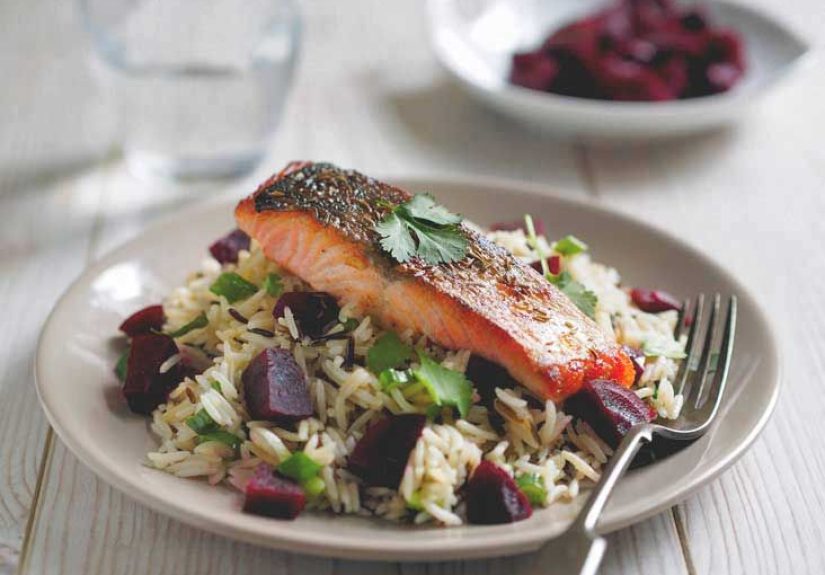
- Dinner: Salmon (or tofu) + roasted broccoli + brown rice + a side of mixed fruit.
- Dessert: Dark chocolate square + strawberries (because joy is also a nutrient).
Grocery list starters (keep it realistic)
Protein
- Salmon or sardines (fresh or canned)
- Eggs, chicken, tofu/tempeh
- Lentils, black beans, chickpeas
Fiber + carbs
- Oats, quinoa, brown rice, whole-grain bread (as tolerated)
- Sweet potatoes
Fats + flavor
- Olive oil
- Chia/flaxseed, walnuts
- Garlic, turmeric, ginger, cinnamon
Produce
- Leafy greens (fresh or frozen)
- Berries (fresh or frozen)
- Cruciferous veggies (broccoli, cauliflower)
- Color boosters (peppers, tomatoes, carrots)
Common questions (because your brain deserves peace)
Is there one “best” diet for endometriosis?
There’s no single official diet. Most evidence supports a general anti-inflammatory, plant-forward pattern (often Mediterranean-style), with personalized
adjustments for digestive triggers and nutrient needs.
Should I cut gluten or dairy?
Some people report improvement, and a few studies suggest potential symptom benefits for certain individualsbut it’s not universal. If you try it,
make it time-limited and structured (for example, 4–8 weeks), track symptoms, and plan balanced replacements so you don’t lose key nutrients.
What about supplements?
Supplements like omega-3s, vitamin D, or antioxidant vitamins are sometimes discussed, but quality and dosing matter. It’s safest to talk with a clinician,
especially if you’re a teen, pregnant, have other conditions, or take medications.
What people often experience when they tweak their diet (the real-world part)
Let’s talk about the lived realitybecause reading “eat more vegetables” is easy, and actually doing it when you’re in pain is… not.
People who try endometriosis-friendly eating patterns often describe their journey in phases, and it’s rarely a straight line. It’s more like a GPS route
that keeps recalculating because you had to pull over for snacks (valid).
Week 1–2: The “Wait, is this helping?” stage. Many folks start by swapping in more whole foodsadding oatmeal, berries, vegetables, and
a couple of fish mealsand cutting back a bit on ultra-processed foods. Early wins often show up as steadier energy and fewer blood-sugar dips
(that mid-afternoon crash where your brain turns into buffering Wi-Fi). Some people notice less bloating simply from eating slower, drinking more water,
and adding fiber gradually. Others feel temporarily more bloated if they increase beans and raw veggies too quicklyso easing in can matter.
Weeks 3–6: The “my gut has opinions” stage. If digestive symptoms are part of your endometriosis picture, this is when patterns start to
become clearer. People often realize certain triggers don’t bother them at all, while others are repeat offenders (hello, giant iced latte on an empty
stomach). A simple food-and-symptom log can be surprisingly empoweringnot to micromanage your life, but to spot the obvious connections.
Some people experiment with reducing dairy, gluten, caffeine, or alcohol and report changes in bloating or pelvic pain. The key is treating it like a
science experiment, not a moral test: try one change at a time so you can tell what actually did something.
Month 2 and beyond: The “sustainable is better than perfect” stage. The people who tend to stick with changes are the ones who build a
flexible routine. They keep “safe meals” available for flare daysfrozen salmon, microwave rice, soup, smoothies, yogurt, eggs, or whatever feels gentle.
They learn that a supportive diet is not a punishment diet. It’s a comfort system: anti-inflammatory foods most of the time, treats sometimes, and less
stress overall. Many also report that sleep quality and stress levels influence pain just as much as food, so they start pairing nutrition changes with
basics like consistent meals, hydration, and rest.
A very important reality check: Some people notice meaningful symptom relief, and some notice only small shifts. That doesn’t mean you did
it “wrong.” Endometriosis is complex, and responses vary. If dietary changes don’t move the needle much, that’s useful informationbecause it can push the
next best step: medical evaluation, pain management strategies, pelvic floor therapy, or a referral to an endometriosis specialist.
Your job isn’t to out-diet a medical condition. Your job is to build the most supportive, doable baseline you canand then get the care you deserve.
Conclusion
If you’re trying to “fight” endometriosis with food, the best approach is less about fighting and more about supporting:
choose anti-inflammatory patterns, boost omega-3s and fiber, emphasize colorful plants, and reduce ultra-processed foods.
Then personalize based on your digestion, your schedule, and your sanity. Small, repeatable changes beat big, stressful overhaulsevery time.