Table of Contents >> Show >> Hide
- 1. Create a Safe, Snow-Free Grilling Zone
- 2. Give Your Grill More Time to Preheat and More Fuel to Burn
- 3. Block the Wind, But Never Block Ventilation
- 4. Cook by Temperature, Not by Time
- 5. Choose Winter-Friendly Foods and Smarter Cuts
- 6. Keep the Lid Closed and Use Two-Zone Cooking
- 7. Dress for the Job and Keep Your Tools Within Reach
- 8. Clean, Cover, and Maintain the Grill After Every Winter Cook
- Conclusion
- Winter Grilling Experiences: What the Season Teaches You
- SEO Tags
Winter grilling sounds a little dramatic, and that is part of the fun. There is something wildly satisfying about standing outside in cold air while your grill throws off heat like a tiny backyard campfire with better seasoning. The burgers sizzle, the smoke curls into the frosty sky, and suddenly you feel like the kind of person who definitely owns a flannel jacket on purpose.
But grilling in the winter is not just regular grilling with chapped lips. Cold weather changes how your grill heats, how quickly fuel burns, how long food takes to cook, and how safely you need to operate your setup. Wind steals heat, snow creates slippery chaos, and darkness arrives early like it pays rent. That means the best winter grilling tips are really about planning, temperature control, safety, and a little common sense.
This guide breaks down 8 practical tips for grilling in the winter so you can keep the cookout spirit alive all season long. Whether you use a gas grill, charcoal grill, pellet grill, or smoker, these cold-weather strategies will help you grill smarter, safer, and with much less guesswork.
1. Create a Safe, Snow-Free Grilling Zone
The first rule of winter grilling is simple: your grill needs a clear, stable, outdoor space. Not “kind of outside.” Not “garage with the door cracked.” Not “under that questionable overhang because it is drizzling.” Just outside, open-air, and safely positioned away from structures.
Before you even think about lighting the burners, clear snow and ice from the path to the grill and around the grill itself. A slippery deck plus a tray of raw chicken is not the kind of winter sports package anyone asked for. Give yourself enough room to move, turn, carry platters, and step back safely from heat and smoke.
What a smart winter grill setup looks like
- A fully cleared path from your kitchen door to the grill
- No snow piled against the grill body, legs, or wheels
- At least one stable landing area for trays, tongs, and plates
- Plenty of clearance from siding, railings, eaves, and anything combustible
- Good outdoor lighting so you can actually see what you are flipping
If you regularly grill in the winter, set up a small “cold-weather station” with a tray table, salt or sand for icy spots, a covered bin for tools, and an outdoor light. You do not need a full TV-chef patio kitchen. You just need a setup that does not turn dinner into a survival documentary.
2. Give Your Grill More Time to Preheat and More Fuel to Burn
One of the biggest cold-weather grilling mistakes is assuming your grill behaves the same way in January as it does in July. It does not. Cold air pulls heat away from the cook chamber, metal surfaces start colder, and wind can make temperature recovery painfully slow. Translation: your grill needs more time to get ready, and it will probably burn more fuel while doing it.
For gas grills and pellet grills, expect longer preheat times. For charcoal, plan on using a little more fuel than usual. If you normally operate with one nearly empty propane tank and a lot of optimism, winter is the season to change that habit. Keep a backup tank, extra briquettes, or dry pellets ready to go.
Fuel planning matters more in winter
A cold grill can take longer to ignite, longer to stabilize, and longer to recover after the lid opens. That means a steak night that seems “quick” in your head can chew through more propane or pellets than expected. Running out of fuel halfway through dinner is not rustic. It is just annoying.
Give your grill time to fully preheat before food goes on. That one habit improves searing, reduces sticking, and makes cooking times more predictable. Winter is not the season for impatience. It is the season for being the person who says, “We are waiting five more minutes,” and then serves food that actually tastes grilled instead of vaguely steamed.
3. Block the Wind, But Never Block Ventilation
Wind is the sneaky villain of cold weather grilling. It steals heat, messes with airflow, makes flames uneven, and can cause temperature swings that turn a simple cook into a guessing game. If your grill is set up in a wind tunnel between the fence and the house, your dinner is basically competing with the weather.
Move the grill to a location that is protected from direct wind when possible, or position it so the wind is not blasting directly into openings, vents, or exhaust paths. Some grill makers recommend orienting the grill strategically to reduce heat loss. That can make a real difference, especially with pellet grills and lighter gas models.
What you should not do is block airflow with unsafe coverings or move the grill into an enclosed area. The goal is wind protection, not smoke-and-carbon-monoxide roulette.
Good ways to handle winter wind
- Use a naturally sheltered outdoor spot
- Reposition the grill to reduce direct wind exposure
- Use a grill-compatible insulation blanket if your manufacturer allows it
- Keep the lid closed as much as possible to hold heat
If you own a pellet grill, this tip matters even more. Cold air and wind can increase pellet use and make temperature maintenance tougher. Dry pellets, a clean firepot, and a sheltered placement can save you from a lot of frustration.
4. Cook by Temperature, Not by Time
Winter grilling has one golden rule: cook to internal temperature, not by the clock. In cold weather, cook times stretch, heat recovery slows, and even familiar recipes can behave differently. That means the old “four minutes per side” trick becomes less reliable than your uncle’s fantasy football predictions.
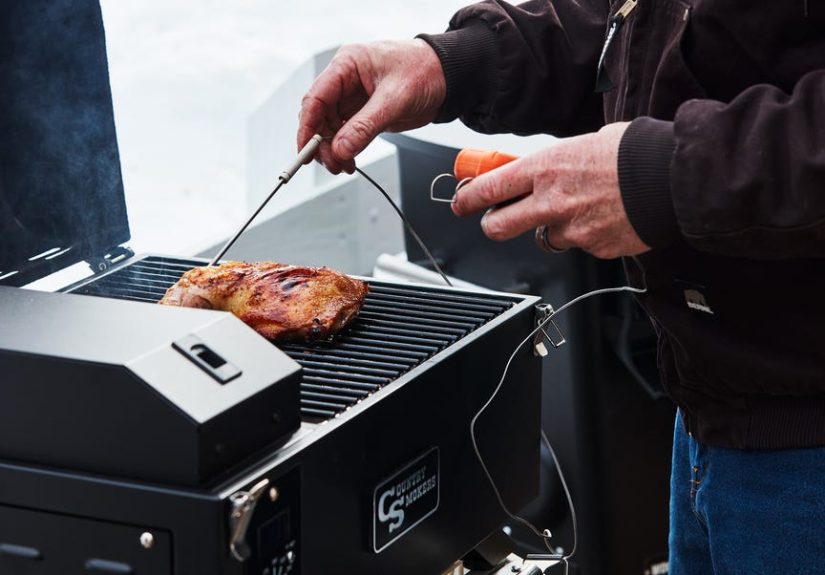
A good meat thermometer is your best friend here. It takes the mystery out of doneness and keeps you from lifting the lid every 90 seconds to stare at the food like you are trying to hatch it.
Why this matters so much
Winter air changes grill performance, but safe internal temperatures do not change. A thermometer helps you avoid two common problems: undercooking food because the outside looks ready, or overcooking it because you panicked and left it on too long.
As a general guide, whole cuts of beef, pork, lamb, and veal should reach safe internal temperature and rest properly, ground meats need a higher temperature, and poultry must be cooked fully. Fish also benefits from thermometer checks when the weather makes timing unreliable.
Remote probe thermometers are especially handy in winter because they let you monitor the cook without constantly opening the lid. You can stay warmer, the grill stays hotter, and dinner stays on track. Everybody wins.
5. Choose Winter-Friendly Foods and Smarter Cuts
You can grill large roasts, pork shoulders, and giant bone-in cuts in the winter. The better question is whether you want to. Cold weather makes long cooks harder to manage, especially on days with wind, snow, or single-digit temperatures. That is why winter grilling often works best with foods that cook efficiently and predictably.
Think chicken thighs, sausages, burgers, kebabs, salmon fillets, shrimp, pork chops, steak tips, and vegetables. These cook faster, recover better from lid openings, and make weeknight grilling feel realistic instead of heroic.
Best foods for winter grilling
- Chicken thighs and drumsticks
- Burgers and sausages
- Skewers and kebabs
- Steaks, especially medium-thickness cuts
- Salmon, shrimp, and firm fish
- Vegetables like mushrooms, peppers, onions, squash, and asparagus
Winter is also a great season for richer flavors. A strong dry rub, maple-mustard glaze, peppery steak crust, or smoky barbecue seasoning feels especially right when it is cold outside. Your grill can deliver that cozy, fire-kissed flavor even when the backyard looks like a snow globe.
6. Keep the Lid Closed and Use Two-Zone Cooking
If summer grilling rewards confidence, winter grilling rewards restraint. Every time you open the lid, precious heat escapes and your grill has to work harder to recover. In very cold weather, those little peeks add up fast.
That is why one of the most effective winter BBQ tips is to grill with intention. Put the food on, close the lid, and trust your setup. Flip only when needed. Monitor with a thermometer. Resist the urge to keep checking “just in case.”
It also helps to build a two-zone fire or use separate heat zones on a gas grill. One side should be hotter for searing, while the other side stays cooler for finishing thicker food more gently. This gives you flexibility when cold weather makes the grill a little less predictable.
Why two-zone cooking works in winter
Two-zone cooking helps prevent flare-ups, gives you a safe place to move food if one side gets too aggressive, and allows you to finish thicker items without scorching the outside. It is one of the simplest ways to make your grill feel more controlled when the weather is not cooperating.
For example, you can sear chicken thighs or pork chops over direct heat, then move them to indirect heat to finish with the lid closed. That gives you browning, better control, and fewer “burned outside, cold center” moments.
7. Dress for the Job and Keep Your Tools Within Reach
Winter grilling is not a fashion show, but your clothing choices matter. Dress warm, but dress smart. Bulky layers are fine. Loose scarves, tassels, dangling sleeves, and anything that might drift too close to open flame are not.
You also need gloves that make sense for the task. Snow gloves keep your hands warm, but they are not the same as heat-resistant grill gloves. The ideal setup is warm clothing plus proper grilling gloves that still let you grip tongs and thermometers with some dexterity.
Cold-weather grilling gear that actually helps
- Heat-resistant grill gloves
- A headlamp or bright outdoor light
- Long tongs and a reliable spatula
- A tray for carrying food in one trip
- A thermometer you can read quickly
- A grill cover for protection between cooks
One underrated move is staging everything before you light the grill. Set out plates, oil, seasonings, tools, and foil in advance. Winter is not the time to realize the tongs are indoors, the platter is in the dishwasher, and the pepper grinder has vanished into another dimension.
8. Clean, Cover, and Maintain the Grill After Every Winter Cook
Cold weather is rough on outdoor equipment. Moisture, ash, grease, and food residue can build up faster than you think, and winter neglect has a way of showing up later as rust, mold, ignition trouble, or sad spring performance.
After each winter grilling session, brush the grates, empty ash when appropriate, and clean out grease or debris before it turns into a bigger problem. Once the grill is cool, cover it. If your grill lives outdoors all season, a good cover is not optional. It is basic protection.
For seasonal maintenance, inspect burners, hoses, ignition systems, grates, and any worn parts. Oil uncoated grates if needed. If you store the grill for part of the season, follow your manufacturer’s guidance on propane, batteries, and storage conditions.
Think of maintenance as flavor insurance
A clean grill heats more efficiently, burns cleaner, and is less likely to produce weird flare-ups or frustrating start-up problems. It also helps your food taste like dinner instead of last month’s pork chops.
Conclusion
Grilling in winter is not about pretending it is summer. It is about learning how to work with the season instead of against it. Clear the space, plan for more preheat time, keep extra fuel nearby, protect the grill from wind, and rely on a thermometer instead of guesswork. Choose foods that make sense for the conditions, keep the lid closed, and stay serious about safety.
Done right, grilling in the winter can be one of the most enjoyable ways to cook. The food tastes smoky and satisfying, the air feels crisp, and the whole process has a kind of stubborn charm. It says, “Yes, it is cold outside. And yes, I still want perfectly grilled chicken.” That is not denial. That is commitment.
If you love the flavor of live-fire cooking, there is no reason to retire your grill the moment the temperature drops. A few smart adjustments can turn cold-weather grilling from a risky inconvenience into one of your favorite kitchen-adjacent hobbies.
Winter Grilling Experiences: What the Season Teaches You
Anyone who has grilled in the winter for more than one season learns pretty quickly that cold-weather cooking has its own personality. It is quieter than summer grilling. There are no buzzing mosquitoes, no blazing afternoon sun, and usually fewer people wandering around asking when dinner will be ready. It is often just you, the grill, the sound of snow crunching under your shoes, and a lid thermometer that suddenly feels like the most important instrument in the universe.
One of the biggest lessons winter grilling teaches is patience. In warm weather, you can get away with being casual. In winter, the grill makes you slow down and respect the process. You learn to preheat properly, to set out tools before you begin, and to stop opening the lid every two minutes. You also learn that confidence comes from preparation, not guesswork. The people who enjoy winter grilling most are rarely the people winging it.
There is also a strange comfort to it. Standing outside with gloves on while the air smells like smoke and garlic butter makes dinner feel more memorable. A simple meal like grilled burgers or chicken skewers feels less routine when you had to shovel a path to make it happen. Even vegetables taste more dramatic when they come off the grates with char marks in thirty-degree weather.
Winter grilling also makes you better at problem-solving. Maybe the wind shifts and your grill temperature drops. Maybe your propane runs low faster than expected. Maybe you realize halfway through cooking that the tray you meant to use is still in the kitchen. After a few sessions, you start building better habits automatically. You keep backup fuel. You store your tongs where you can actually find them. You buy the thermometer and wonder why you waited so long.
Perhaps the best part is that winter grilling changes how you think about outdoor cooking. It stops being a seasonal event and becomes a skill. You start seeing the grill as a real cooking tool, not just a summertime accessory. And once that happens, cold weather feels less like an obstacle and more like part of the experience. The backyard is quieter, the food tastes better somehow, and the whole thing feels just a little more earned. That is probably why devoted grillers keep doing it year after year. Not because it is always easy, but because it is deeply satisfying when you pull it off.