Table of Contents >> Show >> Hide
- Why This ’90s IKEA Espresso Set Still Feels So Modern
- What’s Usually Included in a “90s IKEA Stainless Steel Espresso Set”
- How to Shop for One Without Getting “Vintage Taxed” Into Oblivion
- How to Actually Use the Set: Espresso, But Make It Easy
- Serving Like You Mean It: Demitasse Basics (Without the Coffee Snob Energy)
- Cleaning and Care: Keep the Shine, Lose the Drama
- Styling Ideas: Turn a Coffee Moment Into a Mini Time Capsule
- Is It Collectibleor Just a Really Good Thrift Find?
- Experiences With the ’90s IKEA Stainless Steel Espresso Set (A 500-Word Reality Check)
- Conclusion
Some people collect vinyl. Some people collect sneakers. And then there are the brave souls who collect
tiny metal espresso cups from the 1990s like they’re museum artifacts. If that last sentence made you nod
(or made your wallet quietly whimper), welcome: the ’90s IKEA stainless steel espresso set is one of those
unexpectedly iconic coffee finds that looks like it belongs on a spaceship, yet somehow fits perfectly on a
cluttered countertop next to a jar of cinnamon and your “I swear I’ll meal-prep this week” glass containers.
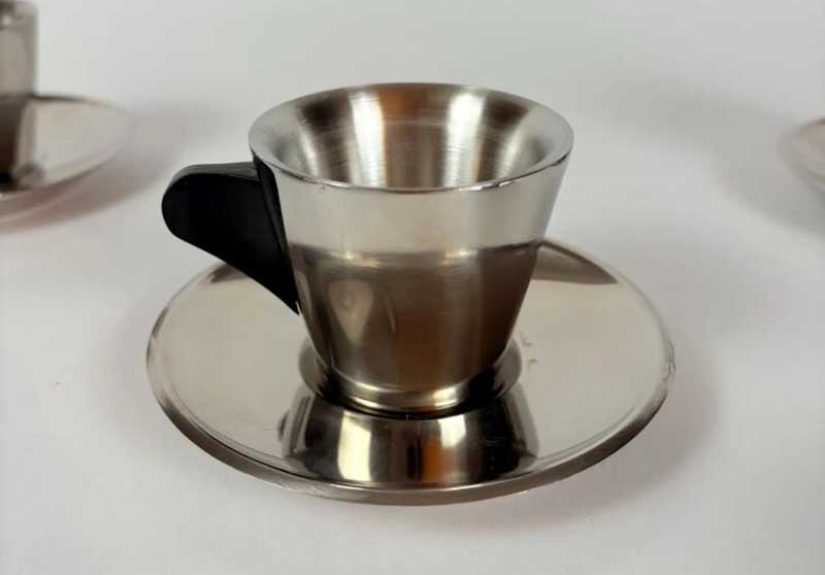
This vintage IKEA espresso setmost commonly seen today as stainless steel demitasse cups with matching saucers
(often with dark/black handles, sometimes with spoons, and occasionally paired with a stainless moka pot)hits a
sweet spot: minimalist Scandinavian vibes, practical durability, and just enough retro flair to make your coffee
ritual feel like a design magazine spread… minus the magazine budget.
Why This ’90s IKEA Espresso Set Still Feels So Modern
1) The “chrome-but-make-it-cozy” aesthetic
The 1990s were a fascinating time for home style: clean lines, a growing love for pared-back forms, and a quiet
obsession with materials that looked sleek but still played nice with everyday life. Stainless steel fit right in.
These espresso pieces tend to be simplecylindrical cups, tidy saucers, understated handlesso they slide easily
into modern kitchens, industrial spaces, or a maximalist apartment where every object is “a little weird on purpose.”
2) Stainless steel makes espresso feel intentional
Espresso is small, intense, and dramatic (basically the theater kid of coffee). Serving it in stainless steel
adds a tactile “this is a thing” moment. The cups feel substantial for their size, and the set looks good even
when it’s doing nothingan underrated talent for any kitchen item.
3) It’s IKEA, so it was built to be usednot just admired
A big part of IKEA’s appeal is “democratic design”: objects that are functional, accessible, and meant for real
homes. Even when you’re buying it secondhand today, the spirit of the set is still practical: stackable shapes,
durable metal, and an overall vibe that says, “Yes, you can have nice thingsnow go drink your espresso.”
What’s Usually Included in a “90s IKEA Stainless Steel Espresso Set”
Because this is a vintage category (and resale listings can be… let’s call them “creative”), the exact components
vary. But most sets you’ll run into fall into one of these common patterns:
- Stainless steel demitasse cups + saucers (often 4 or 6), frequently with a dark/black handle or grip.
- Matching stainless steel teaspoons (sometimes included, sometimes “mysteriously missing,” sometimes replaced by a spoon that is clearly from 2007).
- A stainless steel moka pot (in some listings), giving you a full stovetop espresso-style setup.
If you see “insulated” in a listing, it may indicate double-wall construction (or it may indicate the seller
discovered the word “insulated” and decided it sparks joy). Treat these terms as clues, not gospelthen verify
with photos and measurements when possible.
How to Shop for One Without Getting “Vintage Taxed” Into Oblivion
Use smart search phrases
Try combinations like:
“IKEA stainless demitasse cups saucers,” “vintage IKEA espresso cups metal,” “IKEA 90s espresso set,”
or “stainless espresso cups black handle.” If a moka pot is part of the dream, add
“stovetop” or “moka” to your search.
Look for consistent design details
The most believable sets tend to have a consistent design language: cups and saucers that match in finish,
shape, and proportions. Watch for:
- Uniform stainless finish (brushed vs. polishedeither is fine, but mismatches in a “set” are a flag).
- Matching saucer diameter across all pieces (no surprise “one is bigger because… reasons”).
- Handle/grip consistency (the same material and shape across cups).
Ask the two questions most sellers can actually answer
- “What is the cup capacity in ounces or milliliters?” (Demitasse is typically smallthink espresso-sized.)
- “Are there markings underneath (IKEA, country of origin, or model info)?”
If the seller can’t answer anything and the photos look like they were taken during a mild earthquake, you’re
allowed to walk away. Your future self will thank you.
How to Actually Use the Set: Espresso, But Make It Easy
Let’s be honest: most of us are not running a café out of our kitchens. The good news is you don’t need an espresso
machine to enjoy an espresso-style moment with a demitasse set. A moka pot is the classic low-fuss partner for this
vibe, producing strong, concentrated coffee that scratches the espresso itch without requiring a second mortgage.
The moka pot method that avoids the “burnt bitterness” stereotype
-
Start with hot water (not cold).
This reduces the time your coffee grounds sit “cooking” in a warming base before brewing starts. -
Use a medium-fine grind.
Too fine can choke the brew or cause sludge; too coarse can taste thin and sad. -
Fill the basket leveldon’t tamp.
Moka pots are not espresso machines. No need to compress the grounds like you’re packing a suitcase. -
Keep the heat moderate and pay attention.
When the flow turns pale and sputtery, you’re at the finish line. -
Stop the brew.
If you can safely do so, cooling the base (or removing it from heat promptly) helps prevent over-extraction.
Pour into your stainless demitasse cups, and you’ll get a coffee that’s bold, aromatic, and perfect for sipping
slowlylike an adultwhile you stare into the middle distance thinking about your 47 open browser tabs.
Serving Like You Mean It: Demitasse Basics (Without the Coffee Snob Energy)
Espresso sizes, simplified
Traditional espresso is often described in small volumesroughly a single in the neighborhood of about an ounce
and a double around twice thatthough real-world café recipes vary. The point isn’t to police your shot; it’s to
match cup size to the drink so it stays hot and tastes balanced.
Stainless vs. ceramic: what changes?
-
Feel: Stainless can feel cooler to the touch at first, then warm quickly. If the cup is double-wall or insulated,
it may feel comfortable even with hot liquid inside. -
Temperature management: Pre-warming matters. A quick rinse with hot water (then dry) helps keep your drink from
losing heat immediately. -
Vibe: Stainless gives “retro-modern café,” while ceramic gives “traditional espresso bar.” Neither is morally superior.
Coffee is not a personality test (even though it sometimes acts like one).
Cleaning and Care: Keep the Shine, Lose the Drama
Daily care for stainless cups and saucers
- Wash soon after use to avoid coffee oils and minerals setting up camp.
- Dry thoroughly to prevent water spots and keep the finish looking crisp.
- Avoid harsh scratching if you want to preserve the original look (especially on brushed finishes).
For stubborn stains or dullness
For stainless steel cookware and many stainless surfaces, gentle cleaners designed for stainless can restore shine.
Classics like Bar Keepers Friend are often recommended for tough stains on nonporous surfacesbut always spot-test,
avoid delicate finishes, and rinse thoroughly. Translation: you want your cups shiny, not “mysteriously matte forever.”
Moka pot care (if your set includes one)
Most stovetop coffee makers do best with simple maintenance: rinse, wipe, dry, and store disassembled so moisture
doesn’t linger. If there’s a rubber gasket, keep an eye on it over timereplacement parts can be the difference
between “perfect coffee ritual” and “why is it making that noise?”
Styling Ideas: Turn a Coffee Moment Into a Mini Time Capsule
The “90s-cool, 2026-clean” coffee corner
Put the stainless set on a small tray with one warm element (wood, linen, or a neutral stone). Add a simple jar of
coffee, a spoon rest, and a single “this is my personality now” itemlike a small plant or a vintage-looking tin.
Stainless steel plays beautifully with white tile, concrete, pale oak, and black accents.
Open-shelf display that doesn’t feel like a showroom
Stack the saucers, nest the cups, and let the metal catch the light. Keep one space around it so it looks curated,
not crowded. The goal is “effortless design,” not “I arranged this for three hours and now no one may touch it.”
Is It Collectibleor Just a Really Good Thrift Find?
Vintage IKEA has become increasingly collectible, and certain older pieces can command surprisingly high resale
prices. That doesn’t mean you should pay a fortune every time you see stainless demitasse cupsbut it does explain
why some listings feel like they were priced by someone who just discovered the word “rare.”
A practical approach:
buy it because you’ll use it, and consider any future value a bonus. If you find a complete set (cups,
saucers, maybe spoons, good condition), that’s usually the sweet spot for both enjoyment and resale stability.
Experiences With the ’90s IKEA Stainless Steel Espresso Set (A 500-Word Reality Check)
The first time you drink from a tiny stainless steel espresso cup, you learn something important: espresso is not
meant to be chugged. The cup is small, the sip is smaller, and suddenly you’re forced into a slower pacelike the
coffee equivalent of being told to “take a deep breath” by a friend who is absolutely correct and also slightly
annoying about it.
If you found the set secondhand, the experience starts before the first brew. You unwrap it like it’s fragile
treasure, even though it’s literally stainless steel and could probably survive being launched into low orbit.
You polish a smudge off the saucer, line up the cups, and immediately understand why people fall for vintage IKEA:
it’s everyday design that still feels intentional decades later.
Then comes the ritual. On a quiet morning, the moka pot (if you have one) becomes your soundtrack: water warming,
coffee blooming, that steady, reassuring gurgle that says, “Yes, something good is happening.” You pour the coffee
into the cups andbecause you’re now a person with stainless demitasse cupsyou do the very normal thing of holding
one up to the light like you’re evaluating a diamond. The crema isn’t perfect, but it looks convincing enough to
make you feel like you know what you’re doing. That’s half the joy.
The set also changes how you serve people. When friends come over, you don’t hand them a random mug that says
“World’s Okayest Human.” You bring out the saucers. You offer a tiny spoon. Someone inevitably says, “Wait, this is
so cute,” and you get to casually respond, “Oh, this old thing? It’s a ’90s IKEA stainless steel espresso set,”
as if you didn’t spend two weeks hunting for it like a caffeinated archaeologist.
There’s also a practical side: stainless doesn’t panic when life happens. A ceramic demitasse can chip if you look
at it wrong; stainless steel basically shrugs. The cups are easy to rinse, and even when they get water spots,
you can restore the shine without fear. Over time, that durability becomes part of the attachment. You stop treating
the set like “special occasion only” and start using it on regular Tuesdaysbecause the whole point of good design
is that it earns a place in your real life.
And maybe that’s the best part: this set makes espresso feel like a tiny daily ceremony. Not fancy. Not fussy.
Just a small, well-designed pause in the dayserved in a cup that still looks cool enough to star in a 1997 kitchen
catalog, while you’re wearing sweatpants in 2026. Truly, the dream.
Conclusion
The ’90s IKEA stainless steel espresso set is a rare kind of vintage find: it’s stylish without trying too hard,
practical enough to use daily, and distinctive enough to make your coffee routine feel like a curated moment. Whether
you’re collecting, decorating, or just want your espresso to arrive with a little retro swagger, this set delivers.
Brew something strong, pre-warm the cups, and let the tiny saucer do what it was born to do: make your kitchen feel
more put-together than you actually are.