Table of Contents >> Show >> Hide
- Why Rock-Paper-Scissors works (even when we’re being ridiculous)
- How to settle anything with Rock-Paper-Scissors (without starting a new argument)
- Rock-Paper-Scissors is older than your group chat
- The hidden science of a “random” game
- Everyday moments Rock-Paper-Scissors can save
- How to keep it fair (and avoid “RPS drama,” which is the funniest kind of drama)
- Why #956 feels so true
- 500 more words: experiences people have with Rock-Paper-Scissors
There are two kinds of decisions in life: the big ones (mortgages, marriages, “should I quit my job to become a llama stylist?”)
and the tiny ones that somehow feel just as dramatic when you’re hungry: pepperoni or sausage, freeway or back roads, drive home or
“please carry me like a burrito.”
Rock-Paper-Scissors is the tiny-decision superhero. It doesn’t need batteries. It doesn’t need a Wi-Fi signal.
It doesn’t even need a tablejust two hands, a shared rhythm, and an agreement that whatever happens next is legally binding in the
court of friendship.
In the spirit of 1000 Awesome Things #956, this is a love letter to the simplest conflict-resolution technology ever invented:
a three-gesture handshake that says, “We could argue… or we could finish this in three seconds and get on with our lives.”
Why Rock-Paper-Scissors works (even when we’re being ridiculous)
It’s fast, fair-seeming, and wonderfully unserious
Most everyday disagreements aren’t really about justice. They’re about momentum. You want the decision to happen so you can move on.
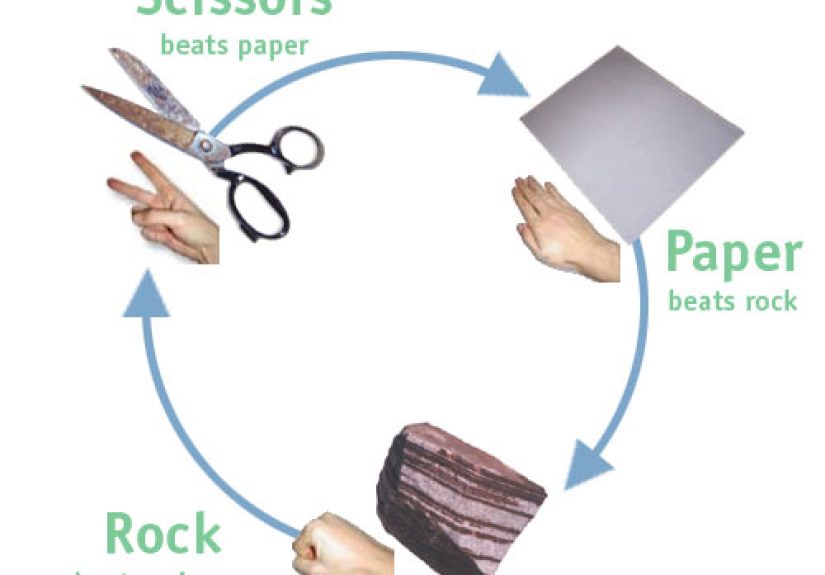
Rock-Paper-Scissors (RPS) is designed for momentum: the rules are simple, the outcome is immediate, and nobody has to deliver a closing
argument like they’re in a courtroom drama.
It also feels fair because it’s symmetrical. Each player has the same options, revealed at the same moment. No one gets to “go second”
and counter your choice. No one gets a head start. It’s the opposite of that “I’ll choose after you choose” energy that turns friendships into
cold wars.
It protects relationships by redirecting ego
The magic isn’t in the gesturesit’s in the agreement. The moment both people accept RPS as the decider, the argument shifts from “I’m right”
to “I’m playing.” That’s a huge emotional discount. Losing feels less like being wrong and more like being… temporarily defeated by paper.
And paper defeating rock is exactly the kind of nonsense that makes it easier to laugh and move on. The symbolism is absurd enough to lower the temperature.
How to settle anything with Rock-Paper-Scissors (without starting a new argument)
Step 1: Agree on what you’re deciding
“Winner picks dinner” is clear. “Winner gets the better half of the fries” is also clear (and brave). “Winner decides the entire vacation itinerary”
is… a cry for help. Keep the stakes proportional to the method.
Step 2: Use a consistent cadence
Most disputes about RPS aren’t philosophical. They’re about timing. One person throws early, one person throws late, and suddenly you’re in an
Olympic judging scandal.
A simple, shared rhythmoften “one, two, three, shoot”keeps it clean. Hands move together, then the throw lands on “shoot.”
Step 3: Decide the match format
For quick choices: one round is fine. For choices that might sting a little (“Who has to call the landlord?”), use best-of-three.
Best-of-three adds a tiny buffer against flukes while still finishing before anyone can draft a PowerPoint argument.
Step 4: Handle ties like civilized people
A tie is not a failure. It’s the universe saying, “Run it back.” Just replay immediately. No speeches, no “Wait, I had a different one in my mind.”
Your mind does not count as a hand.
Rock-Paper-Scissors is older than your group chat
From East Asia to everywhere
Versions of three-gesture “cyclical” hand games trace back through China and Japan, where the modern form is commonly associated with
janken (often chanted as “jan-ken-pon”). Over time, the game traveled, changed names, and became a global shorthand for quick, fair-ish decisions.
“Rochambeau” and other nickname chaos
In parts of the U.S., you’ll hear “roshambo” or “rochambeau.” The origin story people repeatlinking it to a French military figure in the American
Revolutionary eragets told a lot, but serious historical discussion tends to point to the game arriving later. The takeaway: language is messy, but
the hand signs remain undefeated.
The hidden science of a “random” game
Game theory says: be unpredictable
In a perfectly played, one-round RPS between two ideal strategists, the “best” approach is to randomizechoose rock, paper, and scissors each about
one-third of the time. That mix prevents an opponent from exploiting patterns. In other words: if your strategy is “always rock,” congratulationsyou’ve
invented the world’s shortest strategy guide for your opponent.
But humans are famously bad at being random
People tend to drift into habits: repeating what just won, switching after a loss, or favoring “rock” because it feels strong (it’s literally a fistour
brains love symbolism). Researchers studying repeated play often find recognizable patternsespecially in sequencesbecause humans learn, imitate,
and react emotionally to wins and losses.
That’s why RPS can be both a fair tiebreaker and a mind game in tournaments. In casual life, it’s mostly about avoiding a debate. In competitive
play, it’s about noticing that your friend always opens with rock like they’re auditioning for a boxing movie.
Reading people (lightly) beats overthinking them
If you’re playing for fun, don’t turn it into a psychological thriller. But if someone insists they’re “totally random,” remember: most of us aren’t.
Patterns show up in how quickly people throw, whether they hesitate, and whether they repeat after a win. The key is to keep it playfulnobody wants a
friendship where dinner choices come with a postgame analytics report.
Everyday moments Rock-Paper-Scissors can save
Food decisions
The classic: two people want two different things and neither wants to be “the difficult one.” RPS converts awkward negotiation into a shared joke.
Winner picks the restaurant. Loser picks dessert. Suddenly everyone wins, because sugar exists.
Chores and errands
Trash duty. Dishes. Who walks the dog in the cold wind that feels personally targeted. RPS is ideal here because it prevents resentment from building
around small tasks. You’re not “stuck doing it.” You “lost a fair match.” Huge difference.
Social logistics
Front seat? Window seat? Who asks the waiter for extra napkins after the spicy wings incident? RPS handles these tiny social friction points quickly,
without forcing someone to volunteer as the permanent martyr.
Group decisions (with a simple twist)
In a group, RPS can still work if you run a quick bracket or use it as a final tiebreak after narrowing down options. The goal is not to create a
bureaucracy. The goal is to pick a plan before the sun sets and everyone becomes a tired philosopher.
How to keep it fair (and avoid “RPS drama,” which is the funniest kind of drama)
Use consistent rules
- Throw on the agreed cue (“shoot” is common).
- No last-second gesture changes after seeing the other hand.
- If it’s a tie, replay immediately.
- If it’s best-of-three, it stays best-of-threeno “best-of-five because I’m feeling unlucky.”
Don’t use it for high-stakes decisions
Rock-Paper-Scissors is for settling things that should never become a fight in the first place. It’s not for medical decisions, legal decisions,
or deciding whether you should text your ex “just to check in.” (Do not let scissors choose your love life.)
Let it be funny
Part of why RPS is awesome is that it adds a little ceremony to the ordinary. It turns “ugh, we can’t decide” into “okay, readyrock, paper, scissors, shoot!”
Even if you lose, you at least get a tiny adrenaline spike and a story to tell.
Why #956 feels so true
The brilliance of #956 isn’t that Rock-Paper-Scissors always picks the “best” option. It’s that it picks an option fast, without bruising anyone’s ego.
It’s a small ritual that keeps small problems small.
In a world full of endless choices, RPS is refreshingly analog. No apps. No scrolling. No polls. Just a quick, fair-ish coin flip you can perform with your
own handslike a tiny magic trick that produces a decision instead of a rabbit.
500 more words: experiences people have with Rock-Paper-Scissors
If you listen closely, Rock-Paper-Scissors shows up in people’s stories like a recurring characternever the main hero, but always the one who saves the
scene from turning into a five-minute debate.
There’s the “parking spot saga,” where two friends pull into a lot with one prime space left near the entrance. Both pretend to be polite. Both secretly
want it. RPS happens right there between car doors, and suddenly the winner gets the spot while the loser gets the moral victory of saying,
“I would’ve let you have it anyway,” which is a sentence that has never been true in the history of asphalt.
Then there’s the restaurant menu standoff: two people scanning the same page, each trying to be the easygoing one, each refusing to admit they care.
RPS breaks the tension. The winner picks the place, the loser picks the appetizer, and both of them walk in feeling like they just completed a tiny quest.
It’s ridiculous how effective it islike a reset button for indecision.
Some of the best RPS moments happen in families. Siblings arguing over the front seat, TV remote, or who gets the last pancake (a matter of national security).
Parents sometimes introduce RPS not as punishment, but as peacekeeping: “Okay, no yelling. One round. Winner chooses.” The genius is that the rules feel
impartialno parent has to play judge and get accused of favoritism. The kids might still grumble, but the argument changes shape: it becomes a game.
In offices and work chats, RPS pops up as a surprisingly humane way to assign tiny tasks. Who volunteers to take notes? Who runs downstairs to grab the
delivery? Who has to be the brave soul who asks, “Can we circle back?” in a meeting that’s already circling like a confused Roomba. A quick RPS match
turns “I don’t want to” into “welp, the hand has spoken.” It keeps the mood light while still getting the job done.
And then there are the accidental tournament moments: two friends who’ve played so many times they start noticing patterns. “You always throw rock first.”
“No I don’t.” “Yes you do.” Suddenly it’s three rounds, then five, then a dramatic rematch because pride is a powerful fuel. Even when it gets competitive,
it’s still low-stakes enough to laugh about. That’s the secret sauce: Rock-Paper-Scissors can be serious for exactly five seconds, and then it’s funny again.
At its best, RPS isn’t about winning. It’s about choosingquickly, playfully, together. It’s the tiny ritual that keeps friendships from getting stuck in
the mud of “I don’t care, you choose.” Because sometimes the kindest thing you can do is let a paper hand decide and save everyone’s energy for the
choices that actually matter.