Table of Contents >> Show >> Hide
- Why a 1,100-Square-Foot Home Feels So Inspiring Right Now
- The Home Tour Lesson: Style Comes From Strategy, Not Size
- 7 Small-Space Design Moves That Make a Home Look Stylish and Feel Bigger
- 1) Use Fewer, Better PiecesNot Just Smaller Pieces
- 2) Build In Storage Wherever You Can
- 3) Let Light Do the Heavy Lifting
- 4) Create Visual Height and Flow
- 5) Make Storage Rules (Yes, Actual Rules)
- 6) Choose Multipurpose Furniture That Doesn’t Look Like a Compromise
- 7) Add Personality Without Adding Chaos
- How to Apply These Ideas in Your Own Small Home
- Small Space, Big Style: The Real Takeaway
- Experience-Based Notes: What Living in a Small Stylish Home Actually Feels Like (500+ Words)
- Conclusion
Small homes have a reputation problem. People hear “1,100 square feet” and immediately picture cramped hallways, nowhere to hide the laundry basket, and a dining table that only works if everyone inhales at the same time. But a well-designed small home can feel polished, welcoming, and surprisingly spaciouswithout pretending to be a giant house.
In fact, one standout 1,100-square-foot home tour shows exactly how smart design beats extra square footage. The home’s success isn’t magic, and it isn’t unlimited renovation money either. It comes down to better choices: layout over excess, storage that works overtime, furniture scaled with intention, and styling that adds personality without visual chaos. Translation: you can absolutely have charm and function in a small space.
If you’ve ever stared at your living room and thought, “I love it, but why does it feel like my sofa is eating the room?”this guide is for you. Below, we break down the practical design lessons a stylish 1,100-square-foot home teaches us, plus how to apply them to your own space without a full-blown overhaul.
Why a 1,100-Square-Foot Home Feels So Inspiring Right Now
There’s a reason small space design is having a big moment. Many buyers and homeowners are rethinking what “enough” looks like, balancing budget, location, maintenance, and lifestyle. A smaller home can mean lower costs, less upkeep, and more intentionespecially if it’s in a neighborhood you actually want to live in.
That’s part of what makes this 1,100-square-foot home story so compelling: it isn’t just about fitting furniture into tight rooms. It’s about creating a home that supports real life. The family prioritized together time, location, and everyday functionality instead of chasing square footage for square footage’s sake.
And here’s the design-world secret that keeps showing up across expert advice: a small room doesn’t automatically look better with tiny furniture and no personality. Quite the opposite. When everything is mini, cluttered, or overcompensating, the room can feel even smaller. A stylish small home works because it is editednot stripped of character.
The Home Tour Lesson: Style Comes From Strategy, Not Size
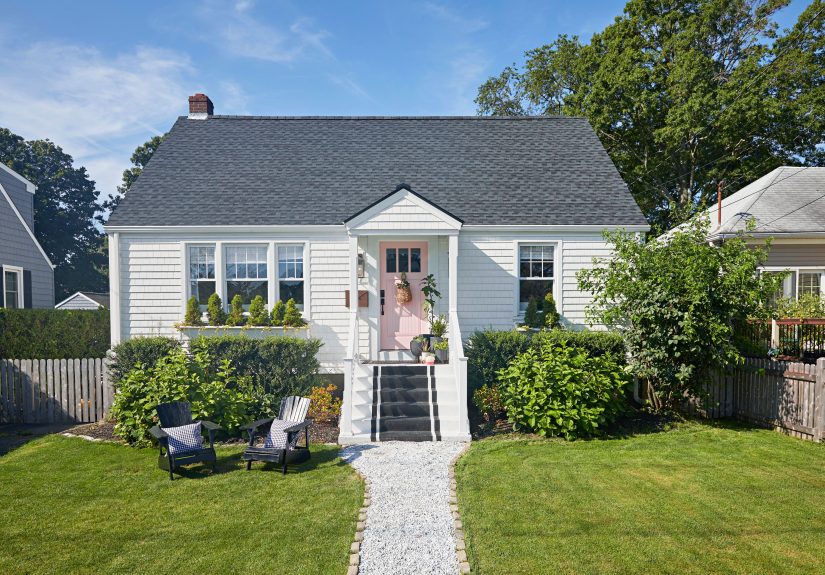
The featured 1,100-square-foot home (a 1950s Cape Cod) is a masterclass in making compact rooms feel warm and useful. Instead of trying to “hide” the home’s size, the homeowner leaned into bold but thoughtful choices: a large heirloom piano painted a soft pale pink, a streamlined sofa, built-ins, a window seat with storage, and a kitchen refresh that brightened the room without changing the footprint.
That last part matters. The kitchen makeover didn’t rely on a massive expansion. It used a lighter palette, updated cabinet fronts, warm accents (like butcher-block counters and brass hardware), and strategic storage decisions. The result was a space that looked larger and felt happierbecause the visual weight and workflow improved.
The home also shows how to reassign rooms based on real life, not labels. A former dining room became a bedroom, and a banquette plus round table carved out a new eating zone in the kitchen. Another room became a multiuse hangout with a drop-leaf table, sleeper sofa, movable poufs, and flexible layout. That’s not “making do.” That’s good design.
7 Small-Space Design Moves That Make a Home Look Stylish and Feel Bigger
1) Use Fewer, Better PiecesNot Just Smaller Pieces
One of the most common small-space mistakes is filling a room with too many tiny pieces. It sounds logical (“small room = small furniture”), but it often creates visual clutter and awkward circulation. A better approach is choosing a few well-scaled pieces that leave breathing room.
In the 1,100-square-foot home, a larger sofa with a streamlined silhouette worked because it provided seating without visual fuss. Designers across major publications also repeat this idea: scale matters more than size labels. A low-profile sofa, leggy chairs, or a clean-lined table can feel lighter than a bulky “apartment-sized” piece with chunky proportions.
2) Build In Storage Wherever You Can
Built-ins are basically the overachievers of small house decorating. They offer storage, seating, and architectural charm in one move. In the featured home, a window seat with cubby storage adds function without looking like a storage bin convention.
The same principle works elsewhere: built-in shelves around a media zone, a banquette with hidden storage, or a shallow wall cabinet in a hallway can dramatically reduce clutter. Bonus: built-ins often make a room feel more intentional and custom, which instantly elevates style.
3) Let Light Do the Heavy Lifting
Natural light is one of the fastest ways to make a small room feel more open. In compact homes, that usually means avoiding heavy window treatments and maximizing whatever daylight you have. Think light-filtering curtains, shades that disappear visually, and window placement that preserves sightlines.
Designers also recommend hanging curtains highercloser to the ceilingto draw the eye up. It’s a classic trick because it works. It visually stretches the room, makes ceilings feel taller, and adds polish. If your room still feels flat, layered lighting (sconces, overhead fixtures, and task lighting) can create depth after sunset.
4) Create Visual Height and Flow
Stylish small homes guide your eye instead of stopping it. In the BHG home, even the fireplace mantel placement was used strategically to make the walls appear taller. That’s a smart reminder: the exact height of shelves, art, sconces, and window treatments can change how spacious a room feels.
Art placement matters too. A few larger pieces can be more effective than many small frames. Large rugs help unify furniture zones so the room feels cohesive instead of choppy. And keeping floor lines visibleunder furniture and drapery when possiblehelps maintain a sense of openness.
5) Make Storage Rules (Yes, Actual Rules)
“Be selective about what you keep” may not sound glamorous, but it is one of the most stylish things you can do in a small home. The featured kitchen uses clever storage habits (using vertical surfaces, top-of-fridge space, and keeping only daily-use items) to free cabinets and reduce visual overload.
Small-space design is part décor, part editing. If every shelf is packed and every surface is occupied, even a beautiful room will feel stressed. Creating “quiet” zonesblank wall space, open shelving with restraint, uncluttered counterslets the design breathe.
6) Choose Multipurpose Furniture That Doesn’t Look Like a Compromise
The best multifunction furniture is the kind people don’t immediately clock as multifunction. A drop-leaf table that works as an end table, a sleeper sofa that still looks tailored, ottomans/poufs that shift from coffee table to seating, or a bed with built-in drawers all stretch your square footage while keeping the room stylish.
In small homes, every piece should answer at least one question: Does this store something, define a zone, improve comfort, or earn its footprint in another way? If the answer is no, it might be décor. If the answer is “all four,” keep it forever.
7) Add Personality Without Adding Chaos
Small space style is not about painting everything white and calling it a day. The 1,100-square-foot home proves you can use color, wallpaper, contrast, and vintage findsif you do it with intention. A pale pink piano becomes a focal point without overwhelming the room. Wallpaper adds charm and texture. A moody bedroom still feels cozy, not cramped.
The key is balance: bold moments paired with calm foundations. Try one statement feature per zone (art wall, patterned tile, painted furniture, wallpapered accent wall) and support it with consistent materials, repeat colors, or simple shapes throughout the home.
How to Apply These Ideas in Your Own Small Home
You don’t need a full renovation to borrow the “small but stylish” playbook. Start with the highest-impact moves:
- Swap one bulky piece for a better-scaled version (especially sofas, coffee tables, or dining chairs).
- Raise your curtains and widen the rod so windows look taller and larger.
- Add one mirror to reflect light and create depth.
- Define zones with rugs, lighting, or furniture placement instead of adding walls or dividers.
- Use vertical storage and underused areas (under windows, under beds, behind doors, top shelves).
- Edit surfaces so each room has at least one intentionally empty visual area.
- Choose a cohesive palette and repeat materials for flow from room to room.
If you have a little renovation budget, a banquette, built-in shelving, wall sconces, or a larger vanity with better storage can transform how a compact home functions. And if you have almost no budget? Paint, layout changes, decluttering, and lighting can still deliver dramatic results.
Small Space, Big Style: The Real Takeaway
A stylish home is not a square-footage contest. It’s the result of thoughtful choices that support the way you actually live. This 1,100-square-foot home works because it combines practicality and personality: flexible rooms, smart storage, good light, strong focal points, and a willingness to prioritize comfort over convention.
In other words, the secret isn’t “make your home look bigger at all costs.” It’s “make your home work better, then style it with confidence.” Once you do that, even a small space can feel layered, elevated, and completely your own.
And honestly, that’s a much better goal than owning a giant room you’re afraid to sit in.
Experience-Based Notes: What Living in a Small Stylish Home Actually Feels Like (500+ Words)
People often talk about small homes in terms of limitations, but the day-to-day experience can be unexpectedly luxurious in ways that don’t show up on a listing. When a home is around 1,100 square feet and thoughtfully designed, routines become easier to manage. You spend less time walking back and forth between rooms, less time cleaning spaces you barely use, and less money filling empty corners with furniture you bought mostly because the room looked “unfinished.”
One of the biggest changes many people notice is how quickly they become aware of what truly earns space. In a larger home, it’s easy to keep duplicate items, decorative clutter, or furniture that doesn’t really fit your life. In a smaller home, every object has a job. That sounds strict, but in practice it can feel freeing. A bench with storage, a table that expands only when guests come over, wall sconces that free the nightstand, or a media console with closed storage can make everyday life feel smoother instead of more crowded.
There’s also a social advantage to small-space living that people rarely mention: rooms feel naturally connected. In the best small homes, conversation carries, sightlines stay open, and shared spaces encourage people to gather instead of disappearing into separate corners of the house. That doesn’t mean you lose privacyit means you become more intentional about creating it with zoning, lighting, and room function. A reading nook by a window seat can feel just as restorative as a much larger room if it’s comfortable and well-lit.
Another real-world experience is that small spaces often push homeowners toward stronger design decisions. Because there isn’t room for endless “maybe” items, people tend to choose pieces with more personality: a painted vintage dresser, a dramatic light fixture, a bold wallpaper accent, or one oversized artwork instead of a dozen small frames. Ironically, this can make a small home feel more stylish and memorable than a larger home that plays everything safe.
Small homes also teach flexibility. A guest room may also be a movie room. A kitchen banquette may double as homework central. A hallway may become a mini gallery. Once you start thinking this way, your home begins to feel customized rather than constrained. You stop asking, “Why don’t I have enough space?” and start asking, “How can this space work harder and look better?”
Of course, the experience is not all perfectly folded throw blankets and magazine-worthy corners. Small-space living requires maintenance habits. If clutter piles up, you feel it quickly. If storage systems are too complicated, people stop using them. If furniture is oversized, circulation suffers instantly. But those challenges are exactly why good design matters so much in a compact home. The payoff is a home that feels edited, personal, and deeply livable.
That’s why a 1,100-square-foot home can be such a powerful example. It proves that style is not about how much room you haveit’s about how well your home reflects your priorities. When layout, storage, lighting, and personality work together, a small home doesn’t feel like a compromise. It feels smart.
Conclusion
A 1,100-square-foot home can absolutely look beautiful, function efficiently, and feel generous when design choices are intentional. The strongest small-space homes don’t try to imitate giant housesthey maximize light, prioritize flow, use multipurpose furniture, build in storage, and embrace personality with restraint. If you’re decorating a compact home, focus on strategy first and square footage second. Style will follow.