Table of Contents >> Show >> Hide
- The Night the Sky Came Apart
- Why Was a B-52 Carrying Nukes Over North Carolina?
- Meet the Mark 39: A “Lightweight” With Heavy Consequences
- Two Bombs, Two Very Different Landings
- “Nearly Nuked” Isn’t a Metaphor: How Close Was It, Really?
- The Cleanup, the Messaging, and the Long Shadow of Secrecy
- What Changed After Goldsboro (and Accidents Like It)
- Myth vs. Reality: The Goldsboro Story Gets Weird on the Internet
- Real-World Experiences: What This Story Feels Like Up Close (About )
- Conclusion: The One-Switch Night That Still Matters
Somewhere in the universe, there’s probably an alternate timeline where eastern North Carolina is best known for being “that place where an accidental thermonuclear blast rewrote the map.” In our timeline, it’s known for barbecue, beaches, andif you hang around historians, nuclear engineers, or the occasional doomscrolling insomniacone of the scariest “almost” stories of the Cold War.
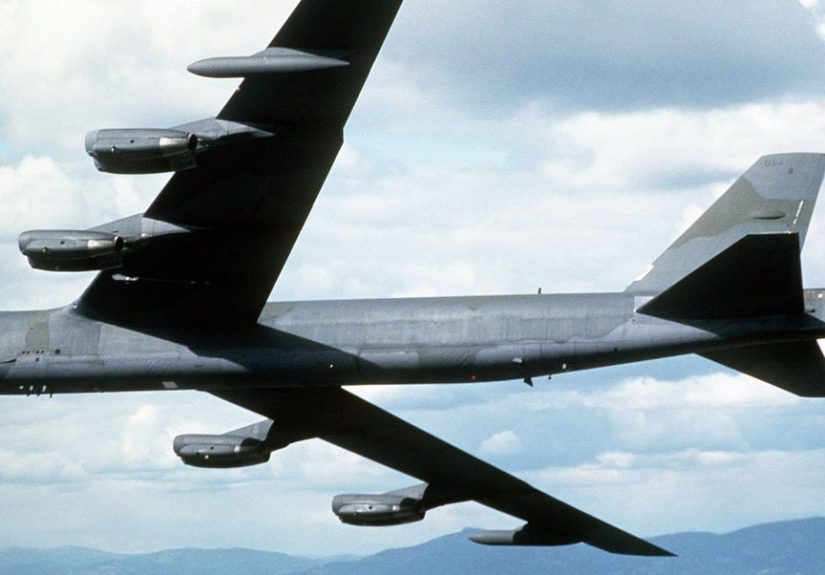
On a cold night in January 1961, a U.S. Air Force B-52 broke apart in the sky near Goldsboro, North Carolina while carrying two Mark 39 thermonuclear bombs. The weapons didn’t detonate. Nobody saw a nuclear flash. There wasn’t a mushroom cloud hovering over Wayne County like a terrible weather forecast.
And yet, later investigations and declassified records painted a deeply uncomfortable picture: at least one of those bombs behaved eerily like it had received a real attack order. In plain English: the hardware started doing its job. That is exactly the last thing you want your nuclear weapon doing during an accident.
The Night the Sky Came Apart
The aircraft involved was a B-52 on a Strategic Air Command mission at the height of Cold War readiness. In that era, American nuclear strategy leaned heavily on a simple idea: if the worst happens, the bombers should already be moving. Not “warm up the engines,” not “file the paperwork,” but “already airborne.”
During the flight, the bomber developed a serious problemaccounts focus on a major fuel issue that worsened fast. As the crew tried to recover and head back toward Seymour Johnson Air Force Base, control became increasingly difficult. The aircraft ultimately broke up midair. Crew members bailed out; some survived, and some didn’t.
The breakup scattered wreckage across rural farmland and released the nuclear payload. This was the moment the incident stopped being “a terrible aviation accident” and became “a sentence that should never exist: nuclear weapons, unplanned deployment.”
Why Was a B-52 Carrying Nukes Over North Carolina?
If your first reaction is, “Hold upwhy were thermonuclear bombs flying around like carry-on luggage?” you’re not alone. The answer is the Cold War’s favorite personality trait: anxiety with a budget.
Strategic Air Command ran airborne alert operations designed to keep nuclear-armed bombers in the sky and ready. The logic was deterrence: if the Soviet Union struck first, bombers already aloft could still reach targets. The risk, which reads obvious now, was that you were also running a high-stakes, high-complexity system nonstop with real people, real machines, and real physics that don’t care about doctrine.
The Goldsboro incident is a case study in the downside of that strategy: the system was designed to be ready to end the world quickly. It wasn’t designed to be gracefully clumsy when something went wrong.
Meet the Mark 39: A “Lightweight” With Heavy Consequences
The weapons aboard were Mark 39 thermonuclear bombs (often described as hydrogen bombs). Contemporary technical descriptions and later summaries put their yield in the multi-megaton rangeroughly 3 to 4 megatons, with 3.8 megatons commonly cited. That’s not “big.” That’s “regional catastrophe with a side of history-ending escalation.”
To make the scale relatable without turning this into a math lecture: Hiroshima is often estimated around 15 kilotons. A 3.8-megaton device is about 250 times that yield. (Which is a fun fact in the same way a speeding freight train is a fun surprise.)
The Mark 39 also had delivery modes that included parachute-retarded optionsmeaning the bomb could deploy a parachute system in order to slow descent for certain attack profiles. This detail matters, because one of the bombs in Goldsboro did exactly that.
Two Bombs, Two Very Different Landings
Bomb #1: The Parachute That Did Its Job (Too Well)
One weapon separated from the aircraft and descended with its parachute deployed. It came down relatively intactso intact, in fact, that investigators later described how parts of its internal sequence behaved in ways that resembled a normal delivery environment.
That sounds reassuring until you realize what “normal delivery environment” means for a thermonuclear bomb.
The nightmare fuel is not that the bomb failed. It’s that it partially succeededthat it did things you’d expect when a bomber is intentionally releasing a weapon over a target. This is where the famous “one switch away” idea enters the story.
Bomb #2: The Impact, the Mud, and the Part That Stayed Behind
The other weapon hit hard and became embedded in soft ground. Recovery teams dug, searched, and recovered major components, including parts of the weapon’s conventional high-explosive and arming systems. But the story that refuses to diebecause it’s true in its broad outlineis that a portion of the weapon was never fully recovered and remains in the ground.
The important point is not “there’s a live nuke waiting like a trapdoor.” A nuclear detonation is not a simple “impact = boom” event. The important point is: we put machines like this in the sky often enough that, when one fell apart, we couldn’t guarantee we would neatly put every piece back in the box.
“Nearly Nuked” Isn’t a Metaphor: How Close Was It, Really?
This is the part where the story usually gets told like a movie: dramatic music, a close-up of a toggle switch, and a narrator whispering, “One… switch… away.”
Real life is both less cinematic and more unsettling. Nuclear weapons have multiple safety mechanisms, interlocks, and sequencing requirements. The Goldsboro accident triggered a messy overlap between an aircraft breaking apart and weapon systems interpreting the chaos as cues.
The Arming Sequence Problem
In simplified terms, bombs of that era relied on a combination of mechanical actions and electrical “permission” steps. Some steps are supposed to happen only if the crew intends a release; others occur as a weapon senses it has separated, fallen, and met certain environmental conditions.
Declassified analyses describe how certain mechanisms that normally require deliberate human action could be initiated by the breakup itselfthrough forces that pulled lanyards, dislodged pins, and mimicked the physical conditions of a real drop. That’s not a design flaw in the sense of “someone forgot a screw.” It’s a design flaw in the sense of “the real world can accidentally impersonate the checklist.”
The “One Switch” IdeaWith the Right Nuance
The most quoted takeaway is that a single low-voltage safety switch stood between the United States and a catastrophe. Later discussions and declassified commentary emphasized that multiple safeguards did not behave as intended in the accident sequence, and that the remaining barrier was not the kind you want to bet North Carolina on.
Important nuance: “One switch away” does not mean detonation was guaranteed if a random lever flipped. Nuclear detonation requires an extraordinarily specific chain of events. But the concern raised by experts wasn’t fantasy. It was that the weapon’s safety architecture, as designed for that era and mission, left room for a credible failure pathway especially if stray electrical conditions or damage effects acted in just the wrong way.
That’s why Goldsboro is still cited in discussions of nuclear weapons safety: it’s a reminder that “unlikely” and “impossible” are not synonyms, and the difference matters when the downside is measured in megatons.
The Cleanup, the Messaging, and the Long Shadow of Secrecy
In the immediate aftermath, the military response focused on two goals: secure the site and make the weapons safe. Explosive ordnance disposal teams and technical specialists worked in difficult conditionsmud, cold, confusion, and the pressure of knowing that “oops” is not an acceptable outcome.
Public messaging at the time tended to emphasize that there was no danger of a nuclear explosion. Depending on the statement, the focus was placed on conventional high explosives, security, and recovery. From a communications perspective, that’s understandable: nobody wants mass panic. From a historical perspective, it’s incomplete.
Decades later, FOIA releases and declassifications gave journalists, scholars, and the public a clearer view of internal debates: what failed, what worked, and what outcomes were considered plausible enough to keep people awake.
If you’ve ever wondered why the Cold War produced such a rich vocabulary of euphemism, meet “Broken Arrow”a term used for a serious nuclear weapons accident that does not involve the start of nuclear war. It’s tidy. It’s professional. And it’s also the kind of phrase that makes you realize language can be a safety blanket.
What Changed After Goldsboro (and Accidents Like It)
The Goldsboro incident didn’t singlehandedly reinvent nuclear weapons safety, but it fed into a growing realization: keeping nuclear weapons safe requires designing for chaos, not just for intention.
Over time, the U.S. moved toward layers of improved safeguardsdesign approaches meant to ensure weapons won’t detonate unless very specific, deliberate conditions are met. Broadly speaking, the direction of travel included:
- Better “environmental sensing” concepts so weapons require the right flight/delivery environment before they can arm.
- Stronger internal safety architectures that tolerate damage and abnormal electrical conditions more robustly.
- Improved control measures to reduce the risk of unauthorized or accidental arming.
- Operational changes that reduce the frequency of high-risk alert postures that place live weapons in constant motion.
In plain language: after enough close calls, the system slowly learned what every engineer learns eventually the universe is creative, and it will stress-test your assumptions at 2 a.m. in a muddy field.
Myth vs. Reality: The Goldsboro Story Gets Weird on the Internet
Because this incident sits at the intersection of secrecy and catastrophe, it attracts two kinds of exaggeration: the “it definitely would have gone off” crowd and the “it was totally harmless” crowd. Reality is messier, and more useful.
Myth: “It was a 24-megaton bomb.”
Some early public discussions tossed around enormous numbers. The Mark 39 is generally described in the multi-megaton range, commonly around 3–4 megatons. That’s already unimaginably destructive. Inflating the yield doesn’t make the lesson sharper it just makes the math louder.
Myth: “If it hit the ground, it could have gone nuclear like a dropped grenade.”
Nuclear weapons don’t work that way. A nuclear detonation requires precise internal timing, intact components, and correct sequencing. Impact alone is not a “press here for apocalypse” button. But impact and breakup can still trigger steps that were never supposed to occur in an accident, which is exactly the risk lesson of Goldsboro.
Reality: The frightening part is system behavior under stress.
Goldsboro is not a story about cartoonish incompetence. It’s about a complex system designed to function under wartime conditions, unexpectedly receiving inputs that resembled wartime conditionswithout anyone intending it.
Real-World Experiences: What This Story Feels Like Up Close (About )
Reading about the Goldsboro incident is one experience. Standing in the geography of itreal roads, real fields, real winter air is another. Even if you never visit North Carolina, it’s worth imagining how the event lands emotionally, depending on who you are.
For locals, the “experience” often starts as a family story: something a parent or grandparent mentions the way people mention tornado sirenscalmly, because that’s how you talk about something that happened and didn’t finish happening. In rural communities, big events don’t always arrive with a headline; sometimes they arrive as a distant boom, an unusual glow, aircraft noise at a strange hour, or a sudden influx of uniforms on back roads. The aftermath becomes a patchwork of memory: which direction the wreckage was, how long the site was cordoned off, how quickly rumors outran facts.
For history-minded travelers, the experience is often defined by contrast. You can drive through Wayne County and see the ordinary textures of lifefarms, small towns, calm intersectionsand then encounter a state historical marker that essentially says, “By the way, two nuclear bombs fell here.” It’s hard not to stare at the words a little longer than you meant to. Your brain tries to reconcile “quiet roadway” with “multi-megaton weapon,” and it takes a moment for the scale to fit in a human head.
For military aviation enthusiasts, the emotional note is different: respect for the crew and the mechanics of flight, mixed with a sobering awareness of how unforgiving airborne alert operations can be. When you learn the timelineroutine mission, escalating emergency, aircraft breakupyou start to feel the pace. You picture checklists being called out, decisions being made under pressure, and the sickening realization that the “cargo” is not cargo in any normal sense. That perspective is less about conspiracy and more about the thinness of margins when complex machines fail.
For nuclear policy readers, the experience is almost clinical at firstuntil it isn’t. You can read declassified descriptions of switches, safing pins, and arming circuits like you’re reviewing any technical incident report. Then you notice the phrases that matter: the sequence began; multiple safeguards didn’t behave as expected; a single remaining barrier prevented further progression. That’s when the story stops being “a Cold War anecdote” and becomes a permanent mental sticky note about risk management. It’s the same feeling you get reading about near-misses in aviation or medicine: you don’t take comfort in the fact that catastrophe didn’t happenyou take instruction from the fact that it almost did.
And for anyone who’s ever worked on safety-critical systemspower grids, chemical plants, software that runs hospitalsthe experience is downright familiar. The Goldsboro lesson reads like an ancient version of a modern incident postmortem: the system did what it was designed to do, but the designers underestimated how an abnormal environment could impersonate an intentional command. The eerie part is not the era. It’s the pattern. We still build systems where “rare edge case” is just another phrase for “future headline.”
Conclusion: The One-Switch Night That Still Matters
The 1961 Goldsboro B-52 crash didn’t produce a nuclear explosion, but it did produce something else: evidence. Evidence that airborne alert postures carried risks beyond the enemy. Evidence that weapons safety can be undermined by the very physical forces an accident unleashes. And evidence that “failsafe” only counts if it fails safe every time, not most of the time.
If this incident feels unsettling six decades later, that’s appropriate. The point isn’t to panic. The point is to remember that civilization sometimes hinges on mundane thingsmaintenance, engineering choices, procedures, and yes, a switch that held when it absolutely had to. Goldsboro is a reminder that risk doesn’t always arrive with villain music. Sometimes it arrives with a fuel leak and a bad night over a quiet patch of North Carolina.