Table of Contents >> Show >> Hide
- Why This West Village Showroom Idea Feels So Different
- From Apartment to Design Laboratory
- Why the West Village Is the Perfect Backdrop
- What the Next Wave of Design Actually Looks Like
- Why Buyers, Designers, and Brands Are Leaning In
- What Homeowners Can Learn From This Showroom Concept
- The Experience of Visiting an At-Home Showroom in the West Village
- Final Thoughts
- SEO Tags
What happens when a design showroom stops acting like a showroom and starts behaving like a real home with better lighting, more interesting chairs, and fewer salespeople lurking behind marble islands? In the West Village, that question has turned into one of the most compelling ideas in contemporary interiors: the at-home showroom. It is intimate, edited, deeply personal, and just a little nosy in the best possible way. Instead of asking visitors to imagine how a sculptural lamp or handcrafted stool might look in a living room, this concept puts the work inside an actual living room and lets the pieces do what they were born to do: live a little.
That is exactly why this new West Village showroom model feels so fresh. It is not only about furniture. It is about context, mood, and the growing appetite for collectible design that feels warm, conversational, and human rather than stiff, precious, or museum-trapped. In a neighborhood known for townhouses, old bones, and cinematic charm, the home itself becomes part of the curatorial argument. And suddenly, the next wave of design is not hiding under fluorescent lights in a giant retail box. It is lounging near a fireplace, catching afternoon sun, and looking annoyingly comfortable.
Why This West Village Showroom Idea Feels So Different
Traditional showrooms have their place. They can be efficient, polished, and useful. But they can also feel a bit like speed dating for sofas: bright, transactional, and slightly exhausting. The at-home showroom flips that script. It slows everything down. Visitors move through rooms the way they would in a real home, noticing scale, texture, rhythm, and the chemistry between objects. A chair is no longer a product on a pedestal; it is part of a lived-in composition that includes books, art, textiles, vintage finds, and the occasional glorious oddball piece that makes a room memorable.
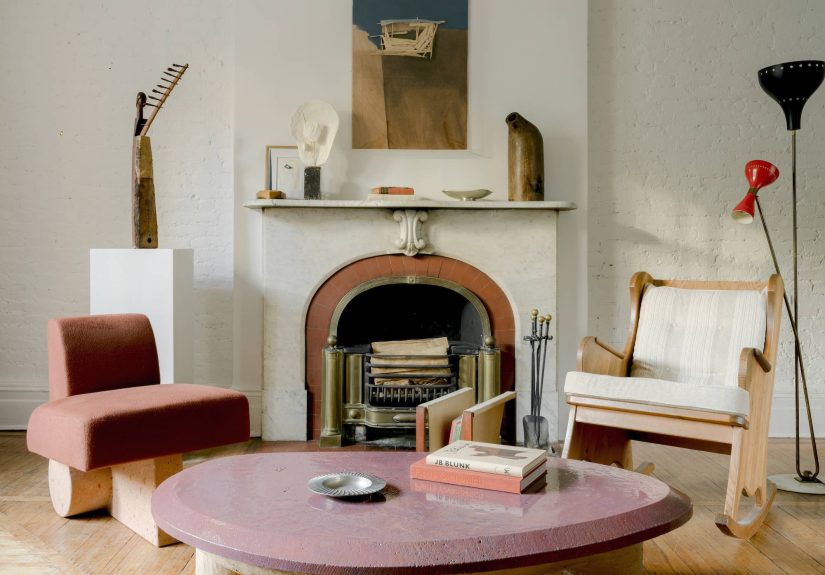
In the West Village concept that inspired this story, the appeal was exactly that tension between domesticity and experimentation. The setting felt residential, but the curation was anything but ordinary. Emerging and collectible pieces sat beside vintage Scandinavian furniture, layered textiles, ceramics, and art. The result was not a staged catalog fantasy. It felt like a design conversation happening in real time.
That difference matters. For a growing audience of collectors, designers, and design-curious homeowners, the question is no longer “What’s new?” It is “What feels alive?” The best at-home showrooms answer with rooms that look assembled rather than installed. They feel discovered rather than merchandised. And that is where the real magic begins.
From Apartment to Design Laboratory
Not a Store. Not Quite a Gallery. Definitely Not a Beige Sofa Warehouse.
The brilliance of the apartment-showroom idea lies in its refusal to pick a single lane. It borrows the intimacy of a home, the selectivity of a gallery, and the usability of a shop, then stirs the whole thing together until it becomes something harder to label and much more interesting to visit. In this West Village version, the rooms functioned almost like a design lab, where new work could be tested inside a believable domestic setting.
That setting made the pieces sing. Lava stone tables and chairs, sculptural lighting, raffia-seated stools, bamboo screens, vintage Swedish forms, tactile cushions, and sunlit ceramics all played off one another in a way that would have been difficult to replicate in a conventional retail environment. The curation had confidence but not snobbery. It mixed eras, materials, and references without collapsing into chaos.
And that mix says a lot about where interior design is heading. The next wave is less obsessed with uniform perfection and more interested in character. It values handmade surfaces, visible craft, patina, irregularity, and storytelling. A fiberglass chair with attitude can share a room with an antique textile. A lamp can feel part sculpture, part utility, part conversation starter. The old hierarchy that separated “serious” design from warmth and whimsy is looking shakier by the minute.
In other words, the future of good taste may be less about matching and more about meaning. Finally. The tyranny of the identical boucle armchair may be losing its grip.
Why the West Village Is the Perfect Backdrop
If this concept had appeared in a generic glass box, it would have lost half its charm. The West Village matters because the neighborhood already speaks the language of intimacy. Its streets invite slower looking. Its buildings reward curiosity. Its interiors tend to be layered rather than slick, atmospheric rather than overexposed. Even people who claim they are “not romantic about neighborhoods” become suspiciously poetic after one walk down a tree-lined Village block.
That setting also supports a broader shift in design culture. For years, the most exciting spaces in New York have been the ones blurring categories: townhouse galleries, appointment-only design houses, apartment-like boutiques, and salons that merge collecting, conversation, and hospitality. The West Village is especially suited to that model because the architecture naturally lends itself to rooms with personality. Small fireplaces, old floors, narrow staircases, weird corners, deep windows, and imperfect proportions all help design objects feel grounded.
In an at-home showroom, those “flaws” become features. A handmade bench looks better against worn wood floors than against an anonymous platform. A textured screen or ceramic vessel feels more persuasive in a room with actual daylight than under retail track lighting that makes everything look like it is waiting for a barcode. The home environment gives design pieces stakes. They either belong, or they do not. And when they do belong, the effect is powerful.
What the Next Wave of Design Actually Looks Like
So what is this “next wave” everyone keeps referencing with the solemnity of a design oracle? It is not one look, one material, or one social-media-approved color of green. It is a cluster of values and tendencies that are reshaping the way interiors are made, shown, and bought.
1. Collectible, but livable
One of the biggest shifts is the rise of collectible design that still wants to be touched, used, and lived with. These are not just objects to admire from a respectful distance while clutching a drink and pretending to understand the phrase “post-craft materiality.” They are pieces designed to function in daily life, even as they blur the line between furniture and art.
This livable collectibility is especially attractive to younger buyers and design lovers who do not want homes that feel like sterile investments. They want rooms with emotional temperature. They want objects that signal curiosity, not just budget. A chair should have presence. A side table should have a point of view. A room should feel collected over time, even if some of the best pieces arrived in one glorious, wallet-threatening swoop.
2. Texture over polish
The next wave also leans heavily into texture. Glazed stone, raffia, woven fiber, raw wood, ceramic, plaster, vintage textiles, and hand-finished surfaces all bring visual depth that flat, overproduced pieces cannot fake. This is partly a reaction to years of frictionless digital shopping, where everything looked smooth, perfect, and suspiciously identical. Real rooms are richer than that. They need surfaces that catch light differently at 9 a.m. and 5 p.m. They need materials that age gracefully and remind you a human hand was involved somewhere along the line.
3. Historical references, remixed
Another hallmark of the movement is an affection for history without obedience to it. Designers are borrowing from Swedish modernism, Art Deco, studio craft, folk traditions, postmodern forms, and global decorative languages, then remixing them into something more fluid. That is why a room can hold a sculptural contemporary piece, a 19th-century textile, and a midcentury lamp without feeling like a costume drama. The point is not fidelity. The point is resonance.
4. Conversation as part of the product
Perhaps most important, the new design scene values dialogue. Fairs, salons, by-appointment houses, and immersive showrooms all encourage people to spend time with objects and with one another. The most compelling spaces do not just display work; they frame discussion around process, craft, collaboration, and use. In that sense, the at-home showroom is not simply a new retail format. It is a new social format.
Why Buyers, Designers, and Brands Are Leaning In
There is a practical reason these spaces are gaining traction: people want to understand how design behaves in the wild. They want to see how a large chair sits near a small side table. They want to know whether a dramatic floor lamp feels poetic or just annoying in a bedroom corner. They want to understand proportion, circulation, comfort, and mood. A home-like environment answers those questions faster and better than a traditional display floor ever could.
For brands and galleries, the at-home showroom offers something equally valuable: storytelling. A residential setting communicates a worldview. It helps a brand say, “This is how we think people want to live now.” That pitch is far more persuasive than a neat row of products in a blank room.
It also taps into a deeper cultural craving for in-person experience. After years of hyper-digital browsing, a growing number of tastemakers are betting that design shoppers want rooms they can move through physically and emotionally. Some of the most interesting new stores and showrooms in New York now feel less like stores and more like someone’s very stylish friend’s apartment, library, salon, or study. That is not an accident. It is the business model.
What Homeowners Can Learn From This Showroom Concept
You do not need a West Village address, a design pedigree, or a bamboo screen that costs more than your first car to borrow from this idea. The real lesson is about curation.
- Mix old and new on purpose. A room gets more interesting when a contemporary statement piece has to hold its own beside something vintage or handmade.
- Let materials do the talking. Texture creates depth faster than clutter ever will.
- Build rooms around conversation pieces. One unusual chair, lamp, or table can give an entire space a center of gravity.
- Think in scenes, not sets. Instead of buying matching pieces, compose little moments that feel personal and layered.
- Design for how you want to feel. Not every room needs to look expensive. Every room should look intentional.
The bigger takeaway is that design works best when it reflects life rather than performing perfection. The most memorable rooms invite use. They tolerate rearranging. They leave space for art, books, guests, mess, and evolution. That may not sound revolutionary, but in an era of algorithm-approved sameness, it honestly kind of is.
The Experience of Visiting an At-Home Showroom in the West Village
Now for the part no product description can really capture: the experience. Walking into an at-home showroom in the West Village does not feel like entering a store. It feels like being let in on something. You buzz downstairs, step into an older building, and immediately become more aware of your footsteps, your coat, your voice. The city drops away a little. The transition matters because it resets your attention. You are no longer consuming design at high speed. You are arriving.
Then the rooms begin to unfold. Not in a theatrical “ta-da” way, but in the slower rhythm of domestic space. A chair is partly hidden by a doorway. A floor lamp appears before the rest of the room does. A low table catches the light and turns out to be more tactile, stranger, and more beautiful than it looked in photographs. You notice how sunlight moves across a ceramic surface. You notice that a woven stool softens the edge of a sharper piece nearby. You notice, maybe with mild embarrassment, that scale is the thing online shopping has been lying to you about for years.
What makes the experience memorable is not just the objects but their relationships. In a good at-home showroom, everything seems to be in conversation: a contemporary piece with a vintage one, a playful material with a sober silhouette, a quiet wall with a loud chair, a polished form with a rougher texture. The rooms do not lecture. They suggest. They show how a home can be edited without becoming cold, and how bold design can still feel intimate.
There is also a social difference. Because these spaces are often viewed by appointment or through smaller gatherings, the energy is less frantic and more attentive. People ask better questions. They talk about process, comfort, memory, and use instead of just price and trend velocity. Someone leans down to inspect a finish. Someone else debates whether a sculptural lamp is genius or wonderfully unhinged. Both reactions are useful. In fact, that is part of the appeal: the showroom feels like a place where taste is still forming, not a place where it has already been decided for you.
The West Village itself deepens that mood. Outside, there is the familiar neighborhood theater of brick facades, narrow streets, dogs with suspiciously premium energy, and windows that make everybody a little curious about how other people live. Inside, the at-home showroom turns that curiosity into a design experience. You are not just seeing products. You are seeing possibilities. You start mentally recasting your own rooms: Maybe the reading corner needs a stronger lamp. Maybe the dining area could handle one truly odd chair. Maybe the answer to a stale interior is not “more stuff,” but “better tension.”
By the time you leave, the lingering impression is not of shopping. It is of having spent time inside a point of view. That may be the greatest strength of the at-home showroom concept. It replaces generic aspiration with something more persuasive: a believable life, artfully arranged. And because the setting is residential, the fantasy feels oddly attainable. Not cheap, obviously. This is still design, not a fairy tale. But attainable in spirit. You walk away thinking less about what to buy and more about how to live with more intention, more curiosity, and maybe one gloriously impractical object that makes you smile every time you pass it.
Final Thoughts
The West Village at-home showroom concept is more than a clever workaround or a stylish one-off. It points to a larger shift in how design is being presented and understood. The next wave is more residential, more collectible, more tactile, more emotionally intelligent, and more willing to let art, furniture, craft, and commerce mingle in the same room without making things awkward.
That is good news for anyone tired of interiors that feel over-formulaic. The best design right now is not chasing sameness. It is embracing context, personality, and the slight unpredictability that makes rooms worth remembering. If the future of design looks a little more like a home and a little less like a showroom, that seems like progress worth sitting down for.