Table of Contents >> Show >> Hide
- Why Early Detection of Alzheimer’s Matters More Than Ever
- What Is the New Alzheimer’s Finger Prick Test Idea?
- How Alzheimer’s Blood Biomarker Tests Work
- What’s Available Now vs. What’s Coming Next
- Why p-tau217 Is Getting So Much Attention
- Finger Prick Testing and Early Detection: What It Could Change
- What a Finger Prick or Blood Biomarker Test Cannot Do
- What the New Clinical Guidance Says
- What Patients and Families Should Do Right Now
- The Road Ahead: From Detection to Prevention
- Final Thoughts
- Real-World Experiences and Everyday Impact
If Alzheimer’s diagnosis has ever felt like a maze of referrals, scans, and “please hold while we transfer you,” you are not imagining things. For years, confirming Alzheimer’s-related brain changes usually meant a PET scan or a spinal tapboth useful, but not exactly “swing by after lunch” options. Now, a new wave of blood-based biomarker testing is changing the conversation. And one of the most exciting ideas in the pipeline is even simpler: a finger prick test that may help detect Alzheimer’s biology earlier and more conveniently.
Here’s the important nuance: the FDA-cleared Alzheimer’s blood test currently available uses a standard blood draw, not a finger prick. But recent research on dried blood spots (the tiny drops collected from a finger prick) suggests we may be moving toward a future where early Alzheimer’s screening becomes far more accessibleespecially in places that don’t have easy access to specialty memory clinics.
In this guide, we’ll break down what the finger prick approach is, how it compares with today’s blood tests, what doctors are looking for in the blood, and why “early detection” is promising but still not the same thing as a diagnosis made from one test alone. Think of this as your no-hype, no-jargon, slightly-caffeinated explainer.
Why Early Detection of Alzheimer’s Matters More Than Ever
Alzheimer’s disease is not just “normal aging with more misplaced keys.” It is a progressive brain disease that affects memory, thinking, behavior, and eventually daily function. It is also incredibly common. In the U.S., more than 7 million Americans are living with Alzheimer’s, and that number is projected to climb sharply in the coming decades.
Early detection matters for several reasons:
- Treatment timing: Newer therapies work best in earlier stages, when symptoms are mild and the disease process is less advanced.
- Care planning: Families can make legal, financial, and caregiving decisions before a crisis hits.
- Better diagnostic accuracy: Memory problems can have many causes, and biomarkers can help clarify what’s going on.
- Clinical trial access: Earlier detection can help more people qualify for research studies and emerging treatments.
In short, earlier answers can mean better options. That does not make the process easy, but it does make it more meaningful.
What Is the New Alzheimer’s Finger Prick Test Idea?
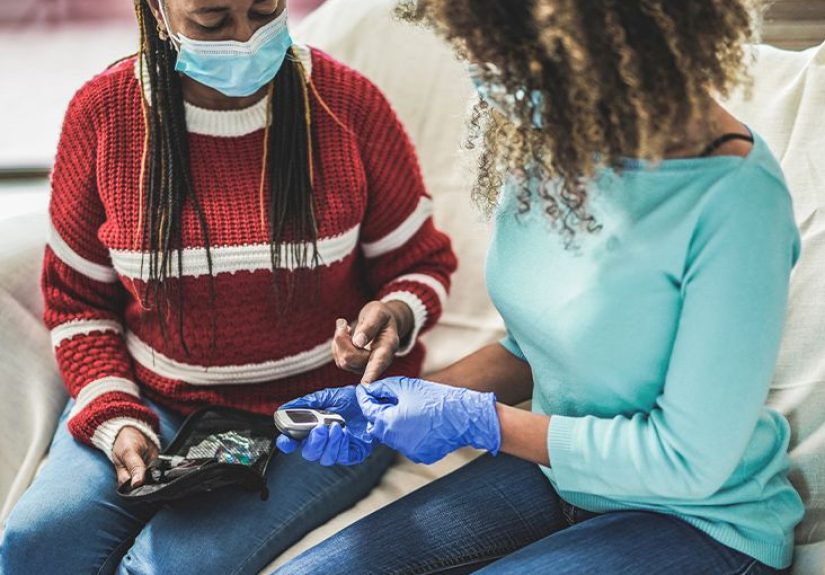
The “finger prick test” headlines are mostly referring to research on dried blood spot (DBS) testing. Instead of collecting a full tube of blood from a vein, a clinician (or in some cases a trained collection workflow) can take a small sample from a finger prick, place droplets on special filter paper, let them dry, and send the card for analysis.
Why is that exciting? Because dried blood spots are:
- Less invasive than a standard blood draw
- Easier to transport and store
- Potentially more scalable for community clinics and rural settings
- Promising for future screening and follow-up workflows
Researchers are testing whether these tiny samples can reliably measure Alzheimer’s-related biomarkersespecially p-tau217, a form of tau protein strongly associated with Alzheimer’s disease biology.
The Big Scientific Question
Can a finger prick sample preserve enough high-quality biological information to match the accuracy of traditional plasma testing from a venous blood draw? Recent studies suggest the answer may be “yes, often,” which is why this topic is getting so much attention.
How Alzheimer’s Blood Biomarker Tests Work
Alzheimer’s blood tests do not read minds, and they do not diagnose memory loss by magic. What they do is measure biomarkersbiological signals in the blood that reflect changes happening in the brain.
The two headline players are:
- Beta-amyloid (amyloid): A protein linked to plaque buildup in the brain
- Tau (especially p-tau217): A protein associated with Alzheimer’s-related neurodegeneration and tangles
Some tests measure a ratio (for example, pTau217 to beta-amyloid markers) to estimate whether amyloid plaques are likely present. This helps doctors decide whether a patient may need confirmatory testing, specialist referral, or treatment discussions.
Important reminder: biomarkers support diagnosisthey do not replace clinical judgment. Doctors still combine biomarker results with symptom history, cognitive testing, medication review, physical and neurological exams, and sometimes imaging.
What’s Available Now vs. What’s Coming Next
Available Now: FDA-Cleared Blood Testing (Standard Blood Draw)
In 2025, the FDA cleared the first blood test to aid in diagnosing Alzheimer’s disease in adults age 55 and older who are showing signs and symptoms of cognitive decline. This was a major milestone because it made biomarker-based evaluation more accessible than PET scans or spinal taps alone.
The test is designed for symptomatic patients in a specialized care setting. It is not intended as a general population screening tool, and it is not a stand-alone diagnosis. In other words, it helps answer the question, “Is Alzheimer’s pathology likely involved here?” It does not answer every question by itself.
Coming Next: Finger Prick (Dried Blood Spot) Testing
Research published in Nature Medicine showed that dried blood spot samples can be used to measure p-tau217 and detect amyloid pathology with strong performance. That is the scientific foundation behind “finger prick test” excitement.
The practical implication is huge: if dried blood spot testing continues to validate across real-world populations, it could expand access to Alzheimer’s biomarker testing in local clinics, lower-resource settings, and possibly even more convenient collection pathways in the future.
The best way to describe the current moment is this: the future is knocking, but it hasn’t fully moved in yet.
Why p-tau217 Is Getting So Much Attention
If p-tau217 sounds like a Wi-Fi password, you’re not alone. But it has become one of the most important blood biomarkers in Alzheimer’s research. Multiple studies have shown that p-tau217 performs well in identifying Alzheimer’s-related pathology, and it may be especially useful in early-stage disease.
Researchers and clinicians like it because p-tau217 has shown strong links to:
- Amyloid plaque positivity
- Alzheimer’s diagnosis in symptomatic patients
- Disease progression risk in some research settings
- Improved diagnostic confidence when combined with other tests
Even better, research in more diverse populations has helped strengthen the case that p-tau217 can be useful beyond narrow study groups. That matters, because Alzheimer’s diagnostics only become truly helpful when they work well in the real worldnot just in ideal lab settings.
Finger Prick Testing and Early Detection: What It Could Change
Let’s talk real-world impact. If a finger prick test becomes widely adopted and clinically validated, here’s what could improve:
1) Faster Triage in Primary and Community Care
Many people first bring memory concerns to a primary care doctor, not a memory specialist. A simple biomarker test could help identify who should be referred quickly and who may need a different workup.
2) Better Access in Rural or Underserved Areas
PET scanners and specialty dementia centers are not evenly distributed. A finger prick workflow could reduce geography as a barrier to early evaluation.
3) Easier Follow-Up Over Time
If future protocols support repeated dried blood spot testing, it may become easier to monitor changes without requiring patients to travel long distances for every test.
4) Lower Friction for Patients and Families
A finger prick is still a medical test, but it is usually less intimidating than a spinal tap and often more convenient than advanced imaging. For families already dealing with stress, reducing friction matters a lot.
What a Finger Prick or Blood Biomarker Test Cannot Do
This is the part that keeps the article honest.
Alzheimer’s blood biomarker tests are powerful, but they are not crystal balls. They have limits, and good clinicians will tell you that right away.
- They are not stand-alone diagnostic tests. Doctors must interpret results in context.
- False positives and false negatives can happen. That is why confirmatory testing may still be needed.
- Some patients fall into an “indeterminate” range. More testing is often required.
- Testing asymptomatic people is not routine clinical practice. Most current guidance focuses on symptomatic individuals.
- Insurance coverage is still evolving. Access and reimbursement vary by test and location.
In other words, a blood test can be a terrific guide, but it should not be the only voice in the room.
What the New Clinical Guidance Says
Alzheimer’s experts are trying to do something medicine does not always do gracefully: move fast and be careful. New clinical guidance released at AAIC 2025 helps set expectations for how blood-based biomarkers should be used in practice.
A few takeaways stand out:
- Blood-based biomarker tests are aimed at specialists evaluating people with cognitive impairment.
- Some tests may be used as a triage tool (to help rule out Alzheimer’s pathology if negative).
- Higher-performing tests may eventually serve as a substitute for PET or CSF in some settings.
- Positive results may still need confirmation, depending on the test and clinical context.
Translation: the field is moving toward broader use, but not toward “DIY diagnosis.” That’s a good thing.
What Patients and Families Should Do Right Now
If you or a loved one is noticing memory or thinking changes, the goal is not to chase the newest test headline. The goal is to get a solid evaluation. Here is a smart, practical path:
Start With Symptoms, Not Panic
Everyone forgets names sometimes. But repeated changesmissed bills, getting lost in familiar places, trouble following conversations, medication mistakes, or noticeable personality changesdeserve a medical visit.
Ask About a Cognitive Workup
A proper workup may include:
- Medical history and medication review
- Cognitive screening or neuropsychological testing
- Lab tests to rule out other causes (thyroid issues, vitamin deficiencies, etc.)
- Brain imaging when needed
- Biomarker testing (blood, CSF, or PET) when clinically appropriate
Ask Whether You’re a Candidate for Biomarker Testing
Biomarker tests are most relevant when there are actual cognitive symptoms. If a doctor suspects Alzheimer’s disease, blood-based testing may help determine next steps and whether referral to a specialist or memory clinic is appropriate.
Ask About Coverage and Logistics
Coverage varies. Ask which tests are available locally, which require send-out labs, and whether insurance or Medicare is likely to cover part of the cost. It is not the most glamorous question, but it is one of the most important.
The Road Ahead: From Detection to Prevention
One of the most exciting developments in Alzheimer’s research is that blood biomarkers may eventually do more than identify current pathology. They may also help estimate risk and timing of future cognitive decline.
Recent university-led research has suggested p-tau217 may help predict when symptoms are likely to emerge in people with Alzheimer’s diseasesometimes years before obvious decline. That kind of forecasting is still developing, but it hints at a future where doctors can intervene earlier and plan more precisely.
If that future arrives, finger prick testing could become one of the tools that makes it practical at scale. Not by replacing specialists, but by helping more people reach the right specialist sooner.
And honestly, that may be the biggest win of all: fewer people waiting in uncertainty while the disease quietly advances.
Final Thoughts
The phrase “Alzheimer’s finger prick test” can sound like science fiction, but it is quickly becoming science factjust not fully finished science yet. Today’s FDA-cleared blood tests already mark a major leap forward for Alzheimer’s detection in symptomatic adults. Finger prick testing, especially through dried blood spot research, may be the next leap that makes early detection easier, cheaper, and more widely available.
The key is to keep expectations realistic. A finger prick test may help flag Alzheimer’s biology early, but diagnosis still requires the full clinical picture. Think of the blood test as a powerful flashlight, not the entire map.
That said, it is a very good flashlightand for millions of families, that could make a life-changing difference.
Real-World Experiences and Everyday Impact
The science is impressive, but what really gives this topic weight is how it lands in everyday life. To make this more practical, here are several illustrative composite experiences based on common situations doctors, caregivers, and families describe when navigating early Alzheimer’s concerns. These are not individual patient stories, but they reflect real-world patterns.
Experience 1: “We Thought It Was Just Stress”
A daughter in her 40s noticed her mother was repeating the same story three times during dinner. At first, the family blamed stress, poor sleep, and too much coffee. Then came missed appointments, duplicate grocery trips, and one very confusing moment involving a TV remote in the refrigerator. (It happens more than people admit.) They booked a primary care visit expecting reassurance.
Instead, the doctor did a basic cognitive screen and recommended a fuller evaluation. The family was surprised by how many steps were involved: medication review, bloodwork for other causes, imaging, and specialist referral. The thing that helped most was not a final diagnosis on day oneit was finally having a process. Families often describe this as a strange emotional mix: fear, relief, and a sudden urge to buy a giant binder for medical paperwork.
Experience 2: “A Simpler Test Reduced the Waiting Stress”
In another common scenario, a patient with mild memory complaints is referred to a memory clinic, but PET imaging has a long wait time. A blood biomarker test becomes the bridge. Even when it does not provide a complete diagnosis, it can narrow the possibilities and help the specialist decide what comes next.
Families often say the biggest benefit is psychological: uncertainty shrinks. A test result may not answer everything, but it can move the conversation from “What is happening?” to “Here is our plan.” That shift matters. People sleep better when there is a planeven if the plan includes more testing.
Experience 3: Rural Access and the Travel Problem
One of the biggest real-life barriers is geography. A retired couple may live two hours from the nearest neurologist and even farther from a PET imaging center. Add traffic, mobility issues, and weather, and a single appointment can become an all-day event. This is where finger prick testing could eventually make a huge difference.
Clinicians in community settings often talk about “diagnostic friction”the many small obstacles that delay care. A simpler collection method could reduce that friction dramatically. Less travel. Less scheduling chaos. Fewer “we’ll do it next month” delays. For older adults and caregivers, convenience is not a luxury; it is access.
Experience 4: When the Result Is Not Clear
Not every story ends with a neat answer. Some patients fall into an intermediate biomarker range. This can be frustrating, especially after weeks of hoping for clarity. But in practice, an indeterminate result is still useful. It tells the care team to dig deeper rather than make assumptions.
Families who are prepared for this possibility usually cope better. The best clinicians explain upfront that biomarker testing is one piece of a puzzle. Setting expectations early prevents the “But we thought the blood test would tell us everything” moment later.
Experience 5: The Hidden Value of a Negative Result
We often focus on positive results, but negative biomarker findings can also be powerful. For some patients, a negative result redirects attention to other causes of cognitive symptoms, such as sleep disorders, medication side effects, depression, or metabolic issues. That can open the door to treatments that are very differentand sometimes very effective.
In real life, this is one of the quiet wins of better testing: not just identifying Alzheimer’s sooner, but avoiding the wrong label. Families frequently say they expected the appointment to be scary, and instead it became clarifying.
The bottom line from these everyday experiences is simple: better Alzheimer’s testing is not just about technology. It is about reducing delays, making care more humane, and giving families a clearer path forward. If finger prick testing reaches routine practice, its greatest contribution may be something medicine does not always measure wellless uncertainty at the exact moment people need confidence most.