Table of Contents >> Show >> Hide
- Meet the Alpine Mummy Who Refuses to Stay Quiet
- The Tattoos: 61 Marks, 19 Groups, and Absolutely No Dragons
- Why These Tattoos Shook Archaeology
- The Plot Twist: “Poke, Don’t Slice” Changes Everything
- What Was the Ink? The Science of Ancient “Black”
- So What Were They For? The Leading Theories (Ranked by “Most Likely to Start a Conference Argument”)
- How Ötzi’s Tattoos Rewrote the Story of Ancient Ink
- What’s Next: New Tech, New Questions, and the Glacier Clock Ticking
- Conclusion: The Simplest Tattoos with the Biggest Consequences
- Experience Add-On: 5 Ways People “Meet” Ötzi’s Tattoos Today (And Why It Feels Weirdly Personal)
- 1) The museum moment: realizing the tattoos aren’t “art” in the way you expected
- 2) The “mapping obsession”: watching science turn skin into data
- 3) The experimental rabbit hole: “Wait, they tested tattoo techniques?”
- 4) The empathy snap: connecting joint pain across 5,000 years
- 5) The tattoo-parlor conversation: when ancient archaeology shows up in modern ink culture
If you ever needed proof that the past is alive and welland quietly judging our skincare routinesmeet the most
stubborn influencer in archaeology: a 5,300-ish-year-old man pulled from Alpine ice with 61 tattoos
and zero interest in letting scholars feel settled.
These aren’t the dramatic, full-sleeve “I wrestle bears for fun” tattoos you might imagine. They’re simple lines and
crosses. Minimalist. Almost boring. And yet, they’ve caused decades of maximum academic chaosbecause they don’t behave
like “normal” ancient body art. Their placement, patterns, and even the way they were made have pushed researchers to
rethink what tattoos meant in prehistory and how early people used their bodies as both canvas and clinic.
Welcome to the mystery of the Alpine mummy’s inkbetter known to the world as Ötzi the Icemanwhere every new imaging
technique seems to whisper, “Cute theory. Try again.”
Meet the Alpine Mummy Who Refuses to Stay Quiet
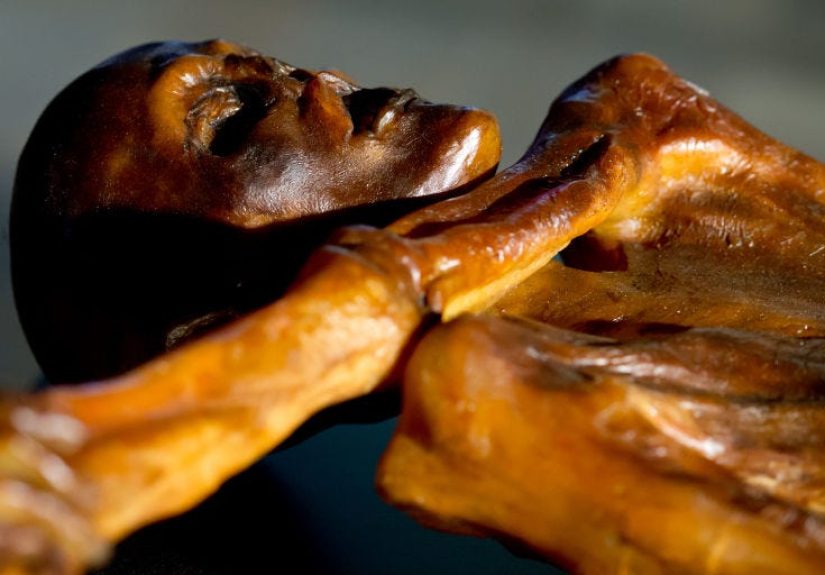
In 1991, hikers spotted a human body emerging from ice high in the Alps near the border between Italy and Austria. At
first, it looked like a modern tragedyuntil scientists realized the “victim” had been waiting in cold storage for
more than five millennia. Radiocarbon dating placed him in the Copper Age (also called the Chalcolithic), around
3350–3120 BCE. He was likely around 45 years old when he died.
The cause of death turned out to be far from peaceful: an arrowhead lodged in his left shoulder, along with other
injuries, suggests he was attacked. That alone would’ve guaranteed him a spot in archaeological celebrity culture.
But then researchers began mapping what was on his skinmarkings that in some places were faint, partially obscured,
or disguised by time and preservation.
The result: not a single “pretty picture,” but a cluster of marks that would become a kind of Rosetta Stone for ancient
tattooing.
The Tattoos: 61 Marks, 19 Groups, and Absolutely No Dragons
Ötzi’s tattoos are typically described as short, dark linesoften grouped in sets of parallel strokesand a handful of
small crosses. Researchers count 61 tattoos arranged in 19 groups. If you’re thinking, “That sounds
like a spreadsheet,” you’re not wrong. Archaeologists love a good dataset.
Where the tattoos are
The placement is the first clue that something unusual is going on. Instead of being displayed where other people can
admire them (shoulders, chest, forearms), many marks cluster around:
- Lower back and spine-adjacent areas
- Knees and surrounding tissue
- Ankles and lower legs
- Wrists
- A small set near the torso/chest
In plain English: they show up where people tend to hurt. Which is… suspicious, in an archaeology kind of way.
How scientists even saw them
Not all tattoos were obvious at discovery. Over time, researchers used specialized imagingparticularly methods
sensitive to wavelengths beyond normal visible lightto reveal tattoos that were faint or hidden by changes in the
skin. This work helped refine both the number and exact locations of marks, turning “he has some tattoos” into “we can
map every line and cross like we’re building a tattoo GPS.”
That mapping matters because interpretation in archaeology often comes down to a simple (and brutal) question:
Pattern or coincidence? The better the map, the better the argument.
Why These Tattoos Shook Archaeology
Tattoos show up across many societies for many reasonsidentity, status, spiritual protection, group membership,
aesthetics, or some combination of all of the above. For a long time, popular imagination leaned hard toward the idea
that tattoos are primarily symbolic decoration.
Ötzi’s tattoos complicated that story immediately. They’re not showy. They’re not centered on “presentation” areas.
They cluster in places associated with joint strain and back pain. And Ötzi’s body shows signs of wear-and-tear,
including arthritis-like degeneration in certain joints.
So archaeologists started asking an uncomfortable question: What if these tattoos were less “fashion” and more
“healthcare”?
The “therapeutic tattoo” theory
One leading idea is that Ötzi’s tattoos were applied in connection with treatmentpossibly for chronic pain. The logic
is straightforward:
- The marks sit near joints and the lower spine where pain and degeneration are common.
- Ötzi’s remains show evidence consistent with musculoskeletal stress and arthritis.
- Some of his equipment included natural materials thought to have medicinal or practical uses.
This interpretation flips a long-standing assumption. If these were therapeutic, then tattooing wasn’t merely a marker
of identity or beliefit was a hands-on medical practice embedded in everyday life.
The acupuncture-adjacent debate (and why it’s controversial)
Another provocative claim is that some tattoo locations resemble points used in acupuncture. That idea has been
discussed for years because the tattoos appear near places where pain relief could plausibly be the goal.
But archaeologists have to be careful here: “resembles” is not the same as “proves.” Acupuncture is part of a
documented medical tradition with its own history, terminology, and theory. Ötzi lived in a different region and
cultural context. Similar patterns can emerge from similar human problems (like joint pain) even without direct
cultural transmission.
In other words: it’s possible that people independently discovered “poke here, it feels better,” without writing a
textbook about meridians.
Still, even entertaining the question forces archaeologists to widen the lens. The tattoos aren’t just “old”; they’re
evidence that ancient Europeans may have used systematic body-based therapies in ways earlier scholarship didn’t
anticipate.
The Plot Twist: “Poke, Don’t Slice” Changes Everything
For years, one popular explanation for how Ötzi got tattooed went like this: someone cut or sliced the skin and then
rubbed charcoal or soot into the wounds. It sounds plausible. It’s simple. It also fits a certain mental image of
prehistoric life as relentlessly blunt-force.
Then researchers did something wonderfully modern: they tested the assumptions with experiments and careful
comparisonusing non-electric tattooing methods to recreate similar marks on living skin and comparing those healed
results with Ötzi’s preserved tattoos.
The conclusion from newer work: Ötzi’s tattoos were likely made by hand-poking with a single-pointed tool
rather than slicing. Think of it as the difference between “cut and rub” versus “tap-tap-tap with pigment.”
This matters because technique reveals culture. A hand-poked method suggests:
- More control over line shape and density than a simple incision-and-rub approach
- A practice that can be repeated in sessions, which matches the idea of ongoing treatment
- Tools that could plausibly be made from bone or copper awlsmaterials present in that period
It also reframes the skill involved. These weren’t accidental “oops, I fell into a campfire and now I’m striped.”
Someone knew what they were doing. Someone had done it before. That pushes tattooing closer to specialized practice
rather than random experimentation.
What Was the Ink? The Science of Ancient “Black”
Analyses of ancient tattoo pigments often point to carbon-based materialssoot or charcoalbecause they’re stable,
accessible, and dark. Ötzi’s tattoos are commonly described as made with carbon-rich pigment, and some discussions note
microscopic traces consistent with material gathered from fire-related contexts.
This is another reason Ötzi disrupts simple narratives. When people say “ancient tattoos,” they sometimes imagine rare
pigments or ceremonial inks. Ötzi’s inkif largely soot-basedsuggests tattooing could be both meaningful and
practical, using everyday materials in deliberate ways.
So What Were They For? The Leading Theories (Ranked by “Most Likely to Start a Conference Argument”)
1) Pain relief and chronic care
If you zoom out, the tattoos behave like a treatment map. Many marks sit near areas where Ötzi had degeneration or
strain. Some scientists interpret them as part of a therapeutic routinesomething applied to soothe pain, reduce
stiffness, or mark treated zones.
Here’s the big implication: if that’s true, then tattooing may have functioned as a long-term healthcare
strategy, not a one-time rite of passage. That would place body modification inside the history of medicine,
not just culture.
2) Ritual practice with practical side effects
Humans are excellent at mixing meanings. A practice can be spiritual and functional. Even if the tattoos were
applied in a ritual contextprotection, identity, or a community traditionthe placement could still reflect practical
knowledge about the body.
In this model, the “mysterious” part isn’t whether it workedit’s how people explained why it worked.
3) Social identity (quietly, not loudly)
Not all identity markers are meant for strangers. Some are intimate, visible only to close community members or during
specific activities (healing, bathing, rites, or seasonal gatherings). The tattoos’ locations might indicate they were
intended for contextual visibility, not constant display.
That interpretation is harder to prove, but archaeology often deals in “most plausible,” not “case closed.”
How Ötzi’s Tattoos Rewrote the Story of Ancient Ink
Ötzi’s tattoos didn’t just add a colorful footnote to prehistorythey forced a rewrite of multiple chapters:
Ancient Europeans weren’t “tattoo-free” by default
Older stereotypes sometimes painted tattooing as something that belonged primarily to specific later cultures or
distant regions. Ötzi shows tattooing was present in prehistoric Europe, and not as a rare novelty61 marks suggests a
sustained practice.
Tattoos can be evidence of healthcare, not just symbolism
The possibility that tattoos were therapeutic expands how archaeologists interpret marks on skin. Instead of asking
only “What did this symbol mean?”, researchers now also ask: “What did this do?”
Technique is part of the message
The shift from incision-based assumptions to hand-poking evidence changes how we imagine prehistoric technology and
expertise. A hand-poked method implies deliberate skill and repeatable practicemore “trained craft” than “rough
improvisation.”
It reframes comparisons with other tattooed mummies
Ötzi often appears in broader discussions of ancient tattooing alongside Egyptian mummies and later, highly artistic
tattoo traditions like those found among Iron Age nomadic cultures in Siberia. Those comparisons highlight something
crucial: tattooing is not one thing. It ranges from subtle therapeutic lines to elaborate mythological art. Ötzi sits at
the “function-first” end of that spectrumat least based on current evidence.
What’s Next: New Tech, New Questions, and the Glacier Clock Ticking
Ötzi’s tattoos have been reinterpreted multiple times as tools improvedespecially imaging methods that reveal faint
pigment and refine maps of the body. That trend will continue.
Future work that could sharpen (or shatter) current theories includes:
- Higher-resolution multispectral imaging to detect pigment distribution and healed tissue patterns
- Microscopy to compare puncture patterns with experimental hand-poke and incision methods
- Chemical analysis to characterize pigment sources and possible additives
- Contextual medical interpretation linking tattoo placement with diagnosed degeneration and injury
There’s also a broader urgency: glacier melt is revealing more artifacts and remains worldwide. That’s scientifically
valuableand environmentally alarming. Ötzi is a reminder that climate and archaeology are now intertwined in ways no
one in 1991 fully anticipated.
Conclusion: The Simplest Tattoos with the Biggest Consequences
Ötzi’s tattoos look simple enough to doodle in the margin of a notebook. But their impact has been anything but
simple. They’ve challenged assumptions about why people tattooed, how skilled those practices were, and whether body
modification in prehistory sometimes functioned as healthcare.
Every time a new study tests an old assumptionlike whether the ink was poked rather than slicedÖtzi changes the
conversation again. And that’s the real reason his tattoos have “upended” archaeological theories: they force scholars
to treat prehistoric people not as vague stereotypes, but as humans with bodies that hurt, tools that worked, and
cultural practices that were probably more sophisticated than our modern prejudices would like to admit.
Experience Add-On: 5 Ways People “Meet” Ötzi’s Tattoos Today (And Why It Feels Weirdly Personal)
The funniest thing about a 5,300-year-old mummy is how quickly he stops feeling like “a mummy” and starts feeling like
“a person who had a very bad day.” Even if you never set foot in a museum, there are modern experiences connected to
Ötzi’s tattoos that make the story stick in your brain like campfire smoke in a hoodie.
1) The museum moment: realizing the tattoos aren’t “art” in the way you expected
People often imagine ancient tattoos as bold symbolsanimals, deities, spirals, something obviously “meaningful.” Then
they see Ötzi’s marks: short lines and tiny crosses that look more like practical notation than decoration. The surprise
is the point. Your brain has to switch tracks: maybe the tattoo wasn’t saying, “Look at me.” Maybe it was saying,
“Help me.” That single shift can change how you think about ancient lifeless mythic, more physical.
2) The “mapping obsession”: watching science turn skin into data
There’s something oddly satisfying about seeing researchers map the tattoos into groups, locations, and patterns.
Modern audiences are used to dashboards and heat mapsso when archaeology adopts similar logic, it becomes relatable.
You can almost picture a Copper Age version of a wellness app: “Pain level: 8/10. Recommended: apply soot lines near
ankle.” The joke lands because the impulse is real: humans have always tried to organize discomfort into something
manageable.
3) The experimental rabbit hole: “Wait, they tested tattoo techniques?”
One of the most memorable modern experiences isn’t visualit’s conceptual. Many readers hit the point where scientists
compare different tattooing methods (incisions vs. hand-poking) and think, “So archaeology is… controlled experiments
with tattoo artists now?” Yes. And it’s awesome. It makes the ancient world feel less like a distant story and more
like a solvable puzzle. You start imagining the ancient tattooist as a skilled practitioner with a steady hand, not a
background extra in a caveman movie.
4) The empathy snap: connecting joint pain across 5,000 years
Whether you’re an athlete, a desk worker, or someone whose knees make suspicious noises on stairs, the therapeutic
theory hits home. People relate immediately to the idea that someone marked painful areas to treat them. You don’t need
to know the Copper Age to understand back pain. Suddenly Ötzi isn’t “the Iceman”; he’s “that guy with a cranky lower
spine.” It’s almost comfortinguntil you remember he also got shot with an arrow. Perspective!
5) The tattoo-parlor conversation: when ancient archaeology shows up in modern ink culture
Ötzi has become a reference point in tattoo culture precisely because his tattoos are so unglamorous. Modern tattooing
often celebrates expression and identity, but there’s a parallel tradition that treats the body as a site of repair:
medical tattooing, scar camouflage, and ink used to mark or manage the body. When artists and clients talk about Ötzi,
the conversation often turns philosophical: was the first “known” tattoo about beautyor relief? And if it was relief,
what does that say about the oldest relationship humans had with ink?
The experience of Ötzi’s tattoos, in the end, is the experience of archaeology itself: you start with a simple visual,
and you end up confronting a whole system of ancient decisionsabout pain, craft, belief, and survival. It’s not just
“cool history.” It’s a reminder that humans have been trying to solve the same problems for a very long time… just with
fewer ergonomic chairs.